

The United Nations Office at Geneva
Multimedia Newsroom
1000 days into Ukraine war, winter poses a critical challenge, says top aid official
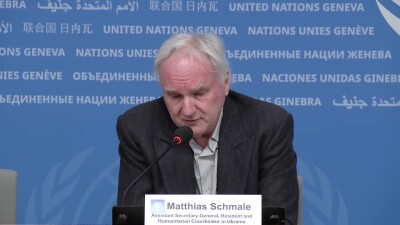
In the nearly 1,000 days since Russia’s full-scale invasion of Ukraine, thousands of civilians have been killed, the country’s energy capacity is on the brink and drones terrify communities on the front line, the UN’s top aid official in the country said on Friday.
Speaking in Geneva, Matthias Schmale described the anguish felt by Ukrainians as the war grinds on: “As we are not only approaching winter but also the sad 1,000-day mark since the Russian Federation’s full-scale invasion in 2022, we are of course thinking of the more than 12,000 people have been killed…To date, civilian infrastructure has been decimated with over 2,000 attacks now on healthcare facilities and two million damaged homes.”
Almost four in 10 people in Ukraine need humanitarian assistance but one of the most pressing concerns is for people living in high-rise buildings who face their third consecutive freezing winter, because of “systematic attacks” on energy infrastructure.
Living without heating
“I am told that by now, 65 per cent of Ukraine's own energy production capacity has been destroyed,” Mr. Schmale said. Where possible, UN aid teams and partners deliver solid fuel and warm clothing to vulnerable communities, but the situation is more precarious for the “huge number” of people living in blocks of flat. “You can evidently not deliver a ton of solid fuel to a high-rise building,” Mr. Schmale explained, adding that collective shelters in cities and towns that provide warm meals, a shower and a hot drink were welcome, but “not enough”.
One of the veteran humanitarian’s biggest concerns is if the Russian forces target the energy sector again, as the weather turns bitterly cold.
Mass displacement threat looms
“It could be a tipping point forcing further mass displacement both inside the country and outside the country,” Mr. Schmale warned. “So, this is not just about technical solutions, it’s about urging the international community to do its bit to stop this war.”
To date, the UN, national and international NGOs and volunteer organizations have reached 7.2 million people in Ukraine with at least one type of aid, thanks to the $1.8 billion received for the humanitarian response.
To prepare for winter and address the emergency needs of 1.8 million people until March by delivering solid fuel, ensuring water systems continue to work and by providing cash relief, the UN and partners require $500 million. But the situation is dangerous on the front line for communities and aid workers, nine of whom have been killed in the line of duty this year. Humanitarian facilities have also been damaged.
Drone terror
“Many people have told me on my visits that they feel civilians and civilian infrastructure and civil society are increasingly targeted by drone attacks; and drone attacks are terrible, I don’t need to describe that to you,” Mr. Schmale said, citing the testimonies of people describing being followed by drones. “Some of this is also psychological terror, because…you never quite know, will they strike or are they just observing?”
Asked to assess how the new US administration might work to alleviate suffering in Ukraine, the UN aid coordinator highlighted the Secretary-General’s wish that the “significant” humanitarian support of the United States would continue. “They have been by far our biggest individual country supporter,” Mr. Schmale said. “The hope is that they understand like the present administration that there are huge humanitarian needs that need to continue to be addressed.”
Ukraine 1000 days of war - OCHA
TRT: 03 min 35s
SOURCE: UNTV CH
RESTRICTIONS: NONE
LANGUAGE: ENGLISH / NATS
ASPECT RATIO: 16:9
DATELINE: 15 NOVEMBER 2024 GENEVA, SWITZERLAND
Speaker:
- Matthias Schmale, UN Resident and Humanitarian Coordinator in Ukraine
SHOTLIST
- Exterior medium: UN Geneva flag alley.
- Wide, UN Geneva Press room.
- SOUNDBITE (English) – Matthias Schmale, Resident and Humanitarian Coordinator in Ukraine: “As we are not only approaching winter but also the sad 1,000-day mark since the Russian Federation’s full-scale invasion in 2022, we of course are thinking of the more than 12,000 people have been killed and almost 40 per cent of the people in Ukraine that are in need of humanitarian assistance.”
- Medium-wide, Press room, journalists, TV cameras.
- SOUNDBITE (English) – Matthias Schmale, Resident and Humanitarian Coordinator in Ukraine: “Civilian infrastructure has been decimated with over 2,000 attacks now on healthcare facilities and two million damaged homes.”
- Medium-wide, podium speakers, TV screens showing podium speakers and journalists.
- SOUNDBITE (English) – Matthias Schmale, Resident and Humanitarian Coordinator in Ukraine: “A particular worry as I’m sure you’re aware is the systematic attacks on the energy infrastructure. I am told that by now, 65 per cent of Ukraine's own energy production capacity has been destroyed. And so, as we approach winter, we are of course particularly worried about this. We are trying to help people with, for example, solid fuel.”
- Medium, podium speakers, TV screen showing a speaker.
- SOUNDBITE (English) – Matthias Schmale, Resident and Humanitarian Coordinator in Ukraine: “A lot of rebuilding has been done but not enough and the real concern is if they were to target the energy sector again it could be a tipping point forcing further mass displacement both inside the country and outside the country. So this is not just about technical solutions, it’s about urging the international community to do its bit to stop this war.”
- Medium, journalists in the Press room.
- SOUNDBITE (English) – Matthias Schmale, Resident and Humanitarian Coordinator in Ukraine: “The work on the front line is dangerous; what we are observing and again many people have told me on my visits that they feel civilians and civilian infrastructure and civil society are increasingly targeted by drone attacks; and drone attacks are terrible, I don’t need to describe that to you.”
- Medium-wide, journalists.
- SOUNDBITE (English) – Matthias Schmale, Resident and Humanitarian Coordinator in Ukraine: “Our hope obviously is and I think the UN leadership starting with the Secretary-General has expressed this clearly, that the significant support – the humanitarian support - of the United States will continue. They have been by far our biggest individual country supporter. At a country level we have excellent relationships with the embassy there and with officials including from USAID. So I can only hope and I think too early and not my place to speculate on what the new administration will do in humanitarian terms. The hope is that they understand like the present administration that there are huge humanitarian needs that need to continue to be addressed.”
- Medium-wide, TV journalists, control booths, UN logo reflected in glass.
- Medium-wide, journalists, Press room.
Similar Stories
1
1
1
Edited News | OCHA , UNICEF , WFP
Aid agencies warned on Friday of the fast-developing humanitarian emergency inside Taiz City in Yemen, which has been encircled by de facto Houthi forces fighting government troops along the country’s west coast.

2
17
1
2
Edited News , Press Conferences , Images | OCHA , WMO
Two UN agencies teamed up on Wednesday to issue an appeal for immediate assistance to help communities already being impacted by the strongest El Niño on record.
3
16
2
2
Edited News , B-roll , Conferences , Images | UNITED NATIONS , UNOG
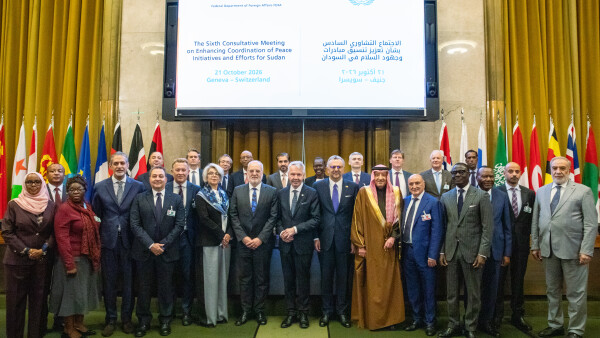
Sixth Consultative Meeting on Enhancing Coordination of Peace Initiatives and Efforts for Sudan

1
1
1
Edited News | UNICEF , WHO , UNHCR
Yemen war continues to force families from homes amid hunger and disease
More than 250,000 people have now fled renewed fighting in Yemen, the UN said on Tuesday, citing particular concern for those sheltering in the southwestern city of Taiz and the wider governorate, where access is “essentially blocked”.

1
1
1
Edited News | UNICEF
A little over one year since a ceasefire agreement was announced between Hamas fighters and Israel, more than 340 children have been reported killed and hundreds more injured, the UN Children’s Fund, UNICEF, said on Friday.

1
1
1
Edited News | UNICEF , IFRC
Six weeks after Nepal’s deadly flooding disaster, communities are still struggling to rebuild their lives, but they will need sustained help as global warming increases the risk of another Himalayan catastrophe, the UN Children’s Fund (UNICEF) said on Friday.

1
1
1
Edited News | WHO
In suspected Russia plague death, testing and monitoring underway – WHO
The death of a lab worker in Russia’s Siberia region has sparked concerns about plague being the cause, the UN World Health Organization (WHO) said on Tuesday, adding that it was following the situation closely.

1
1
Edited News | OHCHR , UNOG
UN Human Rights Chief Volker Türk on Friday provided and oral update to the 63rd session of the Human rights Council on Ukraine.

1
1
1
Edited News | OHCHR , UNOG
UN Human Rights Chief Volker Türk on Friday provided and oral update to the 63rd session of the Human rights Council on the human rights situation in Haiti.

1
1
1
Edited News | WHO
Repeated delays in bringing lifesaving medicines, prosthetics and more from Israel into Gaza risk having devastating consequences on Palestinians who urgently need them in the wartorn enclave, the UN World Health Organization (WHO) said on Friday. “A truck full of non-priority supplies or the right supplies arriving too late, doesn't save lives. That's the question that actually matters," said Dr Reinhilde Van De Weerdt, WHO Representative in the OPT.

1
1
1
Edited News | WHO
DRC: Early access to care and oxygen decisive for Ebola patients’ survival – WHO
In the Democratic Republic of the Congo (DRC), health workers fighting the country’s largest-ever Ebola outbreak are struggling to overcome critical challenges to patient care, the UN World Health Organization (WHO) warned on Tuesday.

1
1
1
Edited News | OCHA , UN
Civilians in Iran are continuing to feel the consequences of months of conflict and military escalation, the UN’s top official in the country has said, as loss of life, damage to civilian infrastructure and mounting economic pressures leave many facing continued uncertainty.