

The United Nations Office at Geneva
Multimedia Newsroom
Main road connecting Lebanon to Syria closed to vehicles after Israeli strike, says UN refugee agency
The major road connecting Lebanon to Syria was hit by Israeli airstrikes overnight near the key Masnaa border crossing where tens of thousands have been fleeing Lebanon into Syria in the past two weeks, the UN refugee agency (UNHCR) said on Friday.
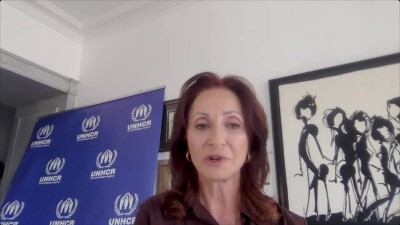
Speaking from Amman to journalists in Geneva, UNHCR spokeswoman Rula Amin said that the large crater left by the shelling “put a halt on traffic, effectively closing off the route for vehicles at this crossing”. According to the UN agency’s senior adviser for the Middle East, people walked across the destroyed area, desperate to flee Lebanon.
Although three other border crossings remain operational, the closure of the Masnaa route will likely significantly impact even more people's ability to flee the fighting in Lebanon. Israeli operations intensified overnight as the military ordered the immediate evacuation of more than 30 villages in the south.
Syria returnees’ dilemma
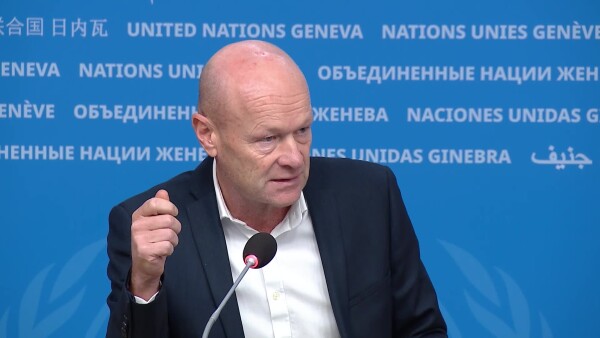
Around one million people are estimated to have been displaced in Lebanon since October 2023, amid intensifying exchanges of fire either side of the UN-patrolled Blue Line that separates Lebanon and Israel, following the outbreak of war in Gaza. “The conflict is intensifying,” said Mathieu Luciano, Head of the UN International Organization for Migration (IOM) Office in Lebanon. Speaking from Beirut, he said that tens of thousands of Lebanese and Syrians are leaving the country, both through legal and irregular means. “Between 21 September and 3 October, approximately 235,000 people had crossed into Syria overland, including 82,000 Lebanese and 152,000 Syrians,” said Mr. Luciano, citing last night’s figures from the Lebanese authorities.
Many Syrian refugees in Lebanon have been displaced by war for a second time and face a difficult dilemma about returning home. “It's either staying in Lebanon with the growing risk on their lives or taking the decision to go back and cross the border to Syria with all the other risks in mind,” said UNHCR’s Ms Amin, as she noted their concerns over safety and security, as well as the lack of work, housing and basic services. “From the numbers of people we have been seeing, it seems that at this point they felt that the risk from the bombings is higher,” she added.
Since October 2023, the UN refugee agency has distributed more than 223,000 items for individuals in need and cash assistance to 70,000. The response also includes carrying out repairs or support for collective shelters, with emergency medical care provided in a network of 42 hospitals across Lebanon.
Shelters full
With more displacement each day, Lebanon’s collective shelters are full in Beirut, leaving hundreds of people stranded and sleeping in the open.
IOM data indicates that as of 2 October, 400,000 were displaced in the last two weeks alone, amid ongoing Israeli military operations in Lebanon, including ground incursions in the south. “Of these, more than 165,000 are living in 800 collective shelters across the country. These are schools that the Government has urgently opened,” said IOM’s Mathieu Luciano.
Humanitarians speaking in Geneva expressed particular concern for the plight of Lebanon’s 180,000 migrant workers – many of whom are female domestic staff - who have been left destitute by the mass displacement.
“We are receiving increasing reports of migrant domestic workers being abandoned by their Lebanese employers, either left on the streets or in the homes as their employers flee,” explained Mr. Luciano. “They come from Ethiopia, from Kenya, from Sri Lanka, Sudan, Bangladesh, the Philippines and they too have been deeply affected by the violence in the country.”
Lebanon's health ministry reported 37 people have been killed in the past 24 hours, taking the total death toll to more than 2,000 since October 2023.
Ends
Story: “Lebanon bombardment – UNHCR, IOM” – 04 October 2024
Speakers:
- Rula Amin, Senior Communications Advisor UNHCR for the Middle East and North Africa (speaking from Amman)
- Mathieu Luciano, IOM's Head of Office in Lebanon (speaking from Beirut)
TRT: 03’05”
SOURCE: UNTV CH
LANGUAGE: ENGLISH / NATS
ASPECT RATIO: 16:9
DATELINE: 04 October 2024 - GENEVA, SWITZERLAND
RESTRICTIONS: NONE
Geneva Press briefing
SHOTLIST
-
- Exterior medium shot: UN flag alley.
- Wide shot of the podium with speakers at the press conference room.
- SOUNDBITE (English) Rula Amin, Senior Communications Advisor UNHCR for the Middle East and North Africa: “The Israeli airstrikes overnight, targeting the road in the no-man's land at the Masnaa border crossing, has put a halt on traffic, effectively closing off the route for vehicles at this crossing. And this is the main entry point for tens of thousands of people, it has been the main entry point for those people in the past week.”
- Wide shot of the press conference room: journalists and TV screens.
- SOUNDBITE (English) Rula Amin, Senior Communications Advisor UNHCR for the Middle East and North Africa: “Syrian refugees in Lebanon and elsewhere in the region were telling us that they still had many concerns or what we call obstacles, that are preventing them from taking the decision to return. And this did include safety and security, lack of livelihood, lack of housing, lack of basic services and access to these services.”
- Wide shot of the press conference room.
- SOUNDBITE (English) Rula Amin, Senior Communications Advisor UNHCR for the Middle East and North Africa: “It's either staying in Lebanon with that growing risk on their lives or taking the decision to go back and cross the border to Syria with all the other risks in mind. But it seems, from the numbers of people we have been seeing, that at this point they felt that the risk from the bombings is higher.”
- Wide shot: journalists in the press conference room.
- SOUNDBITE (English) Mathieu Luciano, IOM's Head of Office in Lebanon: “As of 2 October, IOM has identified over half a million internally displaced persons with 400,000 displaced in just the last two weeks. Of these, more than 165,000 are living in 800 collective shelters across the country. These are schools that the Government has urgently opened.”
- Wide shot of the press conference room.
- SOUNDBITE (English) Mathieu Luciano, IOM's Head of Office in Lebanon: “Tens of thousands of Lebanese, but also Syrians, are leaving the country, both through legal and irregular means. Between 21 September and 3 October, 235,000 individuals crossed into Syria by land: 82,000 Lebanese and 152,000 Syrians and these are the figures from the Lebanese authorities, from yesterday night.”
- Medium shot of speakers at the podium in the press conference room.
- SOUNDBITE (English) Mathieu Luciano, IOM's Head of Office in Lebanon: “I want to take a moment to highlight the plight of Lebanon's 180,000 migrant workers, many of whom are female domestic workers. They come from Ethiopia, from Kenya, from Sri Lanka, Sudan, Bangladesh, the Philippines and they too have been deeply affected by the violence in the country. We are receiving increasing reports of migrant domestic workers being abandoned by their Lebanese employers, either left on the streets or in the homes.”
- Close shot of journalists.
- Medium shot of a cameraperson and control room.
Similar Stories
1
1
1
Edited News | OCHA , UNICEF , WFP
Aid agencies warned on Friday of the fast-developing humanitarian emergency inside Taiz City in Yemen, which has been encircled by de facto Houthi forces fighting government troops along the country’s west coast.

2
17
1
2
Edited News , Press Conferences , Images | OCHA , WMO
Two UN agencies teamed up on Wednesday to issue an appeal for immediate assistance to help communities already being impacted by the strongest El Niño on record.

3
16
2
2
Edited News , B-roll , Conferences , Images | UNITED NATIONS , UNOG
Sixth Consultative Meeting on Enhancing Coordination of Peace Initiatives and Efforts for Sudan

1
1
1
Edited News | UNICEF , WHO , UNHCR
Yemen war continues to force families from homes amid hunger and disease
More than 250,000 people have now fled renewed fighting in Yemen, the UN said on Tuesday, citing particular concern for those sheltering in the southwestern city of Taiz and the wider governorate, where access is “essentially blocked”.

1
1
1
Edited News | UNICEF
A little over one year since a ceasefire agreement was announced between Hamas fighters and Israel, more than 340 children have been reported killed and hundreds more injured, the UN Children’s Fund, UNICEF, said on Friday.

1
1
1
Edited News | UNICEF , IFRC
Six weeks after Nepal’s deadly flooding disaster, communities are still struggling to rebuild their lives, but they will need sustained help as global warming increases the risk of another Himalayan catastrophe, the UN Children’s Fund (UNICEF) said on Friday.

1
1
1
Edited News | WHO
In suspected Russia plague death, testing and monitoring underway – WHO
The death of a lab worker in Russia’s Siberia region has sparked concerns about plague being the cause, the UN World Health Organization (WHO) said on Tuesday, adding that it was following the situation closely.

1
1
Edited News | OHCHR , UNOG
UN Human Rights Chief Volker Türk on Friday provided and oral update to the 63rd session of the Human rights Council on Ukraine.

1
1
1
Edited News | OHCHR , UNOG
UN Human Rights Chief Volker Türk on Friday provided and oral update to the 63rd session of the Human rights Council on the human rights situation in Haiti.

1
1
1
Edited News | WHO
Repeated delays in bringing lifesaving medicines, prosthetics and more from Israel into Gaza risk having devastating consequences on Palestinians who urgently need them in the wartorn enclave, the UN World Health Organization (WHO) said on Friday. “A truck full of non-priority supplies or the right supplies arriving too late, doesn't save lives. That's the question that actually matters," said Dr Reinhilde Van De Weerdt, WHO Representative in the OPT.

1
1
1
Edited News | WHO
DRC: Early access to care and oxygen decisive for Ebola patients’ survival – WHO
In the Democratic Republic of the Congo (DRC), health workers fighting the country’s largest-ever Ebola outbreak are struggling to overcome critical challenges to patient care, the UN World Health Organization (WHO) warned on Tuesday.

1
1
1
Edited News | OCHA , UN
Civilians in Iran are continuing to feel the consequences of months of conflict and military escalation, the UN’s top official in the country has said, as loss of life, damage to civilian infrastructure and mounting economic pressures leave many facing continued uncertainty.