

The United Nations Office at Geneva
Multimedia Newsroom
Press Conferences , Edited News | HRC , OHCHR
HRC - Press conference: SR on Myanmar - 20 March 2024
Myanmar requires stronger international support as junta escalates civilian attacks
“Substantial” battlefield setbacks for Myanmar’s military junta and ongoing widespread popular resistance have prompted an increase in attacks on civilians, a top UN-appointed independent expert said on Wednesday.
In a call for a stronger and unified international stance on the emergency, three years since Myanmar generals seized power in a coup, Tom Andrews, UN Special Rapporteur on the situation of human rights in Myanmar, noted a fivefold increase in aerial attacks on civilians.
“The reason for this is, that for them it's dangerous with their troops to move around on the ground,” Mr. Andrews told journalists in Geneva. “So instead, they're taking the aircraft that they've been able to obtain from abroad and bomb villages, IDP (internally displaced people) centres and kill innocent civilians.”
Following the coup d’état, the military overthrew the elected government and arrested hundreds of officials, including State Counselor Aung San Suu Kyi, before forming a ruling State Adminstration Council (SAC).
The minority Muslim Rohingya community are among those worst affected by the ongoing violence which has seen them facing continuing attacks and persecution. Several hundred thousand Rohingya were forced to flee their homes in Rakhine state amid a widespread military operation in 2017 - likened to a “textbook example of ethnic cleansing” by former UN rights chief, Zeid Ra’ad al-Hussein – before seeking refuge in neighboring Bangladesh.
“The community that is impacted the most is the Rohingya community. The Rohingya are now being bombarded like other areas of the country,” said the UN Special Rapporteur, who reports to the Human Rights Council in an independent capacity and is not a UN staff member. “Their villages are being bombarded by heavy artillery and by airstrikes. But unlike other areas of the country, they are not allowed to move to safety.”
Recent reports indicate that within the past two days, a minimum of 23 Rohingya, including very young children, lost their lives during the bombardment of a village in Rakhine State.
Today, the junta is attempting to force young Rohingya to join the same military force that is responsible for committing genocide against their community, Mr. Andrews maintained.
“Imagine if you are a Rohingya family with … a young Rohingya man being forced to join the very military that is barraging your villages with these aerial attacks, the very military that committed genocide against your community, sending hundreds of thousands of Rohingya over the border into Bangladesh. I can't imagine anything as horrific is that kind of situation faced by the Rohingya,” he said.
Across the country, about 2.7 million people are displaced and 18.6 million – including six million children – require humanitarian aid.
“The problem that we have right now is that humanitarian aid is not going to the areas that need it most. I'm talking about the conflict areas, the areas outside of SAC-administered areas of the country,” Mr. Andrews noted. “This is the fastest-growing part of the country. That is where most of the people, growing numbers of people, in the country that need humanitarian aid are. There are 18.6 million people who are in need of humanitarian aid.”
Mr. Andrews called upon the international community to put pressure on the junta’s murderous campaign by denying it the weapons and the money it requires to carry on its campaign.
“We need to take away the money that the junta requires in order to continue its reign of terror. And that means sanctions, coordinated, focused, targeted sanctions, same with weapons,” he said.
The Special Rapporteur said that the actions of the junta impact not only the people of Myanmar but also the region and the wider world. International criminal networks have found safe haven in Myanmar, he alleged, including a global centre for cyberscam operations that has tens of thousands of victims.
“We're talking about tens of thousands of people, 120,000 victims, human trafficking victims, sent into these centres to operate these scams, these international scams. And they're reaching the entire world. Victims, giving up billions of dollars, billions of dollars that are being used to fuel these atrocities as a result of these scam centers,” Mr. Andrews said.
Special Rapporteur Tom Andrews was tasked in 2020 by the Human Rights Council to impartially assess, monitor and report on the human rights situation in Myanmar.
-ends-
STORY: Special Rapporteur on Myanmar
TRT: 3:26”
SOURCE: UNTV CH
RESTRICTIONS: NONE
LANGUAGE: ENGLISH / NATS
ASPECT RATIO: 16:9
DATELINE: 20 March 2024 GENEVA, SWITZERLAND
1. Exterior wide shot: UN flag alley
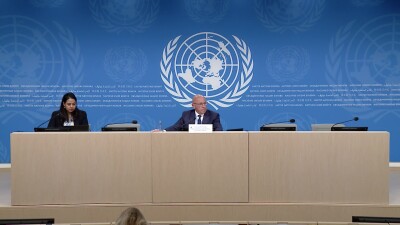
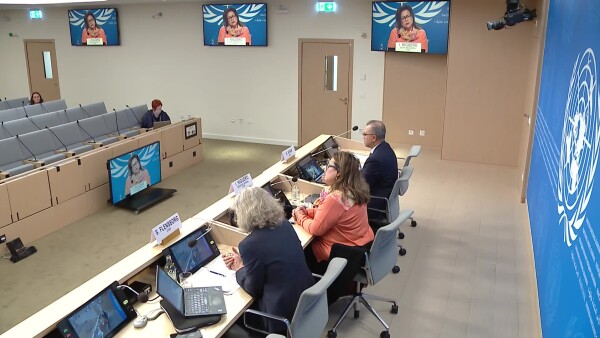
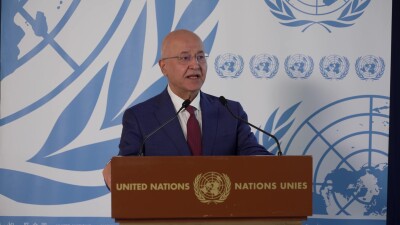
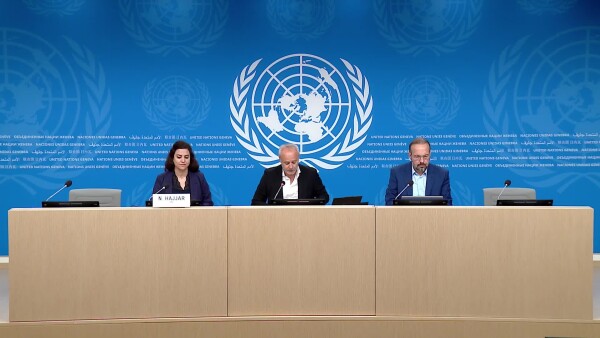
2. Wide shot: speakers at the podium in the press room
3. SOUNDBITE (English) – Tom Andrews, UN Special Rapporteur on the situation of human rights in Myanmar: “There has been a fivefold increase in attacks, aerial attacks, on civilians. And the reason for this is, is that for them it's dangerous with their troops to move around on the ground. So instead, they're taking the aircraft that they've been able to obtain from abroad and bomb villages, IDP centers, and kill innocent civilians.”
4. Medium shot: speaker at the podium filmed from behind during the press conference
5. SOUNDBITE (English) – Tom Andrews, UN Special Rapporteur on the situation of human rights in Myanmar: “The community that is impacted the most is the Rohingya community. The Rohingya are now being bombarded like other areas of the country. Their villages are being bombarded by heavy artillery and by airstrikes. But unlike other areas of the country, they are not allowed to move to safety.”
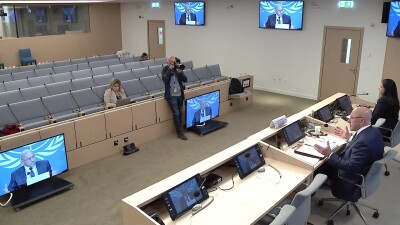
6. Wide shot: Journalists in press room with speaker at the podium
7. SOUNDBITE (English) – Tom Andrews, UN Special Rapporteur on the situation of human rights in Myanmar: “Imagine if you are a Rohingya family with a young person or a young young Rohingya man being forced to join the very military that is barraging your villages with these aerial attacks, the very military that committed genocide against your community, sending hundreds of thousands of Rohingya over the border into Bangladesh. I can't imagine anything as horrific is that kind of situation faced by the Rohingya.”
8. Close up, photographer taking photos
9. SOUNDBITE (English) - Tom Andrews, UN Special Rapporteur on the situation of human rights in Myanmar: “The problem that we have right now is that humanitarian aid is not going to the areas that need it most. And I'm talking about the conflict areas, the areas outside of SAK administered areas of the country. This is the fastest growing part of the country. That is where most of the people, growing numbers of people, in the country that need humanitarian aid are. There are 18.6 million people who are in need of humanitarian aid.”
10. Medium shot: Journalists in press room
11. SOUNDBITE (English) - Tom Andrews, UN Special Rapporteur on the situation of human rights in Myanmar: “We need to take away the money that the junta requires in order to continue its reign of terror. And that means sanctions, coordinated, focused, targeted sanctions, same with weapons.”
12. Medium shot: Journalist typing
13. SOUNDBITE (English) - Tom Andrews, UN Special Rapporteur on the situation of human rights in Myanmar: “It is unbelievable, we're talking about tens of thousands of people, 120,000 victims, human trafficking victims, sent into these centers to operate these scams, these international scams. And they're reaching the entire world. Victims, giving up billions of dollars, billions of dollars that are being used to fuel these atrocities as a result of these scam centers.”
14. Wide shot: speakers at the podium with journalists in the press room
15. Close up, journalist typing
16. Medium shot, zoom operator behind window
Similar Stories

1
1
1
Edited News | OCHA , UNICEF , WFP
Aid agencies warned on Friday of the fast-developing humanitarian emergency inside Taiz City in Yemen, which has been encircled by de facto Houthi forces fighting government troops along the country’s west coast.
1
1
1
Press Conferences | UN WOMEN , WFP , WHO
UN WOMEN: Sudan Women and girls one year after the fall of El Fasher; increasing drone attacks across the country; WFP: DRC - Ebola spreads to eighth DRC province as WFP delivers food, builds treatment centres and keeps supplies moving; WHO - Update on Ebola (Bundibugyo Virus Disease)
1
12
1
1
Press Conferences , Images | UNOG
Closing Press Conference following the Sixth Consultative Meeting on Enhancing Coordination of Peace Initiatives and Efforts in Sudan

2
17
1
2
Edited News , Press Conferences , Images | OCHA , WMO
Two UN agencies teamed up on Wednesday to issue an appeal for immediate assistance to help communities already being impacted by the strongest El Niño on record.

3
16
2
2
Edited News , B-roll , Conferences , Images | UNITED NATIONS , UNOG
Sixth Consultative Meeting on Enhancing Coordination of Peace Initiatives and Efforts for Sudan
1
1
1
Press Conferences | CITES
Wildlife trade and conservation policy discussions at the 81st meeting of the CITES Standing Committee (SC81)

1
1
1
Edited News | UNICEF , WHO , UNHCR
Yemen war continues to force families from homes amid hunger and disease
More than 250,000 people have now fled renewed fighting in Yemen, the UN said on Tuesday, citing particular concern for those sheltering in the southwestern city of Taiz and the wider governorate, where access is “essentially blocked”.
1
1
1
Press Conferences | UNHCR , UNCTAD , WMO , OCHA , UNICEF , WHO
UNHCR Hungary’s 1956 Refugee Crisis: 70 Years On, UNCTAD World Investment Forum 2026, Doha, WMO Greenhouse Gas Bulletin and Climate Update for COP31, OCHA Afghanistan: Malnutrition, Girls’ Education and Recovery, UNICEF Yemen: Child Malnutrition and Unsafe Water in Taiz, WHO Inequalities in Noncommunicable Diseases and Risk Factors
1
1
1
Press Conferences | UNHCR
End of UNHCR's 77th Annual Executive Committee (ExCom) meeting week

1
1
1
Edited News | UNICEF
A little over one year since a ceasefire agreement was announced between Hamas fighters and Israel, more than 340 children have been reported killed and hundreds more injured, the UN Children’s Fund, UNICEF, said on Friday.
1
1
1
Press Conferences | UNICEF , IOM , UNHCR
UN Special Assistant to the Personal Envoy Office (SUDAN): Peace Initiatives and Efforts in Sudan; UNICEF: Dire situation of children in Gaza; IOM: Damaged Homes and Energy Attacks Risk Displacing Ukrainians for this winter; UNHCR: update on EXCOM week

1
1
1
Press Conferences | IOM , UNDRR
UN stresses importance of household preparedness for disaster risk reduction.