

The United Nations Office at Geneva
Multimedia Newsroom
Yemen aid lifeline nears breaking point as UN food agency appeals for $870 million
More than $870 million is needed to sustain lifesaving aid to war-torn Yemen over the next six months, the World Food Programme (WFP) said on Tuesday, as UN humanitarians also warned that some projects were nearing “breaking point”.
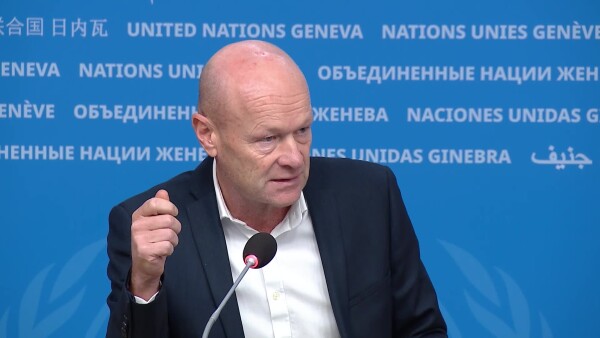
“WFP needs $870 million to continue to deliver life-saving assistance to millions in Yemen in need of humanitarian assistance to survive. This is from June to December,” said Elisabeth Byrs, WFP senior spokesperson, speaking via videoconference.
The appeal comes after more than five years of fighting in the Arabian peninsula country, between the Government of Abd Rabbu Mansour Hadi now based in the south – supported by a Saudi-led international coalition - and the mainly Houthi-led opposition, which occupies the capital, Sana’a, in the north.
According to the UN refugee agency, UNHCR, four in five Yemenis need humanitarian assistance.
Yemen was already one of the poorest countries in the world before violence escalated in March 2015, and today millions of people lack access to sufficient food, fuel and medicine, almost all of which is imported.
The WFP spokesperson noted the UN agency’s particular concern for “over 20 million Yemenis are food insecure, of which nearly 10 million are acutely food insecure”.
Ms. Byrs added that the agency “expects coronavirus to push many more children in Yemen into acute malnutrition. Over two million children in Yemen are already acutely malnourished, and it’s a figure that WFP fears will increase.”
« Nous sommes particulièrement inquiets pour les 20 millions de Yemenis qui souffrent d’insécurité alimentaire et dont 10 millions d’entre eux de ces 20 millions sont - souffrent - d’insécurite alimentaire sévère. Il y a egalement des enfants qui posent problème, il y avait deux millions d’enfants au Yemen qui souffrent de malnutrition aïgue. Nous pensons que ce chiffre va malheureusement continuer d’augmenter. »
As of Monday evening, the World Health Organization (WHO) reported nearly 50 confirmed deaths from COVID-19 in Yemen.
But there are widespread concerns that the situation is much worse.
It is also widely feared that with around half of the country’s health facilities shut, Yemen lacks the means to prevent this latest threat to an already weakened population that faces the ever-present threat of cholera and ongoing conflict that has displaced more than four million people.
UNHCR, the UN refugee agency, echoed concerns that the aid situation in Yemen threatens to spin out of control, describing it as the world’s worst humanitarian crisis with unparalleled protection concerns.
“We’re seeing a growing number of families resorting to harmful coping mechanisms, such as begging, child labour and marrying of children to survive. And we’re reaching a potential breaking point in our programmes,” said Charlie Yaxley, UNHCR spokesperson, via videoconference.
Among the projects most at risk are the agency’s cash-assistance programmes for internally displaced and impoverished host communities.
Up to one million people will be exposed if the projects stop unless funding is found, Mr. Yaxley noted.
Under the scheme, each eligible family receives around $170 in instalments over six months to help pay for rent, buy food, extra clothes and fuel, along with medicine and other urgent concerns.
The development comes ahead of a UN pledging conference for Yemen planned for next Tuesday.
- Medium-wide shot: exterior, flag alley, Palais des Nations, United Nations Geneva, sunny, blustery.
- SOUNDBITE (EN) - Elisabeth Byrs, Senior Spokesperson for the World Food Programme (WFP): “WFP needs $870 million to continue to deliver life-saving assistance to millions in Yemen in need of humanitarian assistance to survive. This is from June to December.”
- Wide shot: UN Geneva main entrance, elevated view of front gates.
- SOUNDBITE (FR) - Elisabeth Byrs, Senior Spokesperson for the World Food Programme (WFP): « Nous sommes particulièrement inquiets pour les 20 millions de Yemenis qui souffrent d’insécurité alimentaire et dont 10 millions d’entre eux de ces 20 millions sont - souffrent - d’insécurite alimentaire sévère. Il y a egalement des enfants qui posent problème, il y avait deux millions d’enfants au Yemen qui souffrent de malnutrition aïgue. Nous pensons que ce chiffre va malheureusement continuer d’augmenter. »
- Medium shot: UN Geneva flag alley.
- SOUNDBITE (EN) - Elisabeth Byrs, Senior Spokesperson for the World Food Programme (WFP): “Over 20 million Yemenis are food insecure, of which nearly 10 million are acutely food insecure. WFP expects coronavirus to push many more children in Yemen into acute malnutrition. Over two million children in Yemen are already acutely malnourished, and it’s a figure that WFP fears will increase.”
- Medium shot: UN Geneva pedestrian entrance and flag alley, viewed from the Place des Nations, Geneva.
- SOUNDBITE (EN) - Charlie Yaxley, spokesperson, UN Refugee Agency (UNHCR): “We’re seeing a growing number of families resorting to harmful coping mechanisms, such as begging, child labour and marrying of children to survive. And we’re reaching a potential breaking point in our programmes.”
- Wide shot, UN Geneva, UN flag flying.

Similar Stories
1
1
1
Edited News | OCHA , UNICEF , WFP
Aid agencies warned on Friday of the fast-developing humanitarian emergency inside Taiz City in Yemen, which has been encircled by de facto Houthi forces fighting government troops along the country’s west coast.

2
17
1
2
Edited News , Press Conferences , Images | OCHA , WMO
Two UN agencies teamed up on Wednesday to issue an appeal for immediate assistance to help communities already being impacted by the strongest El Niño on record.
3
16
2
2
Edited News , B-roll , Conferences , Images | UNITED NATIONS , UNOG
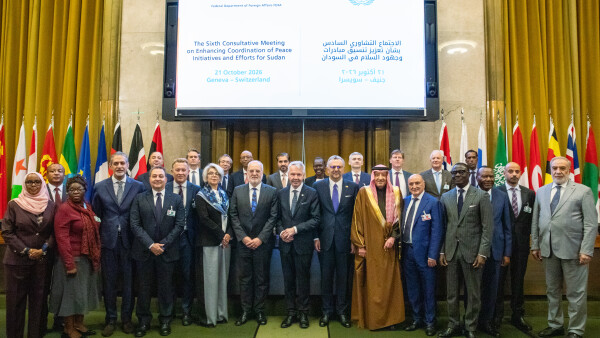
Sixth Consultative Meeting on Enhancing Coordination of Peace Initiatives and Efforts for Sudan
1
1
1
Edited News | UNICEF , WHO , UNHCR
Yemen war continues to force families from homes amid hunger and disease
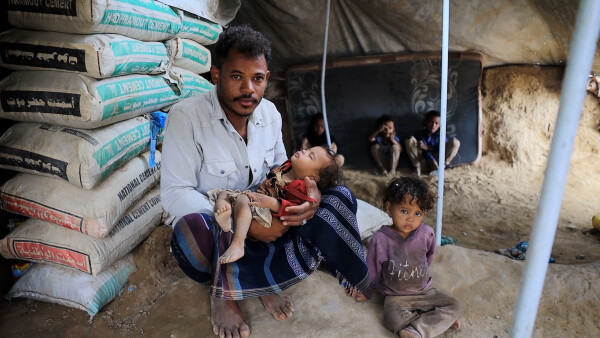
More than 250,000 people have now fled renewed fighting in Yemen, the UN said on Tuesday, citing particular concern for those sheltering in the southwestern city of Taiz and the wider governorate, where access is “essentially blocked”.

1
1
1
Edited News | UNICEF
A little over one year since a ceasefire agreement was announced between Hamas fighters and Israel, more than 340 children have been reported killed and hundreds more injured, the UN Children’s Fund, UNICEF, said on Friday.

1
1
1
Edited News | UNICEF , IFRC
Six weeks after Nepal’s deadly flooding disaster, communities are still struggling to rebuild their lives, but they will need sustained help as global warming increases the risk of another Himalayan catastrophe, the UN Children’s Fund (UNICEF) said on Friday.

1
1
1
Edited News | WHO
In suspected Russia plague death, testing and monitoring underway – WHO
The death of a lab worker in Russia’s Siberia region has sparked concerns about plague being the cause, the UN World Health Organization (WHO) said on Tuesday, adding that it was following the situation closely.

1
1
Edited News | OHCHR , UNOG
UN Human Rights Chief Volker Türk on Friday provided and oral update to the 63rd session of the Human rights Council on Ukraine.

1
1
1
Edited News | OHCHR , UNOG
UN Human Rights Chief Volker Türk on Friday provided and oral update to the 63rd session of the Human rights Council on the human rights situation in Haiti.

1
1
1
Edited News | WHO
Repeated delays in bringing lifesaving medicines, prosthetics and more from Israel into Gaza risk having devastating consequences on Palestinians who urgently need them in the wartorn enclave, the UN World Health Organization (WHO) said on Friday. “A truck full of non-priority supplies or the right supplies arriving too late, doesn't save lives. That's the question that actually matters," said Dr Reinhilde Van De Weerdt, WHO Representative in the OPT.

1
1
1
Edited News | WHO
DRC: Early access to care and oxygen decisive for Ebola patients’ survival – WHO
In the Democratic Republic of the Congo (DRC), health workers fighting the country’s largest-ever Ebola outbreak are struggling to overcome critical challenges to patient care, the UN World Health Organization (WHO) warned on Tuesday.

1
1
1
Edited News | OCHA , UN
Civilians in Iran are continuing to feel the consequences of months of conflict and military escalation, the UN’s top official in the country has said, as loss of life, damage to civilian infrastructure and mounting economic pressures leave many facing continued uncertainty.