

The United Nations Office at Geneva
Multimedia Newsroom
Edited News | UNICEF
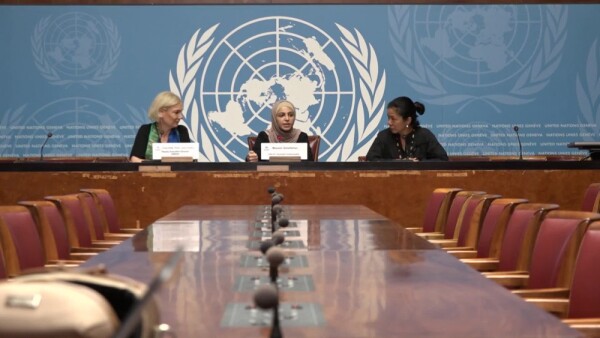
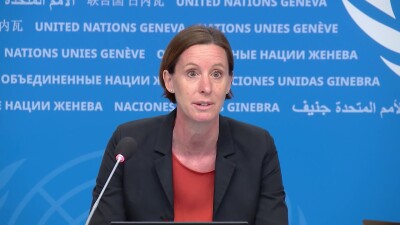
UNICEF press conference: Education Alert West And Central Africa - Muzoon Almellehan, UNICEF Goodwill Ambassador
In a new report detailing threats of violence against schools across the region, the UN agency warned that a generation of children risks being denied the right to learn.
“Nearly two million children are out of school due to conflict, so it is not an easy number,” UNICEF Goodwill Ambassador, Muzoon Almellehan, told journalists in Geneva. “It is important to highlight those challenges, to highlight the struggle of those people. They need us, they need our attention.”
Data gathered by UNICEF indicated that up to June this year, 9,272 schools have been closed in Burkina Faso, Cameroon, Chad, Central African Republic, the Democratic Republic of the Congo, Mali, Niger and Nigeria as a result of insecurity - three times the number at the end of 2017.
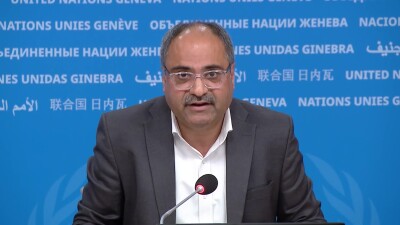
“Schools are being shut down,” said UNICEF Deputy Executive Director, Charlotte Petri Gornitzka. “Over the past two years, the number of schools that have been shut down has tripled; over 9,000 schools due to the insecurity have been attacked.”
The UNICEF report notes how spreading insecurity across north-west and south-west Cameroon has left more than 4,400 schools forcibly closed. In Burkina Faso, more than 2,000 schools are closed, along with more than 900 in Mali, owing to increasing violence in both countries.
In the central Sahel region, moreover, Burkina Faso, Mali and Niger have witnessed a six-fold increase in school closures owing to attacks and threats of violence in just over two years, from 512 in April 2017, to more than 3,000 by June this year.
School closures in the four countries affected by crisis in the Lake Chad Basin – Cameroon, Chad, Niger and Nigeria – remained at around 1,000 between the end of 2017 and June 2019.
Just back from visiting a camp for people displaced by violence in central Mali, Almellehan insisted in Geneva that for many people, herself included, education was vitally important in giving children hope for a better future.
“I had to flee my homeland in Syria in 2013 and I also had to live in refugee camps,” she explained. “It wasn’t easy for me and also I can feel like those children who can’t go to school, because education is something really, really important to me, myself.”
One direct result of children not getting an education is that they are more vulnerable to recruitment by extremists or abuse at their hands, including forced marriage, the UNICEF Goodwill Ambassador insisted.
“When a child is not at a school, especially if the child suffers from a very bad economic situation, when they are in poverty, when they don’t have enough awareness, all of that can affect that child and can lead that child to being exploited easily,” she said.
On a wider level, the lack of schooling “is casting a foreboding shadow upon children”, their families, their communities and society at large,” UNICEF said in a statement, noting that more than 40 million six to 14-year-olds are already missing out on school in Central and West Africa.
The agency is working with education authorities and communities to support alternative learning opportunities including community learning centres, radio school programmes, technology for teaching and learning, and faith-based learning initiatives. It is also providing tools for teachers who work in dangerous locations, and psychosocial support and care for schoolchildren emotionally scarred by violence.
“Now more than ever, governments must reaffirm their commitment to education and protect spending on education for their youngest citizens,” the UNICEF report insists. “Now is the time for renewed efforts to make sure the potential of a generation of young people is not wasted,” it emphasized, highlighting a funding gap of 72 per cent of the $221 million required for educational programmes across seven countries in the region.
1. Exterior shot, UN Geneva flag alley.
2. Wide shot, press room
3. Wide shot, speakers.
4. SOUNDBITE (English) Muzoon Almellehan, UNICEF Goodwill Ambassador: “Nearly two million children are out of school due to conflict, so it is not an easy number, it is important to highlight those challenges, to highlight the struggle of those people. They need us, they need our attention.”
5. Close up, journalists writing
6. SOUNDBITE (English) Charlotte Petri Gornitzka, Deputy Executive Director, UNICEF:
“Schools are being shut down. Over the past two years, the number of schools that have been shut down has tripled; over 9,000 schools due to the insecurity have been attacked.”
7. Med shot, podium
8. SOUNDBITE (English) Muzoon Almellehan, UNICEF Goodwill Ambassador:
“I had to flee my homeland in Syria in 2013 and I also had to live in refugee camps. It wasn’t easy for me and also I can feel like those children who can’t go to school, because education is something really, really important to me, myself.”
9. Close up, journalist
10. SOUNDBITE (English) Muzoon Almellehan, UNICEF Goodwill Ambassador:
“When a child is not at a school, especially if the child suffers from a very bad economic situation, when they are in poverty, when they don’t have enough awareness, all of that can affect that child and can lead that child to being exploited easily.”
11. Close up, journalist.
FILE – UNICEF - CENTRAL MALI
12. Wide shot, damaged building
13. Med shot, girl dancing classmates clapping
14. Med shot, young woman with baby by river, reading a book.
15. Med shot, young woman with baby in arms
16. Close up, handwriting.
17. Close up, classroom pupil writing
18. Wide shot: teacher addressing full classroom, students in background.
19. Med shot, pupil raises hand and stands, speaks.
20. Wide shot, teacher holds class under a tree
21. Med shot, teacher bends down to turn on radio.
22. Close up, hand moves from radio set on ground
23. Med shot, pupil reading
24. Med shot, pupil begins to write in exercise book
In a new report detailing threats of violence against schools across the region, the UN agency warned that a generation of children risks being denied the right to learn.
“Nearly two million children are out of school due to conflict, so it is not an easy number,” UNICEF Goodwill Ambassador, Muzoon Almellehan, told journalists in Geneva. “It is important to highlight those challenges, to highlight the struggle of those people. They need us, they need our attention.”
Data gathered by UNICEF indicated that up to June this year, 9,272 schools have been closed in Burkina Faso, Cameroon, Chad, Central African Republic, the Democratic Republic of the Congo, Mali, Niger and Nigeria as a result of insecurity - three times the number at the end of 2017.
“Schools are being shut down,” said UNICEF Deputy Executive Director, Charlotte Petri Gornitzka. “Over the past two years, the number of schools that have been shut down has tripled; over 9,000 schools due to the insecurity have been attacked.”
The UNICEF report notes how spreading insecurity across north-west and south-west Cameroon has left more than 4,400 schools forcibly closed. In Burkina Faso, more than 2,000 schools are closed, along with more than 900 in Mali, owing to increasing violence in both countries.
In the central Sahel region, moreover, Burkina Faso, Mali and Niger have witnessed a six-fold increase in school closures owing to attacks and threats of violence in just over two years, from 512 in April 2017, to more than 3,000 by June this year.
School closures in the four countries affected by crisis in the Lake Chad Basin – Cameroon, Chad, Niger and Nigeria – remained at around 1,000 between the end of 2017 and June 2019.
Just back from visiting a camp for people displaced by violence in central Mali, Almellehan insisted in Geneva that for many people, herself included, education was vitally important in giving children hope for a better future.
“I had to flee my homeland in Syria in 2013 and I also had to live in refugee camps,” she explained. “It wasn’t easy for me and also I can feel like those children who can’t go to school, because education is something really, really important to me, myself.”
One direct result of children not getting an education is that they are more vulnerable to recruitment by extremists or abuse at their hands, including forced marriage, the UNICEF Goodwill Ambassador insisted.
“When a child is not at a school, especially if the child suffers from a very bad economic situation, when they are in poverty, when they don’t have enough awareness, all of that can affect that child and can lead that child to being exploited easily,” she said.
On a wider level, the lack of schooling “is casting a foreboding shadow upon children”, their families, their communities and society at large,” UNICEF said in a statement, noting that more than 40 million six to 14-year-olds are already missing out on school in Central and West Africa.
The agency is working with education authorities and communities to support alternative learning opportunities including community learning centres, radio school programmes, technology for teaching and learning, and faith-based learning initiatives. It is also providing tools for teachers who work in dangerous locations, and psychosocial support and care for schoolchildren emotionally scarred by violence.
“Now more than ever, governments must reaffirm their commitment to education and protect spending on education for their youngest citizens,” the UNICEF report insists. “Now is the time for renewed efforts to make sure the potential of a generation of young people is not wasted,” it emphasized, highlighting a funding gap of 72 per cent of the $221 million required for educational programmes across seven countries in the region.
Similar Stories
1
1
1
Edited News | UNMAS
Demining experts from around the world have been sharing their collective shock at the widespread and growing threat from unexploded ordnance, the new head of the UN Mine Action Service (UNMAS) said on Wednesday.
1
1
1
Edited News | OHCHR , UNOG
The UN Human Rights Office in Syria conducted a 5-day visit to the northeast of the country where they received accounts of human rights violations and abuses.
1
1
1
Edited News | UNICEF
Sudan: ‘History repeating itself’ for Darfur’s children - UNICEF
Mass atrocities in Sudan’s Darfur 20 years ago reverberated as far as Hollywood, but today, a new generation of children faces attacks, hunger and displacement in an emergency largely ignored by the outside world, the UN Children’s Fund (UNICEF) warned on Tuesday.
1
1
Edited News | WHO , UNMAS
Desperate and dangerous conditions in Gaza continue to hamper recovery efforts for the wartorn enclave's people, the UN health agency said on Friday, while demining experts warned that they’ve “barely scratched the surface” in assessing the level of contamination of unexploded ordnance.
2
1
2
Press Conferences , Edited News
The continued support of UN Member States to Lebanon will be “indispensable” to boost the country’s national armed forces and provide humanitarian assistance with more than one million people still uprooted by the Middle East war, the UN's peacekeeping chief said on Wednesday.
2
1
2
Press Conferences , Edited News | UNECE
Middle East war: After oil and gas shortages, concerns grow over critical minerals crunch
The shipping crisis in the Strait of Hormuz caused by war in the Middle East has exposed a new threat: a looming shortage of strategic minerals needed to drive economies all over the world and a race by countries to obtain them.
1
1
1
Edited News | IOM
Millions of desperate Sudanese return home amid dire conditions as war rages – IOM
Three years into the devastating conflict in Sudan, nearly four million displaced people have returned to their places of origin across the country, only to face “another struggle for survival”, the UN International Organization for Migration (IOM) said on Tuesday.

1
1
1
Edited News | UNESCO
UNESCO protects cultural sites in war-torn Middle East, confirming damage to key heritage.
1
1
1
Edited News | UN WOMEN
The war in Gaza has inflicted a far higher toll on women and girls than in previous conflicts in the Palestinian enclave, with more than 38,000 killed by Israeli air bombardment and land military operations since Hamas-led terror attacks in Israel sparked the war in October 2023, UN Women said on Friday.
1
1
1
Edited News | UNHCR
In 2025, nearly 900 Rohingya refugees were reported missing or dead in the Andaman Sea and Bay of Bengal, making it the deadliest year on record in South and Southeast Asia, the UN refugee agency, UNHCR, said on Friday.
1
1
1
Edited News | UNFPA , IFRC
Lebanon faces escalating violence, with new mothers uncertain of safety amid ongoing crises.
1
1
1
Edited News | FAO , UNHCR , WHO
Sudan: 14 million displaced; hunger and attacks on health continue as war enters fourth year
As Sudan approaches the third anniversary of a brutal civil war, millions remain displaced and hungry while the health system lies in ruins, with no end to the violence in sight, UN agencies said on Friday.