

The United Nations Office at Geneva
Multimedia Newsroom
Edited News , Press Conferences | WHO
Ukraine: 2nd full winter under war and healthcare - WHO
Even if the war ended now, health needs of millions of Ukrainians would be high and increasing: WHO
As the war in Ukraine enters its second full winter, the UN health agency warned that the coming months risked being brutally cold and long for vulnerable Ukrainians.
“We see the increasing disease burden, so even if the war was to end today, the health needs of millions of people across the country would be high and increasing,” Dr Jarno Habicht from the World Health Organization (WHO) told reporters in Geneva.
Amid the ongoing Ukraine counter-offensive in response to the full-scale Russian invasion on 24 February 2022, the campaign has reportedly become one of only incremental gains.
Speaking from Odessa, the WHO Representative in Ukraine highlighted the high level of disruption to the health system.
More than 2,400 verified attacks have been carried out against health facilities since Russia’s so-called special military operation, resulting in many civilian casualties, according to WHO.
This has left many health facilities only partly functional in the east and south of the country where needs are highest.
Among them, mental health illness affects more than 10 million people. “It can vary from simple stress, anxiety to the other high-level needs for which it is necessary to turn to primary care and hospitals,” Dr. Habicht said. “What we have been doing is to ensure that the training materials are available for people, like the (online) self-help plus tools,” the WHO official explained.
More than 55,000 primary health care workers are trained to deal with mental health issues but the needs will be long-lasting for many generations, he said.
Children and the elderly are suffering particularly and struggling as winter arrives and amid ongoing fighting. Since 24 February 2022, WHO has delivered more than 4,000 metric tons of life-saving medical supplies to Ukraine, including power generators, ambulances, oxygen and medicines.
It is envisaged that the long list of requirements will be sustained next year at the same level.
The UN health agency and partners evaluate that 7.8 million people will need humanitarian support in 2024. Of this number, the humanitarian community aims to target 3.8 million of the most vulnerable. “This is something where we need to put all our efforts to reach to all those civilians,” stressed Dr. Jarno Habicht.
On a more positive note, the WHO official highlighted that Ukraine’s public health system continues to function, notably in battling the polio outbreak successfully in 2023.
Ukraine has also adopted a new public health law to improve resilience, along with boosted community surveillance for infections, ensuring that healthcare specialists address all risk factors including non-communicable diseases.
The public health community also sees the European Union accession process as an opportunity to transform Ukraine’s care infrastructure further, Dr. Habicht insisted. “We have more harmonized disease surveillance together within EU Member States, and that's very important for public health and also information exchange.”
Accession to the EU would also harmonize medical education for nurses and doctors, as well as standards for water sanitation, the WHO official continued. Nevertheless, these changes will take time as the EU only agreed on 14 December to move forward with membership talks.
Ends
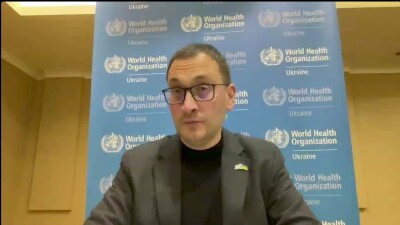
Speaker: Dr Jarno Habicht, WHO Representative in Ukraine, speaking from Odessa, Ukraine.
TRT: 01’49”
SOURCE: UNTV CH
LANGUAGE: ENGLISH
ASPECT RATIO: 16:9
DATELINE: 19 Dec. 2023 - GENEVA, SWITZERLAND
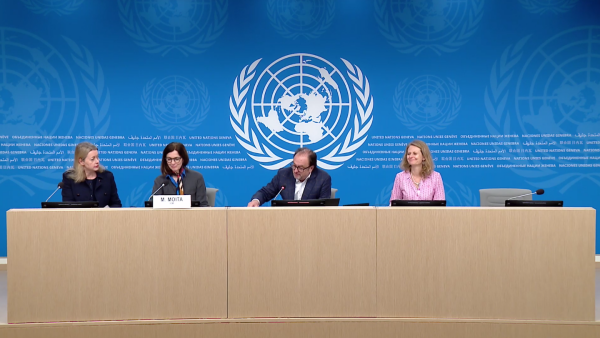
Geneva WHO Press Conference at UNOG
SHOTLIST
- Wide shot: UN flag alley UN Geneva.
- Cutaway: wide shot, press room, UN Geneva.
- SOUNDBITE (ENGLISH) Dr Jarno Habicht, WHO Representative in Ukraine: “We see the increasing disease burden. So, even if the war would end today, the health needs of people, millions of people across the whole Ukraine, will be high and increasing.”
- Cutaway: wide shot, press room, UN Geneva.
- SOUNDBITE (ENGLISH) Dr Jarno Habicht, WHO Representative in Ukraine: “We have more than 10 million people with mental health needs. It can vary from simple stress, anxiety to the other high-level needs that you need to turn to the primary care and hospitals. What we have been doing is to ensure that the training materials are available for people like the self-help plus tools.”
- Cutaway: close-up shot of journalist, UN Geneva.
- SOUNDBTE (ENGLISH) Dr Jarno Habicht, WHO Representative in Ukraine: “We have evaluated that people needs next year, in 2024, account for 7.8 million people. And we, as a humanitarian community working in health and with WHO coordination, are targeting 3.8 million people. And this is something where we need to put all of our efforts to reach to all of those civilians, many of those who are elderly and children.”
- Cutaway: wide shot, press room with journalists, UN Geneva.
- SOUNDBITE (ENGLISH) Dr Jarno Habicht, WHO Representative in Ukraine: “We have more harmonized disease surveillance together within EU member states, and that's very important for public health and also information exchange.”
- Various shots of press conference room, UN Geneva.
Similar Stories

1
1
1
Edited News | OCHA , UNICEF , WFP
Aid agencies warned on Friday of the fast-developing humanitarian emergency inside Taiz City in Yemen, which has been encircled by de facto Houthi forces fighting government troops along the country’s west coast.
1
1
1
Press Conferences | UN WOMEN , WFP , WHO
UN WOMEN: Sudan Women and girls one year after the fall of El Fasher; increasing drone attacks across the country; WFP: DRC - Ebola spreads to eighth DRC province as WFP delivers food, builds treatment centres and keeps supplies moving; WHO - Update on Ebola (Bundibugyo Virus Disease)
1
12
1
1
Press Conferences , Images | UNOG
Closing Press Conference following the Sixth Consultative Meeting on Enhancing Coordination of Peace Initiatives and Efforts in Sudan

2
17
1
2
Edited News , Press Conferences , Images | OCHA , WMO
Two UN agencies teamed up on Wednesday to issue an appeal for immediate assistance to help communities already being impacted by the strongest El Niño on record.

3
16
2
2
Edited News , B-roll , Conferences , Images | UNITED NATIONS , UNOG
Sixth Consultative Meeting on Enhancing Coordination of Peace Initiatives and Efforts for Sudan
1
1
1
Press Conferences | CITES
Wildlife trade and conservation policy discussions at the 81st meeting of the CITES Standing Committee (SC81)

1
1
1
Edited News | UNICEF , WHO , UNHCR
Yemen war continues to force families from homes amid hunger and disease
More than 250,000 people have now fled renewed fighting in Yemen, the UN said on Tuesday, citing particular concern for those sheltering in the southwestern city of Taiz and the wider governorate, where access is “essentially blocked”.
1
1
1
Press Conferences | UNHCR , UNCTAD , WMO , OCHA , UNICEF , WHO
UNHCR Hungary’s 1956 Refugee Crisis: 70 Years On, UNCTAD World Investment Forum 2026, Doha, WMO Greenhouse Gas Bulletin and Climate Update for COP31, OCHA Afghanistan: Malnutrition, Girls’ Education and Recovery, UNICEF Yemen: Child Malnutrition and Unsafe Water in Taiz, WHO Inequalities in Noncommunicable Diseases and Risk Factors
1
1
1
Press Conferences | UNHCR
End of UNHCR's 77th Annual Executive Committee (ExCom) meeting week

1
1
1
Edited News | UNICEF
A little over one year since a ceasefire agreement was announced between Hamas fighters and Israel, more than 340 children have been reported killed and hundreds more injured, the UN Children’s Fund, UNICEF, said on Friday.
1
1
1
Press Conferences | UNICEF , IOM , UNHCR
UN Special Assistant to the Personal Envoy Office (SUDAN): Peace Initiatives and Efforts in Sudan; UNICEF: Dire situation of children in Gaza; IOM: Damaged Homes and Energy Attacks Risk Displacing Ukrainians for this winter; UNHCR: update on EXCOM week
1
1
1
Press Conferences | IOM , UNDRR
UN stresses importance of household preparedness for disaster risk reduction.