

The United Nations Office at Geneva
Multimedia Newsroom
If there is a hell on earth today, its name is northern Gaza, UN humanitarians say
After reports that Israel has agreed to implement four-hour pauses in the fighting in areas of northern Gaza to allow civilians to move south, UN humanitarians on Friday reiterated urgent calls for a humanitarian ceasefire and unimpeded, secure access of aid deliveries into the Palestinian enclave.
“If there is a hell on earth today, its name is northern Gaza. People who remain there, the corners of their existence is death, deprivation, despair, displacement and, literally, darkness,” said Jens Laerke, spokesperson for the UN’s humanitarian affairs coordination office, OCHA. He added that “the entire” Gaza Strip had been plunged into darkness since 11 October, when the electricity grid was shut down and fuel was stopped from entering.
OCHA reported that hundreds of thousands of people remaining in the north continue to struggle to find the bare minimum of water and food to survive. All municipal water wells have shut down again due to the lack of fuel, halting the supply of water for domestic non-drinking uses.
An Naser Children’s Hospital in Gaza city was hit during an airstrike, reportedly killing three people and injuring dozens more.
“What do you tell your children in such a situation? It's almost unimaginable that the firework that they see in the sky is out to kill them, because that's what it looks like. So, of course, we advocate for a humanitarian pause, for a humanitarian ceasefire that covers the entirety of the of the Strip,” Mr. Laerke told reporters at the United Nations in Geneva.
OCHA reported that on Wednesday some 50,000 people fled areas to the north of Wadi Gaza, a valley that separates the northern from the southern part of Gaza, through a “corridor” opened by the Israeli military. Images showed people walking, pushing wheelchairs with elderly and displaced people, or using donkey karts. The development will only worsen the already massively overcrowded facilities of the UN Relief and Works Agency for Palestine Refugees in the Near East (UNRWA) whose facilities are already overwhelmed by the number of people seeking refuge from Israeli bombardments.
“We have heard that some facilities are at full-time capacities. Other facilities are at 10 times capacities. We hear stories of one toilet per 160 people, one shower per 700 people. These are just mind-boggling figures. And it gives you an idea of the day-to-day human challenges in terms of preserving people's human dignity,” Mr. Laerke said.
According to OCHA, prior to the current crisis, 500 trucks a day on average crossed into the enclave. Mr. Laerke noted that “yesterday, a total of 65 trucks carrying food, medicines, health supplies, bottled water, blankets and hygiene products, as well as seven ambulances crossed from Egypt into Gaza via the Rafah crossing. That brings the total number of trucks that have entered Gaza since the 21st of October to 821.”
Amid fresh reports on Friday morning that a yard at the Al Shifa Hospital in Gaza City, where thousands of displaced Palestinians were sheltering, was struck by bombardments, Dr. Margaret Harris, spokesperson for the UN World Health Agency (WHO) said that 20 out of a total of 36 hospitals in Gaza had been destroyed.
“We've lost 20 (hospitals), that means we've got 16 (remaining). But [they] are not functioning in the way you or I would recognize a hospital functioning,” said Dr. Harris. “They are managing to keep the bare minimum of services and receive people. But they are not being able to function where they do not have any of the adequate supplies. They do not have the anesthetic medications. They do not have the disinfectants, and they are massively, massively overcrowded.”
WHO said they are “desperately concerned” about the levels of infectious diseases. The WHO reported that they are seeing diarrhoea rates surging massively. “We normally see 2,000 cases per month. We're seeing over 22,000, cases and huge numbers of respiratory infections that still spread everywhere.”
In addition, WHO’s Dr. Harris reported that “we are seeing crush injuries, burns and yes, indeed, people have severe damage to their bones, having been under rubble, having been crushed.”
The WHO spokesperson reiterated that “once we have access, I'm sure orthopedic surgeons will be very, very welcome. But the critical thing, as I said, is we need safe access and a means to provide those teams in a way where they can truly support the health system and that the beleaguered doctors and nurses who are doing extra ordinary things under impossible conditions.”
-ends-
STORY: Humanitarian crisis in Gaza - OCHA - WHO
TRT: 3:54”
SOURCE: UNTV CH
LANGUAGE: ENGLISH
ASPECT RATIO: 16:9
DATELINE: 10 November 2023 - GENEVA, SWITZERLAND
SHOTLIST
- Exterior medium shot: UN building with UN flag, UN Geneva.
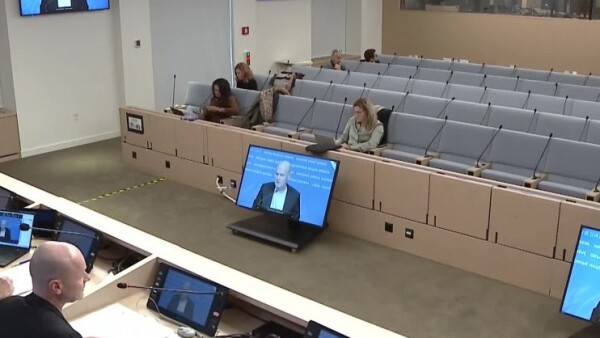
- Wide shot, press briefing room with journalists and screens, UN Geneva
- SOUNDBITE (ENGLISH) – Jens Laerke, OCHA spokesperson: “If there is a hell on earth today, its name is northern Gaza. People who remain there, the corners of their existence is death, deprivation, despair, displacement, and literally darkness. The entire Gaza Strip has been plunged into darkness since the 11th of October, when the electricity grid was shut down and fuel stopped entering.”
- Cutaway: Wide shot, press briefing room with spokesperson, journalists and screens, UN Geneva
- SOUNDBITE (ENGLISH) – Jens Laerke, OCHA spokesperson: “What do you tell your children in such a situation? It's almost unimaginable that the firework that they see in the sky is out to kill them, because that's what it looks like. So, of course, we advocate for a humanitarian pause, for a humanitarian cease fire that covers the entirety of the of the strip.”
- Cutaway: close up, technicians and cameraman listening
- SOUNDBITE (ENGLISH) – Jens Laerke, OCHA spokesperson: “It can only make it worse. We have heard that some facilities are at four time capacities. Other facilities are at ten times capacities. We hear stories of one toilet per 160 people, one shower per 700 people. These are just mind-boggling figures. And it gives you an idea of the day-to-day human challenges in terms of preserving people's human dignity.”
- Cutaway: Wide shot, press briefing room with journalists and screens, UN Geneva
- SOUNDBITE (ENGLISH) – Jens Laerke, OCHA spokesperson: “Yesterday, a total of 65 trucks carrying food, medicines, health supplies, bottled water, blankets and hygiene products, as well as seven ambulances crossed from Egypt into Gaza via the Rafah crossing. That brings the total number of trucks that have entered Gaza since the 21st of October to 821.”
- Cutaway: Wide shot, press briefing room with spokesperson, journalists and screens, UN Geneva
- SOUNDBITE (ENGLISH) – Margaret Harris, spokesperson for the World Health Organization (WHO): “36 hospitals overall. So, if we've lost 20, that means we've got 16. But it's not functioning in the way you or I would recognize a hospital functioning. Let's be realistic here. They are managing to keep the bare minimum of services and receive people. But they are not being able to function where they do not have any of the adequate supplies. They do not have the anesthetic medications. They do not have the disinfectants, and they are massively, massively overcrowded.”
- Cutaway: Wide shot, press briefing room with journalists, UN Geneva
- SOUNDBITE (ENGLISH) – Margaret Harris, spokesperson for the World Health Organization (WHO): “We are seeing crush injuries, burns and yes, indeed, people have severe damage to their bones, having been under rubble, having been crushed.”
- Cutaway: Wide shot, press briefing room with journalists and screens, UN Geneva
- SOUNDBITE (ENGLISH) – Margaret Harris, spokesperson for the World Health Organization (WHO): “Once we have access, I'm sure orthopedic surgeons will be very, very welcome. But the critical thing, as I said, is we need safe access and a means to provide those teams in a way where they can truly support the health system and that the beleaguered doctors and nurses who are doing extra ordinary things under impossible conditions.”
- Cutaway: close up, journalist listening, UN Geneva
- Cutaway: wide shot, press briefing room with journalists and screens, UN Geneva
- Cutaway: close up, journalist listening, UN Geneva
Similar Stories

1
1
1
Edited News | UNICEF
A little over one year since a ceasefire agreement was announced between Hamas fighters and Israel, more than 340 children have been reported killed and hundreds more injured, the UN Children’s Fund, UNICEF, said on Friday.

1
1
1
Edited News | UNICEF , IFRC
Six weeks after Nepal’s deadly flooding disaster, communities are still struggling to rebuild their lives, but they will need sustained help as global warming increases the risk of another Himalayan catastrophe, the UN Children’s Fund (UNICEF) said on Friday.

1
1
1
Edited News | WHO
In suspected Russia plague death, testing and monitoring underway – WHO
The death of a lab worker in Russia’s Siberia region has sparked concerns about plague being the cause, the UN World Health Organization (WHO) said on Tuesday, adding that it was following the situation closely.

1
1
Edited News | OHCHR , UNOG
UN Human Rights Chief Volker Türk on Friday provided and oral update to the 63rd session of the Human rights Council on Ukraine.

1
1
1
Edited News | OHCHR , UNOG
UN Human Rights Chief Volker Türk on Friday provided and oral update to the 63rd session of the Human rights Council on the human rights situation in Haiti.

1
1
1
Edited News | WHO
Repeated delays in bringing lifesaving medicines, prosthetics and more from Israel into Gaza risk having devastating consequences on Palestinians who urgently need them in the wartorn enclave, the UN World Health Organization (WHO) said on Friday. “A truck full of non-priority supplies or the right supplies arriving too late, doesn't save lives. That's the question that actually matters," said Dr Reinhilde Van De Weerdt, WHO Representative in the OPT.

1
1
1
Edited News | WHO
DRC: Early access to care and oxygen decisive for Ebola patients’ survival – WHO
In the Democratic Republic of the Congo (DRC), health workers fighting the country’s largest-ever Ebola outbreak are struggling to overcome critical challenges to patient care, the UN World Health Organization (WHO) warned on Tuesday.

1
1
1
Edited News | OCHA , UN
Civilians in Iran are continuing to feel the consequences of months of conflict and military escalation, the UN’s top official in the country has said, as loss of life, damage to civilian infrastructure and mounting economic pressures leave many facing continued uncertainty.
1
1
1
Edited News | WHO , UNICEF
Aid agencies in Yemen highlighted the growing hunger emergency sparked by renewed fighting between Houthi opposition forces and Government troops, after mobile health clinics reported that hundreds of children displaced by the violence are suffering from the most deadly form of malnutrition.
1
1
1
Edited News | UNHCR
Displacement on the rise in Yemen as fighting continues - UNHCR
As hostilities worsen in Yemen, more people have been fleeing their homes, further intensifying the humanitarian crisis within the region, the UN Refugee Agency (UNHCR) warned on Tuesday.
1
1
1
Edited News | IOM , OHCHR , UNFPA , UNOG , UNHCR , WHO
Yemen’s humanitarian crisis growing by the hour amid spike in displacement
Yemenis displaced by renewed fighting have described fleeing for their lives amid shelling and gunfire, aid agencies reported on Friday, while highlighting the dramatic increase in humanitarian needs in the country and in Djibouti, where thousands have sought shelter.
1
1
1
Edited News | OHCHR , UNOG
The UN Human Rights Office issued on Friday a report documenting a shocking pattern of sexual violence amid Russia’s full-scale armed attack on Ukraine.