

The United Nations Office at Geneva
Multimedia Newsroom
Humanitarian pause essential to help ease suffering of Gazans, says UN
As the crisis in Gaza continues to worsen amid intense Israeli bombardments and an ongoing ground operation, UN humanitarians reiterated on Friday their call for a humanitarian pause to be able to deliver urgently needed relief items throughout the enclave and evacuate those seriously wounded.
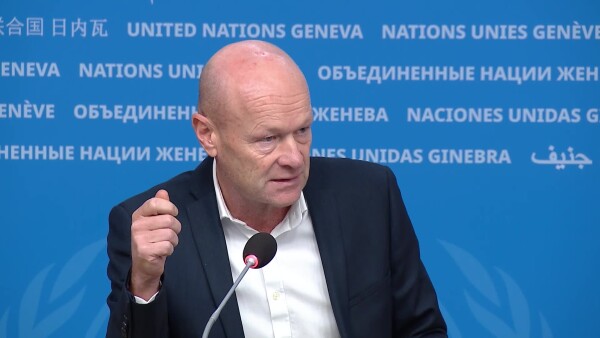
“The solution is a humanitarian pause, that's what we are suggesting. It's something that has been done in many other contexts,” said Jens Laerke, spokesperson for the UN Office for the Coordination of Humanitarian Affairs (OCHA) when briefing reporters in Geneva. “As OCHA, we have deconfliction mechanisms in place, we either have now or have had in the past: northwest Syria, Yemen, Afghanistan and many other places.”
OCHA reported on Friday that in Gaza, according to the Hamas-run Ministry of Health the death toll over the past 27 days has reached 9,061. Women and children make up 62 per cent of these victims. Some 1,400 people have been killed in Israel, the vast majority during the 7 October attacks by Hamas.
“At least 195 Palestinians were killed and about 800 injured in less than 24 hours between Tuesday, 31 October and Wednesday 1 November in two rounds of Israeli airstrikes on Jabaliya refugee camp, northern Gaza,” said OCHA’s Jens Laerke. Some 120 people were believed to be trapped under the rubble.
Nearly 700,000 internally displaced people are sheltering in 149 installations of the UN Relief and Works Agency for Palestine Refugees in the Near East (UNRWA) across the Gaza Strip, which have reached almost four times their intended capacity, OCHA said. In some shelters up to 240 people are living in classrooms of 40 to 60 square metres.
Since the start of the hostilities, nearly 50 UNRWA facilities have been damaged by the fighting. Providing humanitarian aid remains extremely challenging due to lack of fuel, ongoing bombardments and disruptions to communication networks.
For Christian Lindmeier, spokesperson for the UN health agency (WHO), “it's the women and the children, the innocent civilians that are losing here, and that's why we need to get this humanitarian access.” He pointed out that what is needed is “at least a humanitarian pause to bring in the supplies, to bring shelter, to evacuate the most desperately wounded.”
To ease this suffering, OCHA and its humanitarian partners will release on Monday an updated Flash Appeal for $1.2 billion to cover the cost of the needs of 2.7 million people - the entire population of Gaza and 500,000 people in the occupied West Bank.
The original appeal, launched 12 October, asked for $294 million to support nearly 1.3 million people and is 25 per cent funded so far.
While much attention has focused on the attacks inside Israel and the escalation of hostilities in Gaza since 7 October, the UN human rights office (OHCHR) on Friday expressed deep concern on Friday about the situation in the occupied West Bank, including East Jerusalem, “amid the increasing and multi-layered human rights violations of Palestinians occurring there.”
According to OHCHR, from 7 October to 2 November, 132 Palestinians, including 41 children, were killed in the West Bank – 124 by Israeli forces and eight by settlers. Two Israeli soldiers were also killed.
“Israeli forces have increasingly used military tactics and weapons in law enforcement operations, including an operation overnight involving air strikes on Jenin refugee camp,” said OHCHR’s spokesperson Liz Throssell. ”Law enforcement is governed by international human rights law, which prohibits the intentional use of lethal force except when strictly necessary to protect life.”
OHCHR informed that since 7 October, nearly 1,000 Palestinians from at least 15 herding communities have been forced from their homes because of the violence. In these circumstances, settler violence may amount to the forcible transfer of a population - "a grave breach of the Fourth Geneva Convention".
“Settler violence, which was already at record levels, has escalated dramatically, averaging seven attacks a day,” said Liz Throssell. She added that in more than a third of these attacks, firearms were used. “We have documented that, in many of these incidents, settlers were accompanied by members of the Israeli forces while the settlers were wearing uniforms and carrying army rifles. Along with the near total impunity for settler violence, we are concerned that armed settlers have been acting with the acquiescence and collaboration of Israeli forces and authorities.”
-ends-
STORY: Update crisis oPt/Israel – OCHA- WHO- OHCHR
TRT: 3:04”
SOURCE: UNTV CH
LANGUAGE: ENGLISH
ASPECT RATIO: 16:9
DATELINE: 3 November 2023 - GENEVA, SWITZERLAND
SHOTLIST
- Exterior medium shot: UN building with UN flag, UN Geneva.
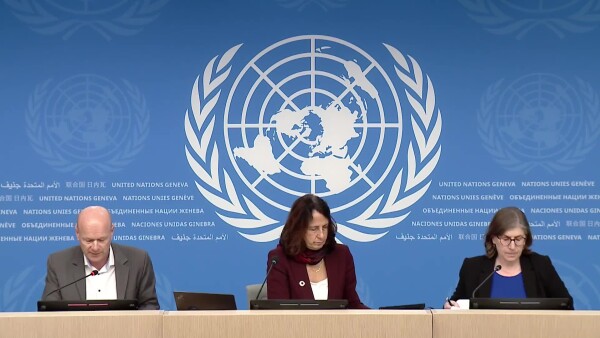
- Medium shot, press room with speakers at podium, UN Geneva.
- SOUNDBITE (ENGLISH) – Jens Laerke, spokesperson for the UN Office for the Coordination of Humanitarian Affairs (OCHA): “The solution is a humanitarian pause. That's what we are suggesting. It's not something new. It's something that has been done in many other contexts. We, as OCHA, have deconfliction mechanisms in places either have now or have had in the past: Northwest, Syria, Yemen, Afghanistan and many other places.”
- Cutaway: Wide shot, press room with camerawoman, UN Geneva.
- SOUNDBTE (ENGLISH) – Jens Laerke, spokesperson for the UN Office for the Coordination of Humanitarian Affairs (OCHA):“At least 195 Palestinians were killed and about 800 injured in less than 24 hours between Tuesday, 31 October and Wednesday, 1 November in two rounds of Israeli airstrikes on Jabaliya refugee camp, northern Gaza. And that is according to the Ministry of Health in Gaza. Some 120 people were believed to be trapped under the rubble.”
- Cutaway: Wide shot: press briefing room with journalists and screens, UN Geneva.
- SOUNDBITE (ENGLISH) – Christian Lindmeier, spokesperson for the World Health Organization (WHO): “It's the women and the children, the innocent civilians that are losing here. And that's why we need to get this humanitarian access. We need to get it now. And ideally, as Jens and others have pointed out, the cessation of hostilities, but at least a humanitarian pause to bring in the supplies, to bring shelter, to evacuate the most, the most desperately wounded and so on and so forth. Let's think about the victims.”
- Cutaway: Wide shot: press briefing room with speakers at podium
- SOUNDBITE (ENGLISH) – Liz Throssell, spokesperson for the UN Human Rights Office (OHCHR): “Israeli forces have increasingly used military tactics and weapons in law enforcement operations, including an operation overnight involving air strikes on Jenin refugee camp. Law enforcement is governed by international human rights law, which prohibits the intentional use of lethal force except when strictly necessary to protect life.”
- Cutaway: close up, journalist listening
- SOUNDBITE (ENGLISH) – Liz Throssell, spokesperson for the UN Human Rights Office (OHCHR): “Settler violence, which was already at record levels, has also escalated dramatically, averaging seven attacks a day. In more than a third of these attacks, firearms were used. We have documented that, in many of these incidents, settlers were accompanied by members of the Israeli forces while the settlers were wearing uniforms and carrying army rifles. Along with the near total impunity for settler violence, we are concerned that armed settlers have been acting with the acquiescence and collaboration of Israeli forces and authorities.”
- Cutaway: wide shot, speakers at podium and journalists in press room, UN Geneva
- Cutaway: medium shot, journalists in press room
- Cutaway: Cutaway: close up, journalist listening, UN Geneva
Similar Stories
1
1
1
Edited News | OCHA , UNICEF , WFP
Aid agencies warned on Friday of the fast-developing humanitarian emergency inside Taiz City in Yemen, which has been encircled by de facto Houthi forces fighting government troops along the country’s west coast.

2
17
1
2
Edited News , Press Conferences , Images | OCHA , WMO
Two UN agencies teamed up on Wednesday to issue an appeal for immediate assistance to help communities already being impacted by the strongest El Niño on record.
3
16
2
2
Edited News , B-roll , Conferences , Images | UNITED NATIONS , UNOG
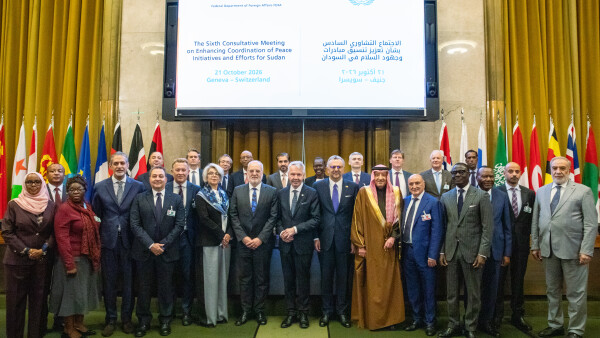
Sixth Consultative Meeting on Enhancing Coordination of Peace Initiatives and Efforts for Sudan

1
1
1
Edited News | UNICEF , WHO , UNHCR
Yemen war continues to force families from homes amid hunger and disease
More than 250,000 people have now fled renewed fighting in Yemen, the UN said on Tuesday, citing particular concern for those sheltering in the southwestern city of Taiz and the wider governorate, where access is “essentially blocked”.

1
1
1
Edited News | UNICEF
A little over one year since a ceasefire agreement was announced between Hamas fighters and Israel, more than 340 children have been reported killed and hundreds more injured, the UN Children’s Fund, UNICEF, said on Friday.

1
1
1
Edited News | UNICEF , IFRC
Six weeks after Nepal’s deadly flooding disaster, communities are still struggling to rebuild their lives, but they will need sustained help as global warming increases the risk of another Himalayan catastrophe, the UN Children’s Fund (UNICEF) said on Friday.

1
1
1
Edited News | WHO
In suspected Russia plague death, testing and monitoring underway – WHO
The death of a lab worker in Russia’s Siberia region has sparked concerns about plague being the cause, the UN World Health Organization (WHO) said on Tuesday, adding that it was following the situation closely.

1
1
Edited News | OHCHR , UNOG
UN Human Rights Chief Volker Türk on Friday provided and oral update to the 63rd session of the Human rights Council on Ukraine.

1
1
1
Edited News | OHCHR , UNOG
UN Human Rights Chief Volker Türk on Friday provided and oral update to the 63rd session of the Human rights Council on the human rights situation in Haiti.

1
1
1
Edited News | WHO
Repeated delays in bringing lifesaving medicines, prosthetics and more from Israel into Gaza risk having devastating consequences on Palestinians who urgently need them in the wartorn enclave, the UN World Health Organization (WHO) said on Friday. “A truck full of non-priority supplies or the right supplies arriving too late, doesn't save lives. That's the question that actually matters," said Dr Reinhilde Van De Weerdt, WHO Representative in the OPT.

1
1
1
Edited News | WHO
DRC: Early access to care and oxygen decisive for Ebola patients’ survival – WHO
In the Democratic Republic of the Congo (DRC), health workers fighting the country’s largest-ever Ebola outbreak are struggling to overcome critical challenges to patient care, the UN World Health Organization (WHO) warned on Tuesday.

1
1
1
Edited News | OCHA , UN
Civilians in Iran are continuing to feel the consequences of months of conflict and military escalation, the UN’s top official in the country has said, as loss of life, damage to civilian infrastructure and mounting economic pressures leave many facing continued uncertainty.