

The United Nations Office at Geneva
Multimedia Newsroom
Gaza: Parents now writing children's names on their arms to identify their remains, says OHCHR
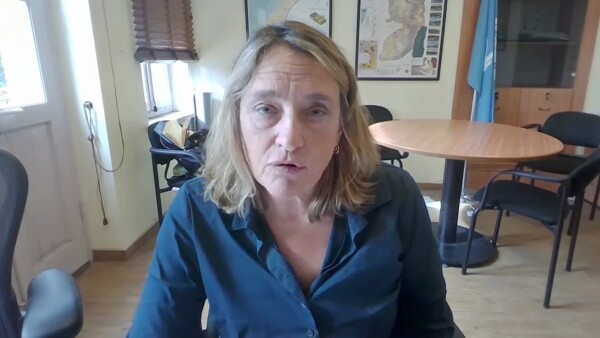
Amid intense negotiations between UN humanitarians and Israel to get more urgently needed aid into the Gaza Strip, Lynn Hastings, the UN Humanitarian Coordinator for the Occupied Palestinian Territory, told reporters in Geneva that relief supplies have to be able to reach people in Gaza “unconditionally”.
“There were 450 trucks going into Gaza before 7 October, and that was under some very, very strict restrictions in terms of goods being able to get into Gaza. We are down now to approximately 12,” said Ms. Hastings.
For almost three weeks since the deadly Hamas attacks on Israel, Gazans have endured bombing raids by Israeli Defense Forces from the air, land and sea.
Ms. Hastings added that there are technical, security and political issues which have made it difficult for aid convoys to pass from Egypt to Gaza, forcing humanitarians to make harrowing decisions.
“The terrible choices include things like: where do you deliver? What's inside those 10 to 20 trucks a day? Which community do you send them to? Which bakeries do you give flour and fuel to? Which desalination plant should be turned on or off? Who do you give water to? Which hospital do you send medication to? So, I think we can all see what those types of choices mean for people who have to make them,” said the UN’s top humanitarian official in the Occupied Palestinian Territory.
The UN human rights office (OHCHR) meanwhile, warned that Israel’s use of explosive weapons with wide-area impact in densely populated areas was difficult to reconcile with international humanitarian law.
“Collective punishment is a war crime. Israel's collective punishment of the entire population of Gaza must immediately cease,” she said, adding that “the use of dehumanizing language against Palestinians must be halted”.
Ms. Shamdasani also condemned continuing rocket attacks against Israel by Hamas from Gaza. “Indiscriminate attacks by Palestinian armed groups, including through the launching of unguided rockets into Israel must stop. They must immediately and unconditionally release all civilians who are captured and are still being held. The taking of hostages is also a war crime.”
Quoting the UN High Commissioner for Human Rights, Volker Türk, who appealed for an immediate end to the crisis, Ms. Shamdasani spoke of “harrowing testimonies of entire families killed by airstrikes on their homes, including the families of our own staff members, of parents writing children's names on their arms to identify their future remains of the terrifying sleepless nights people are spending in open air as air strikes continue overhead.”
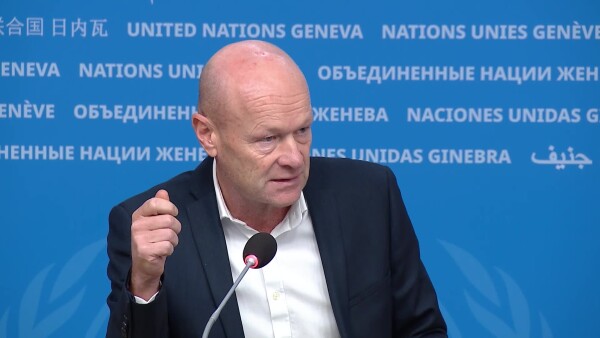
The World Health Organization (WHO) updated on the latest number of casualties quoting the Hamas-run Ministry of Health (MoH) in Gaza. “We got reported data on 7,045 deaths of which 55 per cent are males and 45 per cent are female. And from the total, 41 per cent are children,” said Dr. Richard Peeperkorn, WHO’s representative in the Occupied Palestinian Territory, speaking from Jerusalem.
Dr. Peeperkorn said that the number of injuries is currently at 18,481 in Gaza. For the West Bank, based on data collected by the MoH, he reported 103 fatalities with 1,956 injuries.
The lack of fuel into the Gaza strip has put the already dire health care system under an additional strain. Dr. Peeperkorn told journalists that a minimum of 94,000 litres of fuel per day were needed to “keep critical functions running” at 12 major hospitals in Gaza.
Two in three hospitals in the enclave are “partially functional”, Dr. Peeperkorn said. “All the patients actually are operated in corridors without anesthetics, patients on life support which normally should be in ICU’s are at the corridors. There is a shortage of everything. As my colleague said, the smell of death, the stench and the smell of death is everywhere. And he sees death children all over, deaths and injured children all over the place.”
The World Food Programme (WFP) stressed that the lack of fuel is jeopardizing the ability of aid trucks entering through the Rafah crossing to distribute the supplies across Gaza. “Even if we have more trucks coming in from the Rafah crossing, we don't have enough fuel inside Gaza that allows us to actually do the trans-shipment and move the food from Rafah crossing into the UN warehouses,” said Samer Abdel Jaber, Country Director for Palestine for speaking from Jerusalem.
The WFP official stressed that “without additional fuel supplies, bakeries working with WFP will no longer be able to produce bread. Only two of our contracted bakeries have fuel to produce bread at the moment and tomorrow there might be none.
On average 200,000 people in shelters receive the fresh bread provided by WFP every day but the fuel shortage is making it ever hard for bakeries to operate. On Wednesday, only 150,000 people received bread.
“From a food system perspective, we are expecting it to completely collapse”, unless aid gets through. And that includes the bakeries, the mills, the wholesalers, whoever had some stocks or food is not able actually to source it to the shops simply because there's not sufficient fuel for the trucks to operate in Gaza.”
Since the start of the crisis, WFP has already assisted close to 630,000 people in shelters and in communities across Gaza and the West Bank. Assistance included emergency food supplies, such as canned food and fresh bread, and electronic vouchers where shops are open and have supplies.
-ends-
Gaza: Humanitarian situation – OCHA-OHCHR-WHO-WFP
TRT: 3’44”
SOURCE: UNTV CH
LANGUAGE: ENGLISH
ASPECT RATIO: 16:9
DATELINE: 27 October 2023 - GENEVA, SWITZERLAND
SHOTLIST
- Exterior medium shot: UN flag alley UN Geneva.
- Wide shot, press room, UN Geneva.
- SOUNDBITE (ENGLISH)- Lynn Hastings, Humanitarian Coordinator for the Occupied Palestinian Territory (OCHA): “There were 450 trucks going into Gaza before 7 October, and that was under some very, very strict restrictions in terms of goods being able to get into Gaza. We are down now to approximately 12.”
- Cutaway: medium shot, press room with camerawoman filming, UN Geneva.
- SOUNDBITE (ENGLISH) - Lynn Hastings, Humanitarian Coordinator for the Occupied Palestinian Territory (OCHA): “The terrible choices include things like: where do you deliver? What's inside those 10 to 20 trucks a day? Which community do you send them to? Which bakeries do you give flour and fuel to? Which desalination plant should be turned on or off? Who do you give water to? Which hospital do you send medication to? So I think we can all see what those types of choices mean for people who have to make them.”
- Cutaway: wide shot press room with journalists and speakers at podium, UN Geneva.
- SOUNDBTE (ENGLISH) - Ravina Shamdasani, Spokesperson for the Office of the UN High Commissioner for Human Rights (OHCHR): “We receive harrowing testimonies of entire families killed by airstrikes on their homes, including the families of our own staff members, of parents writing children's names on their arms to identify their future remains of the terrifying sleepless nights people are spending in open air as air strikes continue overhead. We mourn the loss of U.N. colleagues and so many more civilians who are clearly disproportionately impacted.”
- Cutaway: close up, UN spokesperson, UN Geneva.
- SOUNDBITE (ENGLISH) - Ravina Shamdasani, Spokesperson for the Office of the UN High Commissioner for Human Rights (OHCHR): “Collective punishment is a war crime. Israel's collective punishment of the entire population of Gaza must immediately cease. The use of dehumanizing language against Palestinians must also be halted. Indiscriminate attacks by Palestinian armed groups, including through the launching of unguided rockets into Israel must stop. They must immediately and unconditionally release all civilians who are captured and are still being held. The taking of hostages is also a war crime.”
- Cutaway: wide shot, press room with speakers at podium, UN Geneva.
- SOUNDBITE (ENGLISH) - Dr Richard Peeperkorn, Representative of the World Health Organization (WHO) in the occupied Palestinian territory speaking from Jerusalem: “We got reported data on 7,045 deaths of which 55 per cent are males and 45 per cent are female. And from the total, 41 percent are children.”
- Cutaway: wide shot, press room with journalists and speakers at podium, UN Geneva.
- SOUNDBITE (ENGLISH) - Dr Richard Peeperkorn, Representative of the World Health Organization (WHO) in the occupied Palestinian territory speaking from Jerusalem: “All those patients actually are operated in corridors without anesthetics, patients on life support which normally should be in ICU’s are at the corridors. There is a shortage of everything. As my colleague said, the smell of death, the stench and the smell of death is everywhere. And he sees death children all over, deaths and injured children all over the place.”
- Wide shot of press conference room, UN Geneva.
- SOUNDBITE (ENGLISH) - Samer Abdel Jaber, Country Director for Palestine for the World Food Programme (WFP) speaking from Jerusalem: “From a food system perspective, we are expecting it to completely collapse if people do not go in. And that includes the bakeries, the mills, the wholesalers, whoever had some stocks or food is not able actually to source it to the shops simply because there's not sufficient fuel for the trucks to operate in Gaza. And the risk that we're looking at, even if we have more trucks coming in from the Rafah crossing, we don't have enough fuel inside Gaza that allows us to actually do the trans-shipment and move the food from Rafah crossing into the U.N. warehouses.”
- Close up, journalist listening
- Medium shot, journalists attending press briefing
- Close up, camerawomen filming
Similar Stories
1
1
1
Edited News | OCHA , UNICEF , WFP
Aid agencies warned on Friday of the fast-developing humanitarian emergency inside Taiz City in Yemen, which has been encircled by de facto Houthi forces fighting government troops along the country’s west coast.

2
17
1
2
Edited News , Press Conferences , Images | OCHA , WMO
Two UN agencies teamed up on Wednesday to issue an appeal for immediate assistance to help communities already being impacted by the strongest El Niño on record.

3
16
2
2
Edited News , B-roll , Conferences , Images | UNITED NATIONS , UNOG
Sixth Consultative Meeting on Enhancing Coordination of Peace Initiatives and Efforts for Sudan

1
1
1
Edited News | UNICEF , WHO , UNHCR
Yemen war continues to force families from homes amid hunger and disease
More than 250,000 people have now fled renewed fighting in Yemen, the UN said on Tuesday, citing particular concern for those sheltering in the southwestern city of Taiz and the wider governorate, where access is “essentially blocked”.

1
1
1
Edited News | UNICEF
A little over one year since a ceasefire agreement was announced between Hamas fighters and Israel, more than 340 children have been reported killed and hundreds more injured, the UN Children’s Fund, UNICEF, said on Friday.

1
1
1
Edited News | UNICEF , IFRC
Six weeks after Nepal’s deadly flooding disaster, communities are still struggling to rebuild their lives, but they will need sustained help as global warming increases the risk of another Himalayan catastrophe, the UN Children’s Fund (UNICEF) said on Friday.

1
1
1
Edited News | WHO
In suspected Russia plague death, testing and monitoring underway – WHO
The death of a lab worker in Russia’s Siberia region has sparked concerns about plague being the cause, the UN World Health Organization (WHO) said on Tuesday, adding that it was following the situation closely.

1
1
Edited News | OHCHR , UNOG
UN Human Rights Chief Volker Türk on Friday provided and oral update to the 63rd session of the Human rights Council on Ukraine.

1
1
1
Edited News | OHCHR , UNOG
UN Human Rights Chief Volker Türk on Friday provided and oral update to the 63rd session of the Human rights Council on the human rights situation in Haiti.

1
1
1
Edited News | WHO
Repeated delays in bringing lifesaving medicines, prosthetics and more from Israel into Gaza risk having devastating consequences on Palestinians who urgently need them in the wartorn enclave, the UN World Health Organization (WHO) said on Friday. “A truck full of non-priority supplies or the right supplies arriving too late, doesn't save lives. That's the question that actually matters," said Dr Reinhilde Van De Weerdt, WHO Representative in the OPT.

1
1
1
Edited News | WHO
DRC: Early access to care and oxygen decisive for Ebola patients’ survival – WHO
In the Democratic Republic of the Congo (DRC), health workers fighting the country’s largest-ever Ebola outbreak are struggling to overcome critical challenges to patient care, the UN World Health Organization (WHO) warned on Tuesday.

1
1
1
Edited News | OCHA , UN
Civilians in Iran are continuing to feel the consequences of months of conflict and military escalation, the UN’s top official in the country has said, as loss of life, damage to civilian infrastructure and mounting economic pressures leave many facing continued uncertainty.