

The United Nations Office at Geneva
Multimedia Newsroom
Edited News | OHCHR , UNOG
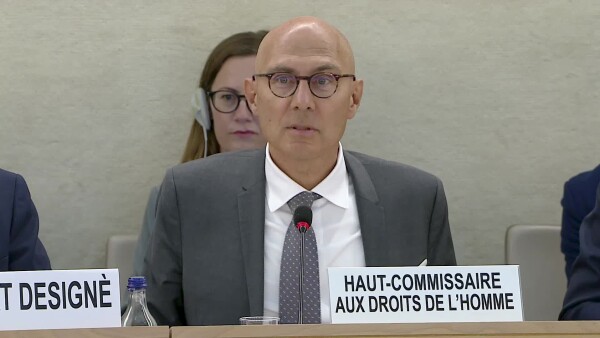
Sudan: Five months of futile suffering, death, loss and destruction - Volker Türk
UN Human Rights travelled to Chad and Ethiopia in June and July to gather first-hand information from people who had fled the violence in Sudan. Their testimonies underscore the information my Office has obtained on the scale and brutality of this conflict.
“We heard stories of family members being killed or raped. Stories of their relatives being arrested, without reason. Of disappeared loved ones. Of piles of abandoned bodies. Of desperate, lingering hunger. Stories of a level of fear and uncertainty for their future unfelt before, despite the decades of turmoil in which Sudan has been embroiled,” the high commissioner stated.
“The unbearable story of a fifteen-year-old girl attacked and raped, and taken away from her family. “My entire body aches; my head aches,” she said. “I am not rested because I do not know what happened to my family. I have no appetite to eat. At night, I cannot sleep thinking about my family,” Türk said.
At least 1500 civilians have been killed, according to the Ministry of Health. The actual figure is likely much higher. More than 5.1 million are uprooted from their homes. More than one million are seeking refuge in neighbouring countries. The conflict has paralysed the economy, pushing millions to the brink of poverty. It has brought essential services in areas affected by fighting – such as education and healthcare–almost to a halt. More than 7.4 million children are without safe drinking water and at least 700,000 are at risk of severe acute malnutrition.
The High Commissioner stated that despite repeated promises by both sides to investigate the serious human rights violations and violations of international humanitarian law, the silence has been deafening, with nobody held to account.
“I deplore the widespread arbitrary detention of civilians by both parties. Hundreds – and likely thousands – are being held incommunicado in appalling conditions. From political activists to courageous human rights defenders, to members of the Resistance Committees, their so-called crime is support or perceived support of the opposing party, opposing the war, or simply to be providing humanitarian assistance to those in need. Many have been tortured, ” he said.
At least 500 people are reported to have disappeared in Khartoum alone.
“And in West Darfur, ethnically motivated attacks perpetrated by the RSF and allied Arab militia have resulted in the deaths of hundreds of “non-Arab” civilians primarily from Masalit communities,” Türk said. This has mainly occurred in the capital, El Geneina, but also in at least eight other locations. The RSF now controls all but two localities in West Darfur.
“Such developments echo a horrific past that must not be repeated,” the high commissioner stated.
In other areas of Darfur, civilian casualties continue to mount, as does destruction of civilian infrastructure, including in Nyala, South Darfur. On 21 August, more than 39 civilians, mostly women and children, were killed there by shells that exploded close to their hiding place under a bridge. And throughout the Darfur region, people have been unable to access their farmlands because of the fighting, further compounding an already desperate food security situation.
“I am deeply concerned by the calls made by SAF officials to arm civilians, including by Major-General Al-Burhan. Similar calls have been made by community leaders, including most recently the Sultan of Massalit. Civilians should not be encouraged to take part in hostilities, nor should they be exposed to the impact of the military operations,” Türk said.
“I am repulsed to hear of the ongoing epidemic of conflict-related sexual violence. As of 10 September, my Office has received credible reports of 45 incidents, involving at least 95 victims, including 75 women, one man and 19 children,” he said. This is likely to be the tip of the iceberg. Reports are mainly coming from Khartoum State, and the Darfur and Kordofan regions. The majority of perpetrators – around 78% - have been men in RSF uniform or armed men affiliated with the RSF. UN Human Rights have also received increasing allegations against both parties, some supported by video evidence, of the torture and killing of people who were hors de combat.
Compounding the crisis, the humanitarian effort to alleviate the suffering has been callously blocked, denied – and directly attacked. The World Health Organisation has documented 56 attacks on health care facilities. Atleast 19 humanitarian workers have been killed and several are missing, making Sudan one of the most dangerous countries in the world to be a humanitarian. These attacks must stop, today, and to avoid further tragedy, the authorities must allow humanitarian aid to be delivered, unimpeded.
“The people of Sudan have endured immense suffering and sacrifice in their long pursuit of peace and justice. This pointless conflict, and the decades of military dictatorship before it, have shown us beyond a shadow of doubt that military rule will not bring stability to Sudan. It will not improve its governance, nor advance human rights, and nor will it improve the economy. What it will do, however, is generate more unrest, and incredible suffering. It is time for the two generals to cease the violence, to return to political talks, and to comply at once with their obligations under international humanitarian and human rights law,” Türk stated.
The High Commissioner adding that it is time that the perpetrators of these gross violations are identified, investigated and held to account. It is time to break the cycle of impunity. Failure to hold those responsible for past crimes and violations to account has been a major contributor to the decades-long instability in Sudan, and it has ultimately fueled the current hostilities.
He added the need to coordinate political will, engagement and cooperation from those with influence in the international community to bring an end to this tragedy. “And in the meantime, we need a massive increase in financial support to the humanitarian agencies who are doing all they possibly can to reach the millions of people in need. This horrific conflict must stop before it is too late to pull Sudan back from disaster,” the high commissioner stated.
ENDS
For more information and media requests, please contact:
In Geneva
Ravina Shamdasani - + 41 22 917 9169 / ravina.shamdasani@un.org or
Liz Throssell + 41 22 917 9296 / elizabeth.throssell@un.org or
Marta Hurtado - + 41 22 917 9466 / marta.hurtadogomez@un.org
In Nairobi
Seif Magango - +254 788 343 897 / seif.magango@un.org
Tag and share
Twitter @UNHumanRights
Facebook unitednationshumanrights
Instagram @unitednationshumanrights
STORY: Sudan - " Five months of futile suffering, death, loss and destruction " Volker Türk at the 54th HRC
TRT: 04:27
SOURCE: UNTV / OHCHR
RESTRICTIONS: NONE
LANGUAGE: English/NATS
ASPECT RATIO: 16:9
DATELINE: 12-09-2023 GENEVA, SWITZERLAND
SHOTLIST
- Exterior shot: Palais des Nations, Geneva.
- Wide shot: wide shot room 20
- Soundbite (English)— Volker Türk, UN High Commissioner for Human Rights, (OHCHR): “This Friday, Sudan will mark five months of futility. Five months of futile suffering, death, loss and destruction. Since the conflict began, the people of Sudan have been caught up in an endless cycle of violence generated by the Sudanese Armed Forces (SAF) and the Rapid Support Forces (RSF). There is no reprieve in sight.”
- Cut away: Room 20
- Soundbite (English)— Volker Türk, UN High Commissioner for Human Rights, (OHCHR): “We heard stories of family members being killed or raped. Stories of their relatives being arrested, without reason. Of disappeared loved ones. Of piles of abandoned bodies. Of desperate, lingering hunger. Stories of a level of fear and uncertainty for their future unfelt before, despite the decades of turmoil in which Sudan has been embroiled.”
- Cut away: Room 20
- Soundbite (English)— Volker Türk, UN High Commissioner for Human Rights, (OHCHR): “The unbearable story of a fifteen-year-old girl attacked and raped and taken away from her family and I quote: “my entire body aches; my head aches,” she said. “I am not rested because I do not know what happened to my family. I have no appetite to eat. At night, I cannot sleep thinking about my family.”
- Cut away: Room 20
- Soundbite (English)— Volker Türk, UN High Commissioner for Human Rights, (OHCHR): “I deplore the widespread arbitrary detention of civilians by both parties. Hundreds – and likely thousands – are being held incommunicado in appalling conditions. From political activists to courageous human rights defenders, to members of the Resistance Committees, their so-called crime is support or perceived support of the opposing party, opposing the war, or simply to be providing humanitarian assistance to those in need. Many have been tortured. ”
- Cut away: Room 20
- Soundbite (English)— Volker Türk, UN High Commissioner for Human Rights, (OHCHR): “And in West Darfur, ethnically motivated attacks perpetrated by the RSF and allied Arab militia have resulted in the deaths of hundreds of “non-Arab” civilians primarily from Masalit communities.”
- Cut away: Room 20
- Soundbite (English)— Volker Türk, UN High Commissioner for Human Rights, (OHCHR): “Such developments echo a horrific past that must not be repeated.”
- Cut away: Room 20
- Soundbite (English)— Volker Türk, UN High Commissioner for Human Rights, (OHCHR): “I am deeply concerned by the calls made by SAF officials to arm civilians, including by Major-General Al-Burhan. Similar calls have been made by community leaders, including most recently the Sultan of Massalit. Civilians should not be encouraged to take part in hostilities, nor should they be exposed to the impact of the military operations.”
- Cut away: Room 20
- Soundbite (English)— Volker Türk, UN High Commissioner for Human Rights, (OHCHR): “I am repulsed to hear of the ongoing epidemic of conflict-related sexual violence. As of 10 September, my Office has received credible reports of 45 incidents, involving at least 95 victims, including 75 women, one man and 19 children.”
- Cut away: Room 20
- Soundbite (English)— Volker Türk, UN High Commissioner for Human Rights, (OHCHR): “The people of Sudan have endured immense suffering and sacrifice in their long pursuit of peace and justice. This pointless conflict, and the decades of military dictatorship before it, have shown us beyond a shadow of doubt that military rule will not bring stability to Sudan. It will not improve its governance, nor advance human rights, and nor will it improve the economy. What it will do, however, is generate more unrest, and incredible suffering. It is time for the two generals to cease the violence, to return to political talks, and to comply at once with their obligations under international humanitarian and human rights law.”
Similar Stories

1
1
1
Edited News | OCHA , UNICEF , WFP
Aid agencies warned on Friday of the fast-developing humanitarian emergency inside Taiz City in Yemen, which has been encircled by de facto Houthi forces fighting government troops along the country’s west coast.

2
17
1
2
Edited News , Press Conferences , Images | OCHA , WMO
Two UN agencies teamed up on Wednesday to issue an appeal for immediate assistance to help communities already being impacted by the strongest El Niño on record.

3
16
2
2
Edited News , B-roll , Conferences , Images | UNITED NATIONS , UNOG
Sixth Consultative Meeting on Enhancing Coordination of Peace Initiatives and Efforts for Sudan

1
1
1
Edited News | UNICEF , WHO , UNHCR
Yemen war continues to force families from homes amid hunger and disease
More than 250,000 people have now fled renewed fighting in Yemen, the UN said on Tuesday, citing particular concern for those sheltering in the southwestern city of Taiz and the wider governorate, where access is “essentially blocked”.

1
1
1
Edited News | UNICEF
A little over one year since a ceasefire agreement was announced between Hamas fighters and Israel, more than 340 children have been reported killed and hundreds more injured, the UN Children’s Fund, UNICEF, said on Friday.

1
1
1
Edited News | UNICEF , IFRC
Six weeks after Nepal’s deadly flooding disaster, communities are still struggling to rebuild their lives, but they will need sustained help as global warming increases the risk of another Himalayan catastrophe, the UN Children’s Fund (UNICEF) said on Friday.

1
1
1
Edited News | WHO
In suspected Russia plague death, testing and monitoring underway – WHO
The death of a lab worker in Russia’s Siberia region has sparked concerns about plague being the cause, the UN World Health Organization (WHO) said on Tuesday, adding that it was following the situation closely.

1
1
Edited News | OHCHR , UNOG
UN Human Rights Chief Volker Türk on Friday provided and oral update to the 63rd session of the Human rights Council on Ukraine.

1
1
1
Edited News | OHCHR , UNOG
UN Human Rights Chief Volker Türk on Friday provided and oral update to the 63rd session of the Human rights Council on the human rights situation in Haiti.

1
1
1
Edited News | WHO
Repeated delays in bringing lifesaving medicines, prosthetics and more from Israel into Gaza risk having devastating consequences on Palestinians who urgently need them in the wartorn enclave, the UN World Health Organization (WHO) said on Friday. “A truck full of non-priority supplies or the right supplies arriving too late, doesn't save lives. That's the question that actually matters," said Dr Reinhilde Van De Weerdt, WHO Representative in the OPT.

1
1
1
Edited News | WHO
DRC: Early access to care and oxygen decisive for Ebola patients’ survival – WHO
In the Democratic Republic of the Congo (DRC), health workers fighting the country’s largest-ever Ebola outbreak are struggling to overcome critical challenges to patient care, the UN World Health Organization (WHO) warned on Tuesday.

1
1
1
Edited News | OCHA , UN
Civilians in Iran are continuing to feel the consequences of months of conflict and military escalation, the UN’s top official in the country has said, as loss of life, damage to civilian infrastructure and mounting economic pressures leave many facing continued uncertainty.