

The United Nations Office at Geneva
Multimedia Newsroom
The fabric of society in southwest Pacific and beyond is “unravelling” because of the effects of our warming climate and weather-related disasters, the World Meteorological Organization (WMO) warned on Friday.
The region's low-lying islands are “acutely vulnerable” to rising sea levels, said WMO spokesperson Clare Nullis.
Speaking in Geneva, following the launch of the UN agency’s latest report into climate change in the South-West Pacific, Ms. Nullis explained that “increasing ocean heat and acidification had devastated vulnerable marine ecosystems”.
According to WMO Secretary-General, Petteri Taalas, the El Niño climate pattern will have a major impact on the region this year, bringing higher temperatures, disruptive weather “and more marine heatwaves and coral bleaching”.
The WMO report shows that sea-level rise rates in the region were higher than the global rate, reaching approximately four millimetres per year in several areas. It also notes that ocean warming contributes 40 per cent of the observed sea-level rise, “through thermal expansion of seawater”.
The agriculture sector is one of the most affected by climate-related disasters in the southwest Pacific, the WMO report states, and enhancing the resilience of food production was a high priority for the region. In the document, Professor Taalas also stressed that implementing early warning systems was “one of the most effective” ways of reducing damage from climate disasters, as it empowered people to make risk-informed decisions.
Ms. Nullis also warned that the summer of extreme heatwaves is set to continue through August, pointing out that heat warnings have been issued across Europe this week, including in France, Germany, Poland and Switzerland.
Meanwhile, parts of the Middle East were expected to see temperatures over 50 degrees Celsius in the coming days and Japan was experiencing a “prolonged” heatwave which shattered temperature records. The WMO spokesperson also noted that Canada’s record-breaking season was continuing and that temperatures were “completely off the charts” this year. As of 17 August, more than 600 wildfires across the country were out of control, she said.
Even the high north of Canada near the Arctic Circle had not been spared, as a mass evacuation order was in force in the town of Yellowknife in the Northern Territories due to an approaching blaze. Meanwhile, in the British Columbia town of Lytton, a record temperature of 42.2 degrees Celsius was reached this week, Ms. Nullis said.
ends
She also warned that Hurricane Hilary had intensified “very rapidly” to a major category four hurricane off Mexico’s Pacific Coast, “fed by warm ocean surface temperatures”. Sustained winds of up to 220 kilometres per hour were expected in Mexico’s coastal areas over the weekend. Ms. Nullis noted that, as it was often the case with tropical cyclones, “the threat is not just from the wind but also from water”, and rainfall of up to 152 millimetres was forecast in the affected areas in Mexico. The usually arid southwest of the United States, including major cities such as San Diego, would also see “a huge amount of rain in a short time”, she said, with a high risk of flash flooding. Following early warnings is “essential,” she said.
STORY: IMPACT OF HEATWAVE - WMO
TRT: 03:42”
SOURCE: UNTV CH
RESTRICTIONS: NONE
LANGUAGE: ENGLISH
ASPECT RATIO: 16:9
DATELINE: 18 AUGUST 2023, GENEVA, SWITZERLAND
SHOTLIST
1. Exterior wide shot, United Nations flag flying.
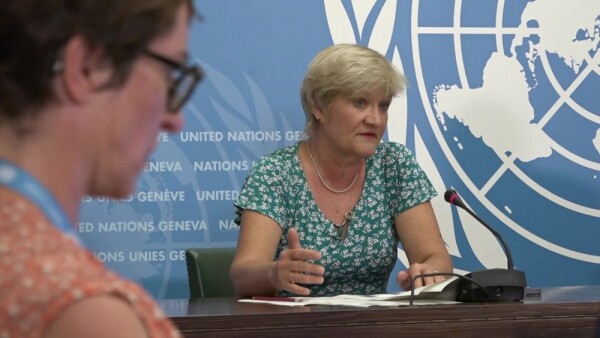
2. Wide shot, panel at briefing.
3. SOUNDBITE: (ENGLISH) Clare Nullis, WMO spokesperson: “Weather-related disasters and climate change impacts are unravelling the fabric of society in the region. I think we could say they're unravelling the fabric of society everywhere. But obviously, the Southwest Pacific low-lying islands are acutely vulnerable.”
4. Mid shot of attendee at briefing.
5. SOUNDBITE: (ENGLISH) Clare Nullis, WMO spokesperson: “Sea level rise threatens the future of these low-lying islands and increasing ocean heat and acidification, Marine heatwaves (are) harming vital and very vulnerable marine ecosystems.”
6. Mid side view of attendees at briefing.
7. SOUNDBITE: (ENGLISH) Clare Nullis, WMO spokesperson: “Now we have an El Niño event and this is very likely to continue for the rest of the year. And to quote World Meteorological Organization (WMO) Secretary-General, Professor Petteri Taalas, he said ‘this will have a big impact on the Southwest Pacific region as it is frequently associated with higher temperatures, disruptive weather patterns, more marine heatwaves and coral bleaching.”
8. Close shot of lap top screen with speaker in background.
9. SOUNDBITE: (ENGLISH) Clare Nullis, WMO spokesperson: “The summer of extremes continues. As we know, July was the hottest month ever recorded. The high impact weather, the high sea surface temperatures are continuing through August.”
10. Wide of attendees at briefing.
11. SOUNDBITE: (ENGLISH) Clare Nullis, WMO spokesperson: “Moderate and severe heat warnings for the next few days have been issued by a number of national meteorological services in Europe. This includes France, Switzerland, Germany, Poland, and so the list goes on.”
12. Mid of attendees at briefing.
13. SOUNDBITE: (ENGLISH) Clare Nullis, WMO spokesperson: “Parts of the Middle East are forecast to see temperatures above 50 degrees Celsius next week, and Japan has seen an exceptional prolonged heatwave with many, many, many temperature records broken for individual stations. Wildfires, Canada's record-breaking wild season, unfortunately, continues. It's completely off the charts this year.”
14. Close of attendees typing.
15. SOUNDBITE: (ENGLISH) Clare Nullis, WMO spokesperson: “Hurricane Hilary has intensified very rapidly to a major category four hurricane, sort of fed by the warm ocean surface temperatures.”
16. Mid shot of speaker.
17. SOUNDBITE: (ENGLISH) Clare Nullis, WMO spokesperson: “ The centre of Hilary will approach via California peninsula in Mexico over the weekend with very, very high winds. As is often the case with tropical cyclones, the threat is not just from the wind, it's from the water.”
18. Side view of attendees at briefing.
19. SOUNDBITE: (ENGLISH) Clare Nullis, WMO spokesperson: “Hilary is expected to produce in Mexico rainfall amounts of up to 152 millimetres, which is about six inches, with isolated cases where it's going to go even higher, 10 inches. This is a huge, huge, huge amount of rain in a very short space of time. There is a risk of flash flooding in the area. So, again, you know, it's essential people follow the early warnings.”
20. Attendees at briefing with panellists in background.
21. Close shot of attendees typing
22. Close shot of attendees.
Similar Stories

1
1
1
Edited News | OCHA , UNICEF , WFP
Aid agencies warned on Friday of the fast-developing humanitarian emergency inside Taiz City in Yemen, which has been encircled by de facto Houthi forces fighting government troops along the country’s west coast.

2
17
1
2
Edited News , Press Conferences , Images | OCHA , WMO
Two UN agencies teamed up on Wednesday to issue an appeal for immediate assistance to help communities already being impacted by the strongest El Niño on record.

3
16
2
2
Edited News , B-roll , Conferences , Images | UNITED NATIONS , UNOG
Sixth Consultative Meeting on Enhancing Coordination of Peace Initiatives and Efforts for Sudan

1
1
1
Edited News | UNICEF , WHO , UNHCR
Yemen war continues to force families from homes amid hunger and disease
More than 250,000 people have now fled renewed fighting in Yemen, the UN said on Tuesday, citing particular concern for those sheltering in the southwestern city of Taiz and the wider governorate, where access is “essentially blocked”.

1
1
1
Edited News | UNICEF
A little over one year since a ceasefire agreement was announced between Hamas fighters and Israel, more than 340 children have been reported killed and hundreds more injured, the UN Children’s Fund, UNICEF, said on Friday.

1
1
1
Edited News | UNICEF , IFRC
Six weeks after Nepal’s deadly flooding disaster, communities are still struggling to rebuild their lives, but they will need sustained help as global warming increases the risk of another Himalayan catastrophe, the UN Children’s Fund (UNICEF) said on Friday.

1
1
1
Edited News | WHO
In suspected Russia plague death, testing and monitoring underway – WHO
The death of a lab worker in Russia’s Siberia region has sparked concerns about plague being the cause, the UN World Health Organization (WHO) said on Tuesday, adding that it was following the situation closely.

1
1
Edited News | OHCHR , UNOG
UN Human Rights Chief Volker Türk on Friday provided and oral update to the 63rd session of the Human rights Council on Ukraine.

1
1
1
Edited News | OHCHR , UNOG
UN Human Rights Chief Volker Türk on Friday provided and oral update to the 63rd session of the Human rights Council on the human rights situation in Haiti.

1
1
1
Edited News | WHO
Repeated delays in bringing lifesaving medicines, prosthetics and more from Israel into Gaza risk having devastating consequences on Palestinians who urgently need them in the wartorn enclave, the UN World Health Organization (WHO) said on Friday. “A truck full of non-priority supplies or the right supplies arriving too late, doesn't save lives. That's the question that actually matters," said Dr Reinhilde Van De Weerdt, WHO Representative in the OPT.

1
1
1
Edited News | WHO
DRC: Early access to care and oxygen decisive for Ebola patients’ survival – WHO
In the Democratic Republic of the Congo (DRC), health workers fighting the country’s largest-ever Ebola outbreak are struggling to overcome critical challenges to patient care, the UN World Health Organization (WHO) warned on Tuesday.

1
1
1
Edited News | OCHA , UN
Civilians in Iran are continuing to feel the consequences of months of conflict and military escalation, the UN’s top official in the country has said, as loss of life, damage to civilian infrastructure and mounting economic pressures leave many facing continued uncertainty.