

The United Nations Office at Geneva
Multimedia Newsroom
Edited News | OHCHR , UNOG
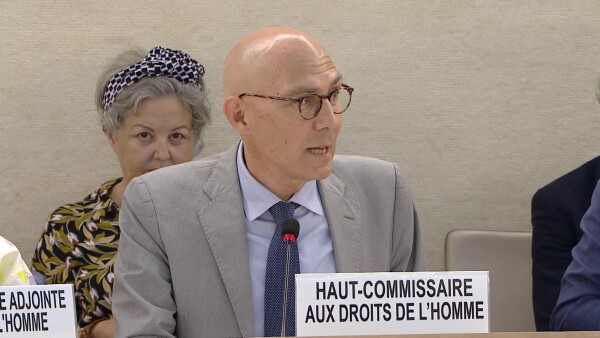
HRC 53 - Statement by Volker Türk, UN High Commissioner for Human Rights at urgent debate at the UN Human Rights Council - 11 July 2023
“This Urgent Debate is prompted by recent incidents of burning of the Quran, which is the core of faith for well over one billion people. These and other incidents appear to have been manufactured to express contempt and inflame anger; to drive wedges between people; and to provoke, transforming differences of opinion and perspective into hatred and, perhaps, violence,” Türk said.
“Setting aside for a moment the question of what the law states is permissible or not, and irrespective of one's own religious beliefs or lack of belief, people need to act with respect for others. All others,” Türk stressed, noting that only in this way can sustained dialogue become possible.
“Yet, the vandalism of religious sites and destruction of icons, books and religious objects, have been used to insult and provoke people for centuries. To me, it is clear that speech and inflammatory acts against Muslims; Islamophobia; anti-Semitism; and actions and speech that target Christians – or minority groups such as Ahmadis, Baháʼís or Yazidis – are manifestations of utter disrespect. They are offensive, irresponsible and wrong,” he said.
“It is important to recall the immense benefit of diversity for all societies. Furthermore, all people have an equal right to believe, or not to believe: this is fundamental to the Universal Declaration of Human Rights that unites us. We need to promote interfaith harmony and mutual respect, in the interests of all communities,” Türk said.
The High Commissioner said that political and religious leaders have a particularly crucial role to play in speaking out clearly, firmly and immediately against disrespect and intolerance – not only of their own communities, but of any group subjected to attack. They should also make it clear that violence cannot be justified by prior provocation, whether real or perceived.
Türk noted that these are complex areas. The limitation of any kind of speech or expression must, as a matter of fundamental principle, remain an exception – particularly since laws limiting speech are often misused by authorities, including to stifle debate on critical issues, he said.
But on the other hand, an act of speech, in the specific circumstances in which it occurs, can constitute incitement to action on the part of others. In recent years, numerous acts of violence, terror attacks and mass atrocities have targeted people on account of their religious beliefs, including inside their places of worship.
“International law is clear on these kinds of incitement, and this is my second main point. Article 20 of theInternational Covenant on Civil and Political Rights states: States parties must, without exception, prohibit “any advocacy of national, racial or religious hatred that constitutes incitement to discrimination, hostility or violence,” the UN Human Rights Chief said.
Türk also outlined how other forms of expression, even if not deemed to incite violence, can amount to hate speech, if they use pejorative or bigoted language towards a person or group on the basis of their sex, belief, race, migration status, sexual orientation or any other factor.
“Dehumanizing women and denying their equality with men; verbally abusing Muslim women and girls who wear a headscarf; sneering at people with disabilities; making false claims that migrants or people of specific ethnicities are more likely to engage in crime; or smearing LGBTIQ+ people: all such hate speech is similar, in that it stems from the baseline notion that some people are less deserving of respect as human beings,” he said.
Hate speech of every kind is rising, everywhere, using the tidal forces of social media and in a context of increasing international and national discord and polarisation, Türk said.
“Hate speech needs to be addressed, in all societies, through dialogue, education, awareness raising, inter-faith and inter-community engagement and other public policy tools. It needs to be actively countered by all responsible authorities, figures of influence, and the private sector,” he said.
The UN Strategy and Plan of Action on Hate Speech is the UN’s response to address this phenomenon and to support States and societies to counter it, the High Commissioner noted.
“Many societies are struggling with this weaponization of religious intolerance for political purposes. We must not allow ourselves to be reeled in and become instrumentalised by these merchants of chaos for political gain – these provocateurs who deliberately seek out ways to divide us,” Türk said.
The High Commissioner pointed to the profound enrichment of us all that is brought by our diversity, understandings of human existence, and ways of thought and belief.
“Our societies – all our societies, wherever they stand in religious or cultural terms – must strive to become magnets of respect, dialogue and cooperation among different peoples, as has been achieved by multiple civilisations in the past,” he said.
We must commit to advancing greater tolerance; greater respect; and greater recognition of the importance and value of our differences, the High Commissioner said. This should happen in the media, online, in businesses, in schools, in government, in the police, and outside and within places of worship.
“The best way to push back against hate speech is with more dialogue, more conversations, more building of common understanding and more acts that manifest our conviction that we are all equal, that all of us have rights, including the right to hold different beliefs, to adopt different ways of living, and to have and share different opinions,” Türk said.
ENDS
For more information and media requests, please contact:
Ravina Shamdasani - + 41 22 917 9169 / ravina.shamdasani@un.org or
Liz Throssell + 41 22 917 9296 / elizabeth.throssell@un.org or
Jeremy Laurence + +41 22 917 9383 / jeremy.laurence@un.org or
Marta Hurtado - + 41 22 917 9466 / marta.hurtadogomez@un.org
Tag and share
Twitter @UNHumanRights
Facebook unitednationshumanrights
Instagram @unitednationshumanrights
Tag and share - Twitter: @UNHumanRights and Facebook: unitednationshumanrights
- Exterior shot: Palais des Nations, Geneva.
- Wide shot: wide shot room 20
- Soundbite (English)— Volker Türk, UN High Commissioner for Human Rights, (OHCHR): “This Urgent Debate is prompted by recent incidents of burning of the Quran, which is the core of faith for well over one billion people. These and other incidents appear to have been manufactured to express contempt and inflame anger; to drive wedges between people; and to provoke, transforming differences of opinion and perspective into hatred and, perhaps, violence.”
- Cut away: room 20.
- Soundbite (English)— Volker Türk, UN High Commissioner for Human Rights, (OHCHR): “Setting aside for a moment the question of what the law states is permissible or not, and irrespective of one's own religious beliefs or lack of belief, people need to act with respect for others. All others.”
- Cut away: room 20.
- Soundbite (English)— Volker Türk, UN High Commissioner for Human Rights, (OHCHR):“Yet,the vandalism of religious sites and destruction of icons, books and religious objects, have been used to insult and provoke people for centuries. To me, it is clear that speech and inflammatory acts against Muslims; Islamophobia; anti-Semitism; and actions and speech that target Christians – or minority groups such as Ahmadis, Baháʼís or Yazidis – are manifestations of utter disrespect. They are offensive, irresponsible and wrong.”
- Cut away: room 20.
- Soundbite (English)— Volker Türk, UN High Commissioner for Human Rights, (OHCHR): “It is important to recall the immense benefit of diversity for all societies. Furthermore, all people have an equal right to believe, or not to believe: this is fundamental to the Universal Declaration of Human Rights that unites us. We need to promote interfaith harmony and mutual respect, in the interests of all communities.” Cut away: room 20.
- Soundbite (English)— Volker Türk, UN High Commissioner for Human Rights, (OHCHR):“International law is clear on these kinds of incitement, and this is my second main point. Article 20 of the International Covenant on Civil and Political Rights states: States parties must, without exception, prohibit “any advocacy of national, racial or religious hatred that constitutes incitement to discrimination, hostility or violence.”
- Cut away: room 20.
- Soundbite (English)— Volker Türk, UN High Commissioner for Human Rights, (OHCHR):“Dehumanizing women and denying their equality with men; verbally abusing Muslim women and girls who wear a headscarf; sneering at people with disabilities; making false claims that migrants or people of specific ethnicities are more likely to engage in crime; or smearing LGBTIQ+ people: all such hate speech is similar, in that it stems from the baseline notion that some people are less deserving of respect as human beings.”
- Cut away: room 20.
- Soundbite (English)— Volker Türk, UN High Commissioner for Human Rights, (OHCHR): “Hate speech needs to be addressed, in all societies, through dialogue, education, awareness raising, inter-faith and inter-community engagement and other public policy tools. It needs to be actively countered by all responsible authorities, figures of influence, and the private sector.”
- Cut away: room 20.
- Soundbite (English)— Volker Türk, UN High Commissioner for Human Rights, (OHCHR): “Many societies are struggling with this weaponization of religious intolerance for political purposes. We must not allow ourselves to be reeled in and become instrumentalised by these merchants of chaos for political gain – these provocateurs who deliberately seek out ways to divide us.”
- Cut away: room 20.
- Soundbite (English)— Volker Türk, UN High Commissioner for Human Rights, (OHCHR): “Our societies – all our societies, wherever they stand in religious or cultural terms – must strive to become magnets of respect, dialogue and cooperation among different peoples, as has been achieved by multiple civilisations in the past.”
- Cut away: room 20.
- Soundbite (English)— Volker Türk, UN High Commissioner for Human Rights, (OHCHR): “The best way to push back against hate speech is with more dialogue, more conversations, more building of common understanding and more acts that manifest our conviction that we are all equal, that all of us have rights, including the right to hold different beliefs, to adopt different ways of living, and to have and share different opinions.”
Similar Stories

2
17
1
2
Edited News , Press Conferences | OCHA , WMO
Two UN agencies teamed up on Wednesday to issue an appeal for immediate assistance to help communities already being impacted by the strongest El Niño on record.
3
16
2
2
B-roll , Conferences , Edited News | UNITED NATIONS , UNOG
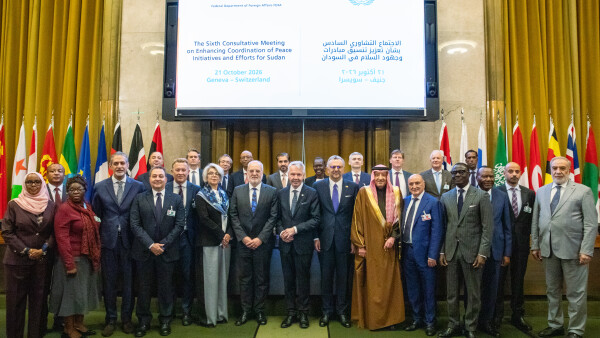
Sixth Consultative Meeting on Enhancing Coordination of Peace Initiatives and Efforts for Sudan

1
1
1
Edited News | UNICEF , WHO , UNHCR
Yemen war continues to force families from homes amid hunger and disease
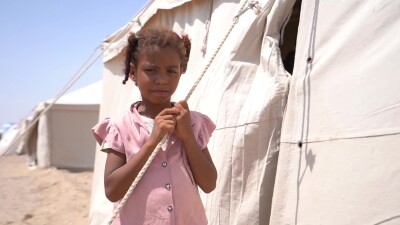
More than 250,000 people have now fled renewed fighting in Yemen, the UN said on Tuesday, citing particular concern for those sheltering in the southwestern city of Taiz and the wider governorate, where access is “essentially blocked”.

1
1
1
Edited News | UNICEF
A little over one year since a ceasefire agreement was announced between Hamas fighters and Israel, more than 340 children have been reported killed and hundreds more injured, the UN Children’s Fund, UNICEF, said on Friday.

1
1
1
Edited News | UNICEF , IFRC
Six weeks after Nepal’s deadly flooding disaster, communities are still struggling to rebuild their lives, but they will need sustained help as global warming increases the risk of another Himalayan catastrophe, the UN Children’s Fund (UNICEF) said on Friday.

1
1
1
Edited News | WHO
In suspected Russia plague death, testing and monitoring underway – WHO
The death of a lab worker in Russia’s Siberia region has sparked concerns about plague being the cause, the UN World Health Organization (WHO) said on Tuesday, adding that it was following the situation closely.

1
1
Edited News | OHCHR , UNOG
UN Human Rights Chief Volker Türk on Friday provided and oral update to the 63rd session of the Human rights Council on Ukraine.

1
1
1
Edited News | OHCHR , UNOG
UN Human Rights Chief Volker Türk on Friday provided and oral update to the 63rd session of the Human rights Council on the human rights situation in Haiti.

1
1
1
Edited News | WHO
Repeated delays in bringing lifesaving medicines, prosthetics and more from Israel into Gaza risk having devastating consequences on Palestinians who urgently need them in the wartorn enclave, the UN World Health Organization (WHO) said on Friday. “A truck full of non-priority supplies or the right supplies arriving too late, doesn't save lives. That's the question that actually matters," said Dr Reinhilde Van De Weerdt, WHO Representative in the OPT.

1
1
1
Edited News | WHO
DRC: Early access to care and oxygen decisive for Ebola patients’ survival – WHO
In the Democratic Republic of the Congo (DRC), health workers fighting the country’s largest-ever Ebola outbreak are struggling to overcome critical challenges to patient care, the UN World Health Organization (WHO) warned on Tuesday.

1
1
1
Edited News | OCHA , UN
Civilians in Iran are continuing to feel the consequences of months of conflict and military escalation, the UN’s top official in the country has said, as loss of life, damage to civilian infrastructure and mounting economic pressures leave many facing continued uncertainty.
1
1
1
Edited News | WHO , UNICEF
Aid agencies in Yemen highlighted the growing hunger emergency sparked by renewed fighting between Houthi opposition forces and Government troops, after mobile health clinics reported that hundreds of children displaced by the violence are suffering from the most deadly form of malnutrition.