

The United Nations Office at Geneva
Multimedia Newsroom
Edited News , Press Conferences | OHCHR , UNOG
United Nations Human Rights briefing on Ukraine by Matilda Bogner_1
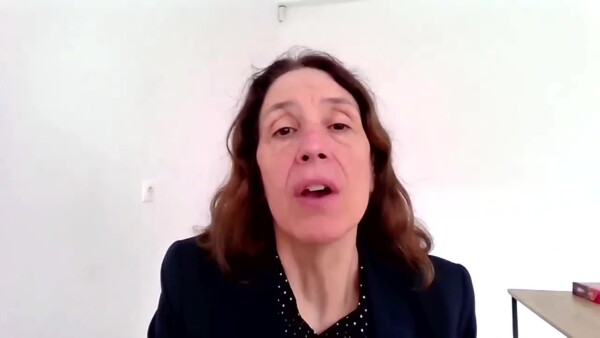
Matilda Bogner, Head of the UN Human Rights Monitoring Mission in Ukraine remarks on Detentions of Civilians in the Context of the Armed Attack by the Russian Federation against Ukraine.
The report that is released today focuses on arbitrary detention of civilians in the context of the Russian Federation’s large-scale attack on Ukraine. It covers 15 months from February 2022 to May 2023.
The findings in our report are based on 1,136 interviews with victims, witnesses and others, 274 site visits and 70 visits to official places of detention run by Ukrainian authorities. The United Nations joint Human Rights office in Ukraine documented over 900 cases of arbitrary detention of civilians, including children, and elderly people. The vast majority of these cases were perpetrated by the Russian Federation.
Ukraine gave unimpeded confidential access to official places of detention and detainees, with one exception. The Russian Federation did not grant us such access, despite the office requests.
“I will start with the detention of civilians by the Russian Federation. From the beginning of its armed attack, Russia began to detain civilians in areas that it occupied. It carried out what appeared in some cases to be security detentions, but in a manner that did not protect civilians or comply with international law. We documented 864 individual cases of arbitrary detention by the Russian Federation, many of which also amounted to enforced disappearances,” she said.
“Civilians were often detained during so-called ‘filtration’ in occupied territory for their perceived support of Ukraine, their status as former Ukrainian servicepersons, or their perceived political opinion or affiliation. They included local public officials, humanitarian volunteers, members of civil society, priests and teachers,” Bogner stated.
“Many civilian detainees were held incommunicado, in unofficial places of detention, often in deplorable conditions. In about a quarter of the documented cases, civilian detainees were transferred to other locations within occupied territory or deported to the Russian Federation. Often, no information was disclosed to their families for prolonged periods of time,” she said.
“We documented the summary execution of 77 civilians while they were arbitrarily detained by the Russian Federation. Some of these cases were included in our report on killings published in December,” Bogner stated.
“Russian armed forces, law enforcement and penitentiary authorities engaged in widespread torture and ill-treatment of civilian detainees. Most of those we interviewed said they had been tortured and ill-treated, and in some cases subjected to sexual violence. Torture was used to force victims to confess to helping Ukrainian armed forces, compel them to cooperate with the occupying authorities, or intimidate those with pro-Ukrainian views,” she stated.
Legislative amendments passed last year, and practices by Ukrainian security forces, resulted in an environment conducive to arbitrary detention. “We documented 75 cases of arbitrary detention by Ukrainian security forces, mostly of people suspected of conflict-related offences. A significant proportion of these cases also amounted to enforced disappearance, perpetrated mainly by the Security Service of Ukraine,” she said.
Under martial law, legislative amendments have given Ukrainian authorities wider discretion to detain people in relation to national security. Given their excessive scope, the amended provisions appear to go beyond what is permissible under international law, even during a public emergency, and have facilitated arbitrary detention.
The law on collaboration, adopted in March 2022, is not in line, according to the report, with international law and criminalizes a wide range of conduct, including that permitted or required under International Humanitarian Law. It has led to cases of arbitrary detention. The misuse of legislative provisions to detain civilians without a warrant, resulted in further cases of arbitrary detention.
“We documented that over half of those arbitrarily detained were subjected to torture or ill-treatment by Ukrainian security forces. This happened while people were being interrogated, usually immediately after arrest,” she said.
“We are not aware of any investigations by Russian authorities into arbitrary detention, enforced disappearance, torture or ill-treatment perpetrated by its own forces in Ukraine,” she said. The United Nations Human rights office is deeply concerned that the Russian Parliament approved in its first reading a draft federal law that would potentially exempt from criminal liability perpetrators of international crimes committed in occupied regions of Ukraine, if they are committed to protect “the interests of the Russian Federation”.
“This would violate the State’s obligation to investigate and prosecute serious violations of international humanitarian law and gross violations of international human rights law,” she stated.
“The Government of Ukraine says that it launches criminal investigations into each allegation of detention of civilians by the Russian Federation. To date, 23 people have been convicted, including 19 in absentia. We are not aware of any completed criminal investigations by Ukrainian authorities into its own security forces for such violations,” Bogner said.
The violations described in the report affect not only the victims, but also their families and communities. Many relatives still have no information on the whereabouts and fate of their loved ones.
“I conclude by reiterating our request to the Russian Federation to grant United Nations human rights monitors full and unfettered access to all areas of Ukraine which it occupies,” Bogner said.
For more information and media requests, please contact:
Ravina Shamdasani - + 41 22 917 9169 / ravina.shamdasani@un.org or
Liz Throssell + 41 22 917 9296 / elizabeth.throssell@un.org or
Jeremy Laurence + +41 22 917 9383 / jeremy.laurence@un.org or
Marta Hurtado - + 41 22 917 9466 / marta.hurtadogomez@un.org
In Nairobi
Seif Magango - +254 788 343 897 / seif.magango@un.org
Tag and share
Twitter @UNHumanRights
Facebook unitednationshumanrights
Instagram @unitednationshumanrights
Tag and share - Twitter: @UNHumanRights and Facebook: unitednationshumanrights
- Exterior shots : Palais de Nations
- Cut away : briefing room
- SOUNDBITE (English)— Matilda Bogner Head of the UN Human Rights Monitoring Mission in Ukraine: “I will start with the detention of civilians by the Russian Federation. From the beginning of its armed attack, Russia began to detain civilians in areas that it occupied. It carried out what appeared in some cases to be security detentions, but in a manner that did not protect civilians or comply with international law. We documented 864 individual cases of arbitrary detention by the Russian Federation, many of which also amounted to enforced disappearances.”
- Cut away: briefing room
- SOUNDBITE (English)— Matilda Bogner Head of the UN Human Rights Monitoring Mission in Ukraine: “Civilians were often detained during so-called ‘filtration’ in occupied territory for their perceived support of Ukraine, their status as former Ukrainian servicepersons, or their perceived political opinion or affiliation. They included local public officials, humanitarian volunteers, members of civil society, priests and teachers.”
- Cut away: briefing room
- SOUNDBITE (English)— Matilda Bogner Head of the UN Human Rights Monitoring Mission in Ukraine: “Many civilian detainees were held incommunicado, in unofficial places of detention, often in deplorable conditions. In about a quarter of the documented cases, civilian detainees were transferred to other locations within occupied territory or deported to the Russian Federation. Often, no information was disclosed to their families for prolonged periods of time.”
- Cut away: briefing room
- SOUNDBITE (English)— Matilda Bogner Head of the UN Human Rights Monitoring Mission in Ukraine: “We documented the summary execution of 77 civilians while they were arbitrarily detained by the Russian Federation. Some of these cases were included in our report on killings published in December.”
- Cut away: briefing room
- SOUNDBITE (English)— Matilda Bogner Head of the UN Human Rights Monitoring Mission in Ukraine: “Russian armed forces, law enforcement and penitentiary authorities engaged in widespread torture and ill-treatment of civilian detainees. Most of those we interviewed said they had been tortured and ill-treated, and in some cases subjected to sexual violence. Torture was used to force victims to confess to helping Ukrainian armed forces, compel them to cooperate with the occupying authorities, or intimidate those with pro-Ukrainian views.”
- Cut away: briefing room
- SOUNDBITE (English)— Matilda Bogner Head of the UN Human Rights Monitoring Mission in Ukraine: “We documented 75 cases of arbitrary detention by Ukrainian security forces, mostly of people suspected of conflict-related offences. A significant proportion of these cases also amounted to enforced disappearance, perpetrated mainly by the Security Service of Ukraine.”
- Photos: Makeshift detention place in a residential building in Hostomel, Kyiv region ©OHCHR
- SOUNDBITE (English)— Matilda Bogner Head of the UN Human Rights Monitoring Mission in Ukraine: “We documented that over half of those arbitrarily detained were subjected to torture or ill-treatment by Ukrainian security forces. This happened while people were being interrogated, usually immediately after arrest.”
- Photos: Makeshift place of detention used by the Russian armed forces in Kharkiv region. ©OHCHR
- SOUNDBITE (English)— Matilda Bogner Head of the UN Human Rights Monitoring Mission in Ukraine: “We are not aware of any investigations by Russian authorities into arbitrary detention, enforced disappearance, torture or ill-treatment perpetrated by its own forces in Ukraine.”
- Photos: Inscriptions made by detained civilians on a wall of makeshift detention place in Dymer, Kyiv region. © OHCHR
- SOUNDBITE (English)— Matilda Bogner Head of the UN Human Rights Monitoring Mission in Ukraine: “This would violate the State’s obligation to investigate and prosecute serious violations of international humanitarian law and gross violations of international human rights law.”
- Cut away: briefing room
- SOUNDBITE (English)— Matilda Bogner Head of the UN Human Rights Monitoring Mission in Ukraine: “The Government of Ukraine says that it launches criminal investigations into each allegation of detention of civilians by the Russian Federation. To date, 23 people have been convicted, including 19 in absentia. We are not aware of any completed criminal investigations by Ukrainian authorities into its own security forces for such violations.”
- Cut away: briefing room
- SOUNDBITE (English)— Matilda Bogner Head of the UN Human Rights Monitoring Mission in Ukraine: “I conclude by reiterating our request to the Russian Federation to grant United Nations human rights monitors full and unfettered access to all areas of Ukraine which it occupies.”
Similar Stories

1
1
1
Edited News | OCHA , UNICEF , WFP
Aid agencies warned on Friday of the fast-developing humanitarian emergency inside Taiz City in Yemen, which has been encircled by de facto Houthi forces fighting government troops along the country’s west coast.
1
1
1
Press Conferences | UN WOMEN , WFP , WHO
UN WOMEN: Sudan Women and girls one year after the fall of El Fasher; increasing drone attacks across the country; WFP: DRC - Ebola spreads to eighth DRC province as WFP delivers food, builds treatment centres and keeps supplies moving; WHO - Update on Ebola (Bundibugyo Virus Disease)
1
12
1
1
Press Conferences , Images | UNOG
Closing Press Conference following the Sixth Consultative Meeting on Enhancing Coordination of Peace Initiatives and Efforts in Sudan

2
17
1
2
Edited News , Press Conferences , Images | OCHA , WMO
Two UN agencies teamed up on Wednesday to issue an appeal for immediate assistance to help communities already being impacted by the strongest El Niño on record.

3
16
2
2
Edited News , B-roll , Conferences , Images | UNITED NATIONS , UNOG
Sixth Consultative Meeting on Enhancing Coordination of Peace Initiatives and Efforts for Sudan
1
1
1
Press Conferences | CITES
Wildlife trade and conservation policy discussions at the 81st meeting of the CITES Standing Committee (SC81)

1
1
1
Edited News | UNICEF , WHO , UNHCR
Yemen war continues to force families from homes amid hunger and disease
More than 250,000 people have now fled renewed fighting in Yemen, the UN said on Tuesday, citing particular concern for those sheltering in the southwestern city of Taiz and the wider governorate, where access is “essentially blocked”.
1
1
1
Press Conferences | UNHCR , UNCTAD , WMO , OCHA , UNICEF , WHO
UNHCR Hungary’s 1956 Refugee Crisis: 70 Years On, UNCTAD World Investment Forum 2026, Doha, WMO Greenhouse Gas Bulletin and Climate Update for COP31, OCHA Afghanistan: Malnutrition, Girls’ Education and Recovery, UNICEF Yemen: Child Malnutrition and Unsafe Water in Taiz, WHO Inequalities in Noncommunicable Diseases and Risk Factors
1
1
1
Press Conferences | UNHCR
End of UNHCR's 77th Annual Executive Committee (ExCom) meeting week

1
1
1
Edited News | UNICEF
A little over one year since a ceasefire agreement was announced between Hamas fighters and Israel, more than 340 children have been reported killed and hundreds more injured, the UN Children’s Fund, UNICEF, said on Friday.
1
1
1
Press Conferences | UNICEF , IOM , UNHCR
UN Special Assistant to the Personal Envoy Office (SUDAN): Peace Initiatives and Efforts in Sudan; UNICEF: Dire situation of children in Gaza; IOM: Damaged Homes and Energy Attacks Risk Displacing Ukrainians for this winter; UNHCR: update on EXCOM week
1
1
1
Press Conferences | IOM , UNDRR
UN stresses importance of household preparedness for disaster risk reduction.