

The United Nations Office at Geneva
Multimedia Newsroom
98% chance at least one in the next five years will beat the temperature record set in 2016, says WMO latest report
Global temperatures are set to reach new records in the next five years (2023-2027) and will be more than 1.5C above pre-industrial levels for at least one of the next five years, the UN World Meteorological Organization (WMO) said on Wednesday.
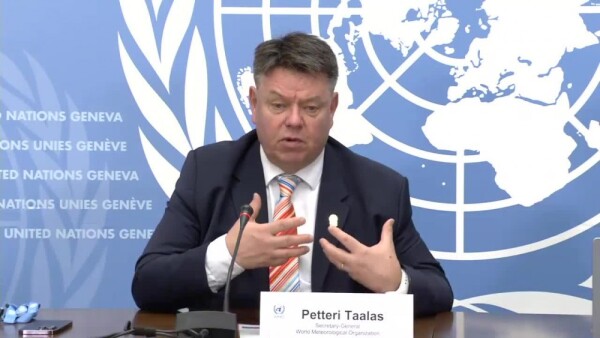
“There is a 66 per cent chance that we would exceed 1.5 degrees during the coming five years,” said Professor Petteri Taalas, WMO Secretary-General, talking to media at the United Nations in Geneva.
And there is a 98 per cent likelihood that at least one of the next five years, and the five-year period as a whole, will be the warmest on record.
“We will see the warmest year on record during the coming five years once this La Niña phase is over,” predicted WMO’s Secretary-General. “These kinds of variations are a combination of these specific surface temperature variations and the impacts of climate change.”
Scientists are expecting a temporary warming effect from the naturally occurring El Niño and climate change to develop in the coming months. The cooling influence of La Niña over much of the past three years ended in March 2023.
“Climate change is proceeding and once we extract this impact of natural variability caused by the El Niño variability, it is once again demonstrating we are moving in the wrong direction when it comes to increases of temperatures and also when it comes to changes in the global precipitation patterns,” said Prof Taalas.
In addition to increasing global temperatures, human-induced greenhouse gases are leading to more ocean heating and acidification, sea ice and glacier melt, sea level rise and more extreme weather. All this will have far reaching repercussions to health, food security, water management and environment, said WMO.
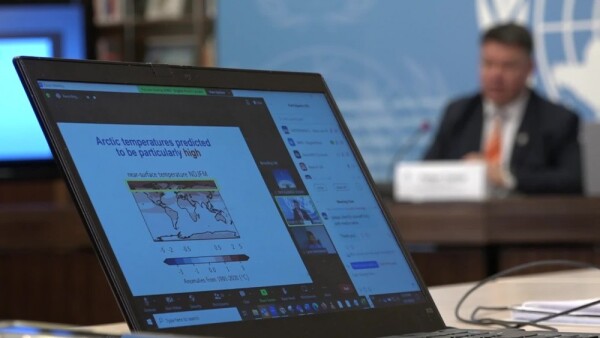
Arctic warming is disproportionality high, according to the UN agency’s latest climate report. Compared to the 1991-2020 average, the temperature anomaly is predicted to be more than three times as large as the global mean anomaly when averaged over the next five northern hemisphere extended winters.
“The most dramatic changes we expect to happen is in the Arctic where we have already seen more than double the global warming taking place and during the coming five years the estimation is that Arctic temperatures would be three times the global average, so we will see more dramatic impacts there,” said Prof Taalas.
On a more pragmatic and encouraging note, Dr Leon Hermanson, climate scientist from the UK Met Office, insisted that cutting greenhouse gas emissions “will reduce the warming and will reduce these big impacts…it will be sad the day we pass 1.5(C) but it’s not a reason to give up, we have to continue working out how we can reduce emissions of greenhouse gases as much as possible even after that.”
-ends-
STORY: Climate Predictions Next Five Years - WMO
TRT: 02’26”
SOURCE: UNTV CH
LANGUAGE: ENGLISH/NATS
ASPECT RATIO: 16:9
RELEASE DATE: 17 May 2023
GENEVA, SWITZERLAND
SHOTLIST
- Exterior wide shot: UN flag alley UN Geneva.
- Wide shot of podium, speakers, conference room, Palais des Nations, Geneva
- SOUNDBITE (ENGLISH) Prof Petteri Taalas, WMO Secretary-General: “There is a 66 per cent chance that we would exceed 1.5 degrees during the coming five years.”
- Close-up: cameraman, monitors in background
- SOUNDBITE (ENGLISH) Prof Petteri Taalas, WMO Secretary-General: “We will see the warmest year on record during the coming five years once this La Niña phase is over. These kinds of variations are a combination of these specific surface temperature variations and the impacts of climate change.”
- Medium shot: cameraman takes photos of speakers on podium
- SOUNDBITE (ENGLISH) Prof Petteri Taalas, WMO Secretary-General: “The most dramatic changes we expect to happen is in the Arctic where we have already seen more than double the global warming taking place and during the coming five years the estimation is that Arctic temperatures would be three times the global average, so we will see more dramatic impacts there.”
- Wide shot: journalists, cameras, technicians
- SOUNDBITE (ENGLISH) Prof Petteri Taalas, WMO Secretary-General: “Climate change is proceeding and once we extract this impact of natural variability caused by the El Niño variability, it is once again demonstrating we are moving in the wrong direction when it comes to increases of temperatures and also when it comes to changes in the global precipitation patterns.”
- Speakers visible on monitors with camera in foreground
- SOUNDBITE (ENGLISH) Dr Leon Hermanson, Met Office climate scientist: “We need to emit as few as possible of any greenhouse gases in any emissions that we manage to cut will reduce the warming and will reduce these big impacts we have been talking about. So, it will be sad the day we pass 1.5 but it’s not a reason to give up, we have to continue working out how we can reduce emissions of greenhouse gases as much as possible even after that.”
- Wide shot: technicians, journalists in room
- Close-up: laptop
- Medium shot: cameras, technicians
Similar Stories

1
1
1
Edited News | UNICEF
A little over one year since a ceasefire agreement was announced between Hamas fighters and Israel, more than 340 children have been reported killed and hundreds more injured, the UN Children’s Fund, UNICEF, said on Friday.

1
1
1
Edited News | UNICEF , IFRC
Six weeks after Nepal’s deadly flooding disaster, communities are still struggling to rebuild their lives, but they will need sustained help as global warming increases the risk of another Himalayan catastrophe, the UN Children’s Fund (UNICEF) said on Friday.

1
1
1
Edited News | WHO
In suspected Russia plague death, testing and monitoring underway – WHO
The death of a lab worker in Russia’s Siberia region has sparked concerns about plague being the cause, the UN World Health Organization (WHO) said on Tuesday, adding that it was following the situation closely.

1
1
Edited News | OHCHR , UNOG
UN Human Rights Chief Volker Türk on Friday provided and oral update to the 63rd session of the Human rights Council on Ukraine.

1
1
1
Edited News | OHCHR , UNOG
UN Human Rights Chief Volker Türk on Friday provided and oral update to the 63rd session of the Human rights Council on the human rights situation in Haiti.

1
1
1
Edited News | WHO
Repeated delays in bringing lifesaving medicines, prosthetics and more from Israel into Gaza risk having devastating consequences on Palestinians who urgently need them in the wartorn enclave, the UN World Health Organization (WHO) said on Friday. “A truck full of non-priority supplies or the right supplies arriving too late, doesn't save lives. That's the question that actually matters," said Dr Reinhilde Van De Weerdt, WHO Representative in the OPT.

1
1
1
Edited News | WHO
DRC: Early access to care and oxygen decisive for Ebola patients’ survival – WHO
In the Democratic Republic of the Congo (DRC), health workers fighting the country’s largest-ever Ebola outbreak are struggling to overcome critical challenges to patient care, the UN World Health Organization (WHO) warned on Tuesday.

1
1
1
Edited News | OCHA , UN
Civilians in Iran are continuing to feel the consequences of months of conflict and military escalation, the UN’s top official in the country has said, as loss of life, damage to civilian infrastructure and mounting economic pressures leave many facing continued uncertainty.
1
1
1
Edited News | WHO , UNICEF
Aid agencies in Yemen highlighted the growing hunger emergency sparked by renewed fighting between Houthi opposition forces and Government troops, after mobile health clinics reported that hundreds of children displaced by the violence are suffering from the most deadly form of malnutrition.
1
1
1
Edited News | UNHCR
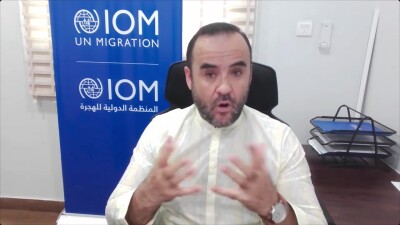
Displacement on the rise in Yemen as fighting continues - UNHCR
As hostilities worsen in Yemen, more people have been fleeing their homes, further intensifying the humanitarian crisis within the region, the UN Refugee Agency (UNHCR) warned on Tuesday.
1
1
1
Edited News | IOM , OHCHR , UNFPA , UNOG , UNHCR , WHO
Yemen’s humanitarian crisis growing by the hour amid spike in displacement
Yemenis displaced by renewed fighting have described fleeing for their lives amid shelling and gunfire, aid agencies reported on Friday, while highlighting the dramatic increase in humanitarian needs in the country and in Djibouti, where thousands have sought shelter.
1
1
1
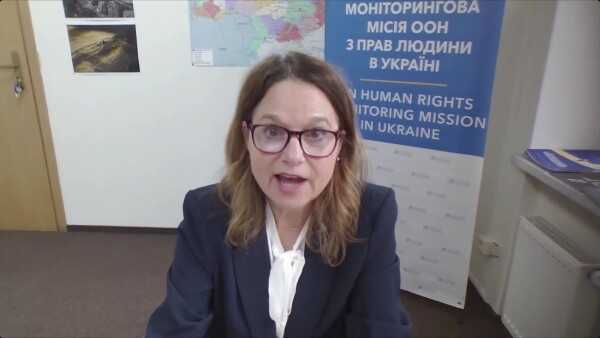
Edited News | OHCHR , UNOG
The UN Human Rights Office issued on Friday a report documenting a shocking pattern of sexual violence amid Russia’s full-scale armed attack on Ukraine.