

The United Nations Office at Geneva
Multimedia Newsroom
Edited News , Press Conferences | OHCHR
OHCHR - Press conference: Commission of Inquiry on Syria 13 March 2023
At the launch of their latest report on Monday, two days before the 12th anniversary of the onset of the Syrian crisis, the UN Commission of Inquiry on the Syrian Arab Republic called for an independent investigation for alleged failures by the Syrian Government, the international community, including the United Nations, to rapidly direct urgent life-saving aid to northwest Syria after the massive earthquakes struck on February 6th.
“Syrians, for good reasons, felt abandoned and neglected by those supposed to protect them in the most desperate of their times,” said Paulo Pinheiro, Chairperson of the Commission of Inquiry on the Syrian Arab Republic, speaking today to journalists at the United Nations in Geneva. He added that “many voices are rightly calling, and we agree with that, for an investigation on accountability to understand what this failure, this disaster happened beyond the earthquake”.
The Commission concluded that in the immediate aftermath of the earthquake, it took the Syrian Government a full week to consent to life-saving cross-border aid access. The Government and opposing Syrian National Army (SNA) both impeded cross-line aid to affected communities, while Hayat Tahrir al Sahm (HTS) in northwest Syria refused cross-line aid from Damascus, the Commissioners said.
“Clearly the armed groups were not helping by obstructing aid coming cross lines,” said Hanny Megally, member of the Syria Commission. “The Syrian Government in Damascus took a week before they even allowed for the extra two crossings, and the United Nations and the international community seemed paralyzed during that period and that‘s really what needs to be looked into.”
Precious time was lost, the Commissioner maintained, to get the approval of two new border crossing points authorised by the UN Security Council.
“We have always argued there is no need for Security Council resolution anywhere when you have people in desperate straits," Mr. Megally said. "And this was an earthquake, it was an exceptional circumstance and legal scholars will argue in exceptional circumstances you can act even if it means crossing boundaries or trampling on state sovereignty, so to speak”.
Though the Commission is calling for a comprehensive ceasefire that is fully respected for civilians to be safe, including aid workers, “we are now investigating fresh attacks even in the very areas devastated by the earthquakes", said Mr. Pinheiro. “These include last week’s reported Israeli attack on Aleppo international airport, a conduit for humanitarian aid.”
The latest report, prepared before the devastating earthquakes, is based on 467 first-hand interviews, corroborated by satellite imagery, photographs, videos and documents. It provides a summary of violations committed against civilians in Syria during the second half of last year.
Civilians in the earthquake-affected northwest were particularly exposed to deadly attacks in the preceding months.
“We are really appalled that nearly 12 years into the conflict, Syrian Government forces used cluster ammunitions to strike densely populated displacement camps in opposition-held Idlib governorate, killing and injuring at least 67 civilians,” said Mr. Pinheiro, describing a single indiscriminate attack which occurred in November 2022.
These and other atrocities that the Commission investigated continue a long-established pattern of indiscriminate attacks, which may amount to war crimes.
The report concludes that parties to the conflict in Syria committed widespread human rights violations and abuses in the months leading up to the earthquakes, continuing a decade-long pattern of failures to protect Syrian civilians.
Further, the Commission of Inquiry found that conditions for safe and dignified return are still not in place in Syria. Some Syrians were denied return outright, their report said. Others were arbitrarily arrested or prevented from accessing their homes and property upon return.
“In the northeast, the Kurdish-led Syrian Democratic Forces (SDF) continues to unlawfully hold 56,000 people, 56,000 people, mainly women and children, in Al-Hol and Roj camps, where conditions continue to deteriorate,” said Mr. Pinheiro.
Commission member Lynn Welchman pointed out that “these camps are horrendous places, mostly women and children are living in there, some 56,000 now, probably some 37,000 non-Syrians, it’s hard to find out exact numbers. Health care is very limited, education is very limited particularly for children, some of those children have no life apart from these awful conditions.”
The Commission will present its report to the UN Human Rights Council in Geneva on 21 March 2023.
-ends
STORY: Commission of Inquiry on Syria – Report launch
TRT: 3:24 mins
SOURCE: UNTV CH
RESTRICTIONS: NONE
LANGUAGE: ENGLISH/NATS
ASPECT RATIO: 16:9
DATELINE: 13 March 2023 GENEVA, SWITZERLAND
SHOTLIST
- Medium shot, UN Geneva flag alley.
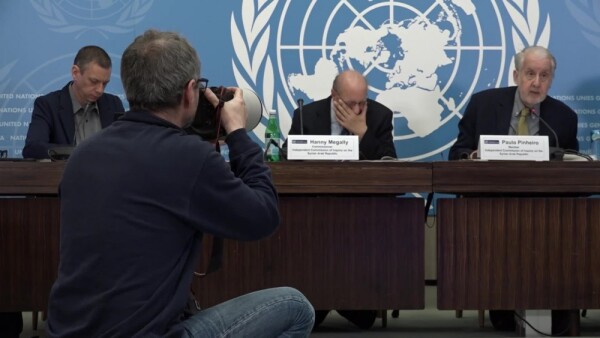
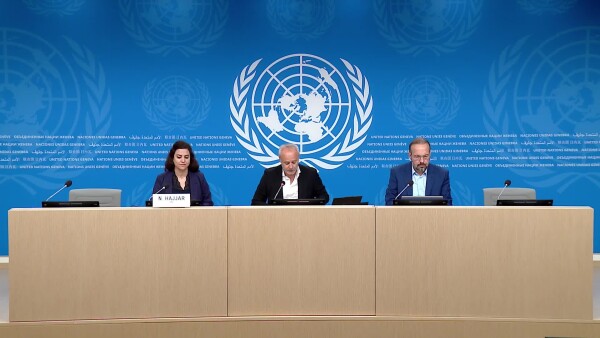
- Wide shot, press room with Commissioners on the podium
- SOUNDBITE (ENGLISH) – Hanny Megally, Commissioner of the Commission of Inquiry on the Syrian Arab Republic: “Clearly the armed groups were not helping by obstructing aid coming cross lines. The Syrian Government in Damascus took a week before they even allowed for the extra two crossings, and the United Nations and the international community seemed paralyzed during that period and that ‘s really what needs to be looked into”.
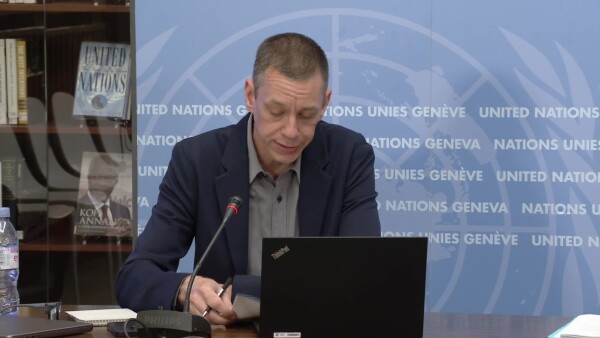
- Medium shot, laptop in front with speaker in background
- SOUNDBITE (ENGLISH) – Paulo Pinheiro, Chairperson of the Commission of Inquiry on the Syrian Arab Republic: “We are now investigating fresh attacks even in the very areas devastated by the earthquakes. These include last week’s reported Israeli attack on Aleppo international airport, a conduit for humanitarian aid”.
- Medium shot, photographers
- SOUNDBITE (ENGLISH) - Paulo Pinheiro, Chairperson of the Commission of Inquiry on the Syrian Arab Republic: “We are really appalled that nearly 12 years into the conflict, Syrian Government forces used cluster ammunitions to strike densely populated displacement camps in opposition held Idlib governorate killing and injuring at least 67 civilians”.
- Close up, journalists in front of screen with speaker
- SOUNDBITE (ENGLISH) - Paulo Pinheiro, Chairperson of the Commission of Inquiry on the Syrian Arab Republic: “Syrians, for good reasons, felt abandoned and neglected by those supposed to protect them in the most desperate of their times. Many voices are rightly calling, and we agree with that for an investigation on accountability to understand what this failure, this disaster happened beyond the earthquake.”
- Medium shot, members of the Commission
- SOUNDBITE (ENGLISH) - Hanny Megally, Commissioner of the Commission of Inquiry on the Syrian Arab Republic: “We have always argued there is no need for Security Council resolution anywhere when you have people in desperate straits. And this was an earthquake, it was an exceptional circumstance and legal scholars will argue in exceptional circumstances you can act even if it means crossing boundaries or trampling on state sovereignty so to speak”.
- Medium shot, photographer taking picture of the three Commissioners at the podium
- SOUNDBITE (ENGLISH) - Paulo Pinheiro, Chairperson of the Commission of Inquiry on the Syrian Arab Republic: “In the northeast, the Kurdish-led Syrian Democratic Forces (SDF) continues to unlawfully hold 56,000 people, 56,000 people, mainly women and children, in Al-Hawl and Roj camps, where conditions continue to deteriorate”.
- Medium shot, Commissioners at podium
- SOUNDBITE (ENGLISH) – Lynn Welchman, Commissioner of the Commission of Inquiry on the Syrian Arab Republic: “These camps are horrendous places, mostly women and children are living in there, some 56, 000 now, probably some 37,000 non-Syrians, it’s hard to find out exact numbers. Health care is very limited, education is very limited particularly for children, some of those children have no life apart from these awful conditions”.
- Wide shot, press briefing room
- Medium shot, journalists listening
- Wide shot, press briefing room with Commissioners at podium and
Similar Stories
1
12
1
1
Press Conferences , Images | UNOG
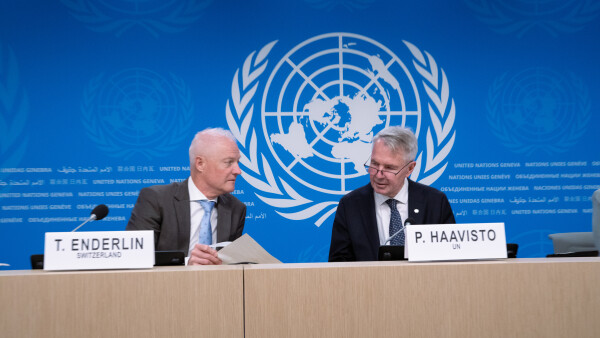
Closing Press Conference following the Sixth Consultative Meeting on Enhancing Coordination of Peace Initiatives and Efforts in Sudan

2
17
1
2
Edited News , Press Conferences | OCHA , WMO
Two UN agencies teamed up on Wednesday to issue an appeal for immediate assistance to help communities already being impacted by the strongest El Niño on record.
3
16
2
2
B-roll , Conferences , Edited News | UNITED NATIONS , UNOG
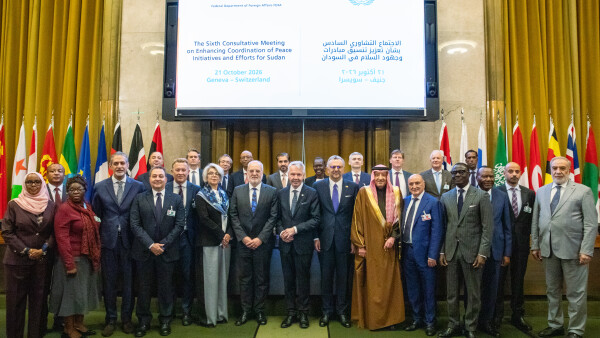
Sixth Consultative Meeting on Enhancing Coordination of Peace Initiatives and Efforts for Sudan
1
1
1
Press Conferences | CITES
Wildlife trade and conservation policy discussions at the 81st meeting of the CITES Standing Committee (SC81)
1
1
1
Edited News | UNICEF , WHO , UNHCR
Yemen war continues to force families from homes amid hunger and disease
More than 250,000 people have now fled renewed fighting in Yemen, the UN said on Tuesday, citing particular concern for those sheltering in the southwestern city of Taiz and the wider governorate, where access is “essentially blocked”.
1
1
1
Press Conferences | UNHCR , UNCTAD , WMO , OCHA , UNICEF , WHO
UNHCR Hungary’s 1956 Refugee Crisis: 70 Years On, UNCTAD World Investment Forum 2026, Doha, WMO Greenhouse Gas Bulletin and Climate Update for COP31, OCHA Afghanistan: Malnutrition, Girls’ Education and Recovery, UNICEF Yemen: Child Malnutrition and Unsafe Water in Taiz, WHO Inequalities in Noncommunicable Diseases and Risk Factors
1
1
1
Press Conferences | UNHCR
End of UNHCR's 77th Annual Executive Committee (ExCom) meeting week

1
1
1
Edited News | UNICEF
A little over one year since a ceasefire agreement was announced between Hamas fighters and Israel, more than 340 children have been reported killed and hundreds more injured, the UN Children’s Fund, UNICEF, said on Friday.
1
1
1
Press Conferences | UNICEF , IOM , UNHCR
UN Special Assistant to the Personal Envoy Office (SUDAN): Peace Initiatives and Efforts in Sudan; UNICEF: Dire situation of children in Gaza; IOM: Damaged Homes and Energy Attacks Risk Displacing Ukrainians for this winter; UNHCR: update on EXCOM week
1
1
1
Press Conferences | IOM , UNDRR
UN stresses importance of household preparedness for disaster risk reduction.

1
1
1
Edited News | UNICEF , IFRC
Six weeks after Nepal’s deadly flooding disaster, communities are still struggling to rebuild their lives, but they will need sustained help as global warming increases the risk of another Himalayan catastrophe, the UN Children’s Fund (UNICEF) said on Friday.
1
1
1
Statements , Press Conferences | OHCHR