

The United Nations Office at Geneva
Multimedia Newsroom
Edited News , Press Conferences | OHCHR , WFP
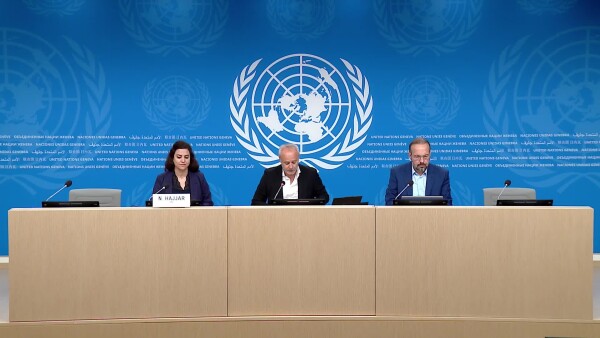
OHCHR Press conference: Human rights in the context of climate change - 24 June 2022
More than 59 million people were internally displaced in 2021 as a consequence mainly related due to climate events. To investigate the plight of people displaced by the impacts of climate change, and to fight for legal protection for them is one of the key tasks of Ian Fry, the first UN Special Rapporteur on human rights and climate change.
“There is a huge number of people, a sort of an intolerable tide of people, moving as a consequence of climate change”, Mr. Fry said when speaking today at a briefing at the United Nations in Geneva. “This is an enormous number of people, and this is higher than the number of people displaced as a consequence of conflict”, he added.
The Special Rapporteur presented yesterday the first-ever report on human rights and climate change at the 50th Session of the UN Human Rights Council. In his report Mr. Fry outlined a six-point plan to address the human rights harms resulting from climate-induced loss and damage.
Mr. Fry mainly expressed worries about people displaced across international borders due to climate change as millions of them have no grounds for seeking asylum under international law. “I am certainly particularly concerned about this issue of people displaced across international borders that are not defined as refugees under the Refugee Convention and therefore fall through the cracks as far as legal protection is concerned”, he said.
The international environmental lawyer whose mandate started last month, also highlighted the many non-economic losses stemming from climate change and its consequences. “Where I come from in the Pacific, people are losing graves as a result of the seas washing away their loved ones”, he said.
Mr. Fry, who fought for least developed countries at the 2015 Paris climate conference, will also look into legislation, litigation and corporate responsibilities during his new mandate over the next three years.
“There are a number of cases being held questioning the role of governments setting targets for climate change, there are court cases against companies so there’ s a variety of litigation that’s before the court at the moment”, he said.
Ian Fry will also look at the fossil fuel industry, itself a major producer of greenhouse gases. He aims to look at their connection on what they are doing on human rights. “This is where businesses, financial institutions are investing in the fossil fuel industry. So, I want to pursue the issue of disclosure around disclosing investments in fossil fuel industry”, he said.
Another important point of his action plan is to address and involve the youth in the discussion around human rights and climate change.
“For our young people who now have an uncertain future, we want to guarantee their future”.
-ends-
- Exterior wide shot, flag alley, UN Geneva.
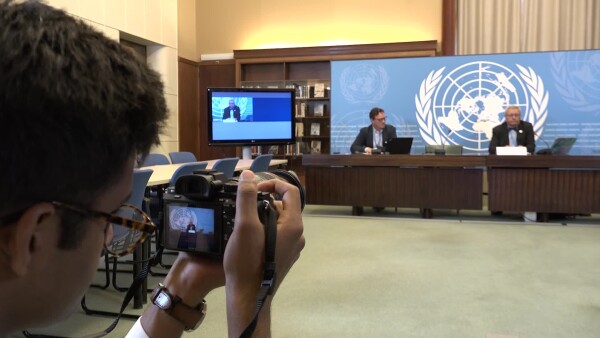
- Wide shot, UN Geneva Press room, photographer in forefront
- SOUNDBITE (ENGLISH): Ian Fry, UN Special Rapporteur on Human rights and Climate change: “There is a huge number of people, a sort of an intolerable tide of people moving as a consequence of climate change”.
- Medium shot, journalists listening
- SOUNDBITE (ENGLISH): Ian Fry, UN Special Rapporteur on Human rights and Climate change: “So this is an enormous number of people, and this is higher than the number of people displaced as a consequence of conflict”.
- Zoom up from hands typing to face of journalist
- SOUNDBITE (ENGLISH): Ian Fry, UN Special Rapporteur on Human rights and Climate change: “I am certainly particularly concerned about this issue of people displaced across international borders that are not defined as refugees under the Refugee Convention and therefore fall through the cracks as far as legal protection is concerned”.
- Close up, hands writing
- SOUNDBITE (ENGLISH): Ian Fry, UN Special Rapporteur on Human rights and Climate change: “Where I come from in the Pacific, people are losing graves as a result of the seas washing away their loved ones”.
- Zoom form laptop to face of journalist
- SOUNDBITE (ENGLISH): Ian Fry, UN Special Rapporteur on Human rights and Climate change: “There are a number of cases being held questioning the role of governments setting targets for climate change, there are court cases against companies so there’ s a variety of litigation that’s before the court at the moment”.
- Medium shot, journalist listening
- SOUNDBITE (ENGLISH): Ian Fry, UN Special Rapporteur on Human rights and Climate change: “This is where businesses, financial institutions are investing in the fossil fuel industry. So, I want to pursue the issue of disclosure around disclosing investments in fossil fuel industry”.
- Medium shot, journalists listening with screen with speaker
- SOUNDBITE (ENGLISH): Ian Fry, UN Special Rapporteur on Human rights and Climate change: “For our young people who now have an uncertain future, we want to guarantee their future”.
- Two shot, journalists listening and typing
- Wide shot, speakers on podium filmed from above
- Close up, journalist
- Wide shot, speaker at podium with journalists listening
Similar Stories
1
1
1
Press Conferences | WMO , UNHCR , WHO , ILO
WMO: Greenhouse Gas Bulletin; UNHCR: As attacks intensify UNHCR urges support for war ravaged Ukrainians; WHO: Clinical trials in DRC: vaccines and beyond; ILO: New global and regional estimates on domestic work, informality and working conditions

1
1
1
Edited News | OCHA , UNICEF , WFP
Aid agencies warned on Friday of the fast-developing humanitarian emergency inside Taiz City in Yemen, which has been encircled by de facto Houthi forces fighting government troops along the country’s west coast.
1
1
1
Press Conferences | UN WOMEN , WFP , WHO
UN WOMEN: Sudan Women and girls one year after the fall of El Fasher; increasing drone attacks across the country; WFP: DRC - Ebola spreads to eighth DRC province as WFP delivers food, builds treatment centres and keeps supplies moving; WHO - Update on Ebola (Bundibugyo Virus Disease)
1
12
1
1
Press Conferences , Images | UNOG
Closing Press Conference following the Sixth Consultative Meeting on Enhancing Coordination of Peace Initiatives and Efforts in Sudan

2
17
1
2
Edited News , Press Conferences , Images | OCHA , WMO
Two UN agencies teamed up on Wednesday to issue an appeal for immediate assistance to help communities already being impacted by the strongest El Niño on record.

3
16
2
2
Edited News , B-roll , Conferences , Images | UNITED NATIONS , UNOG
Sixth Consultative Meeting on Enhancing Coordination of Peace Initiatives and Efforts for Sudan
1
1
1
Press Conferences | CITES
Wildlife trade and conservation policy discussions at the 81st meeting of the CITES Standing Committee (SC81)

1
1
1
Edited News | UNICEF , WHO , UNHCR
Yemen war continues to force families from homes amid hunger and disease
More than 250,000 people have now fled renewed fighting in Yemen, the UN said on Tuesday, citing particular concern for those sheltering in the southwestern city of Taiz and the wider governorate, where access is “essentially blocked”.
1
1
1
Press Conferences | UNHCR , UNCTAD , WMO , OCHA , UNICEF , WHO
UNHCR Hungary’s 1956 Refugee Crisis: 70 Years On, UNCTAD World Investment Forum 2026, Doha, WMO Greenhouse Gas Bulletin and Climate Update for COP31, OCHA Afghanistan: Malnutrition, Girls’ Education and Recovery, UNICEF Yemen: Child Malnutrition and Unsafe Water in Taiz, WHO Inequalities in Noncommunicable Diseases and Risk Factors
1
1
1
Press Conferences | UNHCR
End of UNHCR's 77th Annual Executive Committee (ExCom) meeting week

1
1
1
Edited News | UNICEF
A little over one year since a ceasefire agreement was announced between Hamas fighters and Israel, more than 340 children have been reported killed and hundreds more injured, the UN Children’s Fund, UNICEF, said on Friday.
1
1
1
Press Conferences | UNICEF , IOM , UNHCR
UN Special Assistant to the Personal Envoy Office (SUDAN): Peace Initiatives and Efforts in Sudan; UNICEF: Dire situation of children in Gaza; IOM: Damaged Homes and Energy Attacks Risk Displacing Ukrainians for this winter; UNHCR: update on EXCOM week