

The United Nations Office at Geneva
Multimedia Newsroom
Statements , Conferences , Edited News | ITU , ODET , PGA , UN , UNESCO
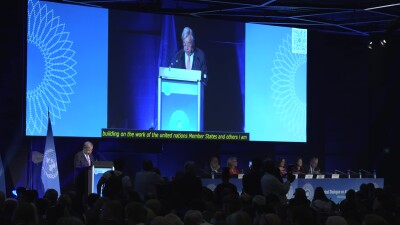
Dialogue mondial sur la gouvernance de l'IA - Séance d'ouverture
L'ONU a lancé la session inaugurale du Dialogue mondial sur la gouvernance de l'IA, réunissant à Genève des gouvernements, des entreprises technologiques, le monde universitaire, la société civile et la communauté technique pour faciliter les discussions sur la gouvernance de l'intelligence artificielle.
Déclarations d'ouverture :
S.E. Ambassadrice Egriselda López, Salvador, Co-Présidente du Dialogue mondial sur la gouvernance de l'IA
S.E. Ambassadeur Rein Tammsaar, Estonie, Co-Président du Dialogue mondial sur la gouvernance de l'IA
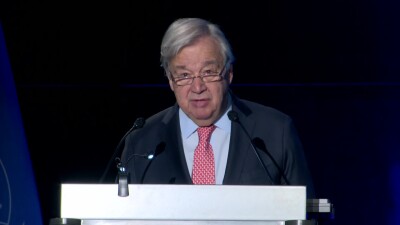
Antonio Guterres, Secrétaire général des Nations Unies
Annalena Baerbock, Présidente de l'Assemblée générale
Doreen Bogdan-Martin, Secrétaire générale, UIT
Khaled El-Enany, Directeur général, UNESCO
Amandeep Singh-Gill, USG et Envoyé spécial pour les technologies numériques et émergentes, ODET
Dialogue Mondial de l'ONU sur la Gouvernance de l'IA
TRT : 4 min 49s
SOURCE : UNTV CH
RESTRICTIONS : AUCUNE
LANGUE : ANGLAIS / NATS
FORMAT D'IMAGE : 16:9
DATELINE : 7 JUILLET 2026 GENÈVE
Orateurs :
- Secrétaire général de l'ONU António Guterres
- Présidente de l'Assemblée générale de l'ONU Annalena Baerbock
- Envoyé spécial de l'ONU pour les technologies numériques et émergentes Amandeep Singh Gill
- Co-président du Panel scientifique international indépendant sur l'IA Yoshua Bengio
- Co-présidente du Panel scientifique international indépendant sur l'IA Maria Ressa
LISTE DE PLANS
- Extérieur, large, allée des drapeaux de l'ONU Genève.
- Extérieur, moyen-large, le Secrétaire général de l'ONU António Guterres arrivant au Centre de Conférences Palexpo, Genève, pour le Dialogue Mondial inaugural sur la Gouvernance de l'IA, avec la Directrice générale de l'ONU Genève Tatiana Valovaya, accueilli par la Secrétaire générale de l'UIT Doreen Bogdan-Martin et le Directeur général de l'UNESCO Khaled El-Enany.
- Extérieur, moyen, M. Guterres avec la Secrétaire générale de l'UIT Doreen Bogdan-Martin et le Directeur général de l'UNESCO Khaled El-Enany.
- Extérieur, moyen, M. Guterres entrant dans le Centre de Conférences Palexpo.
- Large, M. Guterres, entouré par le personnel, journaliste filmant sur téléphone mobile.
- Moyen, M. Guterres.
- Large, M. Guterres assis au podium, aux côtés de la Secrétaire générale de l'UIT Doreen Bogdan-Martin, du Directeur général de l'UNESCO Khaled El-Enany, de l'Envoyé spécial de l'ONU pour les technologies numériques et émergentes Amandeep Singh Gill, et des co-présidents du Dialogue Mondial Egriselda López et Rein Tammsaar.
- Large, M. Guterres s'adressant aux délégués.
- EXTRAIT SONORE (Anglais) — Secrétaire général de l'ONU António Guterres : “Aucun avenir ne se construit tout seul. Ainsi, le choix qui s'offre à nous n'est pas entre la foi en l'IA ou la peur de celle-ci ; c'est entre gouverner par conception et dériver par défaut.”
- Large, M. Guterres s'adressant aux délégués.
- EXTRAIT SONORE (Anglais) — Secrétaire général de l'ONU António Guterres : “Nous ne laissons pas un médicament atteindre un enfant tant qu'il n'est pas prouvé sûr. Nous testons chaque jouet. Pourtant, l'IA a atteint nos enfants – leur apprentissage, leurs amitiés, leurs questions les plus privées – avant que quiconque ne se demande ce qu'elle leur ferait.”
- Moyen, M. Guterres s'adressant aux délégués.
- EXTRAIT SONORE (Anglais) — Secrétaire général de l'ONU António Guterres : “Le Dialogue Mondial concerne l'IA civile. Mais l'IA ne respecte pas cette ligne. Les mêmes modèles et puces ont été déplacés sur le champ de bataille. Ma principale préoccupation concerne les systèmes d'armes autonomes létaux. Appelons-les ce qu'ils sont : des robots tueurs.”
- Moyen, délégué filmant les procédures sur téléphone mobile.
- EXTRAIT SONORE (Anglais) — Secrétaire général de l'ONU António Guterres : “Dans chaque décision à enjeux élevés – en justice, en santé, en maintien de l'ordre – les machines peuvent informer, mais les humains doivent décider – et répondre.”
- Large, photographes.
- EXTRAIT SONORE (Anglais) - Présidente de l'Assemblée générale de l'ONU Annalena Baerbock : “Nous refusons de laisser nos plateformes devenir des champs de bataille. Cela signifie nous, cela signifie nous en tant qu'adultes, en tant que gouvernements, en tant que décideurs politiques, en tant qu'entreprises, pour aborder les usages sinistres de l'IA, tels que les deepfakes, qui ciblent de manière disproportionnée les femmes et les filles avec un rapport de 99 pour cent des deepfakes étant de nature sexuelle et 96 pour cent ciblant les femmes et les filles.”
- Large, l'Envoyé spécial de l'ONU pour les technologies numériques et émergentes Amandeep Singh Gill s'adressant aux délégués.
- EXTRAIT SONORE (Anglais) – Envoyé spécial de l'ONU pour les technologies numériques et émergentes Amandeep Singh Gill : “L'IA est trop conséquente pour être façonnée par quelques-uns. Nous avons besoin d'une conversation qui soit mondiale, inclusive et fondée sur des preuves.”
- Large, Yoshua Bengio et Maria Ressa, co-présidents du Panel scientifique international indépendant sur l'IA.
- EXTRAIT SONORE (Anglais) — Co-présidente du Panel scientifique international indépendant sur l'IA Maria Ressa : “Les risques sont réels. Et j'ai observé cela il y a une décennie avec l'apprentissage automatique et l'IA sur les réseaux sociaux. Cela promettait de nous connecter et au lieu de cela, cela a déchiré notre réalité partagée.”
- Large, Maria Ressa et plaque nominative à l'écran.
- EXTRAIT SONORE (Anglais) — Co-présidente du Panel scientifique international indépendant sur l'IA Maria Ressa : “Un garçon de 14 ans est mort en 2024 après des mois de conversation avec un chatbot qu'il a surnommé, eh bien, le nom était générique, il l'a surnommée Danni. Lorsqu'il était en crise, Danni n'a jamais rompu le personnage, n'a jamais suggéré qu'il appelle à l'aide. Sa mère a témoigné devant le Congrès que cela l'a encouragé à se suicider. Cette affaire a été réglée cette année. Ce n'est pas la seule.”
- Large, Yoshua Bengio et plaque nominative à l'écran.
- EXTRAIT SONORE (Anglais) — Co-président du Panel scientifique international indépendant sur l'IA Yoshua Bengio : “L'intelligence des IA continuera de croître, cela ressemble à de la science-fiction, mais c'est une possibilité réelle et cela pourrait changer le monde de manières que nous ne comprenons pas encore, et cela pourrait changer les dynamiques de pouvoir de notre planète de manières qui nécessitent notre attention.”
- Large, M. Guterres s'adressant aux délégués.
- Moyen-large, délégués, assis.
- Moyen, M. Guterres s'adressant aux délégués.
- Large, performance de Gadi Sassoon, compositeur et artiste transmédia.
- Large, M. Guterres regardant la performance musicale, entouré par Mme Bogdan-Martin et l'Envoyé spécial de l'ONU Gill.
- Moyen, performance de Gadi Sassoon, compositeur et artiste transmédia.
- Large, applaudissements de M. Guterres, Mme Bogdan-Martin et l'Envoyé spécial de l'ONU Gill.
Similar Stories

1
1
1
Edited News | UNICEF , IFRC
Six weeks after Nepal’s deadly flooding disaster, communities are still struggling to rebuild their lives, but they will need sustained help as global warming increases the risk of another Himalayan catastrophe, the UN Children’s Fund (UNICEF) said on Friday.
1
1
1
Statements , Press Conferences | OHCHR

1
1
1
Edited News | WHO
In suspected Russia plague death, testing and monitoring underway – WHO
The death of a lab worker in Russia’s Siberia region has sparked concerns about plague being the cause, the UN World Health Organization (WHO) said on Tuesday, adding that it was following the situation closely.

1
1
Edited News | OHCHR , UNOG
UN Human Rights Chief Volker Türk on Friday provided and oral update to the 63rd session of the Human rights Council on Ukraine.
2
1
2
Statements , Conferences | HRC , OHCHR
Interactive dialogue with the High Commissioner for Human Rights, Volker Türk on the oral update on Ukraine.

1
1
1
Edited News | OHCHR , UNOG
UN Human Rights Chief Volker Türk on Friday provided and oral update to the 63rd session of the Human rights Council on the human rights situation in Haiti.

1
1
1
Edited News | WHO
Repeated delays in bringing lifesaving medicines, prosthetics and more from Israel into Gaza risk having devastating consequences on Palestinians who urgently need them in the wartorn enclave, the UN World Health Organization (WHO) said on Friday. “A truck full of non-priority supplies or the right supplies arriving too late, doesn't save lives. That's the question that actually matters," said Dr Reinhilde Van De Weerdt, WHO Representative in the OPT.

1
1
1
Edited News | WHO
DRC: Early access to care and oxygen decisive for Ebola patients’ survival – WHO
In the Democratic Republic of the Congo (DRC), health workers fighting the country’s largest-ever Ebola outbreak are struggling to overcome critical challenges to patient care, the UN World Health Organization (WHO) warned on Tuesday.

1
1
1
Edited News | OCHA , UN
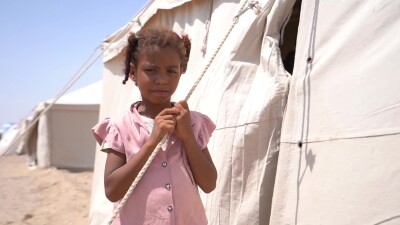
Civilians in Iran are continuing to feel the consequences of months of conflict and military escalation, the UN’s top official in the country has said, as loss of life, damage to civilian infrastructure and mounting economic pressures leave many facing continued uncertainty.
1
1
1
Edited News | WHO , UNICEF
Aid agencies in Yemen highlighted the growing hunger emergency sparked by renewed fighting between Houthi opposition forces and Government troops, after mobile health clinics reported that hundreds of children displaced by the violence are suffering from the most deadly form of malnutrition.
1
1
1
Edited News | UNHCR
Displacement on the rise in Yemen as fighting continues - UNHCR
As hostilities worsen in Yemen, more people have been fleeing their homes, further intensifying the humanitarian crisis within the region, the UN Refugee Agency (UNHCR) warned on Tuesday.
1
1
1
Statements , Conferences | HRC , OHCHR
Interactive dialogue on the oral update of the Independent International Commission of Inquiry on Ukraine at the 63rd regular session of the Human Rights Council