

The United Nations Office at Geneva
Multimedia Newsroom
Les efforts mondiaux de déminage mis à mal par la montée des conflits et la diminution de l'aide
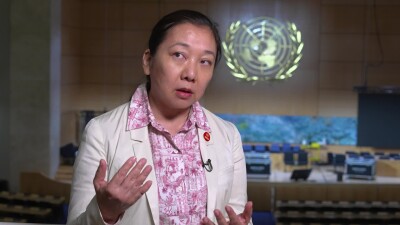
Les experts en déminage du monde entier ont partagé leur choc collectif face à la menace généralisée et croissante des munitions non explosées, a déclaré mercredi le nouveau chef du Service de l'action antimines des Nations Unies (UNMAS).
« Ils me disent : ‘Jamais dans ma carrière je n'ai vu autant de conflits,’» a déclaré Kazumi Ogawa, s'exprimant après la conclusion d'une réunion des Directeurs nationaux de l'action antimines et des conseillers de l'ONU à Genève.
Malgré le besoin évident de poursuivre le travail de déminage dans les zones de conflit du monde et celles désormais en paix, « pour diverses raisons, le niveau de financement a diminué en termes d'assistance humanitaire », a noté Mme Ogawa.
À Gaza, par exemple, un pourcentage stupéfiant de 90 % des personnes blessées par des dangers explosifs issus de la guerre Hamas-Israël sont des civils – « et parmi eux, la majorité sont des enfants », a-t-elle souligné.
L'UNMAS a averti qu'entre cinq et dix pour cent de toutes les munitions tirées à Gaza n'ont pas explosé. Le résultat est que des munitions non explosées potentiellement mortelles sont désormais « enracinées » dans l'enclave dévastée, a déclaré le chef du service d'action antimines.
« Nous pouvons rassembler les dangers explosifs et les encercler à Gaza pour qu'ils soient bloqués, mais nous ne sommes pas en mesure de les détruire - nous ne pouvons pas les retirer pour le moment. Et donc, ils s'accumulent en tas et vous obtenez de plus en plus de tas de dangers explosifs qui traînent et que les enfants doivent contourner. »
Elle a ajouté : « Vous avez des pères qui vont traverser les décombres pour essayer de rentrer chez eux et trouver des dispositifs explosifs sans savoir quoi en faire ; vous trouverez des enfants qui jouent, n'est-ce pas, et qui tombent sur ces dangers. »
Malgré une telle menace massive, il n'y a jamais assez de soutien pour le déminage et l'éducation aux risques, en particulier aujourd'hui, au milieu d'une crise de soutien pour les agences et organismes internationaux, y compris l'ONU, et une augmentation du nombre de conflits.
« Le problème est que, alors que les budgets - les budgets nationaux - sont détournés vers, par exemple, la défense, et éloignés de l'assistance humanitaire, ce que nous voyons, c'est l'effet de cela sur le terrain », a déclaré Mme Ogawa. « Ainsi, en Afghanistan, par exemple, un enfant est tué chaque jour.»
Le problème n'est pas moins choquant en Syrie.
« Là où normalement vous auriez peut-être 300 personnes tuées par des dangers explosifs en un an dans un pays particulier infesté de mines, en Syrie, vous avez 200 personnes tuées par semaine », a déclaré la Directrice de l'UNMAS. « C'est inimaginable. Et ce sont le genre de choses pour lesquelles le financement des donateurs nous aiderait grandement : l'éducation aux risques liés aux munitions explosives, l'assistance aux victimes, le déminage réel, le plaidoyer auprès des autres, des plus grandes parties de la communauté humanitaire, de la communauté internationale, pour s'assurer que ces personnes restent en sécurité. »
En plus du coût humain des mines terrestres et autres restes explosifs de guerre, l'impact économique est également un frein significatif au développement.
« Si un enfant est mutilé, vous demandez à la famille de prendre soin de cet enfant jusqu'à l'âge adulte, à la communauté de faire des concessions pour cet enfant lorsqu'il ou elle devient un participant à la communauté. Je veux dire, ce n'est pas juste une personne qui meurt, n'est-ce pas ? » a expliqué Mme Ogawa.
La Directrice de l'UNMAS a souligné le travail positif soutenu par l'ONU à travers le monde pour contrer les mines terrestres et autres armes non explosées, ce qui aide les communautés et les nations à se reconstruire.
En Colombie, où il y a un héritage de mines antipersonnel et d'autres contaminations par des munitions explosives issues de la guerre civile de plusieurs décennies, une initiative du mécanisme national de justice transitionnelle implique d'anciens combattants « pour aider à la récupération et à la restauration de ces communautés, y compris par le déminage et l'action antimines, l'assistance aux victimes, l'éducation aux risques », a déclaré Mme Ogawa.
« C'est une manière d'incorporer - au lieu de pénaliser les ex-combattants en les mettant en prison, c'est vraiment les incorporer pour qu'ils fassent partie de la communauté. Et de revenir et de faire amende honorable aux côtés des membres de la communauté. » Si vous parlez à la Juridiction spéciale pour la paix en Colombie, c'est super excitant ce qu'ils font. »
Le traité international de 1997 pour éradiquer les mines terrestres – connu officiellement sous le nom de Convention sur l'interdiction des mines antipersonnel – s'est avéré efficace pour interdire les mines antipersonnel mais en 2025 et début 2026, plusieurs nations européennes ont initié ou achevé le processus de retrait de celui-ci.
La nouvelle Directrice de l'UNMAS a souligné la valeur du Traité et sa pertinence pour tout le monde, partout : « Rappelons-nous que nous sommes ici non seulement pour l'adhésion aux conventions internationales pour le simple fait de l'adhésion pour que nous puissions dire, ‘Oh, voici un pays de plus.’ C'est pour que cela se répercute ensuite et crée les conditions pour que les gens vivent en sécurité et en sûreté. »
fin
Kazumi Ogawa, Directeur du Service de lutte antimines des Nations Unies - UNMAS
DURÉE : 3 min 45s
SOURCE : UNTV CH
RESTRICTIONS : AUCUNE
LANGUE : ANGLAIS / NATS
FORMAT D'IMAGE : 16:9
DATE : 29 AVRIL 2026 GENÈVE, SUISSE
Orateur :
- Kazumi Ogawa, Directeur du Service de lutte antimines des Nations Unies - UNMAS
LISTE DES PLANS
- Vue extérieure large, allée des drapeaux de l'ONU à Genève.
- EXTRAIT SONORE (Anglais) – Kazumi Ogawa, Directeur du Service de lutte antimines des Nations Unies – UNMAS : « Ce qui m'a frappé cette semaine, c'est le nombre de directeurs nationaux, le nombre de partenaires qui ont beaucoup d'expérience, qui viennent me voir et disent : 'Jamais de ma vie, jamais dans ma carrière, je n'ai vu autant de conflits,' et en même temps, comme vous le savez, pour diverses raisons, le niveau de financement a diminué en termes d'aide humanitaire. »
- Vue large, destruction à Gaza, du film UNMAS « Gaza : Creating Safe Pathways ».
- Vue rapprochée, destruction à Gaza, du film UNMAS « Gaza : Creating Safe Pathways ».
- Vue large, une route animée à Gaza, du film UNMAS « Gaza : Creating Safe Pathways ».
- Vue large, une mosquée bombardée au Soudan, du film UNMAS « 2 min 51 sec in Sudan ».
- Vue large, un énorme monticule de terre et de débris à Gaza, du film UNMAS « Gaza : Creating Safe Pathways ».
- EXTRAIT SONORE (Anglais) – Kazumi Ogawa, Directeur du Service de lutte antimines des Nations Unies – UNMAS : « Dans le cas de la Colombie, ce qui s'est passé, c'est que les auteurs de la violence dans les communautés sont condamnés, d'une certaine manière, à retourner et à aider à la récupération et à la restauration de ces communautés, y compris par le déminage et l'action antimines, l'assistance aux victimes, l'éducation au risque. »
- Vue large, expert en déminage travaillant, du film UNMAS « 2 min 51 sec in Sudan ».
- Vue large, expert en déminage travaillant, du film UNMAS « 2 min 51 sec in Sudan ».
- EXTRAIT SONORE (Anglais) – Kazumi Ogawa, Directeur du Service de lutte antimines des Nations Unies – UNMAS : « C'est une façon d'intégrer - au lieu de pénaliser les ex-combattants en les mettant en prison - c'est vraiment les intégrer pour qu'ils fassent partie de la communauté. Et de revenir et de réparer aux côtés des membres de la communauté. Si vous parlez à la juridiction spéciale pour la paix en Colombie, c'est super excitant ce qu'ils font. »
- Vue large, obus d'artillerie et armes gisant sur le sol de la forêt, du film UNMAS, « South Sudan: Peace is Cheaper Than War ».
- Vue large, panoramique, obus d'artillerie sur le sol de la forêt, du film UNMAS, « South Sudan: Peace is Cheaper Than War ».
- Vue rapprochée, douille usagée sur le sol de la forêt avec objets rouillés non identifiés, du film UNMAS, « South Sudan: Peace is Cheaper Than War ».
- Moyen dé-zoom, grenade propulsée par fusée sur le sol de la forêt, du film UNMAS, « South Sudan: Peace is Cheaper Than War ».
- EXTRAIT SONORE : (ANGLAIS) : Kazumi Ogawa, Directeur, Service de lutte antimines des Nations Unies (UNMAS) : « À Gaza, comme notre Directeur des Programmes l'a dit, c'est particulièrement ancré dans la façon dont la communauté fonctionne. Et donc, vous avez des pères qui traversent les décombres pour essayer de rentrer chez eux et trouvent des engins explosifs et ne savent pas quoi en faire ; vous trouverez des enfants qui jouent, et tombent sur ces dangers. »
- Vue large, jeunes hommes maniant des masses pour démolir des dalles de béton provenant de bâtiments détruits, du film UNMAS « Gaza: Creating Safe Pathways ».
- Vue rapprochée, grand boîtier de missile vide parmi les décombres, du film UNMAS « Gaza: Creating Safe Pathways ».
- Vue large, dévastation à Gaza, du film UNMAS « Gaza: Creating Safe Pathways ».
- EXTRAIT SONORE : (ANGLAIS) : Kazumi Ogawa, Directeur, Service de lutte antimines des Nations Unies (UNMAS) : « Le problème est que, alors que les budgets - les budgets nationaux - sont détournés vers, par exemple, la défense, et éloignés de l'aide humanitaire, ce que nous voyons, c'est l'effet de cela sur le terrain. Ainsi, en Afghanistan, par exemple, un enfant est tué chaque jour. Un enfant est tué chaque jour. »
- Vue large, grande explosion d'un engin retiré de Khartoum, du film UNMAS « 2 min 51 sec in Sudan ».
- EXTRAIT SONORE : (ANGLAIS) : Kazumi Ogawa, Directeur, Service de lutte antimines des Nations Unies (UNMAS) : « Là où normalement vous auriez peut-être 300 personnes tuées, à cause des dangers explosifs dans un pays particulier infesté de mines, en Syrie, vous avez 200 personnes tuées par semaine. C'est inimaginable. Et ce sont le genre de choses pour lesquelles le financement des donateurs nous aiderait énormément : l'éducation au risque des engins explosifs, l'assistance aux victimes, le déminage réel, le plaidoyer auprès des autres, plus grandes parties de la communauté humanitaire, la communauté internationale, pour s'assurer que ces personnes restent en sécurité. »
- Vue large, bâtiments aplatis à Gaza, du film UNMAS « Gaza: Creating Safe Pathways ».
- Vue large, les Gazaouis marchent parmi la destruction dans l'enclave, du film UNMAS « Gaza: Creating Safe Pathways ».
- Vue large, destruction massive à Gaza, du film UNMAS « Gaza: Creating Safe Pathways ».
- Vue moyenne, travailleurs de l'UNMAS et experts en déminage du film UNMAS « 2 min 51 sec in Sudan ».
- Vue moyenne, expert en déminage attachant une genouillère, du film UNMAS, « South Sudan: Peace is Cheaper Than War ».
- Vue moyenne, expert en déminage attachant un casque et une visière, du film UNMAS, « South Sudan: Peace is Cheaper Than War ».
- Vue moyenne, expert en déminage ajustant un gilet de protection, du film UNMAS, « South Sudan: Peace is Cheaper Than War ».
- Vue large, expert en déminage utilisant un détecteur sur le terrain, du film UNMAS, « South Sudan: Peace is Cheaper Than War ».
- Vue moyenne, expert en déminage à genoux utilisant une truelle pour creuser sur le terrain, du film UNMAS, « South Sudan: Peace is Cheaper Than War ».
- Vue large, enfants spectateurs, du film UNMAS, « South Sudan: Peace is Cheaper Than War ».
Similar Stories

1
1
1
Edited News | WHO
In suspected Russia plague death, testing and monitoring underway – WHO
The death of a lab worker in Russia’s Siberia region has sparked concerns about plague being the cause, the UN World Health Organization (WHO) said on Tuesday, adding that it was following the situation closely.

1
1
Edited News | OHCHR , UNOG
UN Human Rights Chief Volker Türk on Friday provided and oral update to the 63rd session of the Human rights Council on Ukraine.

1
1
1
Edited News | OHCHR , UNOG
UN Human Rights Chief Volker Türk on Friday provided and oral update to the 63rd session of the Human rights Council on the human rights situation in Haiti.

1
1
1
Edited News | WHO
Repeated delays in bringing lifesaving medicines, prosthetics and more from Israel into Gaza risk having devastating consequences on Palestinians who urgently need them in the wartorn enclave, the UN World Health Organization (WHO) said on Friday. “A truck full of non-priority supplies or the right supplies arriving too late, doesn't save lives. That's the question that actually matters," said Dr Reinhilde Van De Weerdt, WHO Representative in the OPT.

1
1
1
Edited News | WHO
DRC: Early access to care and oxygen decisive for Ebola patients’ survival – WHO
In the Democratic Republic of the Congo (DRC), health workers fighting the country’s largest-ever Ebola outbreak are struggling to overcome critical challenges to patient care, the UN World Health Organization (WHO) warned on Tuesday.

1
1
1
Edited News | OCHA , UN
Civilians in Iran are continuing to feel the consequences of months of conflict and military escalation, the UN’s top official in the country has said, as loss of life, damage to civilian infrastructure and mounting economic pressures leave many facing continued uncertainty.
1
1
1
Edited News | WHO , UNICEF
Aid agencies in Yemen highlighted the growing hunger emergency sparked by renewed fighting between Houthi opposition forces and Government troops, after mobile health clinics reported that hundreds of children displaced by the violence are suffering from the most deadly form of malnutrition.
1
1
1
Edited News | UNHCR
Displacement on the rise in Yemen as fighting continues - UNHCR
As hostilities worsen in Yemen, more people have been fleeing their homes, further intensifying the humanitarian crisis within the region, the UN Refugee Agency (UNHCR) warned on Tuesday.
1
1
1
Edited News | IOM , OHCHR , UNFPA , UNOG , UNHCR , WHO
Yemen’s humanitarian crisis growing by the hour amid spike in displacement
Yemenis displaced by renewed fighting have described fleeing for their lives amid shelling and gunfire, aid agencies reported on Friday, while highlighting the dramatic increase in humanitarian needs in the country and in Djibouti, where thousands have sought shelter.
1
1
1
Edited News | OHCHR , UNOG
The UN Human Rights Office issued on Friday a report documenting a shocking pattern of sexual violence amid Russia’s full-scale armed attack on Ukraine.
2
1
2
Edited News , Press Conferences | WMO
As world’s water reserves change, countries must prepare for a new reality: WMO
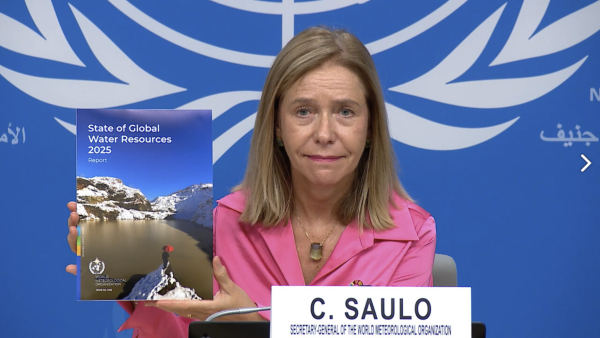
New data showing that rivers were at their lowest level for decades last year provides further evidence that the climate crisis is real and countries must act immediately to protect themselves from the increasing threat to communities and livelihoods, the UN World Meteorological Organization (WMO) said on Thursday.
The key findings from WMO’s State of Global Water Resources 2025 report covering the hydrological cycle and extreme events in the five-year period to last year:
- 2025 was one of driest years for river discharge in 35 years
- Past seven years have seen abnorfmal river flows
- Water storage on Earth’s land surface has decreased in past decade
- Widespread glacier loss across all regions for fourth consecutive year
- Asia and Africa are regions most affected by water-related disasters
- Water data availability has improved, but gaps remain in hard-hit areas
Highlighting the long-term decline in the Earth’s freshwater storage and glacier melt, WMO Secretary-General Celeste Saulo explained that the planet’s water reserves used to act as a planetary “savings account” that absorbed the occasional dry season, avoiding a water crisis. “One of the central stories of the 2025 report is what is happening to that savings account? And the simple answer is that we are depleting it,” she told journalists in Geneva.
Groundwater reserves are equally stretched and have been in decline since 2014, WMO’s report states, with nearly two-thirds of monitored wells worldwide showing levels lower than the historical norm and indicating a shift “further toward deficit…not recovery”.
“At the same time, we are seeing more water-related disasters,” Ms. Saulo said, while also stressing that the currently strengthening El Niño “will increase the risk of drought in some areas, and flooding in others”.
Glaciers disappearing
In 2025, for the fourth consecutive year, every major glaciated region on Earth lost ice mass, leading to short-term hazards including floods and long-term water insecurity, according to WMO.
Responding to a question about whether the changing global water cycle might have contributed to the deadly Nepal-China flooding disaster, Ms. Saulo explained that melting ice and rock was just one factor in the chain of events that ultimately sent a massive and deadly wall of water and debris downstream on 26 August, killing at least 1,367 people.
“You asked if it could happen again? Absolutely; the problem in this region is that there’s 63,700 glaciers at the last count,” she told a Press Conference in Geneva. “Even if you’re looking with remote sensing with satellites at these glaciers, you might see some faults, you might see some slight shifting, that does not mean necessarily catastrophic collapse. So, in order to plan for this, it’s very, very difficult. But the international community is looking very hard at ways in which we can bring people together to solve some of these monitoring issues.”
Data indicates that glaciers shrank between 2023 and 2025 with cumulative losses of 1,400 gigatonnes of water – or about one third of annual fresh water needs.
Every major glacier region on Earth lost ice for the fourth consecutive year.
“All 19 glacier regions around the globe lost ice; in Central Asia, Iceland, the Russian Arctic and western Canada and the United States, it was among the three worst years on record,” said Wayne Jenkinson, WMO’s Director of Hydrology and Cryosphere.
Some regions with smaller glaciers such as Central Europe, the Caucasus, the western Canada and the United States may already have reached “peak water”, Mr. Jenkinson warned.
“After this point, the glacier gives less meltwater each year simply because there is less ice left to melt. That matters for every community downstream that relies on water during hot, dry summers,” he explained.
Narelle van der Wel, WMO’s Head of Cryosphere Monitoring, Predictions and Services, stressed that while some further glacier loss is unavoidable, the eventual scale of the decline is not predetermined.
“Some glacier loss is inevitable, but total loss of glaciers is not yet inevitable,” she said, pointing to emissions reductions as central to limiting future losses.
Preparing for moving baselines
The report does not attribute every observed change to climate change alone. WMO says pressure on water resources and natural variability also contribute.
Mr. Jenkinson said governments need to prepare for “moving baselines” as historical patterns become less reliable.
“The situation 30 years ago is not where we are today,” he said. Countries, he added, need to prepare “for those changes that have really already arrived”.
ends
1
1
1
Edited News | OCHA , WHO
The deadly Ebola virus outbreak in DR Congo continues to spread across the vast country despite some success in containing it, aid officials said on Tuesday, in a renewed call for international support to help responders on the ground.