

The United Nations Office at Geneva
Multimedia Newsroom
Press Conferences | UNCTAD
Conférence de presse de la CNUCED : Examen du transport maritime - 24 septembre 2025
Publication de l'examen du transport maritime 2025
Orateurs :
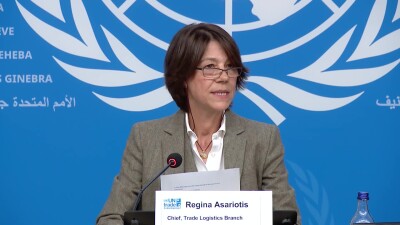
- Regina Asariotis, Chef, Branche de la logistique commerciale (CNUCED)
- Hassiba Benamara, économiste, Branche de la logistique commerciale (CNUCED)
DESCRIPTION
HISTOIRE : CNUCED / TRANSPORT MARITIME MONDIAL 2025
TRT :
SOURCE : CNUCED / UNTV CH
LANGUE : ANGLAIS / NATS
DATELINE : 24 SEPTEMBRE 2025, GENÈVE, SUISSE
WEBSITE : http://unctad.org/rmt2025
LISTE DES PLANS
1. Plan large, Palais des Nations
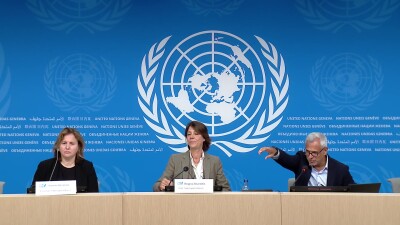
2. Divers plans, salle de briefing
3. EXTRAIT SONORE (Anglais) Regina Asariotis, Chef, Branche de la Logistique Commerciale (CNUCED) :
"Nous savons que l'environnement mondial est devenu plus complexe. Nous savons que les tensions géopolitiques affectent la mer Rouge et ont forcé des détournements coûteux autour du Cap de Bonne-Espérance. Les risques demeurent, par exemple, dans le détroit d'Ormuz, une artère vitale pour le commerce mondial du pétrole. De nouveaux tarifs perturbent les flux commerciaux établis, les taux de fret sont de plus en plus élevés et volatils, et les retards et perturbations deviennent la norme. Et ces défis augmentent les coûts. Les petits États insulaires en développement, les pays les moins avancés et les nations importatrices nettes de produits alimentaires sont les plus vulnérables, car des coûts de fret plus élevés se traduisent rapidement par des importations plus coûteuses et une insécurité alimentaire."
4. Plan large, salle de briefing
5. EXTRAIT SONORE (Anglais) Regina Asariotis, Chef, Branche de la Logistique Commerciale (CNUCED) :
"Le commerce maritime a augmenté de 2,2 % en 2024. En même temps, les détournements ont entraîné des routes maritimes plus longues, avec une augmentation des tonnes-milles d'environ 6 %. Cela a conduit à des coûts de transport plus élevés, des retards et des émissions de gaz à effet de serre, ainsi qu'à une réorganisation des réseaux maritimes affectant les ports, y compris en Afrique. Pour 2025, la grande image est une incertitude et une volatilité accrues, avec une croissance prévue de ralentir à seulement un demi pour cent."
6. Plan large, salle de briefing
7. EXTRAIT SONORE (Anglais) Regina Asariotis, Chef, Branche de la Logistique Commerciale (CNUCED) :
"Les solutions numériques comme les guichets uniques maritimes et les systèmes communautaires portuaires s'avèrent essentielles pour l'efficacité portuaire et pour un commerce plus fluide. Mais une plus grande dépendance aux systèmes et solutions numériques dans l'industrie a également accru les risques et vulnérabilités cybernétiques, qui doivent être abordés. L'inclusivité de genre dans les ports s'améliore, avec près de 40 % des postes de direction occupés par des femmes, mais les femmes restent sous-représentées dans les emplois opérationnels, où l'automatisation peut créer de nouvelles opportunités. Le développement et la formation de la main-d'œuvre maritime seront vitaux pour la résilience. Construire une mise en œuvre et une application plus cohérentes des règles pour protéger les droits des marins par les États du pavillon, les ports et l'industrie sera essentiel pour inverser la tendance à la pénurie croissante de marins."
8. Plan large, salle de briefing
9. EXTRAIT SONORE (Anglais) Regina Asariotis, Chef, Branche de la Logistique Commerciale (CNUCED) :
"Un développement majeur est le cadre zéro net de l'OMI, qui sera envisagé pour adoption formelle en octobre prochain. Il introduirait une norme mondiale de carburant, un mécanisme de tarification du carbone et un fonds zéro net pour soutenir la recherche, la technologie, les infrastructures et les initiatives de transition juste, en particulier dans les petits États insulaires en développement et les pays les moins avancés. Et si adopté, les revenus de ce fonds pourraient aider les pays en développement à décarboniser."
10. Plan large, salle de briefing
Similar Stories
1
1
1
Press Conferences | UN WOMEN , WFP , WHO
UN WOMEN: Sudan Women and girls one year after the fall of El Fasher; increasing drone attacks across the country; WFP: DRC - Ebola spreads to eighth DRC province as WFP delivers food, builds treatment centres and keeps supplies moving; WHO - Update on Ebola (Bundibugyo Virus Disease)
1
12
1
1
Press Conferences , Images | UNOG
Closing Press Conference following the Sixth Consultative Meeting on Enhancing Coordination of Peace Initiatives and Efforts in Sudan

2
17
1
2
Edited News , Press Conferences , Images | OCHA , WMO
Two UN agencies teamed up on Wednesday to issue an appeal for immediate assistance to help communities already being impacted by the strongest El Niño on record.
1
1
1
Press Conferences | CITES
Wildlife trade and conservation policy discussions at the 81st meeting of the CITES Standing Committee (SC81)
1
1
1
Press Conferences | UNHCR , UNCTAD , WMO , OCHA , UNICEF , WHO
UNHCR Hungary’s 1956 Refugee Crisis: 70 Years On, UNCTAD World Investment Forum 2026, Doha, WMO Greenhouse Gas Bulletin and Climate Update for COP31, OCHA Afghanistan: Malnutrition, Girls’ Education and Recovery, UNICEF Yemen: Child Malnutrition and Unsafe Water in Taiz, WHO Inequalities in Noncommunicable Diseases and Risk Factors
1
1
1
Press Conferences | UNHCR
End of UNHCR's 77th Annual Executive Committee (ExCom) meeting week
1
1
1
Press Conferences | UNICEF , IOM , UNHCR
UN Special Assistant to the Personal Envoy Office (SUDAN): Peace Initiatives and Efforts in Sudan; UNICEF: Dire situation of children in Gaza; IOM: Damaged Homes and Energy Attacks Risk Displacing Ukrainians for this winter; UNHCR: update on EXCOM week
1
1
1
Press Conferences | IOM , UNDRR
UN stresses importance of household preparedness for disaster risk reduction.
1
1
1
Statements , Press Conferences | OHCHR
1
1
1
Press Conferences | UNHCR , UNICEF , IFRC , OHCHR , UN WOMEN , IOM , OCHA , WHO
UNHCR – ExCom Meeting, UNICEF – Nepal Recovery, IFRC – Flash Floods, WHO – Mental Health, IOM – South Sudan Floods, OCHA – DRC Humanitarian aid, UNHCR – Sahel Displacement, UNICEF – Yemen Update, IOM – Gaza Shelter, UN Women – Gaza Women, OHCHR – Arrests and detentions of Syrians by Israeli force
2
1
2
Press Conferences | UNCTAD
Presentation of the Trade and Developement Report 2026
Embargoed until 9 October 2026 at 11 a.m. (Geneva Time)
UNCTAD: UNCTAD’s flagship report finds that governments increasingly use industrial, trade, financial and technology policies to pursue economic and national security objectives. Market access and the ability to move into higher-value activities now depend more heavily on technology, finance and geopolitics.
1
1
1
Press Conferences | UPU
Release of the State of the Postal Sector Report 2026