

The United Nations Office at Geneva
Multimedia Newsroom
Press Conferences | UNCTAD
UNCTAD Press conference: Review of Maritime Transport - 24 September 2025
UNCTAD / WORLD MARITIME TRANSPORT 2025
24 September 2025
Global shipping, moving over 80% of the world’s merchandise trade, is entering a period of fragile growth, rising costs and mounting uncertainty, according to The Review of Maritime Transport 2025: Staying the course in turbulent waters, released by UN Trade and Development (UNCTAD) on 24 September.
After firm growth last year, seaborne trade is expected to stall in 2025, with volumes barely rising (+0.5%). Long-distance rerouting caused by geopolitical tensions kept ships busier last year with a record of nearly 6% growth in ton-miles.
“The transitions ahead – to zero carbon, to digital systems, to new trade routes – must be just transitions,” said UNCTAD Secretary-General Rebeca Grynspan. “They must empower, not exclude. They must build resilience, not deepen vulnerability.”
Political tensions, new tariffs, shifting trading patterns and reconfigured shipping lanes are reshaping the geography of maritime trade.
The United States of America and several trading partners have announced policy measures, including new tariffs and port fees in the United States for certain foreign-built or foreign-operated vessels. These measures may further affect shipping costs and routes.
The result is more rerouting, skipped port calls, longer journeys and ultimately increased costs. Energy shipping is also in transition: Coal and oil volumes are under pressure from decarbonization efforts, while gas trade continues to expand.
Critical minerals — essential for batteries, renewable energy and the digital economy as a whole — are becoming a new source of tension in global trade, with competition to secure supplies and add value domestically. Maritime logistics are key for developing countries in seizing critical minerals opportunities.
Full report: http://unctad.org/rmt2025
Production Date: 24 September 2025
Creator: UNCTAD / UNTV CH
Subject Topical: Trade, development, maritime transport, sustainable development
Geographic Subject: GLOBAL
Website: http://unctad.org/rmt2025
DESCRIPTION
STORY: UNCTAD / WORLD MARITIME TRANSPORT 2025
TRT:
SOURCE: UNCTAD / UNTV CH
LANGUAGE: ENGLISH / NATS
DATELINE: 24 SEPTEMBER 2025, GENEVA, SWITZERLAND
WEBSITE: http://unctad.org/rmt2025
SHOTLIST
1. Wide shot, Palais des Nations
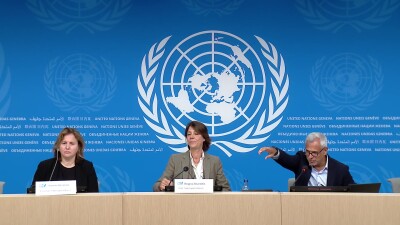
2. Various shots, briefing room
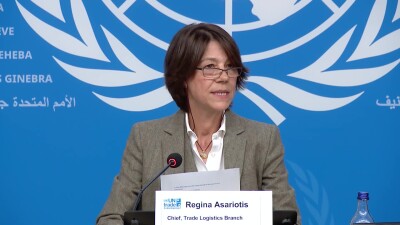
3. SOUNDBITE (English) Regina Asariotis, Chief, Trade Logistics Branch (UNCTAD):
"We know the global environment has become more complex. We know geopolitical tensions are affecting the Red Sea and have forced costly rerouting around the Cape of Good Hope. Risks remain, for example, in the Strait of Hormuz, a vital artery for global oil trade. New tariffs are disrupting established trade flows, freight rates are increasingly high and volatile, and delay and disruption are becoming the norm. And these challenges drive up costs. Small island developing states, least developed countries, and net food-importing nations are the most vulnerable, as higher freight costs quickly translate into more expensive imports and food insecurity."
4. Wide shot, briefing room
5. SOUNDBITE (English) Regina Asariotis, Chief, Trade Logistics Branch (UNCTAD):
"Seaborne trade has grown in 2024 by 2.2%. At the same time, rerouting has meant longer shipping routes, with ton-miles increasing by about 6%. This, in turn, has led to higher transport costs, delays, and greenhouse gas emissions, as well as a reshuffling of shipping networks affecting ports, including in Africa. For 2025, the big picture is heightened uncertainty and volatility, with growth forecast to slow to only half a percent."
6. Wide shot, briefing room
7. SOUNDBITE (English) Regina Asariotis, Chief, Trade Logistics Branch (UNCTAD):
"Digital solutions like maritime single windows and port community systems are proving essential for port efficiency and for smoother trade. But greater reliance on digital systems and solutions across the industry has also heightened cyber risks and vulnerabilities, which need to be addressed. Gender inclusiveness in ports is improving, with nearly 40% of managerial positions held by women, but women remain underrepresented in operational jobs, where automation may create new opportunities. Maritime workforce development and training will be vital for resilience. Building more consistent implementation and enforcement of rules to protect seafarers’ rights by flag states, ports, and the industry will be key to turning the tide on the growing shortage of seafarers."
8. Wide shot, briefing room
9. SOUNDBITE (English) Regina Asariotis, Chief, Trade Logistics Branch (UNCTAD):
"A major development is the IMO net zero framework, which will be considered for formal adoption this October. It would introduce a global fuel standard, a carbon pricing mechanism, and a net zero fund to support research, technology, infrastructure, and just transition initiatives, especially in small island developing states and least developed countries. And if adopted, revenues from this fund could help developing countries decarbonize."
10. Wide shot, briefing room
Similar Stories
1
1
1
Press Conferences | IOM , ITU , UNECE , UNICEF , WHO , WMO
UNICEF: Ebola, DRC - children orphans or separating them from parents and caregivers; IOM: Humanitarian needs in Djibouti amid arrivals from Yemen and increased migrant movements; WHO: Darfur, scale of health needs far exceeds available resources; WMO co-sponsored Global Heat Forum, Bangkok, monthly Global Seasonal Climate Update; UNECE: UN Forum of Mayors; ITU Plenipotentiary Conference 2026; WHO: child and adolescent obesity guidelines and new global roadmap to tackle pregnancy hypertension, a leading cause of maternal mortality
1
1
1
Press Conferences | OCHA , UN WOMEN , UNHCR , WFP , WHO , WTO , UNEP
OCHA – $160M CERF allocation to 12 underfunded crises; UNHCR – 5.8M refugee children remain out of school amid funding cuts; UN Women – Middle East escalation and food security among women/girls; WHO – Gaza supplies and overall situation; WFP – Yemen food insecurity and impact on global hunger ; UNEP - First International Conference of the Global Framework on Chemicals in Geneva | 16-20 November 2026
1
1
1
Press Conferences | UNHCR , WHO
Yemen's health system nears collapse amid conflict, causing rising casualties and medicine shortages.
1
1
1
Press Conferences | HRC
Update by the Expert Mechanism to Advance Racial Justice and Equality in Law Enforcement
1
1
1
Press Conferences | WIPO , WHO , UNICEF , UNHCR , IOM , WFP , FAO
WIPO Global Innovation Index 2026 launch and press conference, WHO Composition of influenza vaccines for the 2027 Southern Hemisphere flu season, UNICEF Yemen hunger and malnutrition; UNHCR Sudan displacement into Chad; IOM Ebola and population movements in DRC; WFP emergency food assistance in Nepal; and FAO food loss and waste.
2
1
2
Press Conferences | UNCTAD
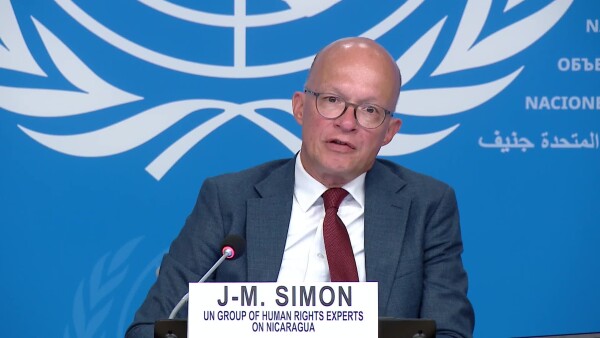
Gaza reconstruction needs reach $71.5 billion as Palestinian economy and public finances face severe strain. Latest UNCTAD report documents the loss of decades of development gains, economic collapse in Gaza and tightening economic constraints in the West Bank.
The report identifies three immediate priorities: transferring withheld Palestinian revenues, safeguarding the banking system and aligning reconstruction support with the documented scale of damage and economic losses.
1
1
1
Press Conferences | HRC
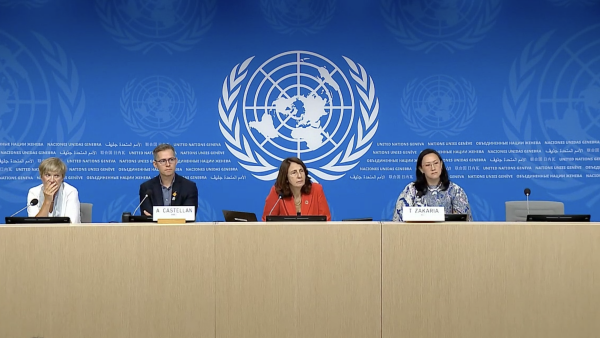
Press conference on the situation of human rights in Nicaragua by the UN Group of Human Rights Experts
1
1
1
Press Conferences | ITU , UNHCR , WHO , WMO
YEMEN - UNHCR: Escalating conflict in Yemen could fuel more displacement, refugee movement
CLIMATE - WHO / WMO: Health and Climate impact of El Niño
1
1
1
Press Conferences | HRC , OHCHR
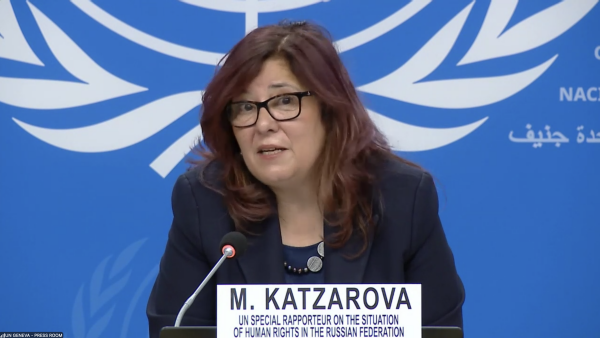
Mariana Katzarova discusses human rights in Russia as a UN Special Rapporteur.
1
1
1
Press Conferences | IOM , OHCHR , UN WOMEN , UNFPA , UNHCR , UNOPS , WHO
UN Geneva briefing: Yemen crisis worsens, urgent aid needed across multiple sectors.
1
1
1
Press Conferences | HRC
Press conference on the latest report of the Independent International Fact-Finding Mission on the Bolivarian Republic of Venezuela to the UN Human Rights Council
1
1
1
Press Conferences | OHCHR
Victims Still Waiting: A Global Briefing on Transitional Justice Around the World