

The United Nations Office at Geneva
Multimedia Newsroom
Press Conferences | HRC , WHO , UN WOMEN , WMO , ICRC , UNCTAD
Conférence de presse de l'ONU à Genève - 17 juin 2025
Plus de Gazaouis tués en essayant d'obtenir de la nourriture, les soins de santé proches d'un ‘désastre total’
Le système de santé de Gaza est à bout de souffle, submergé à maintes reprises par des dizaines de victimes tuées ou blessées près des sites de distribution d'aide, a déclaré mardi l'Organisation mondiale de la santé (OMS) des Nations Unies.
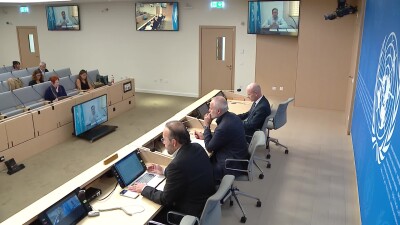
Parlant depuis l'enclave, le Dr Thanos Gargavanis, chirurgien traumatologue et responsable des urgences de l'OMS, a déclaré aux journalistes à Genève : « Nous marchons sur la fine ligne grise entre la capacité opérationnelle et le désastre total, chaque jour.»
Les services de santé sont « à peine disponibles » et difficiles d'accès, a-t-il dit, puisque plus de 80 pour cent du territoire de Gaza est sous ordre d'évacuation.
« L'espace humanitaire qui se réduit rend chaque activité de santé bien plus difficile que la veille », a insisté le Dr Garavanis.
Le représentant de l'OMS dans le territoire palestinien occupé, le Dr Rik Peeperkorn, a souligné de nouveaux rapports mardi matin d'un autre incident de victimes de masse avec « des centaines de victimes submergeant complètement le Complexe Médical Nasser » à Khan Younis, dans le sud de la bande.
Nasser est le plus grand hôpital de référence à Gaza et le seul hôpital principal restant à Khan Younis, a déclaré le Dr Peeperkorn. Il est actuellement situé dans la zone d'évacuation annoncée par les forces israéliennes le 12 juin.
L'hôpital Al-Amal voisin, géré par la Société du Croissant-Rouge Palestinien (PRCS), continue de fournir des services aux patients déjà présents, mais il est incapable d'admettre quiconque d'autre en raison des opérations militaires en cours.
« C'est ce que nous appelons un hôpital fonctionnel minimal », a déclaré le Dr Peeperkorn.
Seuls 17 des 36 hôpitaux de Gaza sont actuellement partiellement fonctionnels, les fournitures médicales sont extrêmement faibles et aucun carburant n'est entré dans la bande depuis plus de 100 jours.
Alors que les détails du dernier événement de victimes de masse continuaient d'arriver, le représentant de l'OMS a souligné la fréquence de tels incidents alors que les Gazaouis désespérés tentent d'accéder à l'aide.
Lundi, plus de 200 patients étaient arrivés à l'hôpital de campagne de la Croix-Rouge à Al Mawasi - le nombre le plus élevé reçu par l'établissement lors d'un seul incident de victimes de masse. Sur ce nombre, 28 patients auraient été déclarés morts. Juste un jour auparavant, le 15 juin, le même hôpital avait reçu au moins 170 patients, qui auraient tenté d'accéder à un site de distribution alimentaire.
Le Dr Gargavanis de l'OMS a averti que « les récentes initiatives de distribution alimentaire par des acteurs non onusiens entraînent à chaque fois des incidents de victimes de masse ».
Depuis fin mai, l'ONU et ses partenaires humanitaires ont été marginalisés à Gaza alors qu'un nouveau modèle de distribution d'aide soutenu par Israël et les États-Unis a commencé ses opérations dans le cadre de la Fondation Humanitaire de Gaza (GHF), qui utilise des entrepreneurs militaires privés, selon des rapports médiatiques.
Le chirurgien traumatologue de l'OMS a souligné une « corrélation constante » entre les emplacements des points de distribution alimentaire et les incidents de victimes de masse à Rafah, à Khan Younis et le long du corridor de Netzarim.
Interrogé sur le type de blessures subies par ceux qui cherchent de l'aide, et qui en est responsable, le Dr Garavanis a souligné que l'OMS n'est pas une agence médico-légale.
« Nous ne sommes pas en mesure d'identifier clairement à partir de la nature de la blessure » qui l'a causée, a-t-il dit. « Ce que nous pouvons dire, cependant, c'est que nous parlons de blessures par balle, et nous parlons de très rares incidents de blessures par éclats d'obus.»
L'ONU a averti à plusieurs reprises que le nouveau système de distribution d'aide n'est pas conforme aux principes humanitaires d'humanité, d'impartialité, d'indépendance et de neutralité. L'organisme mondial a également appelé à la levée des restrictions d'aide.
Le Dr Peeperkorn a insisté sur le fait que l'OMS doit être facilitée pour acheminer des fournitures à Gaza de manière rentable « par toutes les voies possibles » pour éviter d'autres fermetures de services médicaux. Il a déclaré que 33 camions de l'OMS avec des fournitures attendent à Al Arish en Égypte pour obtenir le passage dans l'enclave, avec 15 autres en attente en Cisjordanie occupée.
-fin-
Similar Stories
1
1
1
Press Conferences | UN WOMEN , WFP , WHO
UN WOMEN: Sudan Women and girls one year after the fall of El Fasher; increasing drone attacks across the country; WFP: DRC - Ebola spreads to eighth DRC province as WFP delivers food, builds treatment centres and keeps supplies moving; WHO - Update on Ebola (Bundibugyo Virus Disease)
1
12
1
1
Press Conferences , Images | UNOG
Closing Press Conference following the Sixth Consultative Meeting on Enhancing Coordination of Peace Initiatives and Efforts in Sudan

2
17
1
2
Edited News , Press Conferences , Images | OCHA , WMO
Two UN agencies teamed up on Wednesday to issue an appeal for immediate assistance to help communities already being impacted by the strongest El Niño on record.
1
1
1
Press Conferences | CITES
Wildlife trade and conservation policy discussions at the 81st meeting of the CITES Standing Committee (SC81)
1
1
1
Press Conferences | UNHCR , UNCTAD , WMO , OCHA , UNICEF , WHO
UNHCR Hungary’s 1956 Refugee Crisis: 70 Years On, UNCTAD World Investment Forum 2026, Doha, WMO Greenhouse Gas Bulletin and Climate Update for COP31, OCHA Afghanistan: Malnutrition, Girls’ Education and Recovery, UNICEF Yemen: Child Malnutrition and Unsafe Water in Taiz, WHO Inequalities in Noncommunicable Diseases and Risk Factors

1
1
1
Press Conferences | UNHCR
End of UNHCR's 77th Annual Executive Committee (ExCom) meeting week

1
1
1
Press Conferences | UNICEF , IOM , UNHCR
UN Special Assistant to the Personal Envoy Office (SUDAN): Peace Initiatives and Efforts in Sudan; UNICEF: Dire situation of children in Gaza; IOM: Damaged Homes and Energy Attacks Risk Displacing Ukrainians for this winter; UNHCR: update on EXCOM week

1
1
1
Press Conferences | IOM , UNDRR
UN stresses importance of household preparedness for disaster risk reduction.

1
1
1
Statements , Press Conferences | OHCHR

1
1
1
Press Conferences | UNHCR , UNICEF , IFRC , OHCHR , UN WOMEN , IOM , OCHA , WHO
UNHCR – ExCom Meeting, UNICEF – Nepal Recovery, IFRC – Flash Floods, WHO – Mental Health, IOM – South Sudan Floods, OCHA – DRC Humanitarian aid, UNHCR – Sahel Displacement, UNICEF – Yemen Update, IOM – Gaza Shelter, UN Women – Gaza Women, OHCHR – Arrests and detentions of Syrians by Israeli force

2
1
2
Press Conferences | UNCTAD
Presentation of the Trade and Developement Report 2026
Embargoed until 9 October 2026 at 11 a.m. (Geneva Time)
UNCTAD: UNCTAD’s flagship report finds that governments increasingly use industrial, trade, financial and technology policies to pursue economic and national security objectives. Market access and the ability to move into higher-value activities now depend more heavily on technology, finance and geopolitics.

1
1
1
Press Conferences | UPU
Release of the State of the Postal Sector Report 2026