

The United Nations Office at Geneva
Multimedia Newsroom
Aucune ordonnance d'évacuation donnée avant la frappe sur l'hôpital Kamal Adwan, déclare l'OMS
L'un des derniers centres de santé partiellement fonctionnels dans le nord de Gaza aurait été à nouveau touché dans la nuit de jeudi à vendredi par plusieurs frappes, laissant quatre travailleurs de la santé parmi les victimes et les morts, selon l'Organisation mondiale de la santé (OMS) des Nations Unies.
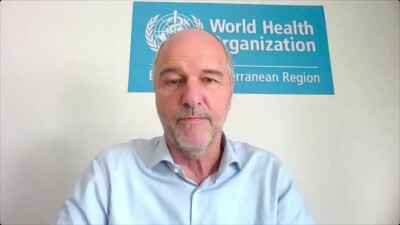
« Toute la nuit, il y a eu de lourds bombardements autour de l'hôpital Kamal Adwan », a déclaré le Dr Rik Peeperkorn, représentant de l'agence de santé de l'ONU pour le Territoire palestinien occupé. S'exprimant depuis Gaza devant des journalistes à Genève, il a rapporté qu'un char des Forces de défense israéliennes (FDI) a été vu à l'extérieur de l'hôpital tôt le matin, vers 4 heures, alors que les gens étaient invités à quitter le centre de santé. « Il n'y a eu aucun ordre officiel d'évacuation », a-t-il affirmé, seulement des rumeurs qui ont semé la panique. « Les gens ont commencé à escalader le mur pour s'échapper, et cette panique a attiré le feu des FDI. Il y a des rapports de morts et d'arrestations. »
Le responsable de l'agence de santé de l'ONU a affirmé que peu de fournitures d'aide et d'équipes de santé d'urgence ont atteint Kamal Adwan depuis le début de l'opération militaire israélienne dans l'extrême nord de Gaza début octobre. Cela a laissé l'hôpital sans la plupart des fournitures, y compris le carburant.
Après sept semaines de tentatives infructueuses et de missions humanitaires refusées, une Équipe médicale d'urgence internationale (EMT) avec des fournitures de base a finalement été déployée à Kamal Adwan « il y a moins d'une semaine », a expliqué le Dr Peeperkorn. L'équipe comprenait deux chirurgiens, deux infirmières d'urgence, un gynécologue et un logisticien. Le déploiement de l'EMT avait été refusé au moins cinq fois au cours des dernières semaines. Leur mission a été écourtée.
« Ils sont juste là, et en une semaine, ils sont à nouveau partis. Ce n'est pas seulement incompréhensible pour moi, mais aussi incroyablement, incroyablement triste », a déclaré le Dr Peeperkorn, qui a ajouté qu'aucun chirurgien ne reste à l'hôpital Kamal Adwan.
Depuis octobre 2023, 58 pour cent des 273 missions dirigées par l'OMS à l'intérieur de Gaza ont été soit refusées, annulées ou entravées.
Cela a ajouté à la tâche urgente mais extrêmement difficile d'évacuer les patients qui ont besoin d'un soutien médical. Depuis le 7 octobre 2023 et le début de la guerre déclenchée par les attaques terroristes menées par le Hamas en Israël, 5 325 patients ont été évacués de Gaza. Près de 5 000 ont voyagé via le passage de Rafah avant sa fermeture le 7 mai dernier, dont 4 000 enfants. L'agence de santé de l'ONU estime qu'au moins 12 000 patients à travers Gaza ont encore besoin d'une évacuation médicale pour survivre. Seulement 378 ont été évacués depuis la fermeture de Rafah.
Au moins 44 612 Palestiniens ont été tués et 105 834 blessés depuis le début de la guerre le 7 octobre 2023, selon les autorités sanitaires palestiniennes. La majorité des personnes tuées étaient des femmes et des enfants.
Fin
Histoire : “Système de santé de Gaza – OMS” – 06 décembre 2024
Orateurs :
· Dr. Rik Peeperkorn, représentant de l'Organisation Mondiale de la Santé (OMS) pour le Territoire Palestinien Occupé (parlant depuis Gaza)
TRT : 02’25”
SOURCE : UNTV CH
LANGUE : ANGLAIS / NATS
FORMAT D'IMAGE : 16:9
DATE : 06 décembre 2024 - GENÈVE, SUISSE
Conférence de presse à Genève
LISTE DES PLANS
- Plan moyen extérieur : allée des drapeaux de l'ONU.
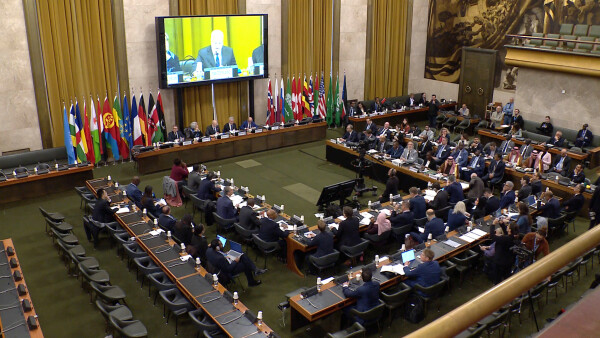
- Plan large de la salle de conférence de presse.
- EXTRAIT SONORE (Anglais) Dr. Rik Peeperkorn, représentant de l'Organisation Mondiale de la Santé (OMS) pour le Territoire Palestinien Occupé : “Il n'y a pas eu d'ordre officiel d'évacuation.”
- Plan moyen de la salle de conférence de presse et Dr. Peeperkorn à l'écran via Zoom.
- EXTRAIT SONORE (Anglais) Dr. Rik Peeperkorn, représentant de l'Organisation Mondiale de la Santé (OMS) pour le Territoire Palestinien Occupé : “Toute la nuit, il y a eu de lourds bombardements autour de l'hôpital près de Kamal Adwan. Tôt le matin, vers 4 heures, un char de l'IDF a été aperçu à l'extérieur de l'hôpital et les gens ont été informés qu'ils devaient tous quitter l'hôpital.”
- Plan large de la salle de conférence de presse.
- EXTRAIT SONORE (Anglais) Dr. Rik Peeperkorn, représentant de l'Organisation Mondiale de la Santé (OMS) pour le Territoire Palestinien Occupé : “Les gens ont commencé à escalader le mur pour s'échapper, et cette panique a attiré les tirs de l'IDF. Il y a des rapports de décès et aussi de détentions, d'arrestations.”
- Plan large des journalistes dans la salle de conférence de presse.
- EXTRAIT SONORE (Anglais) Dr. Rik Peeperkorn, représentant de l'Organisation Mondiale de la Santé (OMS) pour le Territoire Palestinien Occupé : “Nous avons récemment amené l'Équipe Médicale d'Urgence (EMT) ‘Mercy’ à Kamal Adwan, il y a moins d'une semaine. Et nous avons apporté 10 000 litres de carburant, des colis alimentaires pour les patients et le personnel, des unités de sang, etc., y compris cette EMT. Et le déploiement de l'EMT a été refusé au moins cinq fois au cours des deux dernières semaines.”
- Plan large des journalistes dans la salle de conférence de presse.
- EXTRAIT SONORE (Anglais) Dr. Rik Peeperkorn, représentant de l'Organisation Mondiale de la Santé (OMS) pour le Territoire Palestinien Occupé : “Ils sont juste là, et maintenant en une semaine, ils sont à nouveau partis. Ce n'est pas seulement incompréhensible pour moi, mais aussi incroyablement, incroyablement triste.”
- Plan moyen d'un opérateur MCR à l'arrière de la salle de conférence de presse.
- EXTRAIT SONORE (Anglais) Dr. Rik Peeperkorn, représentant de l'Organisation Mondiale de la Santé (OMS) pour le Territoire Palestinien Occupé : “Depuis le 7 octobre 2023, au total, 5 325 patients ont été évacués hors de Gaza. Parmi eux, presque 5 000 ont été évacués via le passage de Rafah avant le 7 mai, y compris 4 000 enfants. Nous estimons qu'au moins 12 000 patients à travers Gaza ont encore besoin d'une évacuation médicale pour survivre.”
- Plans variés de la salle de conférence de presse.
Similar Stories
1
1
1
Edited News , B-roll , Conferences | UNITED NATIONS , UNOG
Arrivals, roundtable and family photo-op at the 6th Consultative Meeting on Enhancing Coordination of Peace Initiatives and Efforts in Sudan

1
1
1
Edited News | UNICEF , WHO , UNHCR
Yemen war continues to force families from homes amid hunger and disease
More than 250,000 people have now fled renewed fighting in Yemen, the UN said on Tuesday, citing particular concern for those sheltering in the southwestern city of Taiz and the wider governorate, where access is “essentially blocked”.

1
1
1
Edited News | UNICEF
A little over one year since a ceasefire agreement was announced between Hamas fighters and Israel, more than 340 children have been reported killed and hundreds more injured, the UN Children’s Fund, UNICEF, said on Friday.

1
1
1
Edited News | UNICEF , IFRC
Six weeks after Nepal’s deadly flooding disaster, communities are still struggling to rebuild their lives, but they will need sustained help as global warming increases the risk of another Himalayan catastrophe, the UN Children’s Fund (UNICEF) said on Friday.

1
1
1
Edited News | WHO
In suspected Russia plague death, testing and monitoring underway – WHO
The death of a lab worker in Russia’s Siberia region has sparked concerns about plague being the cause, the UN World Health Organization (WHO) said on Tuesday, adding that it was following the situation closely.

1
1
Edited News | OHCHR , UNOG
UN Human Rights Chief Volker Türk on Friday provided and oral update to the 63rd session of the Human rights Council on Ukraine.

1
1
1
Edited News | OHCHR , UNOG
UN Human Rights Chief Volker Türk on Friday provided and oral update to the 63rd session of the Human rights Council on the human rights situation in Haiti.

1
1
1
Edited News | WHO
Repeated delays in bringing lifesaving medicines, prosthetics and more from Israel into Gaza risk having devastating consequences on Palestinians who urgently need them in the wartorn enclave, the UN World Health Organization (WHO) said on Friday. “A truck full of non-priority supplies or the right supplies arriving too late, doesn't save lives. That's the question that actually matters," said Dr Reinhilde Van De Weerdt, WHO Representative in the OPT.

1
1
1
Edited News | WHO
DRC: Early access to care and oxygen decisive for Ebola patients’ survival – WHO
In the Democratic Republic of the Congo (DRC), health workers fighting the country’s largest-ever Ebola outbreak are struggling to overcome critical challenges to patient care, the UN World Health Organization (WHO) warned on Tuesday.

1
1
1
Edited News | OCHA , UN
Civilians in Iran are continuing to feel the consequences of months of conflict and military escalation, the UN’s top official in the country has said, as loss of life, damage to civilian infrastructure and mounting economic pressures leave many facing continued uncertainty.
1
1
1
Edited News | WHO , UNICEF
Aid agencies in Yemen highlighted the growing hunger emergency sparked by renewed fighting between Houthi opposition forces and Government troops, after mobile health clinics reported that hundreds of children displaced by the violence are suffering from the most deadly form of malnutrition.