

The United Nations Office at Geneva
Multimedia Newsroom
Nigeria : Des centaines de milliers de personnes ont besoin d'aide alors que les inondations détruisent des maisons – PAM
Dans le nord-est du Nigeria, les humanitaires de l'ONU se précipitent pour aider des dizaines de personnes nouvellement déplacées après que des pluies torrentielles ont provoqué l'effondrement d'un barrage et inondé la région, a déclaré vendredi le Programme alimentaire mondial (PAM) de l'ONU.
Le barrage d'Alau, situé à un peu plus de 10 miles au sud de Maiduguri, la capitale de l'État de Borno, s'est effondré au milieu de la nuit de mardi, forçant des centaines de milliers de personnes à quitter leurs maisons.
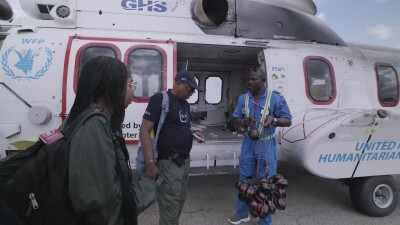
Emmanuel Bigenimana, chef du bureau du PAM à Maiduguri, a déclaré qu'il avait réussi à survoler la ville avec un hélicoptère du service aérien humanitaire de l'ONU (UNHAS), dépêché par le PAM pour effectuer une évaluation rapide des dégâts et des besoins.
« Ce que j'ai vu est vraiment déchirant », a-t-il dit, décrivant des maisons, des infrastructures, des routes, des écoles, des hôpitaux submergés par l'eau.
« Beaucoup, beaucoup de gens - je parle de plus de 200 000 - 300 000 personnes déplacées - sont entassés dans plusieurs camps de déplacés internes (PDI) et aussi dans les rues. »
Le PAM a rapporté que l'effondrement du barrage a forcé l'eau de la rivière à submerger 50 % de Maiduguri et que le gouvernement de l'État a émis des ordres d'évacuation pour les résidents des zones touchées, tout en appelant à un soutien humanitaire.
Parlant depuis le centre de l'un des camps de PDI, M. Bigenimana a déclaré que le PAM avait réussi à ouvrir des soupes populaires pour fournir des repas chauds aux personnes touchées et qu'il intensifiait sa réponse avec les autorités et les partenaires.
Les soupes populaires situées dans trois camps - Teachers’ Village, Asheikh et Yerwa - visent à fournir des repas chauds nutritifs à « 50 000 des enfants, femmes et hommes les plus touchés qui ont perdu leurs maisons », a déclaré le PAM, mais une aide supplémentaire est nécessaire.
« C'est vraiment un fardeau supplémentaire aux crises déjà existantes », a souligné M. Bigenimana du PAM. « Cette région est confrontée à un conflit depuis une décennie. »
L'État de Borno était l'une des zones les plus touchées par l'insurrection de Boko Haram qui, selon l'ONU plus tôt cette année, a été en partie contrôlée.
« Plus récemment, nous avons vu l'inflation alimentaire, les prix des aliments ont grimpé en flèche, affectant vraiment des millions de personnes confrontées à l'insécurité alimentaire », a ajouté M. Bigenimana.
Les impacts des conditions météorologiques extrêmes se font sentir sévèrement à travers le pays. Environ 800 000 personnes dans 29 États du Nigeria ont été touchées par les inondations en septembre 2024, a déclaré le PAM, et plus de 550 000 hectares de terres agricoles ont été inondés. En mars 2024, environ 32 millions de personnes dans le pays étaient déjà confrontées à une faim aiguë.
L'agence alimentaire de l'ONU a déclaré qu'elle avait besoin de 147,9 millions de dollars pour soutenir les personnes en situation d'insécurité alimentaire dans le nord-est du Nigeria au cours des six prochains mois.
Pour les populations touchées par les inondations à Maiduguri, « la récupération prendra du temps », a déclaré M. Bigenimana. « Nous avons besoin de plus de ressources pour sauver des vies et pour mettre en place des efforts pour répondre aux crises - et aussi penser à une récupération et des solutions à plus long terme. »
-Fin-
Histoire : Inondations au Nigeria - PAM – 13 septembre 2024
TRT : 03’05”
SOURCE : UNTV CH
LANGUE : ANGLAIS / NATS
RATIO D'ASPECT : 16:9
DATELINE : 13 septembre 2024 - Maiduguri, Nigeria
LISTE DE PLANS
- Plan de drone montrant la dévastation et les inondations à Maiduguri, Nigeria.
- EXTRAIT SONORE (Anglais) Emmanuel Bigenimana, Chef du bureau de zone du PAM à Maiduguri :”Le barrage d'Alau situé à quelques kilomètres de cette ville s'est effondré au milieu de la nuit et a causé des inondations massives dans cette ville.”
- Plan de drone montrant la dévastation et les inondations à Maiduguri, Nigeria.
- EXTRAIT SONORE (Anglais) Emmanuel Bigenimana, Chef du bureau de zone du PAM à Maiduguri : “Hier, j'ai réussi à survoler la ville avec un hélicoptère du PAM et ce que j'ai vu est vraiment déchirant. J'ai vu plusieurs maisons, infrastructures, routes, écoles, hôpitaux submergés par l'eau.”
- Plan moyen de l'équipe du PAM sur le terrain marchant à côté des personnes déplacées à Maiduguri, Nigeria.
- EXTRAIT SONORE (Anglais) Emmanuel Bigenimana, Chef du bureau de zone du PAM à Maiduguri : “Beaucoup, beaucoup de gens - je parle de plus de 200 000 - 300 000 personnes déplacées qui sont surpeuplées dans plusieurs camps de déplacés internes et aussi dans les rues. Le PAM a réussi à ouvrir des cuisines communautaires pour fournir des repas chauds aux personnes touchées et nous intensifions nos efforts avec nos partenaires, en complétant la réponse du PAM et aussi celle du gouvernement.”
- Plan moyen de l'équipe du PAM sur le terrain à Maiduguri, Nigeria.
- EXTRAIT SONORE (Anglais) Emmanuel Bigenimana, Chef du bureau de zone du PAM à Maiduguri : “C'est vraiment un fardeau supplémentaire aux crises déjà existantes. Cette région fait face à des conflits depuis une décennie. Et plus récemment, nous avons vu l'inflation des prix alimentaires, les prix des denrées alimentaires ont explosé, affectant vraiment des millions de personnes qui font face à l'insécurité alimentaire.”
- Plan moyen de l'équipe du PAM sur le terrain parlant avec les déplacés à Maiduguri, Nigeria.
- EXTRAIT SONORE (Anglais) Emmanuel Bigenimana, Chef du bureau de zone du PAM à Maiduguri : “La récupération prendra du temps. Et aussi, nous avons besoin de plus de ressources pour sauver des vies et pour mettre en place des efforts pour répondre aux crises et aussi penser à une récupération et des solutions à long terme.”
- Plan moyen de l'équipe du PAM sur le terrain parlant avec les déplacés à Maiduguri, Nigeria.
- Plan large de l'équipe du PAM sur le terrain parlant avec les déplacés à Maiduguri, Nigeria.
- Plan rapproché du panneau du centre de stabilisation Intersos.
- Plan de drone montrant la dévastation et les inondations à Maiduguri, Nigeria.
- Équipe du PAM près d'un hélicoptère.
- Plan depuis l'hélicoptère montrant les inondations à Maiduguri, Nigeria.
- Plan aérien montrant les inondations et les dégâts à Maiduguri, Nigeria.
- Plan moyen de l'équipe du PAM déchargeant l'aide d'urgence de l'hélicoptère.
- Plan moyen de l'équipe du PAM tenant des boîtes d'aide d'urgence.
- Plan moyen de l'équipe du PAM déchargeant l'aide d'urgence de l'hélicoptère.
- Plan large de l'équipe du PAM déchargeant l'aide d'urgence de l'hélicoptère.
Similar Stories
1
1
1
Edited News | OCHA , UNICEF , WFP
Aid agencies warned on Friday of the fast-developing humanitarian emergency inside Taiz City in Yemen, which has been encircled by de facto Houthi forces fighting government troops along the country’s west coast.

2
17
1
2
Edited News , Press Conferences , Images | OCHA , WMO
Two UN agencies teamed up on Wednesday to issue an appeal for immediate assistance to help communities already being impacted by the strongest El Niño on record.

3
16
2
2
Edited News , B-roll , Conferences , Images | UNITED NATIONS , UNOG
Sixth Consultative Meeting on Enhancing Coordination of Peace Initiatives and Efforts for Sudan

1
1
1
Edited News | UNICEF , WHO , UNHCR
Yemen war continues to force families from homes amid hunger and disease
More than 250,000 people have now fled renewed fighting in Yemen, the UN said on Tuesday, citing particular concern for those sheltering in the southwestern city of Taiz and the wider governorate, where access is “essentially blocked”.

1
1
1
Edited News | UNICEF
A little over one year since a ceasefire agreement was announced between Hamas fighters and Israel, more than 340 children have been reported killed and hundreds more injured, the UN Children’s Fund, UNICEF, said on Friday.

1
1
1
Edited News | UNICEF , IFRC
Six weeks after Nepal’s deadly flooding disaster, communities are still struggling to rebuild their lives, but they will need sustained help as global warming increases the risk of another Himalayan catastrophe, the UN Children’s Fund (UNICEF) said on Friday.

1
1
1
Edited News | WHO
In suspected Russia plague death, testing and monitoring underway – WHO
The death of a lab worker in Russia’s Siberia region has sparked concerns about plague being the cause, the UN World Health Organization (WHO) said on Tuesday, adding that it was following the situation closely.

1
1
Edited News | OHCHR , UNOG
UN Human Rights Chief Volker Türk on Friday provided and oral update to the 63rd session of the Human rights Council on Ukraine.

1
1
1
Edited News | OHCHR , UNOG
UN Human Rights Chief Volker Türk on Friday provided and oral update to the 63rd session of the Human rights Council on the human rights situation in Haiti.

1
1
1
Edited News | WHO
Repeated delays in bringing lifesaving medicines, prosthetics and more from Israel into Gaza risk having devastating consequences on Palestinians who urgently need them in the wartorn enclave, the UN World Health Organization (WHO) said on Friday. “A truck full of non-priority supplies or the right supplies arriving too late, doesn't save lives. That's the question that actually matters," said Dr Reinhilde Van De Weerdt, WHO Representative in the OPT.

1
1
1
Edited News | WHO
DRC: Early access to care and oxygen decisive for Ebola patients’ survival – WHO
In the Democratic Republic of the Congo (DRC), health workers fighting the country’s largest-ever Ebola outbreak are struggling to overcome critical challenges to patient care, the UN World Health Organization (WHO) warned on Tuesday.

1
1
1
Edited News | OCHA , UN
Civilians in Iran are continuing to feel the consequences of months of conflict and military escalation, the UN’s top official in the country has said, as loss of life, damage to civilian infrastructure and mounting economic pressures leave many facing continued uncertainty.