

The United Nations Office at Geneva
Multimedia Newsroom
Edited News | UNICEF , IOM
Les violences sexuelles et la famine au Soudan alertent l'UNICEF - OIM 13 août 2024
La violence sexuelle et la famine menacent les déplacés du Soudan : UNICEF, OIM
La crise humanitaire croissante au Soudan, causée par près de 16 mois de guerre, a laissé d'innombrables femmes et filles victimes de violences sexuelles et de viols, et des dizaines de milliers d'enfants risquent de mourir de faim, ont déclaré mardi les équipes d'aide des Nations Unies.
L'alerte de l'agence des Nations Unies pour les migrations, l'OIM, et du Fonds des Nations Unies pour l'enfance, l'UNICEF, survient au milieu d'une violence croissante à travers le Soudan qui a créé la plus grande crise de déplacement au monde et a déclenché des craintes de famine dans un camp pour personnes déplacées par la violence.
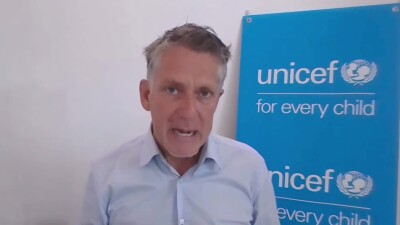
« Sans action, des dizaines de milliers d'enfants soudanais pourraient mourir dans les mois à venir… et ce n'est en aucun cas le pire scénario », a déclaré James Elder, porte-parole de l'UNICEF. « Toute épidémie de maladie et nous verrons la mortalité monter en flèche ; la maladie est notre plus grande peur. »
HISTOIRE : Alerte sur la violence sexuelle et la famine au Soudan – UNICEF, OIM
TRT : 2 min 50s
SOURCE : UNTV CH
RESTRICTIONS : AUCUNE
LANGUE : ANGLAIS / NATS
RATIO D'ASPECT : 16:9
DATELINE : 13 AOÛT 2024 GENÈVE, SUISSE
LISTE DES PLANS
- Extérieur moyen : allée des drapeaux de l'ONU à Genève.
- Plan moyen-large, salle de presse, ONU Genève.
- EXTRAIT SONORE (Anglais) – James Elder, orateur, UNICEF (via Zoom depuis le Soudan) : « Hier à Khartoum, j'ai parlé à un travailleur médical senior qui a donné un aperçu de l'ampleur de la violence sexuelle pendant cette guerre. Elle a expliqué qu'elle a eu un contact direct avec des centaines, des centaines de femmes et de filles, certaines aussi jeunes que huit ans, qui ont été violées. Beaucoup ont été retenues captives pendant des semaines. Elle a également parlé du nombre alarmant de bébés nés – nés après un viol – qui sont maintenant abandonnés. »
- Plan moyen-large, salle de presse, ONU Genève.
- EXTRAIT SONORE (Anglais) – James Elder, orateur, UNICEF : « Sans action, des dizaines de milliers d'enfants soudanais pourraient mourir dans les mois à venir, des dizaines de milliers. Et ce n'est en aucun cas un scénario du pire. Toute épidémie de maladie et nous verrons la mortalité monter en flèche. La maladie est notre plus grande peur. »
- Plan large, salle de presse, ONU Genève, écrans de télévision montrant des orateurs extérieurs.
- EXTRAIT SONORE (Anglais) – Mohamed Refaat, Chef de mission de l'OIM au Soudan (depuis Port-Soudan) : « Entre le 24 juin et aujourd'hui - donc en moins d'un mois et demi - nous avons compté 736 000 personnes déplacées. Ce n'est qu'une seule ligne de front. Si vous ajoutez à cela les autres - je vous donne un exemple, Khartoum : sur les 10,7 millions de déplacés internes au Soudan, 35 % d'entre eux viennent de la capitale du Soudan, Khartoum. C'est presque toute la capitale du pays qui a été déplacée. Alors imaginez l'ampleur du déplacement. »
- Plan moyen-large, salle de presse, ONU Genève.
- EXTRAIT SONORE (Anglais) – Mohamed Refaat, Chef de mission de l'OIM au Soudan (depuis Port-Soudan) : « Nous avons encore un grand nombre de civils qui sont piégés, extrêmement, dans un environnement de guerre très hostile, sans aucun accès aux services de santé. Ils marchent sur des centaines, peut-être de mètres ou de kilomètres, beaucoup d'entre eux dans un environnement très hostile essayant de se procurer de la nourriture. Les prix des denrées alimentaires montent en flèche. Il y a une pénurie de tout. Il y a des milices qui ont pris plusieurs propriétés partout. Donc il y a des civils qui sont piégés là-bas, ils ne peuvent pas sortir, peut-être qu'ils n'ont pas d'endroit où aller. »
- EXTRAIT SONORE (Anglais) – James Elder, orateur, UNICEF : »
- Plan moyen-large, salle de presse, ONU Genève, moniteurs de télévision montrant des orateurs externes.
- EXTRAIT SONORE (Anglais) – James Elder, orateur, UNICEF : « S'il y a une épidémie de rougeole, s'il y a de la diarrhée, ou s'il y a des infections respiratoires, alors les perspectives terrifiantes pour les enfants au Soudan s'aggravent considérablement. En se rappelant que dans les conditions de vie actuelles, avec les fortes pluies et les inondations, ces maladies se propageront comme une traînée de poudre. »
- Plan moyen-large, journalistes et moniteurs de télévision montrant M. Elder parlant via lien vidéo.
- Plan moyen-large, journalistes et écrans de télévision.
- Plan moyen, participants, journalistes.
- Plan moyen, journalistes.
Similar Stories

1
1
1
Edited News | OCHA , UNICEF , WFP
Aid agencies warned on Friday of the fast-developing humanitarian emergency inside Taiz City in Yemen, which has been encircled by de facto Houthi forces fighting government troops along the country’s west coast.

2
17
1
2
Edited News , Press Conferences , Images | OCHA , WMO
Two UN agencies teamed up on Wednesday to issue an appeal for immediate assistance to help communities already being impacted by the strongest El Niño on record.

3
16
2
2
Edited News , B-roll , Conferences , Images | UNITED NATIONS , UNOG
Sixth Consultative Meeting on Enhancing Coordination of Peace Initiatives and Efforts for Sudan

1
1
1
Edited News | UNICEF , WHO , UNHCR
Yemen war continues to force families from homes amid hunger and disease
More than 250,000 people have now fled renewed fighting in Yemen, the UN said on Tuesday, citing particular concern for those sheltering in the southwestern city of Taiz and the wider governorate, where access is “essentially blocked”.

1
1
1
Edited News | UNICEF
A little over one year since a ceasefire agreement was announced between Hamas fighters and Israel, more than 340 children have been reported killed and hundreds more injured, the UN Children’s Fund, UNICEF, said on Friday.

1
1
1
Edited News | UNICEF , IFRC
Six weeks after Nepal’s deadly flooding disaster, communities are still struggling to rebuild their lives, but they will need sustained help as global warming increases the risk of another Himalayan catastrophe, the UN Children’s Fund (UNICEF) said on Friday.

1
1
1
Edited News | WHO
In suspected Russia plague death, testing and monitoring underway – WHO
The death of a lab worker in Russia’s Siberia region has sparked concerns about plague being the cause, the UN World Health Organization (WHO) said on Tuesday, adding that it was following the situation closely.

1
1
Edited News | OHCHR , UNOG
UN Human Rights Chief Volker Türk on Friday provided and oral update to the 63rd session of the Human rights Council on Ukraine.

1
1
1
Edited News | OHCHR , UNOG
UN Human Rights Chief Volker Türk on Friday provided and oral update to the 63rd session of the Human rights Council on the human rights situation in Haiti.

1
1
1
Edited News | WHO
Repeated delays in bringing lifesaving medicines, prosthetics and more from Israel into Gaza risk having devastating consequences on Palestinians who urgently need them in the wartorn enclave, the UN World Health Organization (WHO) said on Friday. “A truck full of non-priority supplies or the right supplies arriving too late, doesn't save lives. That's the question that actually matters," said Dr Reinhilde Van De Weerdt, WHO Representative in the OPT.

1
1
1
Edited News | WHO
DRC: Early access to care and oxygen decisive for Ebola patients’ survival – WHO
In the Democratic Republic of the Congo (DRC), health workers fighting the country’s largest-ever Ebola outbreak are struggling to overcome critical challenges to patient care, the UN World Health Organization (WHO) warned on Tuesday.

1
1
1
Edited News | OCHA , UN
Civilians in Iran are continuing to feel the consequences of months of conflict and military escalation, the UN’s top official in the country has said, as loss of life, damage to civilian infrastructure and mounting economic pressures leave many facing continued uncertainty.