

The United Nations Office at Geneva
Multimedia Newsroom
Edited News , Press Conferences | UNFPA
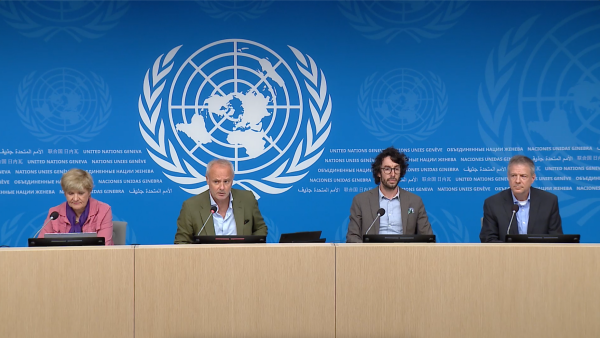
Conférence de presse de l'UNFPA : Rapport sur la population mondiale 2024 - 15 avril 2024
Le Fonds des Nations unies pour la population (UNFPA), l'agence des Nations unies pour la santé sexuelle et reproductive, lance le rapport sur l'État de la population mondiale 2024 : "Vies entrelacées, fils d'espoir : Mettre fin aux inégalités en matière de santé sexuelle et reproductive et de droits" lance le rapport
Le monde a réalisé des progrès impressionnants en matière de santé sexuelle et reproductive et de droits des femmes au cours des 30 dernières années. Mais ces progrès se sont récemment enlisés, voire inversés dans certains cas. Le rapport sur l'État de la population mondiale 2024 de l'UNFPA partagera de nouvelles recherches sur les raisons de ce phénomène, y compris certaines "vérités difficiles" sur l'impact continu du sexisme et du racisme systémiques sur la santé des femmes.
Orateur:
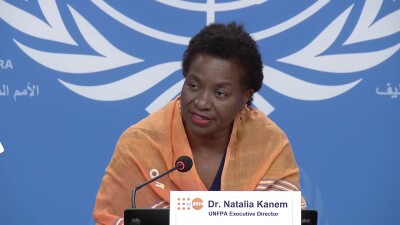
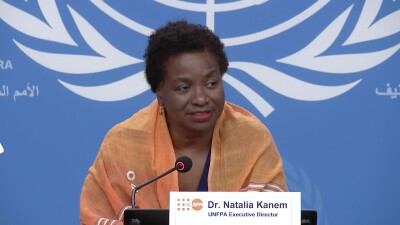
- Dr. Natalia Kanem, Directrice exécutive de l'UNFPA
HISTOIRE : Lancement du rapport annuel de l'UNFPA
TRT : 3:27”
SOURCE : UNTV CH
RESTRICTIONS : AUCUNE
LANGUE : ANGLAIS / NATS
FORMAT D'IMAGE : 16:9
DATE : 15 avril 2024 GENÈVE, SUISSE
1. Plan moyen : Allée des drapeaux de l'ONU
2. Plan large : Orateurs au podium
3.EXTRAIT SONORE (Anglais) – Dr. Natalia Kanem, Directrice exécutive de l'UNFPA : “Le monde n'a fait aucun progrès pour sauver les femmes des décès évitables pendant la grossesse et l'accouchement. Une femme sur quatre ne peut pas prendre ses propres décisions en matière de soins de santé. Une femme sur quatre ne peut pas dire non au sexe. Et près d'une sur dix ne peut pas faire ses propres choix quant à l'utilisation ou non de la contraception.”
4. Plan moyen : Personnel technique dans la salle de contrôle avec caméraman et photographe devant
5. EXTRAIT SONORE (Anglais) – Dr. Natalia Kanem, Directrice exécutive de l'UNFPA : “Nous avons, pour la première fois, des données sur l'évolution de l'autonomie corporelle des femmes au fil du temps et dans 40 % des pays disposant de données, elle diminue en réalité. Pourquoi ? Une raison importante que montre notre rapport est que nous n'avons pas donné la priorité à atteindre ceux qui sont les plus en retard.”
6. Gros plan : Photographe à côté de l'écran avec l'orateur
7. EXTRAIT SONORE (Anglais) – Dr. Natalia Kanem, Directrice exécutive de l'UNFPA : “Lorsque nous examinons les disparités ethniques, nous constatons que les groupes qui ont le plus bénéficié sont ceux qui avaient le moins de barrières au départ. L'accès aux contraceptifs modernes varie selon la race, le statut de réfugié et de migrant, l'éducation et la localisation. Et bien que la violence basée sur le genre soit malheureusement omniprésente partout, le risque augmente en fonction de l'âge et de l'orientation sexuelle.”
8. Plan moyen : Journalistes dans la salle de presse
9. EXTRAIT SONORE (Anglais) - Dr. Natalia Kanem, Directrice exécutive de l'UNFPA : “Les femmes autochtones se voient systématiquement refuser des soins de santé maternelle adaptés à leur culture. En conséquence, ces groupes sont beaucoup plus susceptibles, et dans certains endroits, six fois plus susceptibles, de mourir pendant la grossesse ou l'accouchement. Les femmes et les jeunes handicapés, les migrants, les personnes vivant avec le VIH et les personnes de genre divers continuent de subir des discriminations et des exclusions lorsqu'ils cherchent à obtenir des soins de santé sexuelle et reproductive.”
10. Gros plan : Journaliste écoutant
11. EXTRAIT SONORE (Anglais) - Dr. Natalia Kanem, Directrice exécutive de l'UNFPA : “Pour le milliard de personnes estimées à vivre avec un handicap au cours de leur vie, pour les 700 millions de personnes vivant dans une pauvreté extrême, pour les 160 millions de femmes ayant un besoin non satisfait de contraception et tant d'autres. Ces inégalités ne devraient pas être politisées. Elles ne devraient pas être utilisées comme une accusation de partialité, ni être des points de division.”
Similar Stories
1
1
1
Press Conferences | UNHCR
End of UNHCR's 77th Annual Executive Committee (ExCom) meeting week

1
1
1
Edited News | UNICEF
A little over one year since a ceasefire agreement was announced between Hamas fighters and Israel, more than 340 children have been reported killed and hundreds more injured, the UN Children’s Fund, UNICEF, said on Friday.
1
1
1
Press Conferences | UNICEF , IOM , UNHCR
UN Special Assistant to the Personal Envoy Office (SUDAN): Peace Initiatives and Efforts in Sudan; UNICEF: Dire situation of children in Gaza; IOM: Damaged Homes and Energy Attacks Risk Displacing Ukrainians for this winter; UNHCR: update on EXCOM week

1
1
1
Press Conferences | IOM , UNDRR
UN stresses importance of household preparedness for disaster risk reduction.

1
1
1
Edited News | UNICEF , IFRC
Six weeks after Nepal’s deadly flooding disaster, communities are still struggling to rebuild their lives, but they will need sustained help as global warming increases the risk of another Himalayan catastrophe, the UN Children’s Fund (UNICEF) said on Friday.
1
1
1
Statements , Press Conferences | OHCHR
1
1
1
Press Conferences | UNHCR , UNICEF , IFRC , OHCHR , UN WOMEN , IOM , OCHA , WHO
UNHCR – ExCom Meeting, UNICEF – Nepal Recovery, IFRC – Flash Floods, WHO – Mental Health, IOM – South Sudan Floods, OCHA – DRC Humanitarian aid, UNHCR – Sahel Displacement, UNICEF – Yemen Update, IOM – Gaza Shelter, UN Women – Gaza Women, OHCHR – Arrests and detentions of Syrians by Israeli force
2
1
2
Press Conferences | UNCTAD
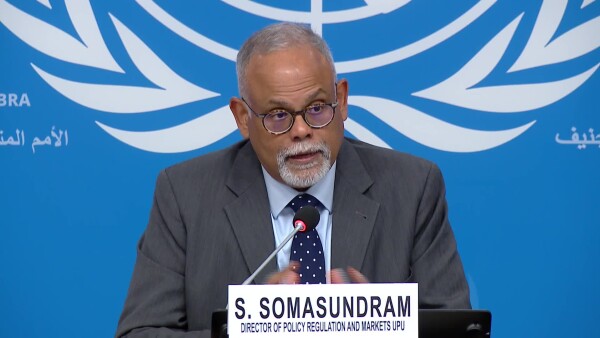
Presentation of the Trade and Developement Report 2026
Embargoed until 9 October 2026 at 11 a.m. (Geneva Time)
UNCTAD: UNCTAD’s flagship report finds that governments increasingly use industrial, trade, financial and technology policies to pursue economic and national security objectives. Market access and the ability to move into higher-value activities now depend more heavily on technology, finance and geopolitics.
1
1
1
Press Conferences | UPU
Release of the State of the Postal Sector Report 2026

1
1
1
Edited News | WHO
In suspected Russia plague death, testing and monitoring underway – WHO
The death of a lab worker in Russia’s Siberia region has sparked concerns about plague being the cause, the UN World Health Organization (WHO) said on Tuesday, adding that it was following the situation closely.
1
1
1
Press Conferences | IOM , ITU , UNECE , UNICEF , WHO , WMO
UNICEF: Ebola, DRC - children orphans or separating them from parents and caregivers; IOM: Humanitarian needs in Djibouti amid arrivals from Yemen and increased migrant movements; WHO: Darfur, scale of health needs far exceeds available resources; WMO co-sponsored Global Heat Forum, Bangkok, monthly Global Seasonal Climate Update; UNECE: UN Forum of Mayors; ITU Plenipotentiary Conference 2026; WHO: child and adolescent obesity guidelines and new global roadmap to tackle pregnancy hypertension, a leading cause of maternal mortality

1
1
Edited News | OHCHR , UNOG
UN Human Rights Chief Volker Türk on Friday provided and oral update to the 63rd session of the Human rights Council on Ukraine.