

The United Nations Office at Geneva
Multimedia Newsroom
As scientists race to understand how virulent and transmissible the new Omicron COVID-19 variant is, the UN World Health Organization (WHO) once again urged caution on Tuesday, with a reminder of the available precautions that should be used to stop the virus from spreading further.
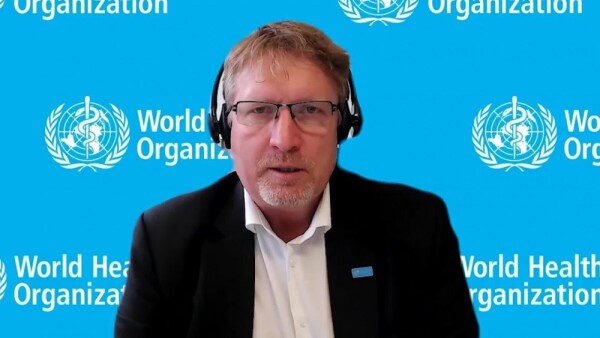
“As we don't have any full picture of this variant, as long as we don't know how well the existing vaccines are working…we need to use the measures that we know work,” said Christian Lindmeier, WHO spokesperson, during a scheduled briefing in Geneva.
These measures include “mask-wearing whenever possible and advisable as long as you are not in a room with more than one person, ventilating a room if possible, as often as possible, keeping the normal hand and body hygiene...We know these measures work”.
The WHO’s message comes as reports indicated potential concern among one pharmaceutical manufacturer that existing vaccines may not be as effective against the new variant as previous iterations, such as the Delta variant.
Mr. Lindmeier said that more time was needed to reach a conclusion on the Omicron variant: “There might be higher transmissibility, according to initial reports,” he said, “hence we're deeply looking. We still need a couple of weeks to get the details together and to know exactly what we're dealing with.”
On Monday, WHO Director-General Tedros Adhanom Ghebreyesus addressed a special three-day meeting of the organisation’s governing body in Geneva, warning that the world shouldn’t need another “wake-up call” about the dangers of COVID-19 before deciding to act to prevent further pandemics.
“Omicron’s very emergence is another reminder that although many of us might think we are done with COVID-19, it is not done with us,” he said.
“We are living through a cycle of panic and neglect. Hard-won gains could vanish in an instant. Our most immediate task, therefore, is to end this pandemic.”
Reinforcing Tedros’s message, Mr Lindmeier pointed out that “Omicron is not the only variant out there, it's now high on the agenda of interest. Let's not forget there is Delta out there. There is a COVID-19 pandemic, even without the Omicron variant”.
Despite concerns that existing vaccines may not be as effective against Omicron, the WHO spokesman reiterated that a “high vaccination rate in the population works, we know that. The emergency rooms...are full of people with the most percentage unvaccinated. The most severe diseases and the most severe outcome until death is most often in those unvaccinated, and that's of high importance.”
Mr. Lindmeier also stressed that it should not be forgotten that life-saving operations “are being postponed for months for people who urgently need them because of full emergency wards and hospitals. Let's use all the measures we have right now until we know more.”
ENDS
STORY: WHO COVID-19 – Omicron Comment
TRT: 2’48”
SOURCE: UNTV CH
RESTRICTIONS: NONE
LANGUAGE: ENGLISH
ASPECT RATIO: 16:9
DATELINE: 30 November 2021, GENEVA, SWITZERLAND
SHOTLIST
- Exterior wide shot, United Nations flags flying.
- Medium-wide shot, speakers, participants and a cameraman in briefing room.
- SOUNDBITE (English): Christian Lindmeier, spokesperson, World Health Organization (WHO): “There might be a higher transmissibility according to initial reports and there might be (an) immune-break but, hence, we are deeply looking into it. You are fully right on the first sentence, we still need a couple of weeks to get the details together and to know exactly what we are dealing with.”
- Close shot, journalists taking notes, TV screen in the background.
- SOUNDBITE (English): Christian Lindmeier, spokesperson, World Health Organization (WHO): “We don’t have any full picture of this variant. As long as we don’t know how well or not well the vaccines, the existing vaccines are working out, the treatment is catching up, how transmissible it is, how severely it attacks people. We need to use the measures that we know and we need to use the measures that we know that work and that is what Rheal showed you in the picture. The mask-wearing whenever possible and advisable as long as you are in a room with more than one person, ventilating a room if possible, as often as possible, keeping the normal hand and body hygiene and especially mouth hygiene in those circumstances. So, we know these measures work.”
- Medium shot, journalist attending briefing.
- SOUNDBITE (English): Christian Lindmeier, spokesperson, World Health Organization (WHO): “Omicron is not the only variant out there. It’s now high on the agenda of interest because it jumped up. Let’s not forget there is Delta out there and there is a COVID–19 pandemic even without the Omicron variant and all these measures work.”
- Close shot, participants taking notes.
- SOUNDBITE (English): Christian Lindmeier, spokesperson, World Health Organization (WHO): “High vaccination rates in the population work we know that. The emergency rooms and centres are full of people with the most percentage: the unvaccinated. The most severe diseases and the most severe outcomes until death is most often in those unvaccinated and that is of high importance. Don’t forget that.”
- Close shot, a journalist at briefing.
- SOUNDBITE (English): Christian Lindmeier, spokesperson, World Health Organization (WHO): “Life-saving operations or interventions with people of non-COVID nature, cancer treatments is being postponed for months for people who urgently need them because of full emergency wards and hospitals. So, let's not forget that, and let's use all the measures we have right now until we know more.”
- Close shot, journalist taking notes of the meeting.
- Close shot, journalist taking notes of the meeting.
- Close shot, journalist taking notes of the meeting.
- Close shot, technician supervising the briefing on Zoom.
Similar Stories
1
1
1
Edited News | OCHA , UNICEF , WFP
Aid agencies warned on Friday of the fast-developing humanitarian emergency inside Taiz City in Yemen, which has been encircled by de facto Houthi forces fighting government troops along the country’s west coast.

2
17
1
2
Edited News , Press Conferences , Images | OCHA , WMO
Two UN agencies teamed up on Wednesday to issue an appeal for immediate assistance to help communities already being impacted by the strongest El Niño on record.
3
16
2
2
Edited News , B-roll , Conferences , Images | UNITED NATIONS , UNOG
Sixth Consultative Meeting on Enhancing Coordination of Peace Initiatives and Efforts for Sudan
1
1
1
Edited News | UNICEF , WHO , UNHCR
Yemen war continues to force families from homes amid hunger and disease
More than 250,000 people have now fled renewed fighting in Yemen, the UN said on Tuesday, citing particular concern for those sheltering in the southwestern city of Taiz and the wider governorate, where access is “essentially blocked”.

1
1
1
Edited News | UNICEF
A little over one year since a ceasefire agreement was announced between Hamas fighters and Israel, more than 340 children have been reported killed and hundreds more injured, the UN Children’s Fund, UNICEF, said on Friday.

1
1
1
Edited News | UNICEF , IFRC
Six weeks after Nepal’s deadly flooding disaster, communities are still struggling to rebuild their lives, but they will need sustained help as global warming increases the risk of another Himalayan catastrophe, the UN Children’s Fund (UNICEF) said on Friday.

1
1
1
Edited News | WHO
In suspected Russia plague death, testing and monitoring underway – WHO
The death of a lab worker in Russia’s Siberia region has sparked concerns about plague being the cause, the UN World Health Organization (WHO) said on Tuesday, adding that it was following the situation closely.

1
1
Edited News | OHCHR , UNOG
UN Human Rights Chief Volker Türk on Friday provided and oral update to the 63rd session of the Human rights Council on Ukraine.

1
1
1
Edited News | OHCHR , UNOG
UN Human Rights Chief Volker Türk on Friday provided and oral update to the 63rd session of the Human rights Council on the human rights situation in Haiti.

1
1
1
Edited News | WHO
Repeated delays in bringing lifesaving medicines, prosthetics and more from Israel into Gaza risk having devastating consequences on Palestinians who urgently need them in the wartorn enclave, the UN World Health Organization (WHO) said on Friday. “A truck full of non-priority supplies or the right supplies arriving too late, doesn't save lives. That's the question that actually matters," said Dr Reinhilde Van De Weerdt, WHO Representative in the OPT.

1
1
1
Edited News | WHO
DRC: Early access to care and oxygen decisive for Ebola patients’ survival – WHO
In the Democratic Republic of the Congo (DRC), health workers fighting the country’s largest-ever Ebola outbreak are struggling to overcome critical challenges to patient care, the UN World Health Organization (WHO) warned on Tuesday.

1
1
1
Edited News | OCHA , UN
Civilians in Iran are continuing to feel the consequences of months of conflict and military escalation, the UN’s top official in the country has said, as loss of life, damage to civilian infrastructure and mounting economic pressures leave many facing continued uncertainty.