

The United Nations Office at Geneva
Multimedia Newsroom
The World Health Organization (WHO) today confirmed the presence of new coronavirus in China, a respiratory illness with 41 confirmed cases and one death to date, as investigations continue and health agencies prepare for a possible outbreak.
Coronaviruses are a large family of viruses that cause illness ranging from the common cold to more severe diseases such as Middle East Respiratory Syndrome (MERS) and Severe Acute Respiratory Syndrome (SARS).
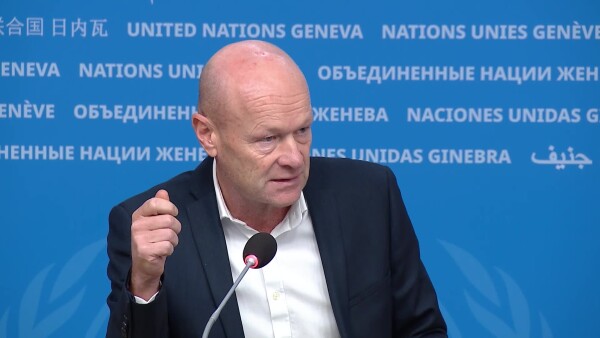
WHO spokesperson Tarik Jašarević told journalists that after a "new coronavirus" (technically known as “novel coronavirus”, or “nCoV”, which is a new strain that has not been previously identified in humans) was detected in a hospitalized person with pneumonia in Wuhan, "Chinese authorities updated confirmed cases to 41," he said. Of the 41 confirmed cases, seven have been discharged, six are said to be severe cases, and one person has died.
“Chinese authorities shared the complete genomic sequence with WHO and with the public”, Jašarević said, that this would be of great importance for other countries to use in developing specific diagnostic kits.
According to the preliminary epidemiological investigation, most cases involved people who either worked at or were handlers and frequent visitors to a single seafood market in the central city of Wuhan, but one confirmed case involved a woman travelling from Wuhan to Thailand.
“Epidemiologic investigations are under way and we are waiting for the results of these but yes, it is certainly possible that there is limited human to human transmission,’ said Dr. Maria D Van Kerkhove , WHO’s Head of the Emerging Diseases and Zoonoses Unit. There is currently no travel ban to Wuhan, and more information will be released as investigations continue.
Dr. Van Kerkhove observed that “the experience of our member states have had with these pathogens”, referring to previous outbreaks of SARS and MERS, “have prepared us for this.” She stressed that “a lot of work that is ongoing for MERS coronavirus that can be applicable here” and can be adapted to deal with this new coronavirus.
The clinical signs and symptoms reported are mainly fever, with a few cases having difficulty in breathing, and chest radiographs showing invasive pneumonic infiltrates in both lungs. National authorities report that patients have been isolated and are receiving treatment in Wuhan medical institutions.
Dr. Van Kerkhove stressed that WHO is closely monitoring the situation and is in regular contact with national authorities in China to provide support required.
“This is something the global community is preparing for, and all of the systems are in place to activate our plans and to utilize the materials that we developed for SARS, for MERS, and adapt them to our current situation,” she told media at the United Nations in Geneva. Technical guidance on the novel coronavirus has been developed and will continue to be updated as additional information is available, she added.
- Wide shot: exterior, flag alley, Palais des Nations, United Nations Geneva.
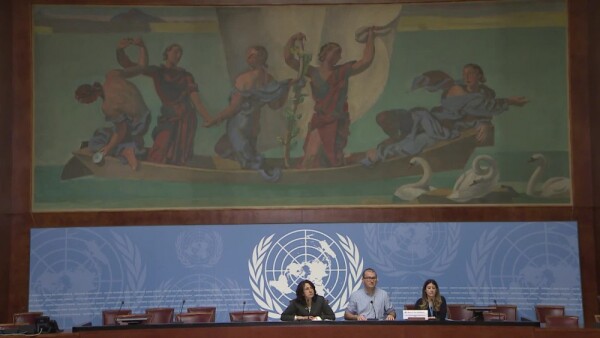
- Wide shot, press briefing room
- SOUNDBITE (EN) Tarik Jašarević (WHO): “On January 9th, Chinese authorities made a preliminary determination of a new coronavirus identified in a hospitalized person with pneumonia in Wuhan. Two days later, Chinese authorities issued additional information updating case numbers to 41 from initially 59, and reporting one death. Chinese authorities also shared the complete genomic sequence with WHO and with the public”.
- Medium shot: podium
- SOUNDBITE (EN) Maria D Van Kerkhove (Head, Emerging Diseases and Zoonoses Unit, WHO): “Epidemiologic investigations are under way and we are waiting for the results of these but yes, it is certainly possible that there is limited human-to-human transmission. There are many similarities to SARS and MERS. This is a coronavirus and this helps us. The experience that we have with SARS and with MERS, the experience of our member states who have experience with these pathogens have prepared us for this. This is not unexpected. This is something that the global community is preparing for, and all of the systems are in place to activate our plans and to utilize the materials that we developed for SARS, for MERS, and adapt them to our current situation.”
- Wide shot, press briefing room
- SOUNDBITE (EN) Maria D Van Kerkhove (Head, Emerging Diseases and Zoonoses Unit, WHO): “There are some antivirals that are in consideration, and these are antivirals that are used for other diseases that could be repurposed for a novel coronavirus infection. There are immunotherapies that are under consideration- monoclonals or polyclonals- but again there is a lot of work that is ongoing for MERS coronavirus that can be applicable here.”
- Medium shot: podium
- Medium shot: journalists
- Medium shot: journalists
- Close-up: journalist
- Close-up: journalist
Similar Stories
1
1
1
Edited News | OCHA , UNICEF , WFP
Aid agencies warned on Friday of the fast-developing humanitarian emergency inside Taiz City in Yemen, which has been encircled by de facto Houthi forces fighting government troops along the country’s west coast.

2
17
1
2
Edited News , Press Conferences , Images | OCHA , WMO
Two UN agencies teamed up on Wednesday to issue an appeal for immediate assistance to help communities already being impacted by the strongest El Niño on record.
3
16
2
2
Edited News , B-roll , Conferences , Images | UNITED NATIONS , UNOG
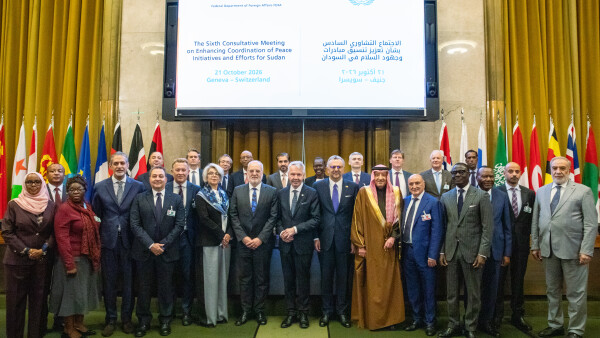
Sixth Consultative Meeting on Enhancing Coordination of Peace Initiatives and Efforts for Sudan

1
1
1
Edited News | UNICEF , WHO , UNHCR
Yemen war continues to force families from homes amid hunger and disease
More than 250,000 people have now fled renewed fighting in Yemen, the UN said on Tuesday, citing particular concern for those sheltering in the southwestern city of Taiz and the wider governorate, where access is “essentially blocked”.

1
1
1
Edited News | UNICEF
A little over one year since a ceasefire agreement was announced between Hamas fighters and Israel, more than 340 children have been reported killed and hundreds more injured, the UN Children’s Fund, UNICEF, said on Friday.

1
1
1
Edited News | UNICEF , IFRC
Six weeks after Nepal’s deadly flooding disaster, communities are still struggling to rebuild their lives, but they will need sustained help as global warming increases the risk of another Himalayan catastrophe, the UN Children’s Fund (UNICEF) said on Friday.

1
1
1
Edited News | WHO
In suspected Russia plague death, testing and monitoring underway – WHO
The death of a lab worker in Russia’s Siberia region has sparked concerns about plague being the cause, the UN World Health Organization (WHO) said on Tuesday, adding that it was following the situation closely.

1
1
Edited News | OHCHR , UNOG
UN Human Rights Chief Volker Türk on Friday provided and oral update to the 63rd session of the Human rights Council on Ukraine.

1
1
1
Edited News | OHCHR , UNOG
UN Human Rights Chief Volker Türk on Friday provided and oral update to the 63rd session of the Human rights Council on the human rights situation in Haiti.

1
1
1
Edited News | WHO
Repeated delays in bringing lifesaving medicines, prosthetics and more from Israel into Gaza risk having devastating consequences on Palestinians who urgently need them in the wartorn enclave, the UN World Health Organization (WHO) said on Friday. “A truck full of non-priority supplies or the right supplies arriving too late, doesn't save lives. That's the question that actually matters," said Dr Reinhilde Van De Weerdt, WHO Representative in the OPT.

1
1
1
Edited News | WHO
DRC: Early access to care and oxygen decisive for Ebola patients’ survival – WHO
In the Democratic Republic of the Congo (DRC), health workers fighting the country’s largest-ever Ebola outbreak are struggling to overcome critical challenges to patient care, the UN World Health Organization (WHO) warned on Tuesday.

1
1
1
Edited News | OCHA , UN
Civilians in Iran are continuing to feel the consequences of months of conflict and military escalation, the UN’s top official in the country has said, as loss of life, damage to civilian infrastructure and mounting economic pressures leave many facing continued uncertainty.