

The United Nations Office at Geneva
Multimedia Newsroom
Edited News | OHCHR , UNICEF , UNHCR , WHO , UNOG
UNOG Bi-weekly press briefing Afghanistan Update UNICEF - OHCHR - UNHCR - WHO - UNOG 17 August 2021
UN agencies urge Taliban to make good on promises to protect vulnerable
Afghan civilians continue to bear the brunt of the Taliban takeover in the country where humanitarian needs remain critical and widespread among existing and newly displaced populations, UN agencies said on Tuesday.
Some 18 million people in the country need aid assistance and one in three children is expected to be severely malnourished this year, said UN Children’s Fund, UNICEF.
Speaking via Zoom from the capital Kabul, the agency’s Chief of field operations & emergency, Mustapha Ben Messaoud, reported seeing hungry infants, some with terrible wounds after clashes between the country’s new rulers and Afghan Security Forces.
“In Kandahar, I have seen the direct impacts of this recent flare in fighting and that impact is severely malnourished children I have seen injured in such a way, that it’s difficult to describe, young children, as young as 10 months,” he said.
Inside Kabul, Mr. Ben Messaoud said that the situation was “improving”, although mobile health teams from the World Health Organization (WHO) had been forced to halt operations in recent days, owing to insecurity. “There is great need there that we need to attend to,” the UNICEF official added.
The recent fighting has also taken a heavy toll on an already fragile health system, which faces “a shortage of essential medical supplies and equipment in the middle of the COVID-19 pandemic”, said WHO spokesperson Tarik Jasarevic. “Needs assessment and service delivery by mobile health teams is on hold for the past 24 hours and that’s due to security and the unpredictable situation in Kabul.”
From the UN human rights office, OHCHR, spokesperson Rupert Colville underlined “chilling reports of human rights abuses, and of restrictions on the rights of individuals, especially women and girls, in some parts of the country captured over the past few weeks. Such reports continue to be received. Unfortunately, for the time being, the flow of information has been considerably disrupted, and we have not been in a position to verify the most recent allegations.”
Mr. Colville also described “desperate scenes” at Kabul airport on Monday, where videos screened on social media showed desperate men clinging to a US airforce plane as it prepared to leave the capital.
“Fortunately, the capital and the other last major cities to be captured such as Jalalabad and Mazar-e-Sharif were not subjected to prolonged fighting, bloodshed or destruction,” he continued. “However, the fear instilled in a significant proportion of the population is profound, and – given past history – thoroughly understandable.”
Mr. Colville said that Taliban spokespeople had issued several statements including pledging an amnesty for those who worked for the previous Government. "They have also pledged to be inclusive. They have said woman can work and girls can go to school. Such promises will need to be honoured, and for the time being - again understandably, given past history - these declarations have been greeted with some scepticism. Nevertheless, the promises have been made, and whether or not they are honoured or broken will be closely scrutinized."
Amid grave concerns about the risk of new human rights violations against civilians in Afghanistan based on previous Taliban rule, the UN Refugee Agency (UNHCR) urged refugee host nations not to repatriate vulnerable Afghan nationals.
“In the wake of the rapid deterioration and the security and human rights situation in large parts of the country and the unfolding humanitarian emergency, UNHCR calls on States to halt possible returns of Afghan nationals who have previously been determined not to be in need of international protection,” said spokesperson Shabia Mantoo.
For the moment, the number of people leaving Afghanistan in search of shelter in neighbouring countries has been relatively low, Ms. Mantoo explained, before underscoring the massive needs inside the country.
“Out of the hundreds of thousands of people that have been displaced, we have now 550,000 people displaced within the country, so they are still within Afghanistan,” she said. “In recent weeks, the majority of those have fled in recent weeks and 80 per cent of those that are newly displaced are women and children.”
With 13 field offices across Afghanistan and decades of experience in rural communities, UNICEF officer Mr. Ben Messaoud noted that contact had already been established with Taliban representatives.
There was even reason to be “slightly optimistic”, he said, noting that “the stand of the Taliban is more or less the same but we’ve seen small differences, especially in terms of girls’ education. There are areas, part of the country, where they told us that they are waiting for guidance from their leadership, religious and political. In other places, they actually said that they want to see girls’ education and school up and running.”
Regarding national staff who have assisted the United Nations and its partners in the past, UN Geneva spokesperson Rhéal LeBlanc reiterated the Organisation’s insistence that they should come to no harm.
“We are extremely grateful to the important work they have done for the United Nations and its bodies and entities over numerous years,” he said, noting that no UN staff had been evacuated from Kabul. “It’s clear that the Taliban and other authorities have the responsibility to protect and ensure the safety of UN staff whether they be national or international and to do whatever they can to ensure their safety.”
ends
STORY: AFGHANISTAN UPDATE – UNICEF - OHCHR - UNHCR - WHO – UNOG
TRT: 04:33”
SOURCE: UNTV CH
RESTRICTIONS: NONE
LANGUAGE: ENGLISH
ASPECT RATIO: 16:9
DATELINE: 17 August 2021, GENEVA, SWITZERLAND
SHOTLIST
1.Exterior wide shot, United Nations flag flying.
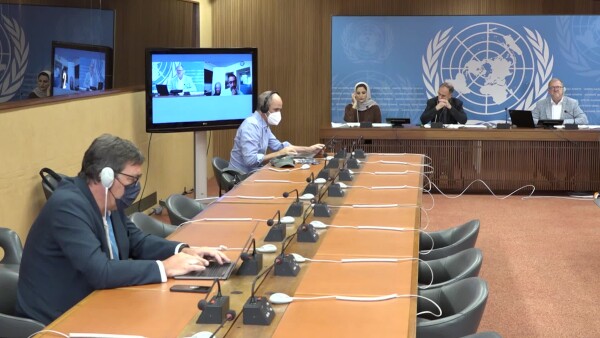
- Wide shot, panel at press briefing, journalists.
- SOUNDBITE: (ENGLISH) Mustapha Ben Messaoud, UNICEF Chief of field operations and emergency in Afghanistan: “And in Kandahar, I have seen the direct impacts of this recent flare in fighting and that impact is severely malnourished children I have seen injured in such a way, that it’s difficult to describe, young children, as young as 10 months.”
- Panel and TV screen at press briefing.
- SOUNDBITE: (ENGLISH) Mustapha Ben Messaoud, UNICEF Chief of field operations and emergency in Afghanistan: “The situation here in Kabul is improving but we’ve seen and went to an IDP camp, started the work there - a mobile health team, but as mentioned by the colleague from WHO – it’s stopped over the last few days and there is great need there that we need to attend to.”
6.Mid of journalists at briefing.
- SOUNDBITE: (ENGLISH) Rupert Colville, OHCHR spokesperson: “There have been chilling reports of human rights abuses and of restrictions on the rights of individuals, especially women and girls in some parts of the country, captured over the past few weeks. Such reports continue to be received. Unfortunately for the time being the flow of information has been considerably disrupted and we’ve not been in a position to verify the most recent allegations.”
8.Mid of Rupert Colville speaking to journalists.
- SOUNDBITE: (ENGLISH) Shabia Mantoo, UNHCR spokesperson: “In the wake of the rapid deterioration and the security and human rights situation in large parts of the country and the unfolding humanitarian emergency, UNHCR calls on States to halt possible returns of Afghan nationals who have previously been determined not to be in need of international protection.”
10.Mid of Shabia Mantoo speaking to journalists
- SOUNDBITE: (ENGLISH) Shabia Mantoo UNHCR spokesperson: “Out of the hundreds of thousands of people that have been displaced, we have now 550,000 people displaced within the country, so they are still within Afghanistan. In recent weeks, the majority of those have fled in recent weeks and 80 per cent of those that are newly displaced are women and children.”
- Journalist at briefing, masked.
- SOUNDBITE: (ENGLISH) Tarik Jasarevic, WHO spokesperson: “Ongoing conflict is having a heavy toll on the already fragile health system in Afghanistan, it has been facing a shortage of essential medical supplies and equipment in the middle of the COVID-19 pandemic. Needs assessment and service delivery by mobile health teams is on hold for the past 24 hours and that’s due to security and the unpredictable situation in Kabul.”
- Mid of panel on TV screen in briefing room.
- SOUNDBITE: (ENGLISH) Mustapha Ben Messaoud, UNICEF Chief of field operations and emergency in Afghanistan: “The stand of the Taliban is more or less the same but we’ve seen small differences, especially in terms of girls’ education. There are areas, part of the country, where they told us that they are waiting for guidance from their leadership, religious and political. In other places, they actually said that they want to see girls’ education and school up and running.”
- Mid, TV screen in briefing room, journalist.
- SOUNDBITE: (ENGLISH) Rheal Leblanc, UNOG spokesperson: “Regarding national staff and we are extremely grateful to the important work they have done for the United Nations and its bodies and entities over numerous years. And it’s clear that the Taliban and other authorities have the responsibility to protect and ensure the safety of UN staff whether they be national or international and to do whatever they can to ensure their safety.”
- Wide of briefing room.
- Mid of video journalist, masked.
- Mid of panel and journalists, masked.
- Wide of panel and video journalist.
- Close of journalist and laptop.
- Mid of journalist, masked.
- Mid of journalist, masked.
Similar Stories

2
17
1
2
Edited News , Press Conferences | OCHA , WMO
Two UN agencies teamed up on Wednesday to issue an appeal for immediate assistance to help communities already being impacted by the strongest El Niño on record.
3
16
2
2
B-roll , Conferences , Edited News | UNITED NATIONS , UNOG
Sixth Consultative Meeting on Enhancing Coordination of Peace Initiatives and Efforts for Sudan

1
1
1
Edited News | UNICEF , WHO , UNHCR
Yemen war continues to force families from homes amid hunger and disease
More than 250,000 people have now fled renewed fighting in Yemen, the UN said on Tuesday, citing particular concern for those sheltering in the southwestern city of Taiz and the wider governorate, where access is “essentially blocked”.

1
1
1
Edited News | UNICEF
A little over one year since a ceasefire agreement was announced between Hamas fighters and Israel, more than 340 children have been reported killed and hundreds more injured, the UN Children’s Fund, UNICEF, said on Friday.

1
1
1
Edited News | UNICEF , IFRC
Six weeks after Nepal’s deadly flooding disaster, communities are still struggling to rebuild their lives, but they will need sustained help as global warming increases the risk of another Himalayan catastrophe, the UN Children’s Fund (UNICEF) said on Friday.

1
1
1
Edited News | WHO
In suspected Russia plague death, testing and monitoring underway – WHO
The death of a lab worker in Russia’s Siberia region has sparked concerns about plague being the cause, the UN World Health Organization (WHO) said on Tuesday, adding that it was following the situation closely.

1
1
Edited News | OHCHR , UNOG
UN Human Rights Chief Volker Türk on Friday provided and oral update to the 63rd session of the Human rights Council on Ukraine.

1
1
1
Edited News | OHCHR , UNOG
UN Human Rights Chief Volker Türk on Friday provided and oral update to the 63rd session of the Human rights Council on the human rights situation in Haiti.

1
1
1
Edited News | WHO
Repeated delays in bringing lifesaving medicines, prosthetics and more from Israel into Gaza risk having devastating consequences on Palestinians who urgently need them in the wartorn enclave, the UN World Health Organization (WHO) said on Friday. “A truck full of non-priority supplies or the right supplies arriving too late, doesn't save lives. That's the question that actually matters," said Dr Reinhilde Van De Weerdt, WHO Representative in the OPT.

1
1
1
Edited News | WHO
DRC: Early access to care and oxygen decisive for Ebola patients’ survival – WHO
In the Democratic Republic of the Congo (DRC), health workers fighting the country’s largest-ever Ebola outbreak are struggling to overcome critical challenges to patient care, the UN World Health Organization (WHO) warned on Tuesday.

1
1
1
Edited News | OCHA , UN
Civilians in Iran are continuing to feel the consequences of months of conflict and military escalation, the UN’s top official in the country has said, as loss of life, damage to civilian infrastructure and mounting economic pressures leave many facing continued uncertainty.
1
1
1
Edited News | WHO , UNICEF
Aid agencies in Yemen highlighted the growing hunger emergency sparked by renewed fighting between Houthi opposition forces and Government troops, after mobile health clinics reported that hundreds of children displaced by the violence are suffering from the most deadly form of malnutrition.