

The United Nations Office at Geneva
Multimedia Newsroom
More bushfires may be in store for Australia as its summer season progresses and climate change plays its role, says WMO
As bushfires rage on in Australia -- with devastating consequences in their aftermath -- there is a potential for further damage as the summer season in the Southern hemisphere progresses, the spokesperson for the UN’s World Meteorological Organization (WMO) told journalists on Tuesday.
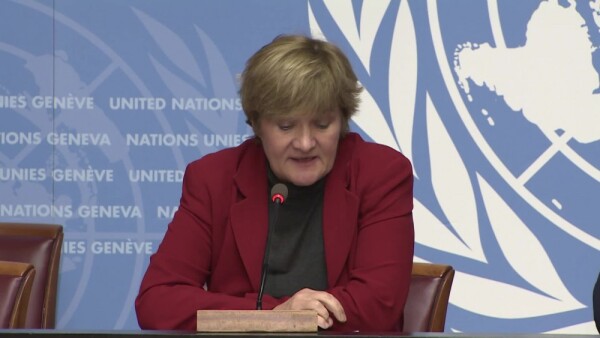
“Catastrophic and unprecedented fires” are still raging in Australia, WMO spokesperson Clare Nullis told journalists in Geneva, adding that these “have killed more than 22 people, destroyed hundreds of homes, burnt hundreds of thousands of hectares of land and caused absolutely massive but massive devastation to wild life, to ecosystems and to the environment”.
As it is still relatively early in the Australian summer, temperatures are expected to rise by the end of the week and there is a potential for further fires as the season progresses, Nullis said.
Satellite imagery has been able to show some of extent of the devastation, and according to WMO and satellite reports, the smoke is in the process of circumnavigating the planet. “The fires have led to hazardous air quality, which is a threat to human health in major cities in Australia, spreading to New Zealand,” the WMO reported, adding that the smoke has “drifted thousands of kilometers across the Pacific to South America.” Meteorological services in both Chile and Argentina have reported that “the long-range transport of smoke had reached there. The sunset in Buenos Aires reportedly turned red, the sky in central Chile were grey because of this smoke”, Nullis said.
Harmful pollutants released by wildfires create hazardous air quality “including toxic gases”, the WMO spokesperson said, highlighting that a far-reaching consequence is that the natural recovery of the forests is hampered as the “fires emit carbon dioxide, and obviously they burn up those very forests which are so vital for acting as carbon sinks and absorbing carbon dioxide”.
Australia had been unusually dry and warm in 2019 as a result of climate change, setting the scene for a long and challenging fire season. Despite a brief respite currently, temperatures in Australia are set to rise again by the end of the week.
“Climate change is playing a role and we should be in no doubt about that,” Nullis said. Australia is projected to experience future increases in both sea and air temperatures, the country’s meteorological agency has predicted, characterized by “more hot days and marine heat waves and fewer cooler extremes,” she said. Average temperatures in Australia have already increased by 1 degree Celsius since records-keeping began.
- Wide shot: exterior, flag alley, Palais des Nations, United Nations Geneva.
- Wide shot, press briefing room
- SOUNDBITE (EN) Clare Nullis, Spokesperson for the World Meteorological Organization (WMO): “Catastrophic and unprecedented fires have killed more than 22 people, destroyed hundreds of homes, burnt hundreds of thousands of hectares of land and caused absolutely massive but massive devastation to wild life, to ecosystems and to the environment”.
- Medium shot: podium
- SOUNDBITE (EN) Clare Nullis, Spokesperson for the World Meteorological Organization (WMO): “The fires have led to hazardous air quality which is a threat to human health in major cities in Australia, spreading to New Zealand and sent smokes drifting thousands of kilometers across the Pacific to South America. Last night meteorological services in both Chile and Argentina are reported that the long-range transport of smoke had reached there. The sunset in Buenos Aires reportedly turned red, the sky in central Chile were grey because of this smoke”.
- Wide shot, press briefing room
- SOUNDBITE (EN) Clare Nullis, Spokesperson for the World Meteorological Organization (WMO): “You know, in addition to the environmental devastation, wild fires do release harmful pollutants including particulate matter and toxic gases, such as carbon monoxide, nitrogen oxides and other organic compounds into the atmosphere. And again thanks to satellite imagery we can see these gases, we can see where they are going, we can see how dense they are. A longer term problem is that fires emit carbon dioxide and obviously they burn up those very forests which are so vital for acting as carbon sinks and absorbing carbon dioxide”.
- Close up, journalist
- SOUNDBITE (EN) Clare Nullis, Spokesperson for the World Meteorological Organization (WMO): “On the one hand, you do have the natural climate variability, on the other hand climate change is playing a role and we should be in no doubt about that”.
- Medium shot, journalists
- SOUNDBITE (EN) - Clare Nullis, Spokesperson for the World Meteorological Organization (WMO): “Australia is projected experience further increases in sea and air temperatures with more hot days and marine heat waves and fewer cooler extremes. This cooler extremes are very important. Decreases in rain fall across southern Australia with more time in drought, but an increase in intense heavy rain fall throughout Australia”.
- Wide shot, journalists
- Wide shot, journalists
- Close up, hands typing
Similar Stories

1
1
1
Edited News | OCHA , UNICEF , WFP
Aid agencies warned on Friday of the fast-developing humanitarian emergency inside Taiz City in Yemen, which has been encircled by de facto Houthi forces fighting government troops along the country’s west coast.

2
17
1
2
Edited News , Press Conferences , Images | OCHA , WMO
Two UN agencies teamed up on Wednesday to issue an appeal for immediate assistance to help communities already being impacted by the strongest El Niño on record.

3
16
2
2
Edited News , B-roll , Conferences , Images | UNITED NATIONS , UNOG
Sixth Consultative Meeting on Enhancing Coordination of Peace Initiatives and Efforts for Sudan

1
1
1
Edited News | UNICEF , WHO , UNHCR
Yemen war continues to force families from homes amid hunger and disease
More than 250,000 people have now fled renewed fighting in Yemen, the UN said on Tuesday, citing particular concern for those sheltering in the southwestern city of Taiz and the wider governorate, where access is “essentially blocked”.

1
1
1
Edited News | UNICEF
A little over one year since a ceasefire agreement was announced between Hamas fighters and Israel, more than 340 children have been reported killed and hundreds more injured, the UN Children’s Fund, UNICEF, said on Friday.

1
1
1
Edited News | UNICEF , IFRC
Six weeks after Nepal’s deadly flooding disaster, communities are still struggling to rebuild their lives, but they will need sustained help as global warming increases the risk of another Himalayan catastrophe, the UN Children’s Fund (UNICEF) said on Friday.

1
1
1
Edited News | WHO
In suspected Russia plague death, testing and monitoring underway – WHO
The death of a lab worker in Russia’s Siberia region has sparked concerns about plague being the cause, the UN World Health Organization (WHO) said on Tuesday, adding that it was following the situation closely.

1
1
Edited News | OHCHR , UNOG
UN Human Rights Chief Volker Türk on Friday provided and oral update to the 63rd session of the Human rights Council on Ukraine.

1
1
1
Edited News | OHCHR , UNOG
UN Human Rights Chief Volker Türk on Friday provided and oral update to the 63rd session of the Human rights Council on the human rights situation in Haiti.

1
1
1
Edited News | WHO
Repeated delays in bringing lifesaving medicines, prosthetics and more from Israel into Gaza risk having devastating consequences on Palestinians who urgently need them in the wartorn enclave, the UN World Health Organization (WHO) said on Friday. “A truck full of non-priority supplies or the right supplies arriving too late, doesn't save lives. That's the question that actually matters," said Dr Reinhilde Van De Weerdt, WHO Representative in the OPT.

1
1
1
Edited News | WHO
DRC: Early access to care and oxygen decisive for Ebola patients’ survival – WHO
In the Democratic Republic of the Congo (DRC), health workers fighting the country’s largest-ever Ebola outbreak are struggling to overcome critical challenges to patient care, the UN World Health Organization (WHO) warned on Tuesday.

1
1
1
Edited News | OCHA , UN
Civilians in Iran are continuing to feel the consequences of months of conflict and military escalation, the UN’s top official in the country has said, as loss of life, damage to civilian infrastructure and mounting economic pressures leave many facing continued uncertainty.