

The United Nations Office at Geneva
Multimedia Newsroom
Drought is akin to a new pandemic, warns UN’s top disaster reduction official
Drought is on the verge of becoming the next pandemic, the UN’s top official for disaster reduction said on Thursday, in a call for concerted action and new transboundary alliances to tackle the growing global threat.
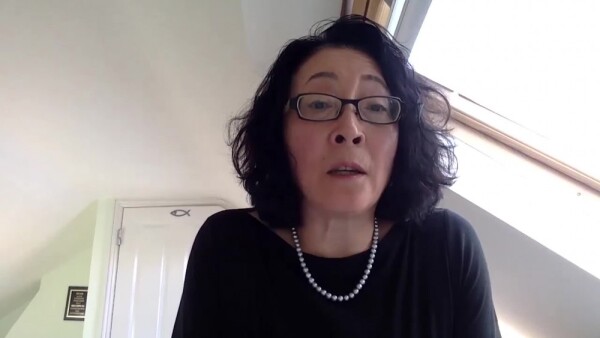
The appeal from Mami Mizutori – the UN Secretary-General’s Special Representative for Disaster Risk Reduction – came as the UN agency she heads warned that drought affects more people than any other slow onset disaster.
The problem “will determine the course of human development in the coming years as the climate emergency worsens”, said the United Nations Office for Disaster Risk Reduction (UNDRR).
“Within the next 80 years, 129 countries will experience increased exposure to drought due to climate change impact alone and an additional 23 countries due to population growth and another 38 due to the interaction of population growth and climate change impact,” Ms. Mizutori said, speaking via Zoom during a press conference in Geneva.
“If you just look at these numbers, there’s a really big number of countries will be exposed to drought. So this is a global issue, something like we’re seeing as a pandemic.”
In a special report on drought by UNDRR, the agency insisted that its impact is widespread and underestimated on societies, ecosystems and economies.
The phenomenon affects millions of people and many sectors and domains – such as agricultural production, public water supply, energy production, waterborne transportation, tourism, health and biodiversity, all of which contribute to food insecurity, poverty and inequality, it noted.
While some of the world’s most vulnerable communities are already affected by drought today, UNDRR warned that increasing temperatures and disrupted rainfall patterns threaten everyone and would require comprehensive mitigation plans by all countries.
“As the world moves towards being two degrees Celsius warmer, urgent action is required to better understand and more effectively manage drought risk
to reduce the devastating toll on human lives and livelihoods,” the Office said.
Echoing that message, Ms. Muzutori maintained that drought “can be the next catastrophe and there is no vaccine; if we do not act now, our exposure to drought risk threatens to derail our progress towards the achievement of the 2030 Agenda for sustainable development”.
The threat is already present in highly developed regions, including western Europe, said Dr. Roger Pulwarty, Senior Scientist, US National Oceanic and Atmospheric Administration: “We are seeing in places such as - and these cases are within the report – such as the Danube basin – drought and an increasing number of them affecting irrigation, hydropower generation and most critically, transportation, and we saw that on the Rhine as well itself.”
Drought should no longer viewed as affecting “simply agriculture”, Dr Pulwarty said, noting that “several developed regions” had seen a significant impact on their ability to export products and services, along with “direct impacts on the functioning and the supply chains on which all societies rely”.
Although many Governments were unwilling to invest in drought risk mitigation because “there is no glory” in it, Ms. Mizutori insisted that they should, as prevention “has far lower cost in humanitarian, financial and environmental ways than reaction and response.”
Among its recommendations, the UNDRR report underlines the merit of establishing a new global mechanism to support countries wanting to address transboundary drought risk, promote innovation and adaptive governance.
“Drought resilience partnerships at the national and local levels will be critical to managing drought in a world where rainfall will become ever more unpredictable,” Ms. Mizutori insisted.
ends
STORY: Drought ‘Is The New Pandemic’- UNDRR
TRT: 02 min 25s
SOURCE: UNTV CH
RESTRICTIONS: NONE
LANGUAGE: ENGLISH / NATS
ASPECT RATIO: 16:9
DATELINE: 17 JUNE 2021 GENEVA, SWITZERLAND
SHOTLIST
- Exterior wide shot, Palais des Nations flag alley, nations’ flags flying, a sunny day.
- Medium shot: TV camera on tripod with podium to rear, Room XIV, Palais des Nations
- SOUNDBITE (English): Mami Mizutori, Special Representative of the Secretary-General for Disaster Risk Reduction: “Within the next 80 years, 129 countries will experience increased exposure to drought due to climate change impact alone and an additional 23 countries due to population growth and another 38 due to the interaction of population growth and climate change impact.”
- Wide shot, large screen TV showing speakers, podium with host in Room XIV.
- SOUNDBITE (English): Mami Mizutori, Special Representative of the Secretary-General for Disaster Risk Reduction: “If you just look at these numbers, there’s a really big number of countries will be exposed to drought. So this is a global issue, something like we’re seeing as a pandemic.”
- Medium shot, journalist’s head in foreground, large screen TV to rear, Room XIV.
- SOUNDBITE (English): Mami Mizutori, Special Representative of the Secretary-General for Disaster Risk Reduction: “Drought can be the next catastrophe and there is no vaccine; if we do not act now, our exposure to drought risk threatens to derail our progress towards the achievement of the 2030 Agenda for sustainable development.”
- Medium shot, participant, seated, texting on mobile phone with laptop showing press conference on screen.
- SOUNDBITE (English): Dr. Roger Pulwarty, Senior Scientist, US National Oceanic and Atmospheric Administration: “We are seeing in places such as - and these cases are within the report – such as the Danube basin – drought and an increasing number of them affecting irrigation, hydropower generation and most critically, transportation, and we saw that on the Rhine as well itself.”
- Medium shot, chairs in foreground, large screen TV to rear, showing press conference on screen.
- SOUNDBITE (English): Dr. Roger Pulwarty, Senior Scientist, US National Oceanic and Atmospheric Administration: “The modernized view of drought is that this is not simply agriculture, that in fact the dimensions that we are seeing and especially in several developed regions are certainly the impact on the ability to export products and services, but also the direct impacts on the functioning and the supply chains on which all societies rely.”
- Medium shot, large screen TV showing press conference on screen, podium speakers.
- SOUNDBITE (English): Mami Mizutori, Special Representative of the Secretary-General for Disaster Risk Reduction: “Prevention has far lower cost in humanitarian, financial and environmental ways than reaction and response.”
- Medium shot, attendee, seated among chairs covered with security tape in respect of COVID-19 distancing requirements.
- SOUNDBITE (English): Mami Mizutori, Special Representative of the Secretary-General for Disaster Risk Reduction: “Drought resilience partnerships at the national and local levels will be critical to managing drought in a world where rainfall will become ever more unpredictable.”
- Medium shot, profile, attendee, seated among chairs covered with security tape in respect of COVID-19 distancing requirements.
- Medium shot, UNTV camera on tripod.
Similar Stories
1
1
1
Edited News | OCHA , UNICEF , WFP
Aid agencies warned on Friday of the fast-developing humanitarian emergency inside Taiz City in Yemen, which has been encircled by de facto Houthi forces fighting government troops along the country’s west coast.

2
17
1
2
Edited News , Press Conferences , Images | OCHA , WMO
Two UN agencies teamed up on Wednesday to issue an appeal for immediate assistance to help communities already being impacted by the strongest El Niño on record.
3
16
2
2
Edited News , B-roll , Conferences , Images | UNITED NATIONS , UNOG
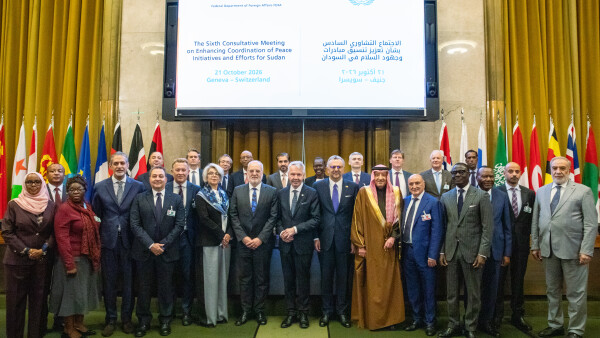
Sixth Consultative Meeting on Enhancing Coordination of Peace Initiatives and Efforts for Sudan

1
1
1
Edited News | UNICEF , WHO , UNHCR
Yemen war continues to force families from homes amid hunger and disease
More than 250,000 people have now fled renewed fighting in Yemen, the UN said on Tuesday, citing particular concern for those sheltering in the southwestern city of Taiz and the wider governorate, where access is “essentially blocked”.

1
1
1
Edited News | UNICEF
A little over one year since a ceasefire agreement was announced between Hamas fighters and Israel, more than 340 children have been reported killed and hundreds more injured, the UN Children’s Fund, UNICEF, said on Friday.

1
1
1
Edited News | UNICEF , IFRC
Six weeks after Nepal’s deadly flooding disaster, communities are still struggling to rebuild their lives, but they will need sustained help as global warming increases the risk of another Himalayan catastrophe, the UN Children’s Fund (UNICEF) said on Friday.

1
1
1
Edited News | WHO
In suspected Russia plague death, testing and monitoring underway – WHO
The death of a lab worker in Russia’s Siberia region has sparked concerns about plague being the cause, the UN World Health Organization (WHO) said on Tuesday, adding that it was following the situation closely.

1
1
Edited News | OHCHR , UNOG
UN Human Rights Chief Volker Türk on Friday provided and oral update to the 63rd session of the Human rights Council on Ukraine.

1
1
1
Edited News | OHCHR , UNOG
UN Human Rights Chief Volker Türk on Friday provided and oral update to the 63rd session of the Human rights Council on the human rights situation in Haiti.

1
1
1
Edited News | WHO
Repeated delays in bringing lifesaving medicines, prosthetics and more from Israel into Gaza risk having devastating consequences on Palestinians who urgently need them in the wartorn enclave, the UN World Health Organization (WHO) said on Friday. “A truck full of non-priority supplies or the right supplies arriving too late, doesn't save lives. That's the question that actually matters," said Dr Reinhilde Van De Weerdt, WHO Representative in the OPT.

1
1
1
Edited News | WHO
DRC: Early access to care and oxygen decisive for Ebola patients’ survival – WHO
In the Democratic Republic of the Congo (DRC), health workers fighting the country’s largest-ever Ebola outbreak are struggling to overcome critical challenges to patient care, the UN World Health Organization (WHO) warned on Tuesday.

1
1
1
Edited News | OCHA , UN
Civilians in Iran are continuing to feel the consequences of months of conflict and military escalation, the UN’s top official in the country has said, as loss of life, damage to civilian infrastructure and mounting economic pressures leave many facing continued uncertainty.