

The United Nations Office at Geneva
Multimedia Newsroom
Fears for India’s most vulnerable amid new COVID-19 wave that’s spreading like ‘wildfire’
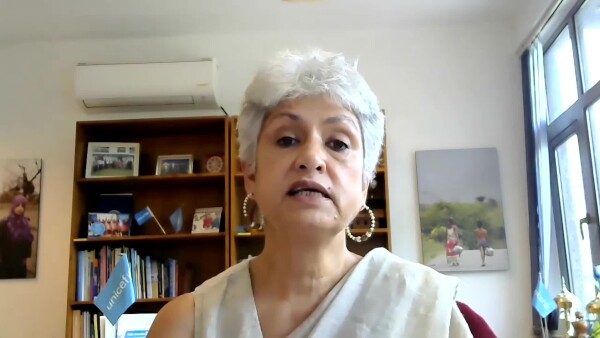
A new wave of COVID-19 infections is spreading like “wildfire” across India, leaving many youngsters destitute, amid reports of four new cases every second and more than two deaths every minute, the UN Children’s Fund UNICEF said on Friday.
In the last 24 hours, India registered 3,915 coronavirus deaths and 414,188 cases “which is the highest daily case count recorded by any country in the history of COVID-19 pandemic”, said Yasmin Haque, UNICEF Representative in India.
“UNICEF is of course very concerned about this deadly daily surge of in new cases,” she added. “This wave is almost four times the size of the first wave and the virus is spreading much faster. On an average, there were more than four new cases every second and more than two deaths every minute in last 24 hours.”
The UN official noted that health facilities have been overwhelmed by COVID-19 patients, amid reports that pregnant women have struggled to find the support they need to give birth.
“With 27 million births and 30 million pregnancies every year, life-saving services to help women give birth are critical in India,” Haque said. “What is happening in India should raise alarm bells for all of us. The pandemic is far from over. COVID-19 cases are rising at an alarming rate across South Asia, especially in Nepal, Sri Lanka and the Maldives.”
Very low levels of vaccination in most South Asian countries - less than 10 per cent in India, Sri Lanka and Nepal – were also adding to concerns of the virus spiralling even further, the UNICEF representative maintained.
UNICEF is also concerned that the COVID-19 surge has also led to “dire consequences” for a greater number of children than during the first wave of infections, with access to essential health, social, protection and education services constrained.
“Children are facing mental health issues and are at greater risk of violence, as lockdowns shut them off from their vital support networks,” Haque explained.
Although there is no indication that the proportion of children getting infected is any different to the first wave, “the numbers are far greater”, she insisted. “We’re seeing the virus entering a household; it just takes one member of the household to be affected and it seems to spread like wildfire throughout the family.”
This has been accompanied by a likely spike in illegal adoption pleas on internet platforms by families desperate to find homes for orphaned relatives, prompting fears of child exploitation, the UN official explained.
Authorities were “beginning to pick up on numbers” of vulnerable children, the UNICEF official continued, in a call to promote family tracing and speedier help for destitute families.
“When we see that children are being orphaned and we do see that there is a lot of trafficking of children which is reported, children go missing, those systems are beginning to pick up on numbers and that’s where we’re trying to strengthen that there is a greater alertness around any family seeing that children have been affected get reported…While there isn’t enough data yet, we can see that illegal adoption pleas have surfaced on social media, making these orphans vulnerable to trafficking and abuse.”
ends
STORY: India – COVID-19 Alert - UNICEF
TRT: 02 min 23s
SOURCE: UNTV CH
RESTRICTIONS: NONE
LANGUAGE: ENGLISH / NATS
ASPECT RATIO: 16:9
DATELINE: 7 MAY 2021 GENEVA, SWITZERLAND
SHOTLIST
- Exterior wide shot, Palais des Nations flag alley, nations’ flags flying, a cloudy day.
- Wide shot, TV broadcasting in foreground and podium to rear, Room XIV, Palais des Nations.
- SOUNDBITE (English) — Yasmin Haque, UNICEF Representative in India: “UNICEF of course is very concerned about this deadly daily surge of new cases. This wave is almost four times the size of the first wave and the virus is spreading much faster. On an average, there were more than four new cases every second and more than two deaths every minute in the last 24 hours.”
- Medium shot, attendee using listening device and taking notes, Room XIV, Palais des Nations.
- SOUNDBITE (English) — Yasmin Haque, UNICEF Representative in India: “What is happening in India should raise alarm bells for all of us. The pandemic is far from over. COVID-19 cases are rising at an alarming rate across South Asia, especially in Nepal, Sri Lanka and the Maldives.”
- Medium shot, attendee sitting in front of laptop, Room XIV, Palais des Nations.
- SOUNDBITE (English) — Yasmin Haque, UNICEF Representative in India: “On the numbers of children directly affected by the virus, we haven’t seen yet any indication that the proportion is any different to what we saw in the first wave, however the numbers are far greater; we’ve seen the virus entering a household; it just takes one member in the household to be affected and it seems to spread like wildfire throughout the family.”
- Close-up, attendee wearing glasses and face mask, Room XIV, Palais des Nations.
- SOUNDBITE (English) — Yasmin Haque, UNICEF Representative in India: “When we see that children are being orphaned and we do see that there is a lot of trafficking of children which is reported, children go missing, those systems are beginning to pick up on numbers and that’s where we’re trying to strengthen that there is a greater alertness around any family seeing that children have been affected get reported.”
- Medium wide shot, attendees sitting in briefing room, Room XIV, Palais des Nations
- SOUNDBITE (English) — Yasmin Haque, UNICEF Representative in India: “While there isn’t enough data yet, we can see that illegal adoption pleas have surfaced on social media, making these orphans vulnerable to trafficking and abuse.”
- Wide shot, podium in foreground and near-empty Room XIV in line with COVID-19 distancing measures to rear, Room XIV, Palais des Nations.
- SOUNDBITE (English) — Yasmin Haque, UNICEF Representative in India: “Very low levels of vaccination in most South Asian countries (less than 10% in India, Sri Lanka and Nepal) is also adding to the concern of the virus spiraling even further.”
- Medium shot, TV broadcasting, Room XIV, Palais des Nations.
- Medium shot, attendees sitting in briefing room, Room XIV, Palais des Nations.
- Medium shot, speaker on podium in foreground and attendee typing on phone to rear, Room XIV, Palais des Nations.
Similar Stories

1
1
1
Edited News | UNICEF
A little over one year since a ceasefire agreement was announced between Hamas fighters and Israel, more than 340 children have been reported killed and hundreds more injured, the UN Children’s Fund, UNICEF, said on Friday.

1
1
1
Edited News | UNICEF , IFRC
Six weeks after Nepal’s deadly flooding disaster, communities are still struggling to rebuild their lives, but they will need sustained help as global warming increases the risk of another Himalayan catastrophe, the UN Children’s Fund (UNICEF) said on Friday.

1
1
1
Edited News | WHO
In suspected Russia plague death, testing and monitoring underway – WHO
The death of a lab worker in Russia’s Siberia region has sparked concerns about plague being the cause, the UN World Health Organization (WHO) said on Tuesday, adding that it was following the situation closely.

1
1
Edited News | OHCHR , UNOG
UN Human Rights Chief Volker Türk on Friday provided and oral update to the 63rd session of the Human rights Council on Ukraine.

1
1
1
Edited News | OHCHR , UNOG
UN Human Rights Chief Volker Türk on Friday provided and oral update to the 63rd session of the Human rights Council on the human rights situation in Haiti.

1
1
1
Edited News | WHO
Repeated delays in bringing lifesaving medicines, prosthetics and more from Israel into Gaza risk having devastating consequences on Palestinians who urgently need them in the wartorn enclave, the UN World Health Organization (WHO) said on Friday. “A truck full of non-priority supplies or the right supplies arriving too late, doesn't save lives. That's the question that actually matters," said Dr Reinhilde Van De Weerdt, WHO Representative in the OPT.

1
1
1
Edited News | WHO
DRC: Early access to care and oxygen decisive for Ebola patients’ survival – WHO
In the Democratic Republic of the Congo (DRC), health workers fighting the country’s largest-ever Ebola outbreak are struggling to overcome critical challenges to patient care, the UN World Health Organization (WHO) warned on Tuesday.

1
1
1
Edited News | OCHA , UN
Civilians in Iran are continuing to feel the consequences of months of conflict and military escalation, the UN’s top official in the country has said, as loss of life, damage to civilian infrastructure and mounting economic pressures leave many facing continued uncertainty.
1
1
1
Edited News | WHO , UNICEF
Aid agencies in Yemen highlighted the growing hunger emergency sparked by renewed fighting between Houthi opposition forces and Government troops, after mobile health clinics reported that hundreds of children displaced by the violence are suffering from the most deadly form of malnutrition.
1
1
1
Edited News | UNHCR
Displacement on the rise in Yemen as fighting continues - UNHCR
As hostilities worsen in Yemen, more people have been fleeing their homes, further intensifying the humanitarian crisis within the region, the UN Refugee Agency (UNHCR) warned on Tuesday.
1
1
1
Edited News | IOM , OHCHR , UNFPA , UNOG , UNHCR , WHO
Yemen’s humanitarian crisis growing by the hour amid spike in displacement
Yemenis displaced by renewed fighting have described fleeing for their lives amid shelling and gunfire, aid agencies reported on Friday, while highlighting the dramatic increase in humanitarian needs in the country and in Djibouti, where thousands have sought shelter.
1
1
1
Edited News | OHCHR , UNOG
The UN Human Rights Office issued on Friday a report documenting a shocking pattern of sexual violence amid Russia’s full-scale armed attack on Ukraine.