

The United Nations Office at Geneva
Multimedia Newsroom
UN chief ‘realistic’ at start of fresh bid to resolve Cyprus stalemate
A fresh United Nations-led bid to seek to resolve decades of tensions in Cyprus was due to get under way in Geneva on Tuesday, with Secretary-General António Guterres “realistic” about the chances of making progress, his spokesperson said.
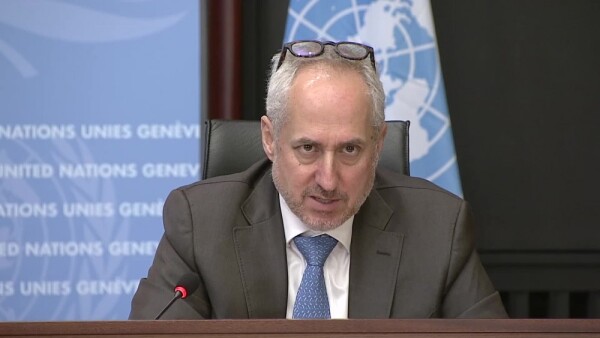
“The Secretary-General decided to organize this meeting following the consultations conducted over the past several months on his behalf by Under Secretary-General Jane Holl Lute,” Stephane Dujarric told journalists at the UN Palais des Nations.
“As we have repeatedly said, the purpose of the meeting will be to determine whether common ground exists for the parties to negotiate a lasting solution to the Cyprus issue within a foreseeable horizon.”
The development comes four years after Greek Cypriot and Turkish Cypriot leaders last met to discuss the future of the divided Mediterranean island.
The talks stalled after a week.
This time round, UN Secretary-General Antonio Guterres is scheduled to oversee three days of informal meetings in the Swiss city, beginning on Tuesday afternoon.
His first bilateral appointments were due to be with Turkish-Cypriot President Ersin Tatar followed by Greek-Cypriot President President Nicos Anastasiades.
While Mr. Anastasiades is a veteran of UN-led negotiations over the island’s peaceful future, Mr. Tatar heads the Turkish-Cypriot delegation for the first time, after becoming President in October 2020.
“(The) Secretary-General is realistic,” said Mr. Dujarric. “This is an issue that he knows well, he has participated in discussions before, so he is…he is realistic.”
Discussions in the Swiss city will also feature delegations from Greece, Turkey and the UK – all guarantor powers of Cyprus that agreed to the island’s independence in 1960 who have historically featured in discussions over next steps.
The development comes after Greek Cypriots and Turkish Cypriots marched for peace at the weekend in Nicosia, Europe’s last divided capital, split for more than four decades.
“The Secretary-General will move forward based on the outcome of these, of the informal talks,” said Mr. Dujarric. “As we’ve said – and I think I’ve said back in February in other times in briefings in New York – the parties are welcome to be creative and the Secretary-General will be encouraging them to move - you know - to use diplomatic language in a sincere and frank, and frank manner. Again, it’s important to stress that these are informal, informal talks.”
At the last UN-led conference on Cyprus in 2017, the leaders from the island’s Greek and Turkish communities held talks on six main issues, including security and guarantees, new territorial boundaries, and power-sharing.
ends
STORY: Cyprus 5+1 Informal Talks
TRT: 01 min 51s
SOURCE: UNTV CH
RESTRICTIONS: NONE
LANGUAGE: ENGLISH / NATS
ASPECT RATIO: 16:9
DATELINE: 27 APRIL 2021 GENEVA, SWITZERLAND
SHOTLIST
- Exterior wide shot, Palais des Nations’ gardens, a sunny day.
- Exterior wide shot, Palais des Nations’ gardens, sit-on lawnmower passing in front of shot with TV camera operator to rear.
- Wide shot, podium with speakers and UNTV cameras in a near-empty Room XIV in line with COVID-19 distancing measures, Palais des Nations.
- SOUNDBITE (English) — Stephane Dujarric, spokesman for the Secretary-General: “The Secretary-General decided to call this informal meeting following the consultations that took place over the past several months, done on his behalf by Under Secretary-General Jane Holl Lute. And as we have repeatedly said, the purpose of this informal meeting will be to determine whether common ground exists for the parties to negotiate a lasting solution to the Cyprus issue within a foreseeable horizon.”
- Medium shot, UNTV cameras filming, Room XIV, Palais des Nations.
- SOUNDBITE (English) — Stephane Dujarric, spokesman for the Secretary-General: “The Secretary-General will move forward based on the outcome of these, of the informal talks. As we’ve said – and I think I’ve said back in February in other times in briefings in New York – the parties are welcome to be creative and the Secretary-General will be encouraging them to move - you know - to use diplomatic language in a sincere and frank, and frank manner. Again, it’s important to stress that these are informal, informal talks.”
- Medium wide shot, participants sitting in Room XIV, Palais des Nations.
- SOUNDBITE (English) — Stephane Dujarric, spokesman for the Secretary-General: “Secretary-General is realistic. This is an issue that he knows well, he has participated in discussions before, so he is…he is realistic.”
- Medium shot, attendee sitting in foreground and UNTV cameras to rear, Room XIV, Palais des Nations.
- Medium shot, podium with speakers, side shot, Room XIV, Palais des Nations.
- Medium shot, attendee using mobile phone and listening device, Room XIV, Palais des Nations.
Similar Stories

1
1
1
Edited News | UNICEF
A little over one year since a ceasefire agreement was announced between Hamas fighters and Israel, more than 340 children have been reported killed and hundreds more injured, the UN Children’s Fund, UNICEF, said on Friday.

1
1
1
Edited News | UNICEF , IFRC
Six weeks after Nepal’s deadly flooding disaster, communities are still struggling to rebuild their lives, but they will need sustained help as global warming increases the risk of another Himalayan catastrophe, the UN Children’s Fund (UNICEF) said on Friday.

1
1
1
Edited News | WHO
In suspected Russia plague death, testing and monitoring underway – WHO
The death of a lab worker in Russia’s Siberia region has sparked concerns about plague being the cause, the UN World Health Organization (WHO) said on Tuesday, adding that it was following the situation closely.

1
1
Edited News | OHCHR , UNOG
UN Human Rights Chief Volker Türk on Friday provided and oral update to the 63rd session of the Human rights Council on Ukraine.

1
1
1
Edited News | OHCHR , UNOG
UN Human Rights Chief Volker Türk on Friday provided and oral update to the 63rd session of the Human rights Council on the human rights situation in Haiti.

1
1
1
Edited News | WHO
Repeated delays in bringing lifesaving medicines, prosthetics and more from Israel into Gaza risk having devastating consequences on Palestinians who urgently need them in the wartorn enclave, the UN World Health Organization (WHO) said on Friday. “A truck full of non-priority supplies or the right supplies arriving too late, doesn't save lives. That's the question that actually matters," said Dr Reinhilde Van De Weerdt, WHO Representative in the OPT.

1
1
1
Edited News | WHO
DRC: Early access to care and oxygen decisive for Ebola patients’ survival – WHO
In the Democratic Republic of the Congo (DRC), health workers fighting the country’s largest-ever Ebola outbreak are struggling to overcome critical challenges to patient care, the UN World Health Organization (WHO) warned on Tuesday.

1
1
1
Edited News | OCHA , UN
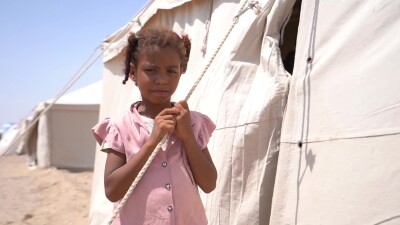
Civilians in Iran are continuing to feel the consequences of months of conflict and military escalation, the UN’s top official in the country has said, as loss of life, damage to civilian infrastructure and mounting economic pressures leave many facing continued uncertainty.
1
1
1
Edited News | WHO , UNICEF
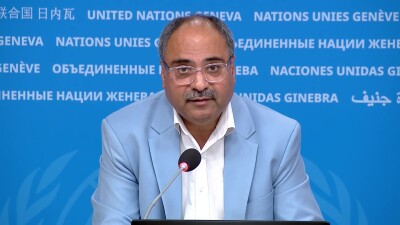
Aid agencies in Yemen highlighted the growing hunger emergency sparked by renewed fighting between Houthi opposition forces and Government troops, after mobile health clinics reported that hundreds of children displaced by the violence are suffering from the most deadly form of malnutrition.
1
1
1
Edited News | UNHCR
Displacement on the rise in Yemen as fighting continues - UNHCR
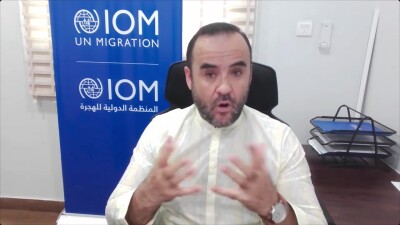
As hostilities worsen in Yemen, more people have been fleeing their homes, further intensifying the humanitarian crisis within the region, the UN Refugee Agency (UNHCR) warned on Tuesday.
1
1
1
Edited News | IOM , OHCHR , UNFPA , UNOG , UNHCR , WHO
Yemen’s humanitarian crisis growing by the hour amid spike in displacement
Yemenis displaced by renewed fighting have described fleeing for their lives amid shelling and gunfire, aid agencies reported on Friday, while highlighting the dramatic increase in humanitarian needs in the country and in Djibouti, where thousands have sought shelter.
1
1
1
Edited News | OHCHR , UNOG
The UN Human Rights Office issued on Friday a report documenting a shocking pattern of sexual violence amid Russia’s full-scale armed attack on Ukraine.