

The United Nations Office at Geneva
Multimedia Newsroom
UN-Habitat report calls for post COVID-19 cities to lead the way to a fairer, greener and healthier future.
A new report by UN-Habitat published on Tuesday demonstrated how cities can reduce the impact of future pandemics and become more equitable, healthy and environmentally friendly.
The document - “Pandemics and Cities Report UN-Habitat” - describes how urban areas have been at the forefront of the COVID-19 crisis.
“Ninety-five per cent of all cases” were recorded in cities in the first months of the pandemic, Maimunah Mohd Sharif, UN-Habitat Executive Director, said.
“Throughout this pandemic, it has been up to local governments and communities to move quickly and decisively to stop the spread of COVID-19 and ensure an effective response.” Sharif added.
Despite these pressures, many local governments and community leaders responded quickly and effectively to prevent the spread of the pandemic and mitigate its effects.
The UN-Habitat report recommends actions for a sustainable recovery based on evidence from more than 1,700 cities.
It found that patterns of inequality, owing to a lack of access to basic services, poverty and overcrowded living conditions, have been key destabilising factors in increasing the scale and impact of COVID-19.
Eduardo Moreno, Head of Knowledge and Innovation at UN-Habitat, said that because of the pandemic, an estimated “120 million people in the world will be pushed into poverty and living standards will reduce by 23 per cent”.
“The conclusion is that income matters,” he added.
According to the report, urban leaders and planners must rethink how people move through and in cities, using lessons from COVID-19.
This includes an increased focus at the local level on planning neighbourhoods and communities that are multi-functional and inclusive.
The report explores how well-planned cities combining residential and commercial with public spaces along with affordable housing can improve public health, the local economy and the environment.
It calls for cities to be at the forefront of moves towards a social contract between governments, the public, civil society and private sector.
This new deal should “explores the role of the state and cities to finance universal basic income, a universal health insurance, a universal housing,” said Sharif.
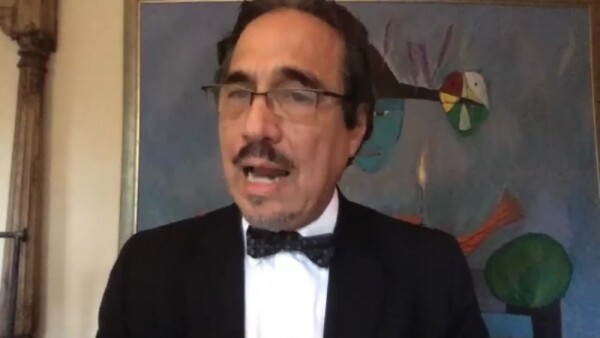
Claudia Lopez Hernandez, Mayor of Bogota, explained how in Bogota their new social contract prioritises women and children.
It is a “ social contract that includes women, that provides them with time, with time to take care of themselves, with time to educate themselves, and with time and education skills to come back to the labour market”.
“To have self-sustainable women is to have self-sustainable societies,” Hernandez explained.
The report outlines how a new normal can emerge in cities “where health, housing and security are prioritised for the most vulnerable not only out of social necessity, but also from a profound commitment to human rights for all”.
This requires governments to focus on policies to protect land rights, improve access to water, sanitation, public transport, electricity, health and education facilities and ensure inclusive digital connectivity.
The report recommends strengthening access to municipal finance to enable city leaders to build a new urban economy that reduces disaster risk as well as addressing climate change by developing nature-based solutions and investing in sustainable infrastructure to enable low carbon transport.
Pandemics and Cities Report UN-Habitat makes it clear that the way cities and towns recover from the pandemic will have a major impact on the global efforts to achieve a sustainable future for all and provides important recommendations on moving towards a more just, greener and healthier future.
ends
STORY: Post Covid-19 Cities Report UN-Habitat
TRT: 02 min 52s
SOURCE: UNTV CH
RESTRICTIONS: EMBARGOED UNTIL 30 MARCH 06:01 CET
LANGUAGE: ENGLISH / NATS
ASPECT RATIO: 16:9
DATELINE: 30 MARCH 2021 GENEVA, SWITZERLAND
SHOTLIST
- Exterior wide shot, Palais des Nations entrance and Place des Nations, a sunny day.
- SOUNDBITE (English) — Maimunah Mohd Sharif, UN-Habitat Executive Director: “We have seen all how our cities and towns have been hit the hardest by the pandemic. Our data on the initial spread shows that 95 per cent of the COVID-19 cases were in cities and towns. And throughout this pandemic, it has been up to local governments and communities to move quickly and decisively to stop the spread of COVID-19 and ensure an effective response.”
- Exterior wide shot, The Knotted Gun sculpture in foreground and the Broken Chair to rear, Place des Nations.
- SOUNDBITE (English) — Maimunah Mohd Sharif, UN-Habitat Executive Director: “This is why this report calls loud and clear for the need of a new social contract that can be initiated in cities. A social contract that explores the role of the State and cities to finance universal basic income, a universal health insurance, a universal housing. A social contract that should be concluded with all social, political and economy actors. The needs for an inclusive approach that involve local communities is today more needed than ever.”
- Exterior wide shot, Palais des Nations building, side shot.
- SOUNDBITE (English) — Eduardo Moreno, Head of Knowledge and Innovation, UN-Habitat: “The report provides some of the, I would say, initial conditions for the virus and the pandemic to spread in some specifier areas. 1.1 billion people live in inadequate housing, 1 million in a slum, 60 per cent of the workforce being informal force. And all this has created or exacerbated these conditions in a way that today UN-Habitat, using data from other UN agencies also, estimates that 120 million people in the world will be pushed into poverty and living standards will reduce by 23 per cent. The conclusion is that income matters.”
- Exterior wide shot, Palais des Nations entrance, motorbike passing.
- SOUNDBITE (English) — Claudia Lopez Hernandez, Mayor of Bogota: “Going to a social contract that includes women, that provides them with time, with time to take care of themselves, with time to educate themselves, and with time and education skills to come back to the labour market. To have self-sustainable women is to have self-sustainable societies. And that’s why the centre of our new social contract in Bogota is the system of care for women.”
- Exterior wide shot, Palais des Nations building, UN flag.
- Exteriormedium shot, Palais des Nations entrance, people with bicycles entering.
- Exterior wide shot, Palais des Nations building, UN flag flying.
Similar Stories

1
1
1
Edited News | OCHA , UNICEF , WFP
Aid agencies warned on Friday of the fast-developing humanitarian emergency inside Taiz City in Yemen, which has been encircled by de facto Houthi forces fighting government troops along the country’s west coast.

2
17
1
2
Edited News , Press Conferences , Images | OCHA , WMO
Two UN agencies teamed up on Wednesday to issue an appeal for immediate assistance to help communities already being impacted by the strongest El Niño on record.

3
16
2
2
Edited News , B-roll , Conferences , Images | UNITED NATIONS , UNOG
Sixth Consultative Meeting on Enhancing Coordination of Peace Initiatives and Efforts for Sudan

1
1
1
Edited News | UNICEF , WHO , UNHCR
Yemen war continues to force families from homes amid hunger and disease
More than 250,000 people have now fled renewed fighting in Yemen, the UN said on Tuesday, citing particular concern for those sheltering in the southwestern city of Taiz and the wider governorate, where access is “essentially blocked”.

1
1
1
Edited News | UNICEF
A little over one year since a ceasefire agreement was announced between Hamas fighters and Israel, more than 340 children have been reported killed and hundreds more injured, the UN Children’s Fund, UNICEF, said on Friday.

1
1
1
Edited News | UNICEF , IFRC
Six weeks after Nepal’s deadly flooding disaster, communities are still struggling to rebuild their lives, but they will need sustained help as global warming increases the risk of another Himalayan catastrophe, the UN Children’s Fund (UNICEF) said on Friday.

1
1
1
Edited News | WHO
In suspected Russia plague death, testing and monitoring underway – WHO
The death of a lab worker in Russia’s Siberia region has sparked concerns about plague being the cause, the UN World Health Organization (WHO) said on Tuesday, adding that it was following the situation closely.

1
1
Edited News | OHCHR , UNOG
UN Human Rights Chief Volker Türk on Friday provided and oral update to the 63rd session of the Human rights Council on Ukraine.

1
1
1
Edited News | OHCHR , UNOG
UN Human Rights Chief Volker Türk on Friday provided and oral update to the 63rd session of the Human rights Council on the human rights situation in Haiti.

1
1
1
Edited News | WHO
Repeated delays in bringing lifesaving medicines, prosthetics and more from Israel into Gaza risk having devastating consequences on Palestinians who urgently need them in the wartorn enclave, the UN World Health Organization (WHO) said on Friday. “A truck full of non-priority supplies or the right supplies arriving too late, doesn't save lives. That's the question that actually matters," said Dr Reinhilde Van De Weerdt, WHO Representative in the OPT.

1
1
1
Edited News | WHO
DRC: Early access to care and oxygen decisive for Ebola patients’ survival – WHO
In the Democratic Republic of the Congo (DRC), health workers fighting the country’s largest-ever Ebola outbreak are struggling to overcome critical challenges to patient care, the UN World Health Organization (WHO) warned on Tuesday.

1
1
1
Edited News | OCHA , UN
Civilians in Iran are continuing to feel the consequences of months of conflict and military escalation, the UN’s top official in the country has said, as loss of life, damage to civilian infrastructure and mounting economic pressures leave many facing continued uncertainty.