

The United Nations Office at Geneva
Multimedia Newsroom
Edited News | OCHA , WHO , UNOG
UNOG Bi-weekly press briefing: Measles Outbreak Samoa - OCHA & WHO
Efforts to help the small Pacific island of Samoa overcome a deadly measles outbreak have received a $2.6 million boost from the UN’s emergency fund, CERF.
The development – announced in New York by the organisation’s emergency relief chief Mark Lowcock - comes as deaths from the preventable disease reached 70, the vast majority being children under five.
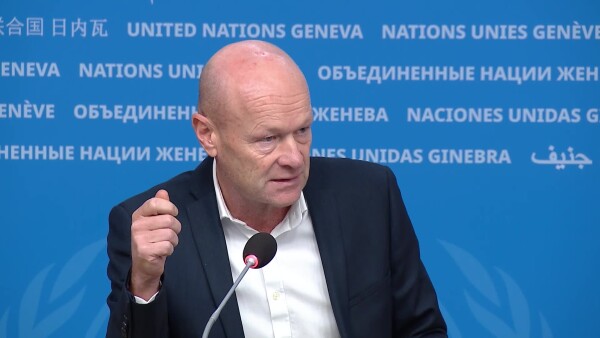
“The United Nations’ emergency response fund, the CERF, has released $2.6 million to help responders scale up and fight back against the devastating measles outbreak in Samoa,” Jens Laerke, spokesperson for the Office for the Coordination of Humanitarian Affairs (OCHA), told journalists in Geneva on Tuesday.
“As of this morning, 4,819 measles cases have been reported to the Disease Surveillance Team since the outbreak started, according to the Ministry of Health in Samoa,” Mr. Laerke added. “There were 87 cases recorded over the past 24 hours.”
Amid reports that Samoan health providers have been “overwhelmed” by the outbreak, which was declared on 15 November, the OCHA official added that the funds would be used to provide emergency vaccinations, obstetric and neonatal care for mothers and newborns infected with measles.
In addition, the funding will help to deliver mental health and psychosocial support and provide clean water and sanitation, along with public health information.
To date, more than 120 medical teams from the World Health Organization (WHO) have also deployed throughout the country to assist with the vaccination drive.
The UN has also backed another national campaign, with workers going door-to-door to promote awareness about the importance of getting inoculations.
Such moves are seen as vital to rebuilding community confidence and trust following the deaths last year of two babies during routine vaccination, amid strong anti-vaccination sentiment.
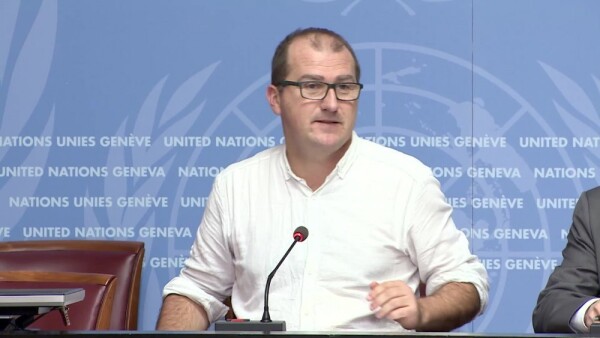
“Obviously this is a tragedy that you can have 61 child(ren) and nine other people being basically killed by a virus that is completely preventable,” said Tarik Jasarevic, WHO spokesperson.
Shortly after the outbreak was declared on 15 November, Samoan authorities launched a mass vaccination campaign, at the same time as they announced a state of emergency.
“So far, about 90 per cent of the 143,000 people it targeted have been reached, Mr. Laerke said, noting that the island nation was not alone in suffering a measles outbreak, linked to low immunisation coverage.
“By the end of November 2019, Samoa, Tonga, Fiji and American Samoa have all reported measles outbreaks,” he said. “Prior to the ongoing outbreaks, measles vaccine coverage varied in Pacific island countries and areas, ranging from 31 per cent in Samoa to 99 per cent in the Cook Islands and Nauru.”
To contain the public health threat, the Government of Samoa has launched a national appeal for nearly $11 million, as it works to vaccinate its population and treat those who have already been affected.
Its youngest citizens are most at risk, OCHA said in a statement, along with pregnant women and new mothers.
- Wide shot: exterior, flag alley, sunny and windy conditions, Palais des Nations, United Nations Geneva.
- Medium shot: Press room, journalists, podium speakers.
- Medium shot: back of journalist’s head wearing listening piece in foreground, another journalist opposite with hand obscuring mouth.
- SOUNDBITE (EN) Jens Laerke, spokesperson, UN Office for the Coordination of Humanitarian Affairs (OCHA): “The United Nations’ emergency response fund, the CERF, has released $2.6 million to help responders scale up and fight back against the devastating measles outbreak in Samoa.”
- Medium shot: journalist wearing headphones to left of shot, other journalists to rear.
- SOUNDBITE (EN) Jens Laerke, spokesperson, UN Office for the Coordination of Humanitarian Affairs (OCHA): “As of this morning, 4,819 measles cases have been reported to the Disease Surveillance Team since the outbreak started, according to the Ministry of Health in Samoa. There were 87 cases recorded over the past 24 hours.”
- Medium shot: journalist writing on laptop, wearing headphones, back of another journalist’s head to right of shot in close up.
- SOUNDBITE (EN) Tarik Jasarevic, spokesperson, World Health Organization (WHO): “Obviously this is a tragedy that you can have 61 child(ren) and nine other people being basically killed by a virus that is completely preventable.”
- Medium shot: journalists typing on laptops.
- SOUNDBITE (EN) Jens Laerke, spokesperson, UN Office for the Coordination of Humanitarian Affairs (OCHA): “The Government of Samoa, with support from the UN and the international community, launched a mass vaccination campaign on 20 November. This campaign has so far reached about 90 per cent of the 143,000 people it targeted.”
- Close up, journalist looking down.
- Medium shot: journalists typing on laptops.
- SOUNDBITE (EN) Jens Laerke, spokesperson, UN Office for the Coordination of Humanitarian Affairs (OCHA): “Prior to the ongoing outbreaks, measles vaccine coverage varied in Pacific island countries and areas, ranging from only 31 per cent in Samoa to 99 per cent in the Cook Islands and Nauru.”
- Medium shot: journalists, one reading, the other checking his mobile phone.
- Medium shot: podium with three speakers, table in foreground.
- Medium shot: journalists in foreground and to rear.
Similar Stories
1
1
1
Edited News | OCHA , UNICEF , WFP
Aid agencies warned on Friday of the fast-developing humanitarian emergency inside Taiz City in Yemen, which has been encircled by de facto Houthi forces fighting government troops along the country’s west coast.

2
17
1
2
Edited News , Press Conferences , Images | OCHA , WMO
Two UN agencies teamed up on Wednesday to issue an appeal for immediate assistance to help communities already being impacted by the strongest El Niño on record.

3
16
2
2
Edited News , B-roll , Conferences , Images | UNITED NATIONS , UNOG
Sixth Consultative Meeting on Enhancing Coordination of Peace Initiatives and Efforts for Sudan

1
1
1
Edited News | UNICEF , WHO , UNHCR
Yemen war continues to force families from homes amid hunger and disease
More than 250,000 people have now fled renewed fighting in Yemen, the UN said on Tuesday, citing particular concern for those sheltering in the southwestern city of Taiz and the wider governorate, where access is “essentially blocked”.

1
1
1
Edited News | UNICEF
A little over one year since a ceasefire agreement was announced between Hamas fighters and Israel, more than 340 children have been reported killed and hundreds more injured, the UN Children’s Fund, UNICEF, said on Friday.

1
1
1
Edited News | UNICEF , IFRC
Six weeks after Nepal’s deadly flooding disaster, communities are still struggling to rebuild their lives, but they will need sustained help as global warming increases the risk of another Himalayan catastrophe, the UN Children’s Fund (UNICEF) said on Friday.

1
1
1
Edited News | WHO
In suspected Russia plague death, testing and monitoring underway – WHO
The death of a lab worker in Russia’s Siberia region has sparked concerns about plague being the cause, the UN World Health Organization (WHO) said on Tuesday, adding that it was following the situation closely.

1
1
Edited News | OHCHR , UNOG
UN Human Rights Chief Volker Türk on Friday provided and oral update to the 63rd session of the Human rights Council on Ukraine.

1
1
1
Edited News | OHCHR , UNOG
UN Human Rights Chief Volker Türk on Friday provided and oral update to the 63rd session of the Human rights Council on the human rights situation in Haiti.

1
1
1
Edited News | WHO
Repeated delays in bringing lifesaving medicines, prosthetics and more from Israel into Gaza risk having devastating consequences on Palestinians who urgently need them in the wartorn enclave, the UN World Health Organization (WHO) said on Friday. “A truck full of non-priority supplies or the right supplies arriving too late, doesn't save lives. That's the question that actually matters," said Dr Reinhilde Van De Weerdt, WHO Representative in the OPT.

1
1
1
Edited News | WHO
DRC: Early access to care and oxygen decisive for Ebola patients’ survival – WHO
In the Democratic Republic of the Congo (DRC), health workers fighting the country’s largest-ever Ebola outbreak are struggling to overcome critical challenges to patient care, the UN World Health Organization (WHO) warned on Tuesday.

1
1
1
Edited News | OCHA , UN
Civilians in Iran are continuing to feel the consequences of months of conflict and military escalation, the UN’s top official in the country has said, as loss of life, damage to civilian infrastructure and mounting economic pressures leave many facing continued uncertainty.