

The United Nations Office at Geneva
Multimedia Newsroom
Edited News | UNHCR , OCHA , UNITED NATIONS , WFP
UNOG Bi-weekly press briefing South Sudan - Insecurity and Malnutrition Ocha - WFP - UNHCR 16 March 2021
South Sudanese “one step away from famine”, said World Food Programme (WFP)
As hunger levels continue to deepen in South Sudan due to a combination of violence, climate change and Covid-19, the 2021 South Sudan Humanitarian Response Plan was launched today aiming to reach 6.6 million people – including 350,000 refugees - with life-saving assistance and protection this year. The plan requests US$1.7 billion in funding to enable UN aid agencies and partners to deliver lifesaving assistance to the world’s youngest country.
“South Sudan is facing its highest levels of food insecurity and malnutrition since independence 10 years ago”, said Jens Laerke, spokesperson for the UN Office for the Coordination of Humanitarian Affairs (OCHA). “The South Sudan Humanitarian Response Plan for 2021, which is being launched today, aims to reach 6.6 million people at life-saving assistance and protection this year.”
The Humanitarian Response Plan has identified 8.3 million people in need of humanitarian assistance, including refugees, across the country. This is an 800,000-person increase in absolute numbers from the 7.5 million people in need in 2020.
“Violence and localized conflicts in many parts of the country also drive up humanitarian needs, and the impact again of COVID-19 on markets, services and people’s ability to move around have increased their vulnerability”, said OCHA’s Jens Laerke.
South Sudan is expected to see devastating flooding again this year. Last year and in 2019 flooding affected almost 1 million people. According to Jens Laerke, “the upcoming lean season in South Sudan from May to July is likely going to be the most severe on record and the immediate priorities in the response plan are to sustain the deliveries in the most food insecure areas and prepare for this upcoming raining season which could, again, be devastating.”
The World Food Programme (WFP) has painted an equally grim picture on South Sudan due to a toxic combination of escalating conflict, climate change and COVID-19 that could spell a hunger catastrophe for millions of already vulnerable people. WFP estimates that 60 percent of the population is increasingly hungry.
“Approximately 7.2 million South Sudanese have been pushed into severe food insecurity due again to sporadic violence, extreme weather and the economic impact of COVID-19”, said Tomson Phiri, spokesperson of the World Food Programme (WFP). He added that “this figure includes over 100,000 people who are in those hard-to-reach areas of 6 counties who are at risk of famine. They are literally one step away from famine according to the Famine Review Committee report.”
WFP has been scaling up its support in, Akobo, Pibor, Aweil west, Tonj North, Tonj South and Tonj East counties reaching 195,000 vulnerable people in early 2021.
“The World Food Programme has started to pre-position food stocks, again ahead of that rainy season, to ensure that crucial food assistance reaches the most vulnerable populations without delay during the lean season”, reported Mr. Phiri.
WFP plans to reach over 5 million people in South Sudan with food and nutrition assistance across its emergency, nutrition and livelihoods programmes.
UNHCR, the UN Refugee Agency, is aiming to provide humanitarian assistance for more than 2,2 million South Sudanese refugees living in five neighbouring countries in 2021.
Millions of the world’s youngest nation are displaced either inside or outside South Sudan. “The crisis continues to be a children’s one with more than 65% of the refugee population being under 18”, said UNHCR’s spokesperson Babar Baloch.
While some progress has been made in implementing the latest peace agreement, humanitarian and protection needs remain high for the largest refugee situation on the African continent. The majority of South Sudanese refugees are hosted in relatively remote and under-developed areas. UNHCR’s Babar Baloch said that “the COVID-19 pandemic combined with the climate change related challenges including severe flooding, droughts and desert locust have compounded an already dire situation. Funding is urgently needed to provide life-sustaining assistance including shelter, access to safe-drinking water, education and health services.”
Food shortages are particularly acute with insufficient funding already leading to ration cuts impacting hundreds of thousands of refugees.
The Democratic Republic of the Congo (DRC), Ethiopia, Kenya, Sudan and Uganda continue to host South Sudanese refugees and to take steps towards their inclusion in national systems.
- Exterior wide shot, Palais des Nations flag alley, nations’ flags flying, a cloudy day.
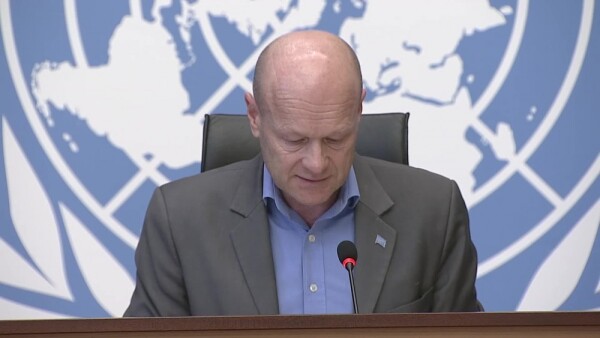
- Wide shot, podium with speakers in a near-empty Room XIV in line with COVID-19 distancing measures, Palais des Nations.
- SOUNDBITE (English) — Jens Laerke, Spokesperson for the UN Office for the Coordination of Humanitarian Affairs (OCHA): “South Sudan is facing its highest levels of food insecurity and malnutrition since independence 10 years ago. The South Sudan Humanitarian Response Plan for 2021, which is being launched today, aims to reach 6.6 million people at life-saving assistance and protection this year.”
- Medium shot, podium with speakers, side shot, Room XIV, Palais des Nations.
- SOUNDBITE (English) — Jens Laerke, Spokesperson for the UN Office for the Coordination of Humanitarian Affairs (OCHA): “Violence and localized conflicts in many parts of the country also drive up humanitarian needs, and the impact again of COVID-19 on markets, services and people’s ability to move around have increased their vulnerability.”
- Medium shot, podium with speakers and TV broadcasting, Room XIV, Palais des Nations.
- SOUNDBITE (English) — Jens Laerke, Spokesperson for the UN Office for the Coordination of Humanitarian Affairs (OCHA): “So the upcoming lean season in South Sudan from May to July is likely going to be the most severe on record and the immediate priorities in the response plan are to sustain the deliveries in the most food insecure areas and prepare for this upcoming raining season which could, again, be devastating.”
- Medium shot, TV broadcasting in foreground and podium to rear, Room XIV, Palais des Nations.
- SOUNDBITE (English) — Tomson Phiri, Spokesperson for the World Food Programme (WFP): “Approximately 7.2 million South Sudanese have been pushed into severe food insecurity due again to sporadic violence, extreme weather and the economic impact of COVID-19. This figure includes over 100,000 people who are in those hard-to-reach areas of 6 counties who are at risk of famine. They are literally one step away from famine according to the Famine Review Committee report.”
- Medium shot, journalist typing on laptop, Room XIV, Palais des Nations.
- SOUNDBITE (English) — Tomson Phiri, Spokesperson for the World Food Programme (WFP): “The World Food Programme has started to pre-position food stocks, again ahead of that rainy season, to ensure that crucial food assistance reaches the most vulnerable populations without delay during the lean season.”
- Medium-wide shot, UNTV cameras and cameraman standing, Room XIV, Palais des Nations.
- SOUNDBITE (English) — Babar Baloch, Spokesperson for the UN Refugee Agency (UNHCR): “The crisis continues to be a children’s one with more than 65% of the refugee population being under 18.”
- Medium shot, journalist using listening device and typing on laptop, Room XIV, Palais des Nations.
- SOUNDBITE (English) — Babar Baloch, Spokesperson for the UN Refugee Agency (UNHCR): “The COVID-19 pandemic combined with the climate change related challenges including severe flooding, droughts and desert locust have compounded an already dire situation. Funding is urgently needed to provide life-sustaining assistance including shelter, access to safe-drinking water, education and health services.”
- Medium shot, journalist typing on phone, Room XIV, Palais des Nations.
- Medium shot, podium with speakers, Room XIV, Palais des Nations.
- Medium shot, podium with speakers in foreground and Room XIV to rear, Palais des Nations.
- Medium shot, TV broadcasting to rear, in-between two seats, Room XIV, Palais des Nations.
Similar Stories

1
1
1
Edited News | OCHA , UNICEF , WFP
Aid agencies warned on Friday of the fast-developing humanitarian emergency inside Taiz City in Yemen, which has been encircled by de facto Houthi forces fighting government troops along the country’s west coast.

2
17
1
2
Edited News , Press Conferences , Images | OCHA , WMO
Two UN agencies teamed up on Wednesday to issue an appeal for immediate assistance to help communities already being impacted by the strongest El Niño on record.

3
16
2
2
Edited News , B-roll , Conferences , Images | UNITED NATIONS , UNOG
Sixth Consultative Meeting on Enhancing Coordination of Peace Initiatives and Efforts for Sudan

1
1
1
Edited News | UNICEF , WHO , UNHCR
Yemen war continues to force families from homes amid hunger and disease
More than 250,000 people have now fled renewed fighting in Yemen, the UN said on Tuesday, citing particular concern for those sheltering in the southwestern city of Taiz and the wider governorate, where access is “essentially blocked”.

1
1
1
Edited News | UNICEF
A little over one year since a ceasefire agreement was announced between Hamas fighters and Israel, more than 340 children have been reported killed and hundreds more injured, the UN Children’s Fund, UNICEF, said on Friday.

1
1
1
Edited News | UNICEF , IFRC
Six weeks after Nepal’s deadly flooding disaster, communities are still struggling to rebuild their lives, but they will need sustained help as global warming increases the risk of another Himalayan catastrophe, the UN Children’s Fund (UNICEF) said on Friday.

1
1
1
Edited News | WHO
In suspected Russia plague death, testing and monitoring underway – WHO
The death of a lab worker in Russia’s Siberia region has sparked concerns about plague being the cause, the UN World Health Organization (WHO) said on Tuesday, adding that it was following the situation closely.

1
1
Edited News | OHCHR , UNOG
UN Human Rights Chief Volker Türk on Friday provided and oral update to the 63rd session of the Human rights Council on Ukraine.

1
1
1
Edited News | OHCHR , UNOG
UN Human Rights Chief Volker Türk on Friday provided and oral update to the 63rd session of the Human rights Council on the human rights situation in Haiti.

1
1
1
Edited News | WHO
Repeated delays in bringing lifesaving medicines, prosthetics and more from Israel into Gaza risk having devastating consequences on Palestinians who urgently need them in the wartorn enclave, the UN World Health Organization (WHO) said on Friday. “A truck full of non-priority supplies or the right supplies arriving too late, doesn't save lives. That's the question that actually matters," said Dr Reinhilde Van De Weerdt, WHO Representative in the OPT.

1
1
1
Edited News | WHO
DRC: Early access to care and oxygen decisive for Ebola patients’ survival – WHO
In the Democratic Republic of the Congo (DRC), health workers fighting the country’s largest-ever Ebola outbreak are struggling to overcome critical challenges to patient care, the UN World Health Organization (WHO) warned on Tuesday.

1
1
1
Edited News | OCHA , UN
Civilians in Iran are continuing to feel the consequences of months of conflict and military escalation, the UN’s top official in the country has said, as loss of life, damage to civilian infrastructure and mounting economic pressures leave many facing continued uncertainty.