

The United Nations Office at Geneva
Multimedia Newsroom
UN seeks $76 million in emergency aid to support Madagascar through its “worst drought in a decade”
The island nation of Madagascar, one of the most impoverished countries in the word, has seen its agricultural season ruined by the worst drought in the decade, the UN humanitarian office said today.
Three consecutive droughts, compounded by the COVID-19 pandemic, have left more than 1,27 million people in the island’s Grand Sud area in desperate need of humanitarian assistance.
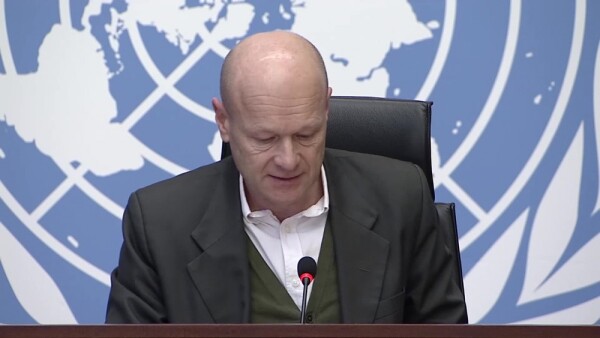
“The United Nations in Madagascar has just issued a Flash Appeal for US$76 million to urgently support over 1 million people who face huge and potentially life-threatening humanitarian needs for food, nutrition, water and sanitation and health assistance”, said Jens Laerke, spokesperson for the UN Office for the Coordination of Humanitarian Affairs (OCHA).
Speaking today at a news conference at the United Nations in Geneva, Laerke added that “we are trying to be out there urgently right now to save lives which are at risk. The COVID-19 situation has of course made everything much more difficult”.
The COVID-19 pandemic and associated lockdowns have driven people to the brink of survival.
“One of the things that are particular concerning is, of course, that the normal coping mechanisms for people during the lean season--because this is not the first time that we have food insecurity in Madagascar -- is often to send a family member to the larger cities to look for work so that they can send money back home. With COVID-19 this kind of coping mechanism is no longer available because people cannot move and there are no jobs available,” Laerke explained.
Cereal corps, including maize, have been hard-hit by climatic factors in Madagascar’s Grand Sud, and have also suffered due army worms outbreaks. These caterpillar pests attack crops especially after periods of drought, when their green leaf material they normally feed on has been depleted. The average infestation rate In Madagascar has been 53 per cent and yield losses on corn crops are being estimated at 47 per cent by the country’sMinistry of Agriculture.
“One in three people in the south are now severely food insecure. The food security analysis from last month December also showed the alarming projection for more than 135,000 children under the age of 5 suffering from acute malnutrition in the coming months in the Grand Sud, ” Laerke said in making the case for urgent donor support.
The Flash Appeal complements Madagascar’s own national response plan and focuses on the most urgent life-saving and life-sustaining needs of communities in the Grand Sud during the peak of the lean season. According to OCHA , the funding will help improve food security for 1.1 million people, provide access to water for 420,000 of the most vulnerable, give nutritional support to 300,000 children under age 5 and ensure essential health care services for 230,000 people.
Just a week ago, the UN’s World Food Programme appealed for $ 35 million in emergency aid to help fight hunger in the region.
- Exterior wide shot, Palais des Nations, Pregny entrance, a sunny day.
- Wide shot, press briefing room
- SOUNDBITE (English) — Jens Laerke, Spokesperson for the UN Office for the Coordination of Humanitarian Affairs (OCHA): “The United Nations in Madagascar has just issued a Flash Appeal for US$76 million to urgently support over 1 million people who face huge and potentially life-threatening humanitarian needs for food, nutrition, water and sanitation and health assistance”.
- Medium shot, spokespeople at the podium
- SOUNDBITE (English) - Jens Laerke, Spokesperson for the UN Office for the Coordination of Humanitarian Affairs (OCHA): “We are trying to be out there urgently right now to save lives which are at risk. The COVID-19 situation has of course made everything much more difficult”.
- Close up, journalist in the press briefing room
- SOUNDBITE (English) - Jens Laerke, Spokesperson for the UN Office for the Coordination of Humanitarian Affairs (OCHA): “One of the things that are particular concerning is, of course, that the normal coping mechanisms for people during the lean season, because this is not the first time that we have food insecurity in Madagascar, is often to send a family member to the larger cities to look for work so that they can send money back home. With COVID-19 this kind of coping mechanism is no longer available because people cannot move and there are no jobs available”.
- Close up, journalist in press briefing room at the UN Palais
- SOUNDBITE (English) - Jens Laerke, Spokesperson for the UN Office for the Coordination of Humanitarian Affairs (OCHA): “One in three people in the south are now severely food insecure. The food security analysis from last month December also showed the alarming projection for more than 135,000 children under the age of 5 suffering from acute malnutrition in the coming months in the Grand Sud”.
- Close up, spokesperson OHCHR
- Medium shot, journalists in press briefing room
- Medium shot, journalist with cell phone in press briefing room
Similar Stories

1
1
1
Edited News | OCHA , UNICEF , WFP
Aid agencies warned on Friday of the fast-developing humanitarian emergency inside Taiz City in Yemen, which has been encircled by de facto Houthi forces fighting government troops along the country’s west coast.

2
17
1
2
Edited News , Press Conferences , Images | OCHA , WMO
Two UN agencies teamed up on Wednesday to issue an appeal for immediate assistance to help communities already being impacted by the strongest El Niño on record.

3
16
2
2
Edited News , B-roll , Conferences , Images | UNITED NATIONS , UNOG
Sixth Consultative Meeting on Enhancing Coordination of Peace Initiatives and Efforts for Sudan

1
1
1
Edited News | UNICEF , WHO , UNHCR
Yemen war continues to force families from homes amid hunger and disease
More than 250,000 people have now fled renewed fighting in Yemen, the UN said on Tuesday, citing particular concern for those sheltering in the southwestern city of Taiz and the wider governorate, where access is “essentially blocked”.

1
1
1
Edited News | UNICEF
A little over one year since a ceasefire agreement was announced between Hamas fighters and Israel, more than 340 children have been reported killed and hundreds more injured, the UN Children’s Fund, UNICEF, said on Friday.

1
1
1
Edited News | UNICEF , IFRC
Six weeks after Nepal’s deadly flooding disaster, communities are still struggling to rebuild their lives, but they will need sustained help as global warming increases the risk of another Himalayan catastrophe, the UN Children’s Fund (UNICEF) said on Friday.

1
1
1
Edited News | WHO
In suspected Russia plague death, testing and monitoring underway – WHO
The death of a lab worker in Russia’s Siberia region has sparked concerns about plague being the cause, the UN World Health Organization (WHO) said on Tuesday, adding that it was following the situation closely.

1
1
Edited News | OHCHR , UNOG
UN Human Rights Chief Volker Türk on Friday provided and oral update to the 63rd session of the Human rights Council on Ukraine.

1
1
1
Edited News | OHCHR , UNOG
UN Human Rights Chief Volker Türk on Friday provided and oral update to the 63rd session of the Human rights Council on the human rights situation in Haiti.

1
1
1
Edited News | WHO
Repeated delays in bringing lifesaving medicines, prosthetics and more from Israel into Gaza risk having devastating consequences on Palestinians who urgently need them in the wartorn enclave, the UN World Health Organization (WHO) said on Friday. “A truck full of non-priority supplies or the right supplies arriving too late, doesn't save lives. That's the question that actually matters," said Dr Reinhilde Van De Weerdt, WHO Representative in the OPT.

1
1
1
Edited News | WHO
DRC: Early access to care and oxygen decisive for Ebola patients’ survival – WHO
In the Democratic Republic of the Congo (DRC), health workers fighting the country’s largest-ever Ebola outbreak are struggling to overcome critical challenges to patient care, the UN World Health Organization (WHO) warned on Tuesday.

1
1
1
Edited News | OCHA , UN
Civilians in Iran are continuing to feel the consequences of months of conflict and military escalation, the UN’s top official in the country has said, as loss of life, damage to civilian infrastructure and mounting economic pressures leave many facing continued uncertainty.