

The United Nations Office at Geneva
Multimedia Newsroom
Flooding leaves South Sudan facing threat of ‘catastrophic’ levels of hunger
Torrential rains and flooding across South Sudan have created the threat of “catastrophic” levels of hunger and left hundreds of thousands homeless, UN humanitarians said on Tuesday.
About 700,000 people are in crisis after flood waters swept across the country, submerging villages, land and livestock, according to a World Food Programme (WFP) alert.
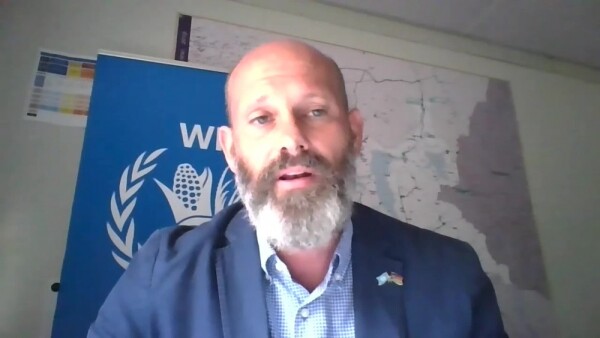
“There is a very significant flood, which is covering vast areas of the country,” said Matthew Hollingworth, WFP Country Director in South Sudan. “More than 36 counties of the country are under water, submerging entire villages, homes, farmsteads, killing livestock and putting an end to livelihoods.”
Across Jonglei and Unity State, homes and clinics have been submerged, communities have been stranded and animals “lie dead in the fields”, WFP said in a statement. Schools that were due to open next week “are filled with the homeless”.
The WFP official described the flooding as likely the worst in 60 years and explained that this year’s rains had begun before last year’s flood waters had receded fully.
The 2019 flooding was already “unprecedented” and had led to the expansion of wetlands, the Sobat and Nile basins, Mr. Hollingworth said, adding that this year’s crisis is likely to be even more severe, as the peak of the flood season was still to come.
WFP is particularly concerned that crops have been lost in worst-affected Jonglei state, where 85,000 people have been displaced by rising waters and some 230,000 people have experienced flooding more than once.
“We’ve seen, as I mentioned, harvests being decimated in Jonglei state…and 45 per cent of all the land that was planted with cereals and sorghum - the mainstay of the diet - have been lost this year. That comes in addition to what we saw very similar last year,” Mr. Hollingworth said.
He added: “This flooding crisis is coming on top of a very grim hunger situation in Jonglei, where already this year 1.4 million people were suffering from acute and severe hunger, in addition to over 300,000 children under five who are acutely malnourished.”
The development adds to the challenges facing South Sudan’s people, where years of conflict, inter-communal conflict, political infighting and corruption have rendered the country vulnerable to natural disaster.
Conflict was “very significant” ahead of this year’s rains in Jonglei, Unity and Lake State, along with the Greater Pibor Administrative Area, the WFP official explained.
This added to the current crisis by preventing humanitarians from delivering food stocks to areas while they were still accessible.
To help “half a million people more than we would usually”, WFP has appealed for $58 million to support assistance for the coming six months. This will help to fund assistance by air and boat to areas that are “completely cut off”, Mr. Hollingworth explained, including communities whose crops have been destroyed by the flooding.
He warned that it was crucially important to provide support to host communities that had to cope with people displaced by flooding or violence to prevent further tensions and flare-ups, as the country continues to make gradual progress on implementing the 2018 peace agreement.
“As cattle move into areas where they weren’t previously put to pasture, as people are displaced into areas where there are not necessarily sufficient resources to look after them as well as the resident community; all of those can breed future problems,” Mr. Hollingworth said.
In the longer-term, it was also important to be able to encourage people to return home and to their livelihoods, he insisted.
“We’ve been seeing natural disasters, we’ve been seeing conflicts displacing people, that is the situation we’re in right now. We have yet to get data back to confirm how bad it will be, but I think we all need to prepare ourselves that we must do everything in our power to avoid famine and to avoid the levels of hunger - the catastrophic hunger - that we’ve seen sadly in the past in this country.”
- Exterior wide shot, Palais des Nations flag alley, nations’ flags flying, a cloudy day.
- Wide shot, podium with speakers in a near-empty Room XIV in line with COVID-19 distancing measures, side shot, Palais des Nations.
- SOUNDBITE (English) — Matthew Hollingworth, WFP Country Director in South Sudan: “There is a very significant flood, which is covering vast areas of the country now; now more than 36 counties of the country are underwater, submerging entire villages, homes, farmsteads, killing livestock and putting an end to livelihoods, so.”
- Medium shot, journalist sitting with conference listening device, Room XIV III, Palais des Nations.
- SOUNDBITE (English) — Matthew Hollingworth, WFP Country Director in South Sudan: “We’ve seen, as I mentioned, harvests being decimated in Jonglei state, that I’m just I’m back from two visits from, and 45 per cent of all the land that was planted with cereals and sorghum - the mainstay of the diet - have been lost this year. That comes in addition to what we saw very similar last year.”
- Medium shot, UN staff member sitting with conference listening device and laptop, Room XIV, Palais des Nations.
- SOUNDBITE (English) — Matthew Hollingworth, WFP Country Director in South Sudan: “This flooding crisis is coming on top of a very grim hunger situation in Jonglei, where already this year 4 million people were suffering from acute and severe hunger, in addition to over 300,000 children under five who are acutely malnourished.”
- Medium shot, journalists, UN staff sitting and listening using conference listening device, Room XIV, Palais des Nations.
- SOUNDBITE (English) — Matthew Hollingworth, WFP Country Director in South Sudan: “We’ve been seeing natural disasters, we’ve been seeing conflicts displacing people; that is the situation we’re in right now. We have yet to get data back to confirm how bad it will be, but I think we all need to prepare ourselves that we must do everything in our power to avoid famine and to avoid the levels of hunger - the catastrophic hunger - that we’ve seen sadly in the past in this country.”
- Medium shot, TV journalist checking mobile phone, standing between two TV cameras, Room XIV, Palais des Nations.
- Medium shot, journalist sitting in front of laptop with conference listening device, Room XIV, Palais des Nations.
- Medium shot, two journalists sitting in line with COVID-19 distancing measures, Room XIV, Palais des Nations.
Similar Stories

1
1
1
Edited News | UNICEF
A little over one year since a ceasefire agreement was announced between Hamas fighters and Israel, more than 340 children have been reported killed and hundreds more injured, the UN Children’s Fund, UNICEF, said on Friday.

1
1
1
Edited News | UNICEF , IFRC
Six weeks after Nepal’s deadly flooding disaster, communities are still struggling to rebuild their lives, but they will need sustained help as global warming increases the risk of another Himalayan catastrophe, the UN Children’s Fund (UNICEF) said on Friday.

1
1
1
Edited News | WHO
In suspected Russia plague death, testing and monitoring underway – WHO
The death of a lab worker in Russia’s Siberia region has sparked concerns about plague being the cause, the UN World Health Organization (WHO) said on Tuesday, adding that it was following the situation closely.

1
1
Edited News | OHCHR , UNOG
UN Human Rights Chief Volker Türk on Friday provided and oral update to the 63rd session of the Human rights Council on Ukraine.

1
1
1
Edited News | OHCHR , UNOG
UN Human Rights Chief Volker Türk on Friday provided and oral update to the 63rd session of the Human rights Council on the human rights situation in Haiti.

1
1
1
Edited News | WHO
Repeated delays in bringing lifesaving medicines, prosthetics and more from Israel into Gaza risk having devastating consequences on Palestinians who urgently need them in the wartorn enclave, the UN World Health Organization (WHO) said on Friday. “A truck full of non-priority supplies or the right supplies arriving too late, doesn't save lives. That's the question that actually matters," said Dr Reinhilde Van De Weerdt, WHO Representative in the OPT.

1
1
1
Edited News | WHO
DRC: Early access to care and oxygen decisive for Ebola patients’ survival – WHO
In the Democratic Republic of the Congo (DRC), health workers fighting the country’s largest-ever Ebola outbreak are struggling to overcome critical challenges to patient care, the UN World Health Organization (WHO) warned on Tuesday.

1
1
1
Edited News | OCHA , UN
Civilians in Iran are continuing to feel the consequences of months of conflict and military escalation, the UN’s top official in the country has said, as loss of life, damage to civilian infrastructure and mounting economic pressures leave many facing continued uncertainty.
1
1
1
Edited News | WHO , UNICEF
Aid agencies in Yemen highlighted the growing hunger emergency sparked by renewed fighting between Houthi opposition forces and Government troops, after mobile health clinics reported that hundreds of children displaced by the violence are suffering from the most deadly form of malnutrition.
1
1
1
Edited News | UNHCR
Displacement on the rise in Yemen as fighting continues - UNHCR
As hostilities worsen in Yemen, more people have been fleeing their homes, further intensifying the humanitarian crisis within the region, the UN Refugee Agency (UNHCR) warned on Tuesday.
1
1
1
Edited News | IOM , OHCHR , UNFPA , UNOG , UNHCR , WHO
Yemen’s humanitarian crisis growing by the hour amid spike in displacement
Yemenis displaced by renewed fighting have described fleeing for their lives amid shelling and gunfire, aid agencies reported on Friday, while highlighting the dramatic increase in humanitarian needs in the country and in Djibouti, where thousands have sought shelter.
1
1
1
Edited News | OHCHR , UNOG
The UN Human Rights Office issued on Friday a report documenting a shocking pattern of sexual violence amid Russia’s full-scale armed attack on Ukraine.