

The United Nations Office at Geneva
Multimedia Newsroom
Statements , Conferences , Edited News | HRC , OHCHR
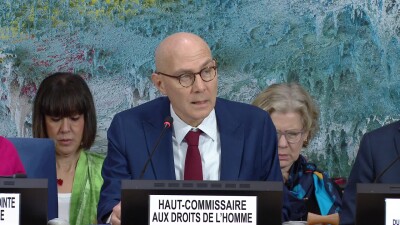
HRC61 - HC Volker Türk Global Update - 27 February 2026
“The world is upside down - we all feel it. Discussions on power are everywhere: who has power; how power is shifting; how power will evolve. Players compete for control over land, energy, attention. But to what end? Dominating the global economy? Accumulating more power? Putting AI into space?”
“Surely power must serve other purposes. If you ask people around the world what they want from power, the answers are the same: peace, safety, a decent standard of living. In short, people desperately want their human rights,” the High Commissioner said.
“Ask GenZ, protesting in the streets. Ask human rights defenders in prison, for speaking up against oppression. Ask those risking their lives for their principles. They have entrusted their leaders with upholding human rights. When those leaders ignore their people, trust breaks,” he added.
“Human rights, and the rule of law based on those rights, prevent the powerful from doing whatever they want. They reject domination and subjugation. They represent how people want to live. Human rights are more popular than populism,” he said.
“Authoritarians around the world follow a familiar playbook. Governments adopt vague laws under the guise of national security, criminalize peaceful criticism, and use heavy-handed tactics to respond to dissent. They control information by capturing some channels for propaganda, while shutting down or censoring others,” said the High Commissioner.
The High Commissioner outlined how Human rights defenders, independent media, and dissenting voices are arrested, threatened, subjected to surveillance, and even killed. Civil society groups are branded as agents of foreign powers, and their funding is cut. Authoritarians undermine judicial institutions by coopting, overriding, or abolishing them.
“And all the while, women and minority groups — migrants, LGBTIQ+ people, religious minorities—are scapegoated and blamed for all of society’s ills. We see this playbook used in many countries today,” he said.
Attacks on minorities continue, as some States retreat from their commitments to prevent and address discrimination. Africans and people of African descent are subjected to racial profiling and excessive use of force across several regions. Indigenous Peoples continue to be denied their rights to land and to free, prior, and informed consent in mining and other commercial projects, and reports show a sharp increase in antisemitism, Islamophobia, and other forms of religious hate across several regions.
The High Commissioner also noted the rise of hate speech against migrants and refugees, the exclusion and discrimination against Roma, the targeting of people and organizations working to defend LGBTIQ+ rights and the intensifying threats faced by women and girls.
Turning to various crises around the world, the High Commissioner shed light on the competition for power and resources that drives conflict, and how it can be stopped.
“The threat and use of force to solve disputes is becoming more frequent and normalized. The number of armed conflicts has almost doubled since 2010, to around 60. Attacks on civilians are up by almost one-third,” Türk said.
“Conflict is a human rights wasteland – literally, and for people living through it,” he added.
“It is baffling that political leaders are not taking urgent steps to reverse these trends.
Instead, some of them are attacking the institutions designed to keep us safe –the United Nations, including the International Court of Justice; the International Criminal Court; this Council, and its mechanisms. I wish they would put their time and energy into the real challenges – for example, the nuclear arms race unfolding before our eyes,” he said.
The High Commissioner expressed deep concern that there are now no binding limits on the two largest nuclear arsenals in the world – those of the Russian Federation and the United States. He expressed hope that the two countries concerned will put in place a successor to the New START Treaty, and called on all States to recommit to nuclear non-proliferation.
“Around the world, we are witnessing blatant violations of international law,” he warned.
“Ten years ago, an attack on a hospital triggered a global outcry. Recent figures show there are now an average of ten attacks per day on healthcare. Warring parties try to justify their actions by exploiting ambiguities in the law and, frankly, by lying,” said Türk.
“The pattern is clear: ignoring atrocity crimes fuels greater bloodshed. The world cannot stand by as the edifice of international humanitarian and human rights law is dismantled before our eyes,” he said.
Calling on States to stand up for universalism, the High Commissioner called for clear actions to address these challenges. These include a ban on the sale or transfer of weapons where there is a risk they could be used to violate international law, for Governments and social media companies to work on an end to hate speech and dehumanizing rhetoric, for accountability through credible investigations and prosecutions - including, by increasing the use of universal jurisdiction, and for human rights confidence-building measures, which can help to create the political space for dialogue and peacebuilding.
The High Commissioner advised that his Office was developing such measures and sharing them with those involved in crises in several places around the world, including Ukraine, Sudan and Venezuela. These proposals are based on lessons learned from previous peace processes, from Colombia to the former Yugoslavia.
With AI technologies controlled by a handful of companies, led by billionaires who have enormous power over the forces reshaping societies, the High Commissioner also called for human rights to be hard-wired into AI design, development and deployment.
“AI is about power – so it is intrinsically connected to human rights. AI is controlled by a handful of companies, led by billionaires who have enormous power over the forces reshaping societies – for better or worse,” said Türk.
Without adequate oversight and accountability, digital technologies can invade privacy, undermine democratic processes, pose serious risks to safety and turbocharge inequality. States have a responsibility to regulate the safety of these technologies, he added.
“Mr. President, the final move in the authoritarian playbook is persuading people that they are powerless. But human rights remind us that we are not. Our choices, our voices, our votes determine what comes next. The future depends on each of us. We need to forge coalitions to champion what unites us,” said the High Commissioner.
“There is a need for human rights-based negotiations that bring parties to conflict together around converging interests, like protecting civilians, clarifying the fate of missing people, and ending arbitrary arrests,” said Türk.
“We will set in motion a Global Alliance for Human Rights to capture the energy and commitment that I feel, everywhere I go. It will represent the quiet majority, who strive for a fairer, more peaceful and compassionate world. And that is what we are working for.”
ENDS
For more information and media requests, please contact
In Geneva:
Ravina Shamdasani: +41 22 917 9169 / ravina.shamdasani@un.org
Jeremy Laurence: +41 22 917 9383 / jeremy.laurence@un.org
Marta Hurtado: + 41 22 917 9466 / marta.hurtadogomez@un.org
Thameen Al-Kheetan: +41 22 917 4232 / thameen.alkheetan@un.org
Facebook unitednationshumanrights
Instagram @unitednationshumanrights
STORY: UN High Commissioner for Human Rights Volker Türk Global update speech to the 61st Human Rights Council
TRT: 06:21
SOURCE: OHCHR/UNOG
RESTRICTIONS: NONE
LANGUAGE: English/NATS
ASPECT RATIO: 16:9
DATELINE: 27 February 2026 – GENEVA, SWITZERLAND
SHOTLIST
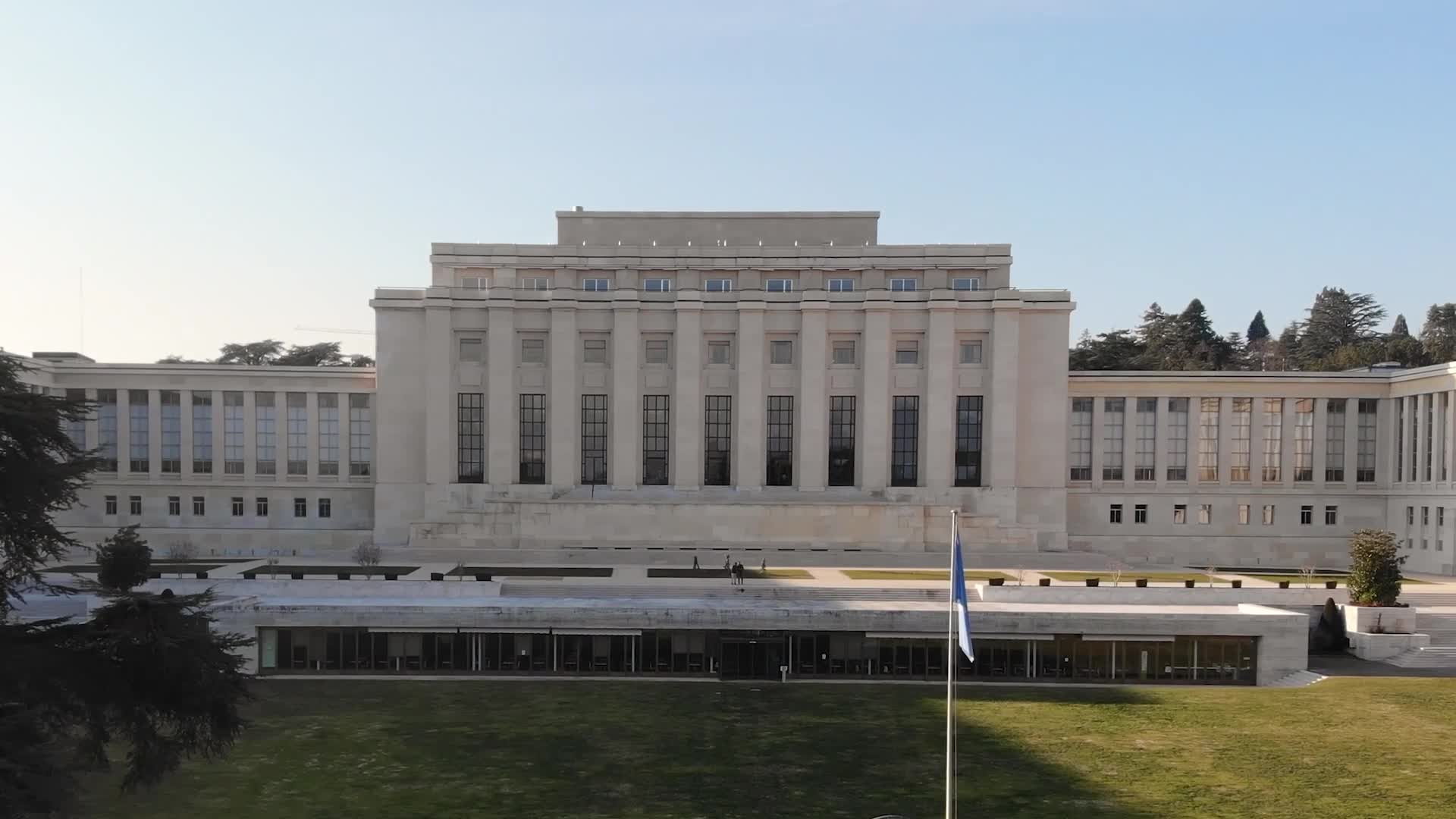
- Various exterior shots : Palais des Nations
- Interior shots: Assembly Hall
- SOUNDBITE (English) — Volker Türk, UN High Commissioner for Human Rights: “The world is upside down - we all feel it. Discussions on power are everywhere: who has power; how power is shifting; how power will evolve. Players compete for control over land, energy, attention. But to what end? Dominating the global economy? Accumulating more power? Putting AI into space?”
- Cutaways: Assembly hall
- SOUNDBITE (English) — Volker Türk, UN High Commissioner for Human Rights: “Surely power must serve other purposes. If you ask people around the world what they want from power, the answers are the same: peace, safety, a decent standard of living. In short, people desperately want their human rights.”
- Cutaways: Assembly hall
- SOUNDBITE (English) — Volker Türk, UN High Commissioner for Human Rights: “Ask GenZ, protesting in the streets. Ask human rights defenders in prison, for speaking up against oppression. Ask those risking their lives for their principles. They have entrusted their leaders with upholding human rights. When those leaders ignore their people, trust breaks.”
- Cutaways: Assembly hall
- SOUNDBITE (English) — Volker Türk, UN High Commissioner for Human Rights: “Human rights, and the rule of law based on those rights, prevent the powerful from doing whatever they want. They reject domination and subjugation. They represent how people want to live. Human rights are more popular than populism.”
- Cutaways: Assembly hall
- SOUNDBITE (English) — Volker Türk, UN High Commissioner for Human Rights: “Authoritarians around the world follow a familiar playbook. Governments adopt vague laws under the guise of national security, criminalize peaceful criticism, and use heavy-handed tactics to respond to dissent. They control information by capturing some channels for propaganda, while shutting down or censoring others.”
- Cutaways: Assembly hall
- SOUNDBITE (English) — Volker Türk, UN High Commissioner for Human Rights: “And all the while, women and minority groups — migrants, LGBTIQ+ people, religious minorities—are scapegoated and blamed for all of society’s ills. We see this playbook used in many countries today.”
- Cutaways: Assembly hall
- SOUNDBITE (English) — Volker Türk, UN High Commissioner for Human Rights: “The threat and use of force to solve disputes is becoming more frequent and normalized. The number of armed conflicts has almost doubled since 2010, to around 60. Attacks on civilians are up by almost one-third.”
- Cutaways: Assembly hall
- SOUNDBITE (English) — Volker Türk, UN High Commissioner for Human Rights: “Conflict is a human rights wasteland – literally, and for people living through it.”
- Cutaways: Assembly hall
- SOUNDBITE (English) — Volker Türk, UN High Commissioner for Human Rights: “It is baffling that political leaders are not taking urgent steps to reverse these trends. Instead, some of them are attacking the institutions designed to keep us safe –the United Nations, including the International Court of Justice; the International Criminal Court; this Council, and its mechanisms. I wish they would put their time and energy into the real challenges – for example, the nuclear arms race unfolding before our eyes.”
- Cutaways: Assembly hall
- SOUNDBITE (English) — Volker Türk, UN High Commissioner for Human Rights: “Around the world, we are witnessing blatant violations of international law.”
- Cutaways: Assembly hall
- SOUNDBITE (English) — Volker Türk, UN High Commissioner for Human Rights: “Ten years ago, an attack on a hospital triggered a global outcry. Recent figures show there are now an average of ten attacks per day on healthcare. Warring parties try to justify their actions by exploiting ambiguities in the law and, frankly, by lying.”
- Cutaways: Assembly hall
- SOUNDBITE (English) — Volker Türk, UN High Commissioner for Human Rights: “The pattern is clear: ignoring atrocity crimes fuels greater bloodshed. The world cannot stand by as the edifice of international humanitarian and human rights law is dismantled before our eyes.”
- Cutaways: Assembly hall
- SOUNDBITE (English) — Volker Türk, UN High Commissioner for Human Rights: “AI is about power – so it is intrinsically connected to human rights. AI is controlled by a handful of companies, led by billionaires who have enormous power over the forces reshaping societies – for better or worse.”
- Cutaways: Assembly hall
- SOUNDBITE (English) — Volker Türk, UN High Commissioner for Human Rights: “Mr. President, the final move in the authoritarian playbook is persuading people that they are powerless. But human rights remind us that we are not. Our choices, our voices, our votes determine what comes next. The future depends on each of us. We need to forge coalitions to champion what unites us.”
- Cutaways: Assembly hall
- SOUNDBITE (English) — Volker Türk, UN High Commissioner for Human Rights: “There is a need for human rights-based negotiations that bring parties to conflict together around converging interests, like protecting civilians, clarifying the fate of missing people, and ending arbitrary arrests.”
- Cutaways: Assembly hall
- SOUNDBITE (English) — Volker Türk, UN High Commissioner for Human Rights: “We will set in motion a Global Alliance for Human Rights to capture the energy and commitment that I feel, everywhere I go. It will represent the quiet majority, who strive for a fairer, more peaceful and compassionate world. And that is what we are working for.”
Similar Stories

1
1
1
Edited News | UNICEF , IFRC
Six weeks after Nepal’s deadly flooding disaster, communities are still struggling to rebuild their lives, but they will need sustained help as global warming increases the risk of another Himalayan catastrophe, the UN Children’s Fund (UNICEF) said on Friday.
1
1
1
Statements , Press Conferences | OHCHR

1
1
1
Edited News | WHO
In suspected Russia plague death, testing and monitoring underway – WHO
The death of a lab worker in Russia’s Siberia region has sparked concerns about plague being the cause, the UN World Health Organization (WHO) said on Tuesday, adding that it was following the situation closely.

1
1
Edited News | OHCHR , UNOG
UN Human Rights Chief Volker Türk on Friday provided and oral update to the 63rd session of the Human rights Council on Ukraine.
2
1
2
Statements , Conferences | HRC , OHCHR
Interactive dialogue with the High Commissioner for Human Rights, Volker Türk on the oral update on Ukraine.

1
1
1
Edited News | OHCHR , UNOG
UN Human Rights Chief Volker Türk on Friday provided and oral update to the 63rd session of the Human rights Council on the human rights situation in Haiti.

1
1
1
Edited News | WHO
Repeated delays in bringing lifesaving medicines, prosthetics and more from Israel into Gaza risk having devastating consequences on Palestinians who urgently need them in the wartorn enclave, the UN World Health Organization (WHO) said on Friday. “A truck full of non-priority supplies or the right supplies arriving too late, doesn't save lives. That's the question that actually matters," said Dr Reinhilde Van De Weerdt, WHO Representative in the OPT.

1
1
1
Edited News | WHO
DRC: Early access to care and oxygen decisive for Ebola patients’ survival – WHO
In the Democratic Republic of the Congo (DRC), health workers fighting the country’s largest-ever Ebola outbreak are struggling to overcome critical challenges to patient care, the UN World Health Organization (WHO) warned on Tuesday.

1
1
1
Edited News | OCHA , UN
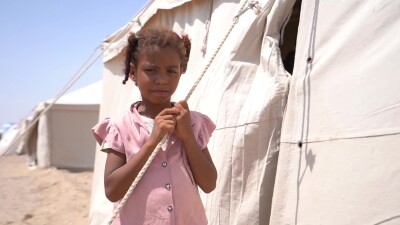
Civilians in Iran are continuing to feel the consequences of months of conflict and military escalation, the UN’s top official in the country has said, as loss of life, damage to civilian infrastructure and mounting economic pressures leave many facing continued uncertainty.
1
1
1
Edited News | WHO , UNICEF
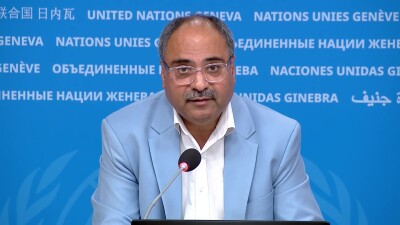
Aid agencies in Yemen highlighted the growing hunger emergency sparked by renewed fighting between Houthi opposition forces and Government troops, after mobile health clinics reported that hundreds of children displaced by the violence are suffering from the most deadly form of malnutrition.
1
1
1
Edited News | UNHCR
Displacement on the rise in Yemen as fighting continues - UNHCR
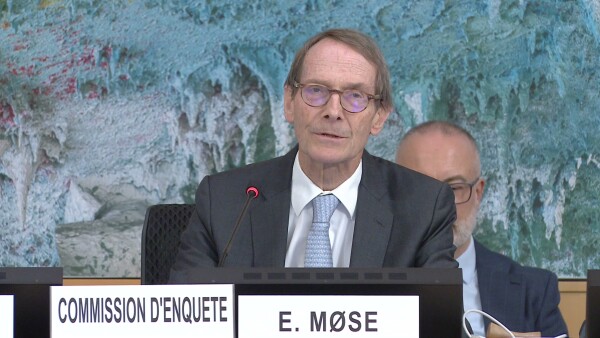
As hostilities worsen in Yemen, more people have been fleeing their homes, further intensifying the humanitarian crisis within the region, the UN Refugee Agency (UNHCR) warned on Tuesday.
1
1
1
Statements , Conferences | HRC , OHCHR
Interactive dialogue on the oral update of the Independent International Commission of Inquiry on Ukraine at the 63rd regular session of the Human Rights Council