

The United Nations Office at Geneva
Multimedia Newsroom
Gaza: Five patients evacuated as Rafah reopens while ‘too many stayed behind’ – WHO
As time is running out for thousands of critically ill patients in Gaza, hope is alive for medical evacuations to increase with the reopening of the Rafah crossing in the southern part of the Strip, the World Health Organization (WHO) said on Tuesday.
The crossing opened on Monday after more than a year, as part of a U.S. peace plan put forward in September 2025.
WHO spokesperson Christian Lindmeier told reporters in Geneva that on Monday, the UN health agency and partners supported the medical evacuation of five patients and seven companions to Egypt via the Rafah crossing.
“It was the first medical evacuation through this route since sometime in 2025,” he said, explaining that WHO’s role focused on ensuring the safe transfer of the patients from Gaza to the border crossing.
More than 18,500 patients in Gaza still require specialized medical care that is currently not available in the Strip, Mr. Lindmeier said.
“We managed to get five out, which is again fantastic, but obviously we need many more,” he stressed.
The WHO spokesperson called Monday’s evacuation the start of a process and a “test” which brings hope of a sustained evacuation flow, adding, “we all believe it did work so far.”
Mr. Lindmeier stressed that the selection of patients is made “by the health authorities on the ground” who suggest a priority list to the security authorities. Once a security clearance for exit through Rafah is obtained, WHO helps to “organize the transfer and notify the families,” he explained.
Describing the medical conditions affecting thousands of patients in need of evacuation in the Gaza Strip, the WHO spokesperson spoke of “heavy trauma wounds” resulting from the war, as well as chronic diseases such as cancer and diabetes, for which “help is not available in Gaza anymore.”
Hundreds of patients used to leave the enclave via Rafah to seek treatment before the conflict on a daily basis, and “for good reason,” Mr. Lindmeier said, adding, “we need to come back to that.”
“18,500 waiting, five managed to get out. Too many stayed behind. That's not just math - it's a human disaster for those having to wait,” he insisted.
The UN health agency spokesperson highlighted the tragedy of patients who died waiting for evacuation, “something which is horrible when you know just a few miles… outside that border help [is] available” but inaccessible “for political reasons”.
A major challenge in the complicated medical evacuation process is finding countries willing to accept patients, Mr. Lindmeier said.
“We need more and more countries to step up and help,” he insisted, stressing that the evacuees are “the most vulnerable,” with medical conditions for which there is no help inside Gaza.
“We would wish many more countries [would] come forward and help on that front,” he said.
-Ends-
STORY Rafah medical evacuations – WHO
TRT: 3:00”
SOURCE: UNTV CH AND UNIFEED
RESTRICTIONS: NONE
LANGUAGE: ENGLISH/NATS
ASPECT RATIO: 16:9
DATELINE: 3 FEBRUARY 2026 GENEVA, SWITZERLAND; 2 FEBRUARY 2026, KHAN YOUNIS, GAZA.
1. Exterior wide shot: Palais des Nations, Flag Alley.
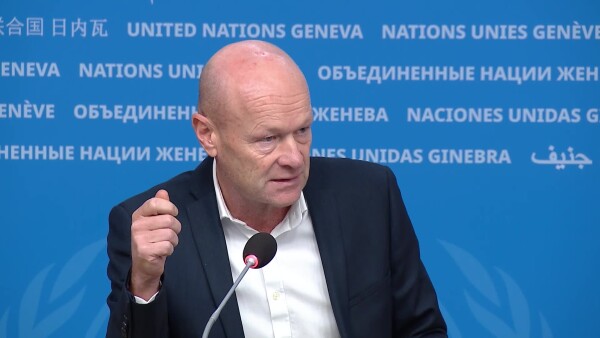
2. Wide shot: Speakers at the podium of the press conference.
3. SOUNDBITE (English) – Christian Lindmeier, spokesperson, World Health Organization (WHO): “On 2 February, WHO and partners supported the medical evacuation of five patients and seven companions to Egypt via the Rafah crossing. It was the first medical evacuation through this route since sometime in 2025 after that ceasefire. WHO’s role focused on ensuring the safe transfer of the patients from Gaza to the Rafah crossing.”
4. Medium shot: Speakers at the podium of the press conference, speaker on screens.
5. SOUNDBITE (English) – Christian Lindmeier, spokesperson, World Health Organization (WHO): “More than 18,500 patients in Gaza still require specialized medical care that is currently not available in the Strip, so 18,500. We managed to get five out, which is again fantastic, but obviously we need many more.”
6. Wide shot: Speakers at the podium of the press conference, speaker on screens. journalists in the Press room.
7. SOUNDBITE (English) – Christian Lindmeier, spokesperson, World Health Organization (WHO): “It's a start of a process there. It was also, as the authorities announced, a test, if it works. We all believe it did work so far and we're hoping this is increasing and turning into really a process where many more of those who need evacuations can actually leave.”
8. Medium shot: Journalists in the Press room.
9. SOUNDBITE (English) – Christian Lindmeier, spokesperson, World Health Organization (WHO): “That can be heavy trauma, trauma wounds of course resulting from the war. That can be chronical conditions, cancer, diabetes when, severe state, when help is not available in Gaza anymore.”
10. Medium shot: Speakers at the podium of the press conference.
11. SOUNDBITE (English) – Christian Lindmeier, spokesperson, World Health Organization (WHO): “We know that patients have died basically waiting for evacuation, and that's something which is horrible when you know just a few miles or kilometres outside that border is help available. It used to be available inside, but even when, if it's only available outside, East Jerusalem, for example, and cannot be reached for political reasons, that's horrible. And people lost their loved ones just for that pure reason.”
12. Medium-wide shot: Speakers at the podium of the press conference, speaker on screens, journalists in the Press room.
13. SOUNDBITE (English) – Christian Lindmeier, spokesperson, World Health Organization (WHO): “We need more and more countries to step up and help. These are the most vulnerable you can imagine coming out of a conflict like this and in a medical condition that doesn't find any support or any help inside Gaza. We would wish many more countries come forward and help on that front.”
14. Various shots of journalists in the Press room.
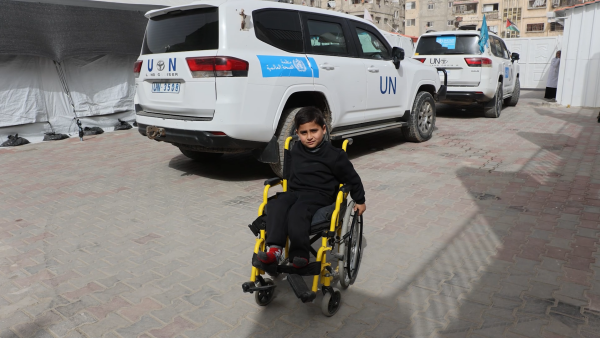
15. UNIFEED B-Roll: 02 FEBRUARY 2026, KHAN YOUNIS CITY, SOUTHERN GAZA STRIP: Various shots, vehicles belonging to the World Health Organization (WHO), overseeing the transportation of patients to the Rafah border crossing on the first day of its reopening; the courtyard of Al-Amal Hospital in Khan Younis; a WHO bus, UN vehicles – credit UNIFEED.
Similar Stories
1
1
1
Edited News | OCHA , UNICEF , WFP
Aid agencies warned on Friday of the fast-developing humanitarian emergency inside Taiz City in Yemen, which has been encircled by de facto Houthi forces fighting government troops along the country’s west coast.

2
17
1
2
Edited News , Press Conferences , Images | OCHA , WMO
Two UN agencies teamed up on Wednesday to issue an appeal for immediate assistance to help communities already being impacted by the strongest El Niño on record.

3
16
2
2
Edited News , B-roll , Conferences , Images | UNITED NATIONS , UNOG
Sixth Consultative Meeting on Enhancing Coordination of Peace Initiatives and Efforts for Sudan

1
1
1
Edited News | UNICEF , WHO , UNHCR
Yemen war continues to force families from homes amid hunger and disease
More than 250,000 people have now fled renewed fighting in Yemen, the UN said on Tuesday, citing particular concern for those sheltering in the southwestern city of Taiz and the wider governorate, where access is “essentially blocked”.

1
1
1
Edited News | UNICEF
A little over one year since a ceasefire agreement was announced between Hamas fighters and Israel, more than 340 children have been reported killed and hundreds more injured, the UN Children’s Fund, UNICEF, said on Friday.

1
1
1
Edited News | UNICEF , IFRC
Six weeks after Nepal’s deadly flooding disaster, communities are still struggling to rebuild their lives, but they will need sustained help as global warming increases the risk of another Himalayan catastrophe, the UN Children’s Fund (UNICEF) said on Friday.

1
1
1
Edited News | WHO
In suspected Russia plague death, testing and monitoring underway – WHO
The death of a lab worker in Russia’s Siberia region has sparked concerns about plague being the cause, the UN World Health Organization (WHO) said on Tuesday, adding that it was following the situation closely.

1
1
Edited News | OHCHR , UNOG
UN Human Rights Chief Volker Türk on Friday provided and oral update to the 63rd session of the Human rights Council on Ukraine.

1
1
1
Edited News | OHCHR , UNOG
UN Human Rights Chief Volker Türk on Friday provided and oral update to the 63rd session of the Human rights Council on the human rights situation in Haiti.

1
1
1
Edited News | WHO
Repeated delays in bringing lifesaving medicines, prosthetics and more from Israel into Gaza risk having devastating consequences on Palestinians who urgently need them in the wartorn enclave, the UN World Health Organization (WHO) said on Friday. “A truck full of non-priority supplies or the right supplies arriving too late, doesn't save lives. That's the question that actually matters," said Dr Reinhilde Van De Weerdt, WHO Representative in the OPT.

1
1
1
Edited News | WHO
DRC: Early access to care and oxygen decisive for Ebola patients’ survival – WHO
In the Democratic Republic of the Congo (DRC), health workers fighting the country’s largest-ever Ebola outbreak are struggling to overcome critical challenges to patient care, the UN World Health Organization (WHO) warned on Tuesday.

1
1
1
Edited News | OCHA , UN
Civilians in Iran are continuing to feel the consequences of months of conflict and military escalation, the UN’s top official in the country has said, as loss of life, damage to civilian infrastructure and mounting economic pressures leave many facing continued uncertainty.