

The United Nations Office at Geneva
Multimedia Newsroom
Gaza women are ‘last line of protection’ for their families amid attacks, hunger and harsh winter – UN Women
Women in Gaza are ensuring their families’ survival “with nothing but courage and exhausted hands” while violence continues and essentials remain in short supply, the UN’s gender equality agency warned on Tuesday.
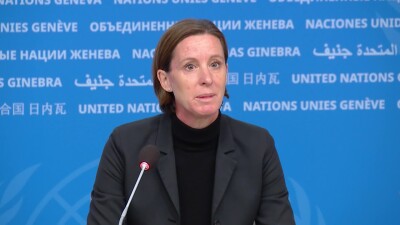
UN Women’s Chief of Humanitarian Action Sofia Calltorp, who just returned from a visit to the enclave last week, said that women there repeatedly told her “there may be a cease-fire, but the war is not over”.
“The attacks are fewer, but the killings continue,” she said.
The UN aid coordination office (OCHA) warned on Monday that hostilities continued to be reported in various parts of the Gaza Strip, causing destruction, displacement and casualties. UN Children’s Fund (UNICEF) said last week that since the Hamas-Israel pause in fighting was announced on 10 October, children were being killed in attacks in the enclave at a rate of two a day.
Briefing reporters in Geneva Ms. Calltorp recounted that during her trip which spanned the entire length of the Strip “from Jabalia in the north to Al-Mawasi in the south”, she saw that “to be a woman in Gaza today means facing hunger and fear, absorbing trauma and grief, and shielding your children from gunfire and cold nights”.
“It means being the last line of protection in a place where safety no longer exists,” she insisted.
Ms. Calltorp said that more than 57,000 women in Gaza now head their households and are left alone to struggle in supremely harsh conditions.
“Women showed me how water soaked through their makeshift tents, leaving the children shivering throughout the night,” she explained. “This is what it means to be a woman in Gaza today, to know that winter is coming, and to know you cannot protect your children from it.”
The UN Women official told the story of a woman she met whose home had been destroyed – “but every morning, she returns to the rubble to gather wood, burning the doors that once sheltered her family just to make breakfast for her children.”
A month and a half into the cease-fire food is still scarce and four times more expensive than before the war – as an example, an egg costs $2.00 on the market in Gaza – which is “out of reach for women with no income”, she said.
“It's completely impossible for many of the women that I met to feed their families,” Ms. Calltorp insisted.
The women whom she talked to had been displaced “countless times”, she said – as many as 35 times since the start of the war in October 2023 in one case.
“Every move means packing the little they have, carrying their children, their elderly parents, choosing between one unsafe place and another,” Ms. Calltorp explained.
She also mentioned the “crisis of women and girls newly disabled by this war”, with over 12,000 of them living with long-term war-related disabilities.
With so much stacked up against them and their families, Gaza’s women “need the cease-fire to hold, they need food, they need cash assistance and they need winterization supplies, health services and vital psychosocial support,” the UN Women official said. She stressed how eager they were “to work, to lead and to rebuild Gaza with their own hands”.
“No woman or girl should have to fight this hard just to survive. We need more aid to enter into Gaza systematically and safely, and we need the killings to stop,” she concluded.
-ENDS-
STORY Gaza update UN Women
TRT: 2:12”
SOURCE: UNTV CH
RESTRICTIONS: NONE
LANGUAGE: ENGLISH/NATS
ASPECT RATIO: 16:9
DATELINE: 25 NOVEMBER 2025 GENEVA, SWITZERLAND
1. Exterior wide shot: Palais des Nations, Flag Alley.
2. Wide shot: Speakers at the podium of the press conference.
3. SOUNDBITE (English) – Sofia Calltorp, Chief of Humanitarian Action, UN Women: “Women in Gaza told me again and again, there may be a cease-fire, but the war is not over. The attacks are fewer, but the killings continue.”
4. Wide shot: Speakers at the podium of the press conference; speaker on screens; journalists in the Press room.
5. SOUNDBITE (English) – Sofia Calltorp, Chief of Humanitarian Action, UN Women: “To be a woman in Gaza today means facing hunger and fear, absorbing trauma and grief, and shielding your children from gunfire and cold nights. It means being the last line of protection in a place where safety no longer exists.”
6. Medium shot: Speakers at the podium of the press conference; speaker on screens.
7. SOUNDBITE (English) – Sofia Calltorp, Chief of Humanitarian Action, UN Women: “Women showed me how water soaked through their makeshift tents, leaving the children shivering throughout the night. This is what it means to be a woman in Gaza today, to know that winter is coming, and to know you cannot protect your children from it.”
8. Wide shot: Speaker on screens; journalists in the Press room.
9. SOUNDBITE (English) – Sofia Calltorp, Chief of Humanitarian Action, UN Women: “One woman told me her home was destroyed, but every morning, she returns to the rubble to gather wood, burning the doors that once sheltered her family just to make breakfast for her children.”
10. Wide shot: Speakers at the podium of the press conference; speaker on screens; journalists in the Press room.
11. SOUNDBITE (English) – Sofia Calltorp, Chief of Humanitarian Action, UN Women: “The markets that do exist with commodities are extremely expensive as I said, food costs four times higher than before the war and it's completely impossible for many of the women that I met to feed their families. As an example, an egg costs $2.00.”
12. Medium shot: Speakers at the podium of the press conference.
13. SOUNDBITE (English) – Sofia Calltorp, Chief of Humanitarian Action, UN Women: “No woman or girl should have to fight this hard just to survive. We need more aid to enter into Gaza systematically and safely, and we need the killings to stop.”
14. Various shots of journalists in the Press room.
Similar Stories
1
1
1
Edited News | OCHA , UNICEF , WFP
Aid agencies warned on Friday of the fast-developing humanitarian emergency inside Taiz City in Yemen, which has been encircled by de facto Houthi forces fighting government troops along the country’s west coast.

2
17
1
2
Edited News , Press Conferences , Images | OCHA , WMO
Two UN agencies teamed up on Wednesday to issue an appeal for immediate assistance to help communities already being impacted by the strongest El Niño on record.

3
16
2
2
Edited News , B-roll , Conferences , Images | UNITED NATIONS , UNOG
Sixth Consultative Meeting on Enhancing Coordination of Peace Initiatives and Efforts for Sudan

1
1
1
Edited News | UNICEF , WHO , UNHCR
Yemen war continues to force families from homes amid hunger and disease
More than 250,000 people have now fled renewed fighting in Yemen, the UN said on Tuesday, citing particular concern for those sheltering in the southwestern city of Taiz and the wider governorate, where access is “essentially blocked”.

1
1
1
Edited News | UNICEF
A little over one year since a ceasefire agreement was announced between Hamas fighters and Israel, more than 340 children have been reported killed and hundreds more injured, the UN Children’s Fund, UNICEF, said on Friday.

1
1
1
Edited News | UNICEF , IFRC
Six weeks after Nepal’s deadly flooding disaster, communities are still struggling to rebuild their lives, but they will need sustained help as global warming increases the risk of another Himalayan catastrophe, the UN Children’s Fund (UNICEF) said on Friday.

1
1
1
Edited News | WHO
In suspected Russia plague death, testing and monitoring underway – WHO
The death of a lab worker in Russia’s Siberia region has sparked concerns about plague being the cause, the UN World Health Organization (WHO) said on Tuesday, adding that it was following the situation closely.

1
1
Edited News | OHCHR , UNOG
UN Human Rights Chief Volker Türk on Friday provided and oral update to the 63rd session of the Human rights Council on Ukraine.

1
1
1
Edited News | OHCHR , UNOG
UN Human Rights Chief Volker Türk on Friday provided and oral update to the 63rd session of the Human rights Council on the human rights situation in Haiti.

1
1
1
Edited News | WHO
Repeated delays in bringing lifesaving medicines, prosthetics and more from Israel into Gaza risk having devastating consequences on Palestinians who urgently need them in the wartorn enclave, the UN World Health Organization (WHO) said on Friday. “A truck full of non-priority supplies or the right supplies arriving too late, doesn't save lives. That's the question that actually matters," said Dr Reinhilde Van De Weerdt, WHO Representative in the OPT.

1
1
1
Edited News | WHO
DRC: Early access to care and oxygen decisive for Ebola patients’ survival – WHO
In the Democratic Republic of the Congo (DRC), health workers fighting the country’s largest-ever Ebola outbreak are struggling to overcome critical challenges to patient care, the UN World Health Organization (WHO) warned on Tuesday.

1
1
1
Edited News | OCHA , UN
Civilians in Iran are continuing to feel the consequences of months of conflict and military escalation, the UN’s top official in the country has said, as loss of life, damage to civilian infrastructure and mounting economic pressures leave many facing continued uncertainty.