

The United Nations Office at Geneva
Multimedia Newsroom
Sudan: Women’s bodies ‘a crime scene’ as tens of thousands flee El Fasher atrocities – UN Women
In war-torn Sudan, rape is being systematically used as a weapon and simply being a woman is “a strong predictor” of hunger, violence and death, the UN’s gender equality agency warned on Tuesday.
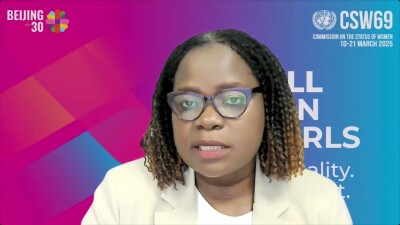
“Women speaking to us from El Fasher, the heart of Sudan's latest catastrophe, tell us that they've endured starvation…displacement, rape and bombardment,” Anna Mutavati, UN Women Regional Director for East and Southern Africa, told reporters in Geneva. “Pregnant women have given birth in the streets as the last remaining maternity hospitals were looted and destroyed.”
The Rapid Support Forces (RSF) militia captured North Darfur state capital El Fasher after more than 500 days of siege in late October, amid reports of widespread atrocities including summary executions and sexual violence.
Fighting erupted in April 2023 between the Sudanese Armed Forces and the paramilitary RSF when a transition to civilian rule broke down, stemming from the overthrow of long-time ruler Omar al-Bashir four years earlier. The ensuing heavy fighting has devastated communities, displaced millions and exacerbated an already dire humanitarian crisis.
Ms. Mutavati said that the situation is worsening dramatically as fighting spreads around the city, prompting mass displacement. Thousands of women and girls have fled to other localities in North Darfur including Tawila, which is some 70 kilometres away, Korma and Malit, where a humanitarian presence is “very scarce”.
On Monday, UN aid coordination office OCHA said that nearly 89,000 people have fled from the area, some seeking refuge near the Sudan-Chad border.
“What the women tell us is that on their horrific journey… every step that they've taken to fetch water, to collect firewood or to stand in a food line has carried a high risk of sexual violence,” the UN Women representative said. “There is mounting evidence that rape is being deliberately and systematically used as a weapon of war.”
Warning that women's bodies “have just become a crime scene in Sudan”, Ms. Mutavati insisted that there are “no safe spaces” left where women can find protection or access basic psychosocial care.
“Basic dignity has also collapsed,” the UN Women official insisted, explaining that in North Darfur a single packet of sanitary towels costs around $27, while humanitarian cash assistance amounts to slightly below $150 per month for a family of six, on average.
Ms. Mutavati spoke of “impossible decisions” having to be made by families “forced to choose between food and medicine and dignity”.
“The essential needs of women and girls fall to the very bottom of that list,” she said.
Ms. Mutavati also said that in Sudan - like in other crises - “women and girls eat the least and they eat last”.
“Most women and girls may not be eating at all in Sudan…Women often skip meals so that their children can eat, while adolescent girls frequently get the smallest share, undermining their long-term nutrition and health,” she said.
“In besieged, remote areas like Darfur or Kordofan, women and girls are often the ones that are scavenging for survival,” Ms. Mutavati added, citing reports of women “foraging for wild leaves and berries to boil into soup” while facing additional risks of violence.
In early November, the latest UN-backed IPC food security analysis confirmed famine conditions in El Fasher and in the capital of South Kordofan state, Kadugli.
Ms. Mutavati also said that health workers report rising cases of severe acute malnutrition in infants, often linked to their starving mothers’ reduced ability to breastfeed.
“There's a ripple effect of the hunger that women are experiencing,” she warned.
Calling for an end to the violence, for broader humanitarian access and for increased support to women-led soup kitchens and other aid providers, Ms. Mutavati stressed that women and girls in Sudan “are the measure of our shared humanity”.
“Every day that the world delays to act on Sudan, another woman gives birth under fire, or buries her child in hunger or disappears without justice,” she concluded.
-ENDS -
STORY Sudan plight of women and girls – UN Women
TRT: 3:23”
SOURCE: UNTV CH
RESTRICTIONS: NONE
LANGUAGE: ENGLISH/NATS
ASPECT RATIO: 16:9
DATELINE: 11 NOVEMBER 2025 GENEVA, SWITZERLAND
1. Exterior wide shot: Palais des Nations, Flag Alley.
2. Wide shot: Speaker at the podium of the press conference; speaker on screens; journalists in the Press room.
3. SOUNDBITE (English) – Anna Mutavati, Regional Director for East and Southern Africa, UN Women: “Women speaking to us from El Fasher, the heart of Sudan's latest catastrophe, tell us that they've endured starvation, they've endured displacement, rape and bombardment. Pregnant women have given birth in the streets as the last remaining maternity hospitals were looted and destroyed.”
4. Medium shot: Speaker at the podium of the press conference; speaker on screens.
5. SOUNDBITE (English) – Anna Mutavati, Regional Director for East and Southern Africa, UN Women: “What the women tell us is that on their horrific journey, they report that every step that they've taken to fetch water, to collect firewood or to stand in a food line has carried a high risk of sexual violence. There is mounting evidence that rape is being deliberately and systematically used as a weapon of war.”
6. Wide shot: Speaker at the podium of the press conference; speaker on screens; journalists in the Press room.
7. SOUNDBITE (English) – Anna Mutavati, Regional Director for East and Southern Africa, UN Women: “Women's bodies, ladies and gentlemen, have just become a crime scene in Sudan. There are no safe spaces that are left, no way for women to gather safely to seek protection or even access even the most basic psychosocial care.”
8. Wide shot: Speaker at the podium of the press conference; speaker on screens; journalists in the Press room.
9. SOUNDBITE (English) – Anna Mutavati, Regional Director for East and Southern Africa, UN Women: “Basic dignity has also collapsed. In North Darfur today, a single packet of sanitary towels costs roughly $27. Meanwhile, families that are receiving cash assistance, humanitarian cash assistance, get slightly below $150 per month for a family of, an average family of six people.”
10. Wide shot: Journalists in the Press room; speaker on screens.
11. SOUNDBITE (English) – Anna Mutavati, Regional Director for East and Southern Africa, UN Women: “In all crises, women and girls eat the least and they eat last. Sudan is no exception. Most women and girls may not be eating at all in Sudan. Our field interviews confirmed that women often skip meals so that their children can eat while adolescent girls frequently get the smallest share, undermining their long-term nutrition and health.”
12. Medium shot: Journalist in the Press room.
13. SOUNDBITE (English) – Anna Mutavati, Regional Director for East and Southern Africa, UN Women: “In besieged, remote areas like Darfur or Kordofan, women and girls are often the ones that are scavenging for survival. Field reports describe women foraging for wild leaves and berries to boil into soup.”
14. Medium shot: Journalist in the Press room.
15. SOUNDBITE (English) – Anna Mutavati, Regional Director for East and Southern Africa, UN Women: “Women and girls in Sudan are not statistics. They are the measure of our shared humanity. And every day that the world delays to act on Sudan, another woman gives birth under fire, or buries her child in hunger or disappears without justice.”
16. Various shots of journalists in the Press room.
Similar Stories
1
1
1
Edited News | UNHCR
More than 280,000 people have now been displaced by fighting in Yemen and many vulnerable people are unable to access lifesaving relief because it is too dangerous to do so, the UN refugee agency (UNHCR) said on Friday.
1
1
1
Edited News | UN
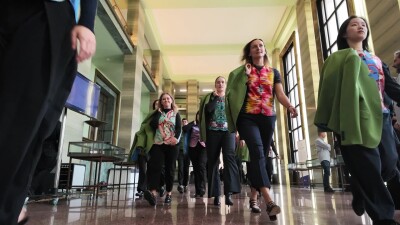
Tour guides at UN Geneva turned heads at the Palace of Nations on Thursday as they unveiled stylish new uniforms, designed in partnership with leading Italian sustainable fashion designers and manufacturers.
1
1
1
Edited News | OCHA , UNICEF , WFP
Aid agencies warned on Friday of the fast-developing humanitarian emergency inside Taiz City in Yemen, which has been encircled by de facto Houthi forces fighting government troops along the country’s west coast.
2
17
1
2
Edited News , Press Conferences , Images | OCHA , WMO
Two UN agencies teamed up on Wednesday to issue an appeal for immediate assistance to help communities already being impacted by the strongest El Niño on record.
3
16
2
2
Edited News , B-roll , Conferences , Images | UNITED NATIONS , UNOG
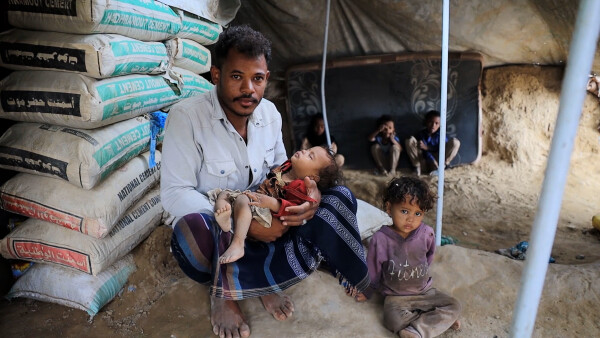
Sixth Consultative Meeting on Enhancing Coordination of Peace Initiatives and Efforts for Sudan
1
1
1
Edited News | UNICEF , WHO , UNHCR
Yemen war continues to force families from homes amid hunger and disease
More than 250,000 people have now fled renewed fighting in Yemen, the UN said on Tuesday, citing particular concern for those sheltering in the southwestern city of Taiz and the wider governorate, where access is “essentially blocked”.
1
1
1
Edited News | UNICEF
A little over one year since a ceasefire agreement was announced between Hamas fighters and Israel, more than 340 children have been reported killed and hundreds more injured, the UN Children’s Fund, UNICEF, said on Friday.
1
1
1
Edited News | UNICEF , IFRC
Six weeks after Nepal’s deadly flooding disaster, communities are still struggling to rebuild their lives, but they will need sustained help as global warming increases the risk of another Himalayan catastrophe, the UN Children’s Fund (UNICEF) said on Friday.

1
1
1
Edited News | WHO
In suspected Russia plague death, testing and monitoring underway – WHO
The death of a lab worker in Russia’s Siberia region has sparked concerns about plague being the cause, the UN World Health Organization (WHO) said on Tuesday, adding that it was following the situation closely.
1
1
Edited News | OHCHR , UNOG
UN Human Rights Chief Volker Türk on Friday provided and oral update to the 63rd session of the Human rights Council on Ukraine.
1
1
1
Edited News | OHCHR , UNOG
UN Human Rights Chief Volker Türk on Friday provided and oral update to the 63rd session of the Human rights Council on the human rights situation in Haiti.
1
1
1
Edited News | WHO
Repeated delays in bringing lifesaving medicines, prosthetics and more from Israel into Gaza risk having devastating consequences on Palestinians who urgently need them in the wartorn enclave, the UN World Health Organization (WHO) said on Friday. “A truck full of non-priority supplies or the right supplies arriving too late, doesn't save lives. That's the question that actually matters," said Dr Reinhilde Van De Weerdt, WHO Representative in the OPT.