

The United Nations Office at Geneva
Multimedia Newsroom
Two years of Gaza-Israel war bring ‘indescribable’ pain: UN humanitarians
Two years since the Hamas-led terror attacks on Israel, UN humanitarians on Tuesday reiterated calls for the release of all hostages in Gaza, an immediate ceasefire and an aid surge to alleviate Palestinians’ suffering, as talks on a US-driven peace plan continued in Egypt.
“The pain is indescribable” on the anniversary of the “abhorrent” attacks, said UN relief chief Tom Fletcher, in a statement shared with media in Geneva by UN aid coordination office (OCHA) spokesperson Jens Laerke.
“I renew my call for the unconditional, immediate release of all the hostages – and until then, they must be treated humanely,” Mr. Fletcher’s statement continued. “Civilians everywhere have to be protected.”
Mr. Fletcher underscored the fact that since 7 October 2023 tens of thousands of Palestinians have been killed and “hundreds of thousands endure starvation and displacement”.
More than 1,250 Israelis and foreign nationals were killed in the attacks while more than 250 others were taken hostage. More than 66,000 Palestinians have subsequently been killed in the war in Gaza according to local health authorities.
The UN relief chief also renewed calls for an immediate ceasefire in Gaza and for humanitarian aid to “flow freely at the scale needed”.
Highlighting the continuing obstacles to aid delivery, OCHA’s Mr. Laerke said that over the past two years, out of more than 8,000 requests for humanitarian missions inside Gaza where coordination with the Israeli authorities was needed, 45 per cent were denied or impeded en route.
The UN Children’s Fund (UNICEF) also noted that teams in Gaza are still waiting for a green light to fetch incubators and ventilators for premature babies evacuated from the north of the Strip.
“We've managed to move [the babies] to another facility when the hospital they were in needed to be evacuated, but we haven't managed to move the incubators… it's been denied so far,” said spokesperson Ricardo Pires.
The go-ahead “to move our convoys to pick up those incubators [is] not being given because of safety and military operations happening on the ground”, Mr. Pires explained.
“One in every five [children] born in Gaza is born premature without the infrastructure to receive them and keep them safe and alive,” he stressed. “We're talking about children sharing oxygen masks in order to stay alive.”
The UNICEF spokesperson went on to say that 61,000 children have reportedly been either killed or maimed “since the horrors Hamas unleashed in Israel and what followed after the disproportionate response from Israel, that is still ongoing”.
“That's an average of one child either killed or maimed every 17 minutes,” he said, “an unacceptable, staggering figure”.
Mr. Pires deplored the fact that children have been “suffering in their bodies and their minds for way too long”, traumatized and “exposed to horrors that no child should ever have to look at or live”.
Famine and malnutrition are part of daily life in Gaza and World Health Organization (WHO) spokesperson Christian Lindmeier recalled that over half a million people are trapped in the famine in Gaza, as per the latest UN-backed Integrated Food Security Phase Classification (IPC) report in August. He said that “640,000 people [are] facing catastrophic levels of food insecurity” and that WHO has verified 400 malnutrition-related deaths, including those of 101 children.
“We know that most indicators are worsening,” said UNICEF’s Mr. Pires, warning that the famine that was declared in Gaza City “is slowly moving to the South as more people get displaced, leaving what is now again a combat zone”.
Referring to the peace plan put forward by US President Donald Trump, which has been the object of negotiations in Egypt for a second day straight, Mr. Pires welcomed “the plans by the US Government which bring a glimpse of hope to the region and to civilians and children in Gaza, that a better future is ahead”.
His words echoed those of UN Secretary-General António Guterres who, in a statement on Monday, said that the recent proposal by the US President “presents an opportunity to that must be seized to bring this tragic conflict to an end”.
-Ends-
STORY Gaza-Israel war 7 October 2025 OCHA – UNICEF - WHO
TRT: 3:31”
SOURCE: UNTV CH
RESTRICTIONS: NONE
LANGUAGE: ENGLISH/NATS
ASPECT RATIO: 16:9
DATELINE: 7 OCTOBER 2025 GENEVA, SWITZERLAND
1. Exterior wide shot: Palais des Nations, Flag Alley.
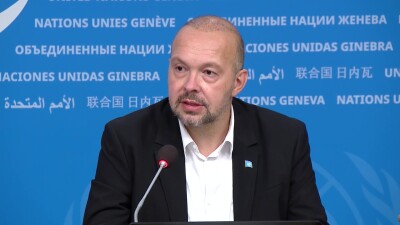
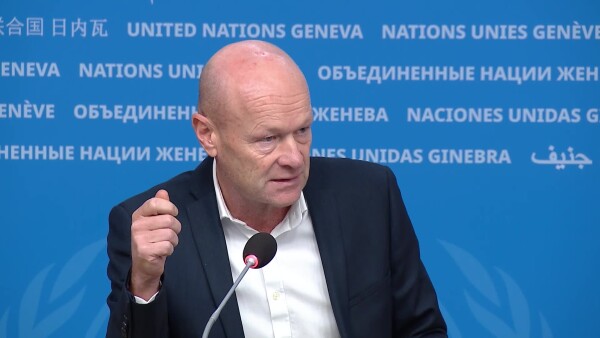
2. Wide shot: Speakers at the podium of the press conference; speaker on screens; journalists in the Press room.
3. SOUNDBITE (English) – Jens Laerke, spokesperson, UN Office for the Coordination of Humanitarian Affairs (OCHA): “Two years on since Hamas and other armed groups carried out those abhorrent attacks in Israel, the pain is indescribable. Today, I renew my call for the unconditional, immediate release of all the hostages – and until then, they must be treated humanely. Civilians everywhere have to be protected.”
4. Wide shot: Speaker on screens; journalists in the Press room.
5. SOUNDBITE (English) – Jens Laerke, spokesperson, UN Office for the Coordination of Humanitarian Affairs (OCHA): “Tens of thousands of Palestinians have been killed. Hundreds of thousands endure starvation and displacement. So we renew the call for an immediate ceasefire in Gaza, for all civilians to be protected, and for humanitarian aid to flow freely at the scale needed.”
6. Wide shot: Speakers at the podium of the press conference.
7. SOUNDBITE (English) – Ricardo Pires, spokesperson, UN Children’s Fund (UNICEF): “We had over 20 babies in the north in incubators because they were born prematurely, which is happening a lot in Gaza now. One in every five child who's born in Gaza is born premature without the infrastructure to receive them and keep them safe and alive.”
8. Medium shot: Journalists in the Press room.
9. SOUNDBITE (English) – Ricardo Pires, spokesperson, UN Children’s Fund (UNICEF): “We've managed to move them to another facility when the hospital they were on needed to be evacuated, but we haven't managed to move the incubators so they can again be placed in those incubators to stay warm and with enough oxygen to stay alive, and those incubators and those ventilators are the ones we're trying to move and it's been denied so far.”
10. Wide shot: Speaker on screens; journalists in the Press room.
11. SOUNDBITE (English) – Ricardo Pires, spokesperson, UN Children’s Fund (UNICEF): “61,000 children have reportedly been either killed or maimed since the horrors Hamas unleashed in Israel and what followed after the disproportionate response from Israel, that is still ongoing. That's an average of one child either killed or maimed every 17 minutes. This is an unacceptable, staggering figure that we still have to live with today. Children have been suffering in their bodies and their minds for way too long.”
12. Wide shot: Speakers at the podium of the press conference; speaker on screens; journalists in the Press room.
13. SOUNDBITE (English) – Christian Lindmeier, spokesperson, World Health Organization (WHO): “Over half a million people trapped in the famine in Gaza as per the latest IPC analysis of August, with 640,000 people facing catastrophic levels of food insecurity. That's the IPC phase five. 400 malnutrition related deaths, including 101 children.”
14. Medium shot: Speakers at the podium of the press conference; speaker on screen.
15. SOUNDBITE (English) – Ricardo Pires, spokesperson, UN Children’s Fund (UNICEF): “We know that most indicators are worsening and famine that was concentrated in Gaza City and was declared in Gaza City is slowly moving to the South as more people get displaced, leaving what is now again a combat zone.”
16. Wide shot: Speakers at the podium of the press conference; speaker on screens; journalists in the Press room.
17. SOUNDBITE (English) – Ricardo Pires, spokesperson, UN Children’s Fund (UNICEF): “We call for a cease-fire. We welcome the plans by the US government which bring a glimpse of hope to the region and to civilians and children in Gaza, that a better future is ahead.”
18. Various shots of journalists in the Press room.
Similar Stories
1
1
1
Edited News | OCHA , UNICEF , WFP
Aid agencies warned on Friday of the fast-developing humanitarian emergency inside Taiz City in Yemen, which has been encircled by de facto Houthi forces fighting government troops along the country’s west coast.

2
17
1
2
Edited News , Press Conferences , Images | OCHA , WMO
Two UN agencies teamed up on Wednesday to issue an appeal for immediate assistance to help communities already being impacted by the strongest El Niño on record.

3
16
2
2
Edited News , B-roll , Conferences , Images | UNITED NATIONS , UNOG
Sixth Consultative Meeting on Enhancing Coordination of Peace Initiatives and Efforts for Sudan

1
1
1
Edited News | UNICEF , WHO , UNHCR
Yemen war continues to force families from homes amid hunger and disease
More than 250,000 people have now fled renewed fighting in Yemen, the UN said on Tuesday, citing particular concern for those sheltering in the southwestern city of Taiz and the wider governorate, where access is “essentially blocked”.

1
1
1
Edited News | UNICEF
A little over one year since a ceasefire agreement was announced between Hamas fighters and Israel, more than 340 children have been reported killed and hundreds more injured, the UN Children’s Fund, UNICEF, said on Friday.

1
1
1
Edited News | UNICEF , IFRC
Six weeks after Nepal’s deadly flooding disaster, communities are still struggling to rebuild their lives, but they will need sustained help as global warming increases the risk of another Himalayan catastrophe, the UN Children’s Fund (UNICEF) said on Friday.

1
1
1
Edited News | WHO
In suspected Russia plague death, testing and monitoring underway – WHO
The death of a lab worker in Russia’s Siberia region has sparked concerns about plague being the cause, the UN World Health Organization (WHO) said on Tuesday, adding that it was following the situation closely.

1
1
Edited News | OHCHR , UNOG
UN Human Rights Chief Volker Türk on Friday provided and oral update to the 63rd session of the Human rights Council on Ukraine.

1
1
1
Edited News | OHCHR , UNOG
UN Human Rights Chief Volker Türk on Friday provided and oral update to the 63rd session of the Human rights Council on the human rights situation in Haiti.

1
1
1
Edited News | WHO
Repeated delays in bringing lifesaving medicines, prosthetics and more from Israel into Gaza risk having devastating consequences on Palestinians who urgently need them in the wartorn enclave, the UN World Health Organization (WHO) said on Friday. “A truck full of non-priority supplies or the right supplies arriving too late, doesn't save lives. That's the question that actually matters," said Dr Reinhilde Van De Weerdt, WHO Representative in the OPT.

1
1
1
Edited News | WHO
DRC: Early access to care and oxygen decisive for Ebola patients’ survival – WHO
In the Democratic Republic of the Congo (DRC), health workers fighting the country’s largest-ever Ebola outbreak are struggling to overcome critical challenges to patient care, the UN World Health Organization (WHO) warned on Tuesday.

1
1
1
Edited News | OCHA , UN
Civilians in Iran are continuing to feel the consequences of months of conflict and military escalation, the UN’s top official in the country has said, as loss of life, damage to civilian infrastructure and mounting economic pressures leave many facing continued uncertainty.