

The United Nations Office at Geneva
Multimedia Newsroom
“Human rights provide a compass to steer us through the challenges of our time, from the climate crisis to technological developments. And yet, disturbing trends that undercut our rights are gaining ground across the world. Pro-war propaganda is everywhere, from military parades to ramped up rhetoric. Sadly, there are no Peace parades, or Ministries of Peace,” Türk said.
“The glorification of violence is coupled with a troubling erosion of international law.
This law is the foundation of peace, our global order, and our daily lives, from trade rules to the global internet, to our fundamental rights. But several Governments are disregarding, disrespecting, and disengaging from it, “the High Commissioner said.
“It is time for States to wake up, and to act. Around the world, the long-established rules of war are being shredded – with virtually no accountability,” he added.
Russia’s war in Ukraine has turned even more deadly, Türk noted. In July, more civilians were killed and injured than in any month since May 2022, as the Russian Federation intensified attacks along the frontline and on cities across the country.
“My staff on the ground are working to document these violations, together with those committed by Ukraine. Negotiations to stop the fighting need to focus on immediate steps to protect civilians and safeguard the rights of people in occupied territory, as well as end torture and ill treatment. Lasting peace can only come with full respect for international law.”
In Sudan, both the Rapid Support Forces – the RSF – and the Sudanese Armed Forces continue to show an utter disregard for international humanitarian and human rights law, the High Commissioner said.
“Thousands of civilians have been killed this year, and hostilities are intensifying in Darfur and Kordofan. Both sides target health facilities, markets, and water plants. The scale of the suffering of the Sudanese people across this vast country is unfathomable, demanding the full attention of the world.”
Turning to Gaza, the High Commissioner said: “Israel’s mass killing of Palestinian civilians in Gaza; its infliction of indescribable suffering and wholesale destruction; its hindering of sufficient lifesaving aid and the ensuing starvation of civilians; its killing of journalists, UN staff and NGO workers, and its commission of war crime upon war crime, are shocking the conscience of the world. I am horrified by the open use of genocidal rhetoric, and the disgraceful dehumanization of Palestinians by senior Israeli officials.”
He continued: “Israel has a legal obligation to take the steps ordered by the International Court of Justice, to prevent acts of genocide, punish incitement to genocide, and ensure enough aid reaches Palestinians in Gaza. My Office’s monitoring and reporting are an important contribution to future accountability. Israel has a case to answer before the ICJ, and the evidence continues to mount. But we need action now, to end the carnage.
The international community is failing in its duty. We are failing the people of Gaza.
Where are the decisive steps to prevent genocide? Why are countries not doing more to avert atrocity crimes? Inaction is not an option. They must stop the flow to Israel of arms that risk violating the laws of war.”
Countries must apply maximum pressure for a ceasefire, the release of hostages and those arbitrarily detained, and the entry of sufficient humanitarian aid into Gaza – through all the means at their disposal, said Türk.
International human rights law protects all, including the most vulnerable. Yet attacks on minorities of all kinds are growing, as States roll back commitments to tackle and prevent discrimination.
“Policies and practices that violate the rights of migrants and refugees are becoming normalized in some countries. Pakistan and Iran have forcibly returned millions of Afghans to their country, and India has also deported groups of Rohingya Muslims by land and sea,” Türk said.
“I am also concerned about recent measures taken by Germany, Greece, Hungary, and other European countries to limit the right to seek asylum. The United States has reportedly reached agreement with several governments, including El Salvador, South Sudan, Eswatini and Rwanda, on deporting third country nationals to places other than their homeland, raising concerns about compliance with international law,” he said.
“Kuwait has revoked the citizenship of thousands of people in recent years, leaving many stateless. In Cambodia, changes to the constitution and nationality law allow the authorities to remove citizenship in cases of treason, creating further ways for them to target their critics. In a positive development, North Macedonia has resolved all known cases of statelessness since the dissolution of the former Yugoslavia – the first country in the region to do so,” the High Commissioner said.
Peace and security depend on full respect for human rights, everywhere. When the Security Council, the General Assembly, this Council or other intergovernmental institutions discuss the human rights situation in a particular country, it is because this concerns us all, in every country, Turk said.
The United Nations Charter gave birth to a new geopolitical era by enshrining the sovereign equality of States. National sovereignty is the foundation of multilateral institutions and international law.
“When States sign international agreements, they are exercising their national sovereignty – not limiting it. And with that sovereignty comes responsibility. Sovereignty does not mean ownership of people,” the High Commissioner said.
“As my update shows, there are coordinated efforts to undermine human rights and the rule of law around the world. When States cut ties with the system or try to weaken it - when they isolate themselves - everybody loses,”he said.
“Therefore, I hope to work with you on a new initiative, through an alliance of Member States, philanthropies, civil society and others, to strengthen the human rights ecosystem and join the dots between abuses and violations, and crisis prevention,” he said.
In his global update, the High Commissioner highlighted the situation in a number of other countries as detailed below.
ENDS
For more information and media requests, please contact:
In Geneva
Ravina Shamdasani: +41 22 917 9169 / ravina.shamdasani@un.org
Liz Throssell: +41 22 917 9296 / elizabeth.throssell@un.org
Jeremy Laurence: +41 22 917 9383 / jeremy.laurence@un.org
Marta Hurtado: + 41 22 917 9466 / marta.hurtadogomez@un.org
Thameen Al-Kheetan: +41 76 223 7762/ thameen.alkheetan@un.org
Facebook unitednationshumanrights
Instagram @unitednationshumanrights
STORY: UN High Commissioner for Human Rights Volker Türk Global update speech to the 60th Human Rights Council
TRT: 06:47
SOURCE: OHCHR / UNOG
RESTRICTIONS: NONE
LANGUAGE: English/NATS
ASPECT RATIO: 16:9
DATELINE: 8 September 2025 GENEVA, SWITZERLAND
SHOTLIST
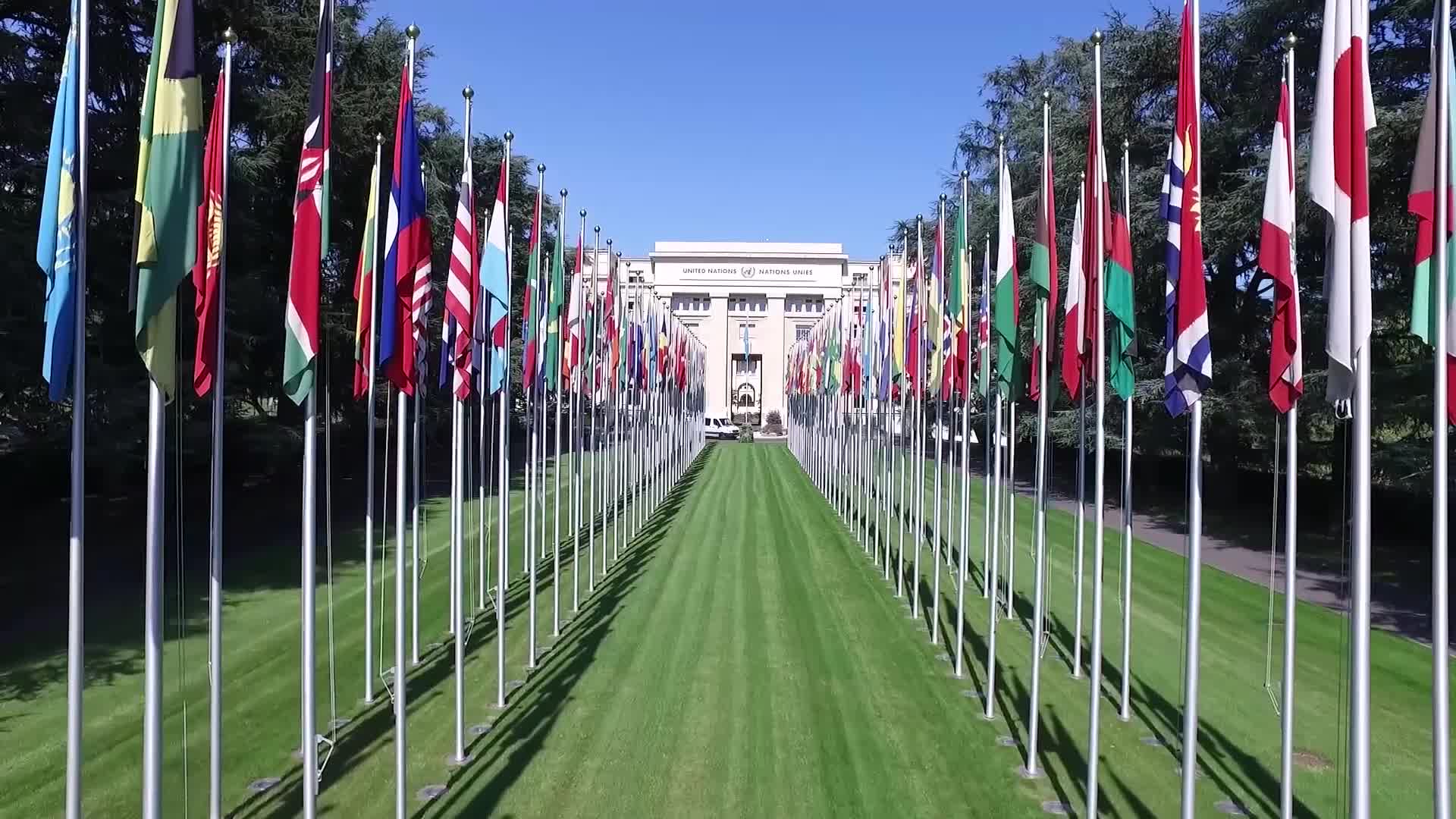
- Exterior shot : Palais des Nations
- Wide shot : Assembly Hall
- Wide shot : Podium
- SOUNDBITE (English)— Volker Türk, UN High Commissioner for Human Rights: “Human rights provide a compass to steer us through the challenges of our time, from the climate crisis to technological developments. And yet, disturbing trends that undercut our rights are gaining ground across the world. Pro-war propaganda is everywhere, from military parades to ramped up rhetoric. Sadly, there are no Peace parades, or Ministries of Peace.”
- Cut away: Assembly Hall
- SOUNDBITE (English)— Volker Türk, UN High Commissioner for Human Rights: “The glorification of violence is coupled with a troubling erosion of international law. This law is the foundation of peace, our global order, and our daily lives, from trade rules to the global internet, to our fundamental rights. But several Governments are disregarding, disrespecting, and disengaging from it.”
- Cut away: Assembly Hall
- SOUNDBITE (English)— Volker Türk, UN High Commissioner for Human Rights: “It is time for States to wake up, and to act. Around the world, the long-established rules of war are being shredded – with virtually no accountability.”
- Cut away: Assembly Hall
- SOUNDBITE (English)— Volker Türk, UN High Commissioner for Human Rights: “My staff on the ground are working to document these violations, together with those committed by Ukraine. Negotiations to stop the fighting need to focus on immediate steps to protect civilians and safeguard the rights of people in occupied territory, as well as end torture and ill treatment. Lasting peace can only come with full respect for international law.”
- Cut away: Assembly Hall
- SOUNDBITE (English)— Volker Türk, UN High Commissioner for Human Rights: “Thousands of civilians have been killed this year, and hostilities are intensifying in Darfur and Kordofan. Both sides target health facilities, markets, and water plants. The scale of the suffering of the Sudanese people across this vast country is unfathomable, demanding the full attention of the world.”
- Cut away: Assembly Hall
- SOUNDBITE (English)— Volker Türk, UN High Commissioner for Human Rights: “Israel’s mass killing of Palestinian civilians in Gaza; its infliction of indescribable suffering and wholesale destruction; its hindering of sufficient lifesaving aid and the ensuing starvation of civilians; its killing of journalists, UN staff and NGO workers, and its commission of war crime upon war crime, are shocking the conscience of the world. I am horrified by the open use of genocidal rhetoric, and the disgraceful dehumanization of Palestinians by senior Israeli officials.”
- Cut away: Assembly Hall
- SOUNDBITE (English)— Volker Türk, UN High Commissioner for Human Rights: “Israel has a legal obligation to take the steps ordered by the International Court of Justice, to prevent acts of genocide, punish incitement to genocide, and ensure enough aid reaches Palestinians in Gaza. My Office’s monitoring and reporting are an important contribution to future accountability. Israel has a case to answer before the ICJ, and the evidence continues to mount. But we need action now, to end the carnage. The international community is failing in its duty. We are failing the people of Gaza. Where are the decisive steps to prevent genocide? Why are countries not doing more to avert atrocity crimes? Inaction is not an option. They must stop the flow to Israel of arms that risk violating the laws of war.”
- Cut away: Assembly Hall
- SOUNDBITE (English)— Volker Türk, UN High Commissioner for Human Rights: “Policies and practices that violate the rights of migrants and refugees are becoming normalized in some countries. Pakistan and Iran have forcibly returned millions of Afghans to their country, and India has also deported groups of Rohingya Muslims by land and sea.”
- Cut away: Assembly Hall
- SOUNDBITE (English)— Volker Türk, UN High Commissioner for Human Rights: “I am also concerned about recent measures taken by Germany, Greece, Hungary, and other European countries to limit the right to seek asylum. The United States has reportedly reached agreement with several governments, including El Salvador, South Sudan, Eswatini and Rwanda, on deporting third country nationals to places other than their homeland, raising concerns about compliance with international law.”
- Cut away: Assembly Hall
- SOUNDBITE (English)— Volker Türk, UN High Commissioner for Human Rights: “Kuwait has revoked the citizenship of thousands of people in recent years, leaving many stateless. In Cambodia, changes to the constitution and nationality law allow the authorities to remove citizenship in cases of treason, creating further ways for them to target their critics. In a positive development, North Macedonia has resolved all known cases of statelessness since the dissolution of the former Yugoslavia – the first country in the region to do so.”
- Cut away: Assembly Hall
- SOUNDBITE (English)— Volker Türk, UN High Commissioner for Human Rights: “When States sign international agreements, they are exercising their national sovereignty – not limiting it. And with that sovereignty comes responsibility. Sovereignty does not mean ownership of people.”
- Cut away: Assembly Hall
- SOUNDBITE (English)— Volker Türk, UN High Commissioner for Human Rights: “As my update shows, there are coordinated efforts to undermine human rights and the rule of law around the world. When States cut ties with the system or try to weaken it - when they isolate themselves - everybody loses.”
- Cut away: Assembly Hall
- SOUNDBITE (English)— Volker Türk, UN High Commissioner for Human Rights: “Therefore, I hope to work with you on a new initiative, through an alliance of Member States, philanthropies, civil society and others, to strengthen the human rights ecosystem and join the dots between abuses and violations, and crisis prevention.”
Similar Stories

1
1
1
Edited News | OCHA , UNICEF , WFP
Aid agencies warned on Friday of the fast-developing humanitarian emergency inside Taiz City in Yemen, which has been encircled by de facto Houthi forces fighting government troops along the country’s west coast.

2
17
1
2
Edited News , Press Conferences , Images | OCHA , WMO
Two UN agencies teamed up on Wednesday to issue an appeal for immediate assistance to help communities already being impacted by the strongest El Niño on record.

3
16
2
2
Edited News , B-roll , Conferences , Images | UNITED NATIONS , UNOG
Sixth Consultative Meeting on Enhancing Coordination of Peace Initiatives and Efforts for Sudan

1
1
1
Edited News | UNICEF , WHO , UNHCR
Yemen war continues to force families from homes amid hunger and disease
More than 250,000 people have now fled renewed fighting in Yemen, the UN said on Tuesday, citing particular concern for those sheltering in the southwestern city of Taiz and the wider governorate, where access is “essentially blocked”.

1
1
1
Edited News | UNICEF
A little over one year since a ceasefire agreement was announced between Hamas fighters and Israel, more than 340 children have been reported killed and hundreds more injured, the UN Children’s Fund, UNICEF, said on Friday.

1
1
1
Edited News | UNICEF , IFRC
Six weeks after Nepal’s deadly flooding disaster, communities are still struggling to rebuild their lives, but they will need sustained help as global warming increases the risk of another Himalayan catastrophe, the UN Children’s Fund (UNICEF) said on Friday.

1
1
1
Edited News | WHO
In suspected Russia plague death, testing and monitoring underway – WHO
The death of a lab worker in Russia’s Siberia region has sparked concerns about plague being the cause, the UN World Health Organization (WHO) said on Tuesday, adding that it was following the situation closely.

1
1
Edited News | OHCHR , UNOG
UN Human Rights Chief Volker Türk on Friday provided and oral update to the 63rd session of the Human rights Council on Ukraine.

1
1
1
Edited News | OHCHR , UNOG
UN Human Rights Chief Volker Türk on Friday provided and oral update to the 63rd session of the Human rights Council on the human rights situation in Haiti.

1
1
1
Edited News | WHO
Repeated delays in bringing lifesaving medicines, prosthetics and more from Israel into Gaza risk having devastating consequences on Palestinians who urgently need them in the wartorn enclave, the UN World Health Organization (WHO) said on Friday. “A truck full of non-priority supplies or the right supplies arriving too late, doesn't save lives. That's the question that actually matters," said Dr Reinhilde Van De Weerdt, WHO Representative in the OPT.

1
1
1
Edited News | WHO
DRC: Early access to care and oxygen decisive for Ebola patients’ survival – WHO
In the Democratic Republic of the Congo (DRC), health workers fighting the country’s largest-ever Ebola outbreak are struggling to overcome critical challenges to patient care, the UN World Health Organization (WHO) warned on Tuesday.

1
1
1
Edited News | OCHA , UN
Civilians in Iran are continuing to feel the consequences of months of conflict and military escalation, the UN’s top official in the country has said, as loss of life, damage to civilian infrastructure and mounting economic pressures leave many facing continued uncertainty.