

The United Nations Office at Geneva
Multimedia Newsroom
Sudan emergency: We need more help to prevent famine, says WFP
The very real risk of famine continues to stalk Sudan’s communities impacted by war, the UN World Food Programme (WFP) said on Tuesday, in an appeal for more funding to support immediate needs and boost longer-term recovery across the country.
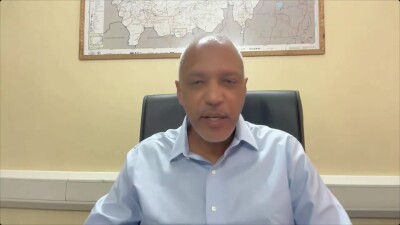
“Over the past six months, WFP scaled up assistance and we are now reaching nearly one million Sudanese in Khartoum with food and nutrition support,” said Laurent Bukera, WFP Country Director in Sudan. “This momentum must continue; several areas in the south are at risk of famine.”
In an update from Port Sudan, Mr. Bukera reported that a mission to Khartoum had found many neighbourhoods abandoned, heavily damaged and akin to a “ghost city”. Pressure on overstretched resources will only intensify, he insisted.
And as conflict still rages between the Sudanese Armed Forces and the paramilitary Rapid Support Forces, sparked by a breakdown in transition to civilian rule in 2023, the veteran aid worker also explained that communities on the frontlines were at “breaking point” and unable to support displaced families any longer.
Despite many “generous” contributions to the UN agency's work in Sudan, it faces a $500 million shortfall to support emergency food and cash assistance for the coming six months.
“The international community must act now by stepping up funding to stop famine in the hardest hit area, and to invest in Sudan's recovery,” Mr. Bukera insisted.” We must also demand respect for the safety and the protection of the Sudanese people and aid workers.”
More than two years of fighting have smashed infrastructure and left communities without basic services, such as clean water.
This – and weeks of heavy rains – have contributed to a deadly cholera outbreak and reports of corpses rotting in the Nile in Omdurman, one of the capital’s three cities. In an update last week, the UN aid coordination office, OCHA, said that war-related displacement and the spread of cholera have continued to add to needs across Sudan.
“We are deeply concerned and meeting the basic needs, especially food, will be critical and is urgent,” said WFP’s Mr. Bukera. “Urgent action is needed to restore basic services and accelerate recovery through coordinated efforts with local authorities, national NGOs, UN agencies and humanitarian partners.”
This vital work has been prevented by a lack of international support, forcing WFP to reduce the amount and range of relief it can distribute.
“Funding shortfalls are already disrupting some of the assistance we are providing in Khartoum, Blue Nile, Al Jazeera and Sennar states,” the WFP senior official continued. “Our rations and the oil and the pulses in the food basket had to be removed due to lack of resources.”
In Khartoum, lifesaving nutritional supplements for young children and pregnant and nursing mothers are already “out of reach” because of a lack of resources, he said.
Despite the many challenges, the UN agency now reaches four million people a month across Sudan. This is nearly four times more than at the start of 2024 as access has expanded, including in previously unreachable areas like Khartoum.
Communities are also supported in the longer-term via cash assistance to support local markets and support for bakeries and small businesses planning to reopen.
“We have rapidly scaled up our operation to meet increasing needs,” Mr. Bukera said. “We are aiming to reach seven people on a monthly basis, prioritizing those facing famine or other areas at extreme risk”, such as Darfur, Kordofan and Al Jazeera.
ends
STORY: Sudan humanitarian update – WFP
TRT: 1’48”
SOURCE: UNTV CH
RESTRICTIONS: NONE
LANGUAGE: ENGLISH / NATS
ASPECT RATIO: 16:9
DATELINE: 10 June 2025 GENEVA, SWITZERLAND
Speaker:
- Laurent Bukera, WFP Country Director in Sudan (From Port Sudan)
SHOTLIST
- Exterior medium-wide: Palais des Nations, Flag Alley.
- Wide shot of Press room, TV journalist, TV screens showing external speaker.
- SOUNDBITE (English) – Laurent Bukera, WFP Country Director in Sudan: “Over the past six months, WFP scaled up assistance and we are now reaching nearly one million Sudanese in Khartoum with food and nutrition support. This momentum must continue. Several areas in the south are at risk of famine.”
- Medium, journalists, TV journalist.
- SOUNDBITE (English) – Laurent Bukera, WFP Country Director in Sudan: “In parts of the city life is returning, but many neighbourhoods remain abandoned, such as a ghost city.”
- Medium, journalist.
- SOUNDBITE (English) – Laurent Bukera, WFP Country Director in Sudan: “Sudanese communities have been on the frontlines hosting the displaced but they are now at a breaking point; with returns expected to heavily damaged areas like Khartoum, pressure on overstretched resources will intensify.”
- Wide, moderator, journalists, TV screens showing remote speaker.
- SOUNDBITE (English) – Laurent Bukera, WFP Country Director in Sudan: “Funding shortfalls are already disrupting some of the assistance we are providing in Khartoum, Blue Nile, Al Jazeera and Sennar states. Our rations and the oil and the pulses in the food basket had to be removed due to lack of resources.”
- Medium, journalist.
- SOUNDBITE (English) – Laurent Bukera, WFP Country Director in Sudan: “In Khartoum, lifesaving nutritional supplements for young children and pregnant and nursing mothers are out of reach - not because of access constraints - but due at the moment to a lack of resources.”
- Medium, photographer, participant.
- Medium, journalists.
Similar Stories

1
1
1
Edited News | OCHA , UNICEF , WFP
Aid agencies warned on Friday of the fast-developing humanitarian emergency inside Taiz City in Yemen, which has been encircled by de facto Houthi forces fighting government troops along the country’s west coast.

2
17
1
2
Edited News , Press Conferences , Images | OCHA , WMO
Two UN agencies teamed up on Wednesday to issue an appeal for immediate assistance to help communities already being impacted by the strongest El Niño on record.

3
16
2
2
Edited News , B-roll , Conferences , Images | UNITED NATIONS , UNOG
Sixth Consultative Meeting on Enhancing Coordination of Peace Initiatives and Efforts for Sudan

1
1
1
Edited News | UNICEF , WHO , UNHCR
Yemen war continues to force families from homes amid hunger and disease
More than 250,000 people have now fled renewed fighting in Yemen, the UN said on Tuesday, citing particular concern for those sheltering in the southwestern city of Taiz and the wider governorate, where access is “essentially blocked”.

1
1
1
Edited News | UNICEF
A little over one year since a ceasefire agreement was announced between Hamas fighters and Israel, more than 340 children have been reported killed and hundreds more injured, the UN Children’s Fund, UNICEF, said on Friday.

1
1
1
Edited News | UNICEF , IFRC
Six weeks after Nepal’s deadly flooding disaster, communities are still struggling to rebuild their lives, but they will need sustained help as global warming increases the risk of another Himalayan catastrophe, the UN Children’s Fund (UNICEF) said on Friday.

1
1
1
Edited News | WHO
In suspected Russia plague death, testing and monitoring underway – WHO
The death of a lab worker in Russia’s Siberia region has sparked concerns about plague being the cause, the UN World Health Organization (WHO) said on Tuesday, adding that it was following the situation closely.

1
1
Edited News | OHCHR , UNOG
UN Human Rights Chief Volker Türk on Friday provided and oral update to the 63rd session of the Human rights Council on Ukraine.

1
1
1
Edited News | OHCHR , UNOG
UN Human Rights Chief Volker Türk on Friday provided and oral update to the 63rd session of the Human rights Council on the human rights situation in Haiti.

1
1
1
Edited News | WHO
Repeated delays in bringing lifesaving medicines, prosthetics and more from Israel into Gaza risk having devastating consequences on Palestinians who urgently need them in the wartorn enclave, the UN World Health Organization (WHO) said on Friday. “A truck full of non-priority supplies or the right supplies arriving too late, doesn't save lives. That's the question that actually matters," said Dr Reinhilde Van De Weerdt, WHO Representative in the OPT.

1
1
1
Edited News | WHO
DRC: Early access to care and oxygen decisive for Ebola patients’ survival – WHO
In the Democratic Republic of the Congo (DRC), health workers fighting the country’s largest-ever Ebola outbreak are struggling to overcome critical challenges to patient care, the UN World Health Organization (WHO) warned on Tuesday.

1
1
1
Edited News | OCHA , UN
Civilians in Iran are continuing to feel the consequences of months of conflict and military escalation, the UN’s top official in the country has said, as loss of life, damage to civilian infrastructure and mounting economic pressures leave many facing continued uncertainty.