

The United Nations Office at Geneva
Multimedia Newsroom
Edited News | OHCHR , UNOG
UN Human Rights Briefing by spokesperson Ravina Shamdasani on OPT
“The increasing issuance by Israeli Forces of “evacuation orders” – which are, in effect, displacement orders – have resulted in the forcible transfer of Palestinians in Gaza into ever shrinking spaces where they have little or no access to life-saving services, including water, food and shelter, and where they continue to be subject to attacks,” said Ravina Shamdansani, UN Human Rights Office spokesperson.
“While Israel, as an occupying power, can lawfully order the temporary evacuations of civilians in certain areas under strict conditions, the nature and scope of the evacuation orders raise serious concerns that Israel intends permanently to remove the civilian population from these areas in order to create a “buffer zone”. Permanently displacing the civilian population within occupied territory amounts to forcible transfer, a grave breach of the Fourth Geneva Convention and a crime against humanity,” she told reporters at the UN bi-weekly press briefing in Geneva.
“Meanwhile, Israeli military strikes continue across Gaza, leaving nowhere safe. Between 18 March and 9 April 2025, there were some 224 incidents of Israeli strikes on residential buildings and tents for internally displaced people (IDPs). In some 36 strikes about which we were able to corroborated information, the fatalities recorded so far were only women and children so far,” she said.
Overall, a large percentage of fatalities are children and women, according to information recorded by our UN Human Rights office. A recent strike on the residential building of the Abu Issa family in Deir al Balah on 6 April reportedly killed one girl, four women, and one four-year-old boy.
“Compounding this alarming trend is the targeting and killing of the Palestinian journalists.Since October 2023, over 209 journalists have been killed in Gaza, while Israel continues to deny access to international media,” Shamdasani said.
The attack reportedly came without warning, killing one journalist and one press agency assistant, and wounding nine other journalists, including one who later died from his injuries. The Israeli military subsequently claimed that one of those injured was a Hamas member, but it remains unclear whether this individual had been identified and targeted as a member of the armed wing of Hamas, or otherwise. Since October 2023, over 209 journalists have been killed in Gaza, while Israel continues to deny access to international media.
“These and other attacks raise serious questions about Israeli Forces’ compliance with international humanitarian law, particularly with the principles of distinction, proportionality and precaution in attack. Intentionally directing attacks against civilians not taking a direct part in hostilities constitutes a war crime,” Shamdasani said.
“Further compounding the desperate conditions for Palestinian civilians, Israel’s closure of crossings into the Gaza Strip has entered its sixth week, preventing the entry of food, safe drinking water, medicines and other essential aid or supplies,” the spokesperson said.
Israeli officials have made statements suggesting that the entry of humanitarian aid is directly linked to the release of hostages, raising serious concerns about collective punishment and the use of starvation of the civilian population as a method of war, both of which constitute crimes under international law.
“In light of the cumulative impact of Israeli Forces’ conduct in Gaza, the Office is seriously concerned that Israel appears to be inflicting on Palestinians in Gaza conditions of life increasingly incompatible with their continued existence as a group in Gaza,” Shamdasani said.
“Protests by Palestinians against Hamas, in exercise of their rights to peaceful assembly and expression under international law, have also been repressed by force, with harsh retribution exacted against a number of individuals,” she added. “The despair of Palestinians, under assault from outside as well as such pressure within, knows no bounds.”
“The UN High Commissioner for Human Rights Volker Türk has stressed, including before the UN Security Council last week, that the last 18 months of violence have made this abundantly clear: There is no military path out of this crisis,” the spokesperson said.
Shamdasani also said the only way forward is a political settlement, based on two states living side by side in equal dignity and rights, in line with UN resolutions and international law. “All hostages must be released immediately and unconditionally. All those arbitrarily detained must also be released.”
ENDS
For more information and media requests, please contact:
Ravina Shamdasani: + 41 22 917 9169 / ravina.shamdasani@un.org
Thameen Al-Kheetan: +41 22 917 4232 / thameen.alkheetan@un.org
Tag and share
Twitter @UNHumanRights
Facebook unitednationshumanrights
Instagram @unitednationshumanrights
STORY: UN Human Rights Spokesperson Ravina Shamdasani on the increasing issuance by Israeli Forces of “evacuation orders” in Gaza
TRT: 03:19
SOURCE: UNTV /OHCHR
RESTRICTIONS: NONE
LANGUAGE: English/NATS
ASPECT RATIO: 16:9
DATELINE: 11 April 2025 – GENEVA, SWITZERLAND
SHOTLIST
Similar Stories

1
1
1
Edited News | UNICEF
A little over one year since a ceasefire agreement was announced between Hamas fighters and Israel, more than 340 children have been reported killed and hundreds more injured, the UN Children’s Fund, UNICEF, said on Friday.

1
1
1
Edited News | UNICEF , IFRC
Six weeks after Nepal’s deadly flooding disaster, communities are still struggling to rebuild their lives, but they will need sustained help as global warming increases the risk of another Himalayan catastrophe, the UN Children’s Fund (UNICEF) said on Friday.

1
1
1
Edited News | WHO
In suspected Russia plague death, testing and monitoring underway – WHO
The death of a lab worker in Russia’s Siberia region has sparked concerns about plague being the cause, the UN World Health Organization (WHO) said on Tuesday, adding that it was following the situation closely.

1
1
Edited News | OHCHR , UNOG
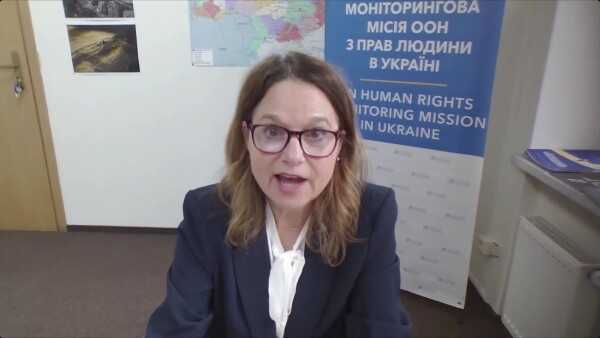
UN Human Rights Chief Volker Türk on Friday provided and oral update to the 63rd session of the Human rights Council on Ukraine.

1
1
1
Edited News | OHCHR , UNOG
UN Human Rights Chief Volker Türk on Friday provided and oral update to the 63rd session of the Human rights Council on the human rights situation in Haiti.

1
1
1
Edited News | WHO
Repeated delays in bringing lifesaving medicines, prosthetics and more from Israel into Gaza risk having devastating consequences on Palestinians who urgently need them in the wartorn enclave, the UN World Health Organization (WHO) said on Friday. “A truck full of non-priority supplies or the right supplies arriving too late, doesn't save lives. That's the question that actually matters," said Dr Reinhilde Van De Weerdt, WHO Representative in the OPT.

1
1
1
Edited News | WHO
DRC: Early access to care and oxygen decisive for Ebola patients’ survival – WHO
In the Democratic Republic of the Congo (DRC), health workers fighting the country’s largest-ever Ebola outbreak are struggling to overcome critical challenges to patient care, the UN World Health Organization (WHO) warned on Tuesday.

1
1
1
Edited News | OCHA , UN
Civilians in Iran are continuing to feel the consequences of months of conflict and military escalation, the UN’s top official in the country has said, as loss of life, damage to civilian infrastructure and mounting economic pressures leave many facing continued uncertainty.
1
1
1
Edited News | WHO , UNICEF
Aid agencies in Yemen highlighted the growing hunger emergency sparked by renewed fighting between Houthi opposition forces and Government troops, after mobile health clinics reported that hundreds of children displaced by the violence are suffering from the most deadly form of malnutrition.
1
1
1
Edited News | UNHCR
Displacement on the rise in Yemen as fighting continues - UNHCR
As hostilities worsen in Yemen, more people have been fleeing their homes, further intensifying the humanitarian crisis within the region, the UN Refugee Agency (UNHCR) warned on Tuesday.
1
1
1
Edited News | IOM , OHCHR , UNFPA , UNOG , UNHCR , WHO
Yemen’s humanitarian crisis growing by the hour amid spike in displacement
Yemenis displaced by renewed fighting have described fleeing for their lives amid shelling and gunfire, aid agencies reported on Friday, while highlighting the dramatic increase in humanitarian needs in the country and in Djibouti, where thousands have sought shelter.
1
1
1
Edited News | OHCHR , UNOG
The UN Human Rights Office issued on Friday a report documenting a shocking pattern of sexual violence amid Russia’s full-scale armed attack on Ukraine.