

The United Nations Office at Geneva
Multimedia Newsroom
UN Commission of Inquiry on Syria: War Crimes likely to be committed by all sides
The UN Commission of Inquiry (COI) on Syria highlighted in its latest report released today the aerial and ground attacks carried out by Syrian Government forces and Russian Air forces last year in Idlib Governorate which decimated civilian infrastructure.
“All sides likely committed war crimes”, said Paulo Sérgio Pinheiro, Chair of the Commission of Inquiry on the Syrian Arab Republic in a video message to the UN. “Children were shelled at schools, parents were shelled at the market, patients were shelled at the hospital, entire families were bombarded even while fleeing these attacks”.
Syrian children, women and men endured unfathomable suffering during the military campaign launched late 2019 by pro-government forces to re-take the last remaining areas under armed groups’ control in Syria.
The 29 - page report presented today at the United Nations in Geneva covers the period from November 2019 to June 2020 and was based on overflight data and witness testimony.
“We have actually investigated 52 counted violations, 17 attacks on hospitals, 14 attacks on schools, 9 on marketplaces and 12 others on residential buildings and other places”, said Hanny Megally, Member of the Commission of Inquiry on the Syrian Arab Republic. “Within that, we have found that war crimes were likely to have been committed by both the Syrian Airforce and by the Russian Airforce”.
The special investigation into recent events in Idlib province and surrounding areas which lead to nearly one million people being displaced in only three months was requested by the Human Rights Council.
The report concluded that the widespread and indiscriminate bombardment carried out by pro-government forces on Ma’arrat al-Nu’man and Ariha (Idlib governorate) as well as Atarib and Darat Azza (western Aleppo) which started in the second half of December and mid-February, foreseeably led to mass displacement and may amount to the crimes against humanity of forcible transfer, murder and other inhumane acts.
“We have come to the conclusion that attacks by the pro-government forces were so systemic and designed to force the population to move and a possible transfer of populations is a crime against humanity”, said Hanny Megally, Member of the Commission of Inquiry on the Syrian Arab Republic. “So, we think that again may have happened by both pro-government forces and by armed groups and terrorist organisations we have seen pillaging and looting happening which again are war crimes”.
The UN investigators also condemned attacks by terrorist fighters. They maintained that UN-designated terrorist-group Hayat Tahrir al-Sham (HTS) indiscriminately shelled densely populated civilian areas “spreading terror” in Government-held areas.
As if the suffering for the nearly one million displaced civilians was not enough, the emergence of the Covid-19 pandemic magnified the already dire humanitarian situation in Syria, including in Idlib and western Aleppo. “Some people are returning to their homes and places of prior displacement because the conditions in overcrowded camps are just dire and compounded by the looming threat of Covid-19”, said Paulo Sérgio Pinheiro, Chair of the Commission of Inquiry on the Syrian Arab Republic.
The COI’s Chair urged that “the very least the Security Council can do now is to renew and strengthen the cross-border and cross-line aid operations. Pandemics know no borders, nor should humanitarian aid”.
The Commission called on all parties to the conflict in Syria to cease attacks on civilians and civilian objects. “While we welcome last week’s resolution by the Security Council calling a 90 day pause in fighting, the Commission urges the parties to the conflict to hear the UN Secretary-General’s Special Envoy’s call for a lasting cease fire and the immediate return to negotiations to end this conflict”, Paulo Sérgio Pinheiro, Chair of the Commission of Inquiry on the Syrian Arab Republic.
The Commission’s report is scheduled to be presented on 14th July to the Human Rights Council.
- Exterior shot, Palais des Nations flag alley, sunny, flags fluttering.
- SOUNDBITE (English) – Paulo Sérgio Pinheiro, Chair of the Commission of Inquiry on the Syrian Arab Republic: “All sides likely committed war crimes. Children were shelled at schools, parents were shelled at the market, patients were shelled at the hospital, entire families were bombarded even while fleeing these attacks”.
- Exterior shot, Palais des Nations with UN lettering and logo
- SOUNDBITE (English) – Hanny Megally, Member of the Commission of Inquiry on the Syrian Arab Republic: “We have actually investigated 52 counted violations, 17 attacks on hospitals, 14 attacks on schools, 9 on marketplaces and 12 others on residential buildings and other places. And within that, we have found that war crimes were likely to have been committed by both the Syrian Airforce and by the Russian Airforce”.
- Wide shot, UN Palais, Entry Pregny Gate
- SOUNDBITE (English) – Hanny Megally, Member of the Commission of Inquiry on the Syrian Arab Republic: “We have come to the conclusion that attacks by the pro-government forces were so systemic and designed to force the population to move and a possible transfer of populations is a crime against humanity. So, we think that again may have happened and by both pro-government forces and by armed groups and terrorist organisations we have seen pillaging and looting happening which again are war crimes”.
- Medium shot, Place des Nations with Broken chair in front of UN building
- SOUNDBITE (English) – Paulo Sérgio Pinheiro, Chair of the Commission of Inquiry on the Syrian Arab Republic: “Some people are returning to their homes and places of prior displacement because the conditions in overcrowded camps are just dire and compounded by the looming threat of Covid-19”.
- Wide shot, Place des Nations with Broken chair in front of UN building
- SOUNDBITE (English) - Paulo Sérgio Pinheiro, Chair of the Commission of Inquiry on the Syrian Arab Republic: “The very least the Security Council can do now is to renew and strengthen the cross-border and cross-line aid operations. Pandemics know no borders, nor should humanitarian aid”.
- Wide shot: ICRC with UN flag
- SOUNDBITE (English) – Paulo Sérgio Pinheiro, Chair of the Commission of Inquiry on the Syrian Arab Republic: “While we welcome last week’s resolution by the Security Council calling a 90 day pause in fighting, the Commission urges the parties to the conflict to hear the UN Secretary General’s Special Envoy call for a lasting cease fire and the immediate return to negotiations to end this conflict”.
- Wide shot: UN flag alley
- Medium, UN flag
- Medium shot, UN flag alley
- Wide shot, UN Palais with flags

Similar Stories

1
1
1
Edited News | UNICEF , WHO , UNHCR
Yemen war continues to force families from homes amid hunger and disease
More than 250,000 people have now fled renewed fighting in Yemen, the UN said on Tuesday, citing particular concern for those sheltering in the southwestern city of Taiz and the wider governorate, where access is “essentially blocked”.

1
1
1
Edited News | UNICEF
A little over one year since a ceasefire agreement was announced between Hamas fighters and Israel, more than 340 children have been reported killed and hundreds more injured, the UN Children’s Fund, UNICEF, said on Friday.

1
1
1
Edited News | UNICEF , IFRC
Six weeks after Nepal’s deadly flooding disaster, communities are still struggling to rebuild their lives, but they will need sustained help as global warming increases the risk of another Himalayan catastrophe, the UN Children’s Fund (UNICEF) said on Friday.

1
1
1
Edited News | WHO
In suspected Russia plague death, testing and monitoring underway – WHO
The death of a lab worker in Russia’s Siberia region has sparked concerns about plague being the cause, the UN World Health Organization (WHO) said on Tuesday, adding that it was following the situation closely.

1
1
Edited News | OHCHR , UNOG
UN Human Rights Chief Volker Türk on Friday provided and oral update to the 63rd session of the Human rights Council on Ukraine.

1
1
1
Edited News | OHCHR , UNOG
UN Human Rights Chief Volker Türk on Friday provided and oral update to the 63rd session of the Human rights Council on the human rights situation in Haiti.

1
1
1
Edited News | WHO
Repeated delays in bringing lifesaving medicines, prosthetics and more from Israel into Gaza risk having devastating consequences on Palestinians who urgently need them in the wartorn enclave, the UN World Health Organization (WHO) said on Friday. “A truck full of non-priority supplies or the right supplies arriving too late, doesn't save lives. That's the question that actually matters," said Dr Reinhilde Van De Weerdt, WHO Representative in the OPT.

1
1
1
Edited News | WHO
DRC: Early access to care and oxygen decisive for Ebola patients’ survival – WHO
In the Democratic Republic of the Congo (DRC), health workers fighting the country’s largest-ever Ebola outbreak are struggling to overcome critical challenges to patient care, the UN World Health Organization (WHO) warned on Tuesday.

1
1
1
Edited News | OCHA , UN
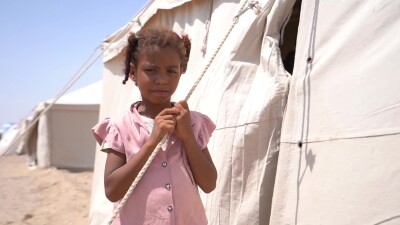
Civilians in Iran are continuing to feel the consequences of months of conflict and military escalation, the UN’s top official in the country has said, as loss of life, damage to civilian infrastructure and mounting economic pressures leave many facing continued uncertainty.
1
1
1
Edited News | WHO , UNICEF
Aid agencies in Yemen highlighted the growing hunger emergency sparked by renewed fighting between Houthi opposition forces and Government troops, after mobile health clinics reported that hundreds of children displaced by the violence are suffering from the most deadly form of malnutrition.
1
1
1
Edited News | UNHCR
Displacement on the rise in Yemen as fighting continues - UNHCR
As hostilities worsen in Yemen, more people have been fleeing their homes, further intensifying the humanitarian crisis within the region, the UN Refugee Agency (UNHCR) warned on Tuesday.
1
1
1
Edited News | IOM , OHCHR , UNFPA , UNOG , UNHCR , WHO
Yemen’s humanitarian crisis growing by the hour amid spike in displacement
Yemenis displaced by renewed fighting have described fleeing for their lives amid shelling and gunfire, aid agencies reported on Friday, while highlighting the dramatic increase in humanitarian needs in the country and in Djibouti, where thousands have sought shelter.