

The United Nations Office at Geneva
Multimedia Newsroom
Edited News | OHCHR , UNOG
HRC58 - UN Human Rights High Commissioner Volker Türk global update speech
“Our world is going through a period of turbulence and unpredictability, reflected in growing conflict and divided societies,” Türk said.
“We cannot allow the fundamental global consensus around international norms and institutions, built painstakingly over decades, to crumble before our eyes,” he said.
“War is the ultimate violation of human rights,” Türk warned, noting that according to the International Committee of the Red Cross, 120 conflicts rage around the world.
“Conflict causes chaos – but it arises from its own twisted logic. Some people – autocrats, demagogues, profiteers – benefit from that chaos, whether through divide and rule tactics, predatory business practices, or simple theft,” Türk said.
“Conflict bleeds into all our lives, from the products we buy to the newsfeeds we scroll; from minerals mined in war zones, to the so-called bot farms and scam centres that flourish in the most lawless corners of the world,” he added.
We all have a responsibility to act – through our consumption habits, our social media use, and our political and social engagement, the High Commissioner said.
Around the world, civil society, lawyers and victims are calling on warring parties to respect international law and pursue avenues of accountability. States need to be put on notice that the world is watching, including on arms transfers to conflict zones.
“An absence of accountability leads directly to an absence of peace. And yet, a tireless search for peace is what the world needs most. Pre-emptive strikes cannot replace preventive diplomacy,” Türk said.
“For millions of people around the world, war has become a simple, devastating fact of life. This should shake us all. We need to build peace from the ground up; to grasp it, nurture it, protect it, and promote it, at every opportunity. Bring warring parties to the table. Ensure that women are involved from beginning to end. Build peace around human rights,” he said.
“Even in societies that are nominally at peace, people are feeling insecure and unmoored. Communities and societies struggle with polarisation and division – which are anathema to human rights,” the UN Human Rights Chief highlighted.
“I have followed recent election campaigns in Europe, North America and beyond with increasing trepidation. Single-issue soundbites devoid of substance oversimplify complex issues and are often based on scapegoating, disinformation, and dehumanization,” he said.
“Dehumanization is a well-worn step towards treating an entire group as outsiders, unworthy of the basic rights we all enjoy. It is a dangerous precursor to hate and violence and must be called out whenever it occurs.”
The High Commissioner voiced his concern about the resurgence in some quarters of toxic ideas about masculinity, and efforts to glorify gender stereotypes, especially among young men. It is shocking, he said, that misogynistic influencers have millions of followers on social media and are hailed as heroes in some quarters. Online and offline, these ideas are translating into a wider pushback against gender equality, as well as violence and hateful rhetoric against women, women’s rights defenders, and women politicians.
Türk said today’s massive shifts and profound transformations have left people in many countries around the world feeling alienated and abandoned.
“My response is: your concerns are our concerns, because they are about human rights - to education, to health, to housing, to free speech, and access to justice. Human rights are about people’s daily concerns for their families and their future,” he said.
“Human rights can never be played off against each other; they reinforce each other and reveal how we are all connected. The solution to today’s pervasive unease lies in more respect for human rights, not less,” he said.
Today, power dynamics are changing. Individuals and corporations have never had so much control and influence over our lives, Türk flagged.
“A handful of unelected tech oligarchs have our data: they know where we live, what we do, our genes and our health conditions, our thoughts, our habits, our desires and our fears. They know us better than we know ourselves. And they know how to manipulate us. Any form of unregulated power can lead to oppression, subjugation, and even tyranny – the playbook of the autocrat,” he said.
States must fulfil their duty to protect people from unchecked power, and work together to achieve this, he said.
The response to all the challenges he had outlined, Türk stressed, was the value of science, knowledge and facts, and a clear, unequivocal commitment to the rule of law, to transparency, and to independent institutions, all anchored in human rights.
“We must inspire with our values and demonstrate that human rights are a winning proposition for humanity. We must cherish the values of respect, unity and solidarity; and work together for a safer, more just, more sustainable world. We can and will persevere,” Türk concluded.
For more information and media requests, please contact
Ravina Shamdasani - + 41 22 917 9169 / ravina.shamdasani@un.org
Liz Throssell + 41 22 917 9296 / elizabeth.throssell@un.org
Jeremy Laurence - + 41 22 917 9383 / jeremy.laurence@un.org
Thameen Al-Kheetan - + - +41 22 917 4232 / thameen.alkheetan@un.org
Seif Magango Tel: +41 79 752 0488 / seif.magango@un.org
Tag and share –
Twitter: @UNHumanRights
Facebook: unitednationshumanrights
Instagram: @unitednationshumanrights
STORY: UN High Commissioner for Human Rights Volker Türk Global Update to the 58thHuman Rights Council
TRT: 05:10
SOURCE: OHCHR / UNOG
RESTRICTIONS: NONE
LANGUAGE: English/NATS
ASPECT RATIO: 16:9
DATELINE: 03 March 2025 GENEVA, SWITZERLAND
SHOTLIST
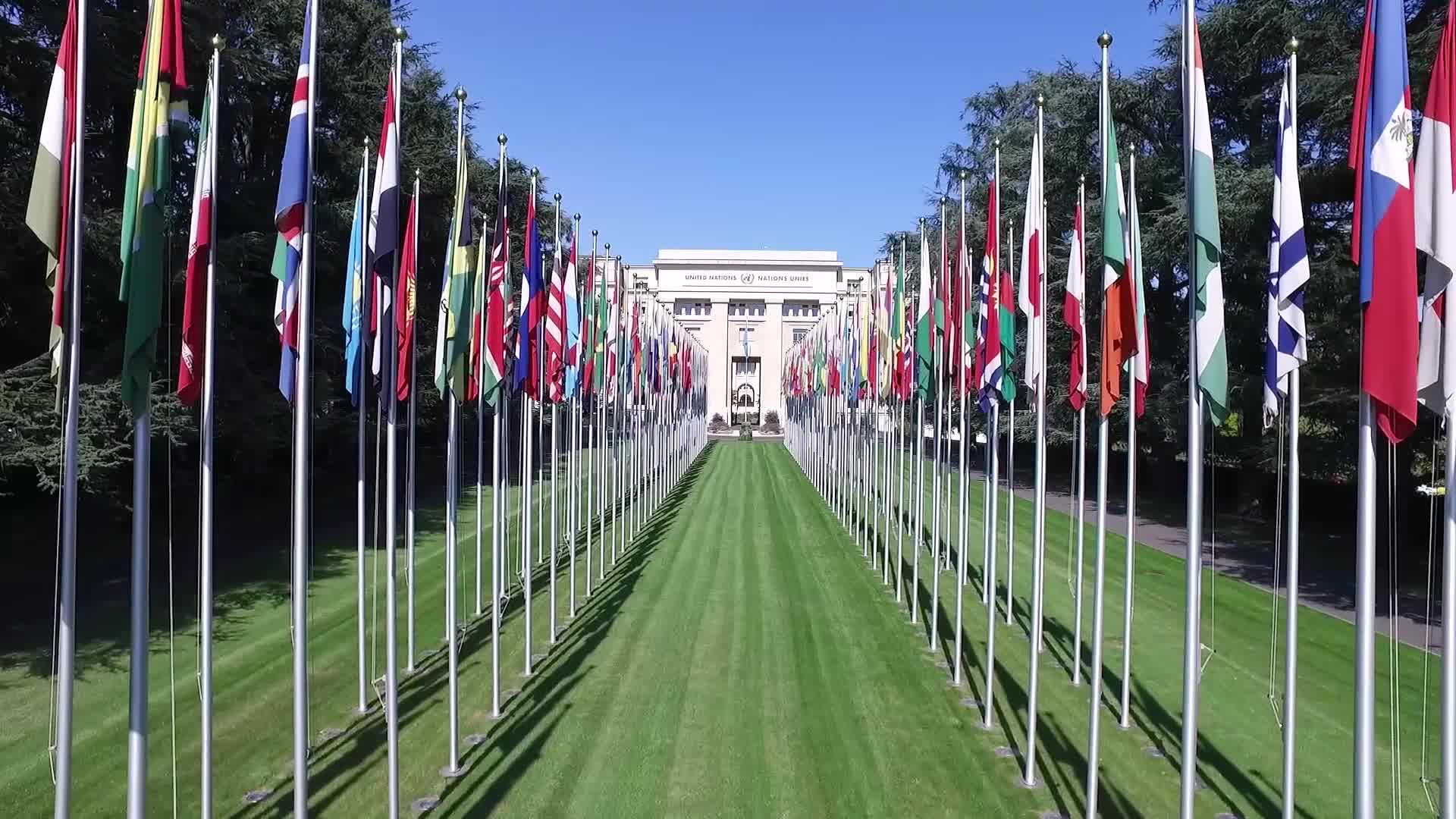
- Exterior shot : Palais des Nations
- Wide shot : Room 20
- Wide shot : Podium
- SOUNDBITE (English)— Volker Türk, UN High Commissioner for Human Rights: “Our world is going through a period of turbulence and unpredictability, reflected in growing conflict and divided societies.”
- Cut away: Room 20
- SOUNDBITE (English)— Volker Türk, UN High Commissioner for Human Rights: “We cannot allow the fundamental global consensus around international norms and institutions, built painstakingly over decades, to crumble before our eyes.”
- Cut away: Room 20
- SOUNDBITE (English)— Volker Türk, UN High Commissioner for Human Rights: “War is the ultimate violation of human rights.”
- Cut away: Room 20
- SOUNDBITE (English)— Volker Türk, UN High Commissioner for Human Rights: “Conflict causes chaos – but it arises from its own twisted logic. Some people – autocrats, demagogues, profiteers – benefit from that chaos, whether through divide and rule tactics, predatory business practices, or simple theft.”
- Cut away: Room 20
- SOUNDBITE (English)— Volker Türk, UN High Commissioner for Human Rights: “Conflict bleeds into all our lives, from the products we buy to the newsfeeds we scroll; from minerals mined in war zones, to the so-called bot farms and scam centres that flourish in the most lawless corners of the world.”
- Cut away: Room 20
- SOUNDBITE (English)— Volker Türk, UN High Commissioner for Human Rights: “An absence of accountability leads directly to an absence of peace. And yet, a tireless search for peace is what the world needs most. Pre-emptive strikes cannot replace preventive diplomacy.”
- Cut away: Room 20
- SOUNDBITE (English)— Volker Türk, UN High Commissioner for Human Rights: “For millions of people around the world, war has become a simple, devastating fact of life. This should shake us all. We need to build peace from the ground up; to grasp it, nurture it, protect it, and promote it, at every opportunity. Bring warring parties to the table. Ensure that women are involved from beginning to end. Build peace around human rights.”
- Cut away: Room 20
- SOUNDBITE (English)— Volker Türk, UN High Commissioner for Human Rights: “For millions of people around the world, war has become a simple, devastating fact of life. This should shake us all. We need to build peace from the ground up; to grasp it, nurture it, protect it, and promote it, at every opportunity. Bring warring parties to the table. Ensure that women are involved from beginning to end. Build peace around human rights.”
- Cut away: Room 20
- SOUNDBITE (English)— Volker Türk, UN High Commissioner for Human Rights: “Even in societies that are nominally at peace, people are feeling insecure and unmoored. Communities and societies struggle with polarisation and division – which are anathema to human rights.”
- Cut away: Room 20
- SOUNDBITE (English)— Volker Türk, UN High Commissioner for Human Rights: “I have followed recent election campaigns in Europe, North America and beyond with increasing trepidation. Single-issue soundbites devoid of substance oversimplify complex issues and are often based on scapegoating, disinformation, and dehumanization.”
- Cut away: Room 20
- SOUNDBITE (English)— Volker Türk, UN High Commissioner for Human Rights: “Dehumanization is a well-worn step towards treating an entire group as outsiders, unworthy of the basic rights we all enjoy. It is a dangerous precursor to hate and violence and must be called out whenever it occurs.”
- Cut away: Room 20
- SOUNDBITE (English)— Volker Türk, UN High Commissioner for Human Rights: “My response is: your concerns are our concerns, because they are about human rights - to education, to health, to housing, to free speech, and access to justice. Human rights are about people’s daily concerns for their families and their future.”
- Cut away: Room 20
- SOUNDBITE (English)— Volker Türk, UN High Commissioner for Human Rights: “Human rights can never be played off against each other; they reinforce each other and reveal how we are all connected. The solution to today’s pervasive unease lies in more respect for human rights, not less.”
- Cut away: Room 20
- SOUNDBITE (English)— Volker Türk, UN High Commissioner for Human Rights: “A handful of unelected tech oligarchs have our data: they know where we live, what we do, our genes and our health conditions, our thoughts, our habits, our desires and our fears. They know us better than we know ourselves. And they know how to manipulate us. Any form of unregulated power can lead to oppression, subjugation, and even tyranny – the playbook of the autocrat.”
- Cut away: Room 20
- SOUNDBITE (English)— Volker Türk, UN High Commissioner for Human Rights: “We must inspire with our values and demonstrate that human rights are a winning proposition for humanity. We must cherish the values of respect, unity and solidarity; and work together for a safer, more just, more sustainable world. We can and will persevere.”
Similar Stories

2
17
1
2
Edited News , Press Conferences | OCHA , WMO
Two UN agencies teamed up on Wednesday to issue an appeal for immediate assistance to help communities already being impacted by the strongest El Niño on record.

3
16
2
2
B-roll , Conferences , Edited News | UNITED NATIONS , UNOG
Sixth Consultative Meeting on Enhancing Coordination of Peace Initiatives and Efforts for Sudan

1
1
1
Edited News | UNICEF , WHO , UNHCR
Yemen war continues to force families from homes amid hunger and disease
More than 250,000 people have now fled renewed fighting in Yemen, the UN said on Tuesday, citing particular concern for those sheltering in the southwestern city of Taiz and the wider governorate, where access is “essentially blocked”.

1
1
1
Edited News | UNICEF
A little over one year since a ceasefire agreement was announced between Hamas fighters and Israel, more than 340 children have been reported killed and hundreds more injured, the UN Children’s Fund, UNICEF, said on Friday.

1
1
1
Edited News | UNICEF , IFRC
Six weeks after Nepal’s deadly flooding disaster, communities are still struggling to rebuild their lives, but they will need sustained help as global warming increases the risk of another Himalayan catastrophe, the UN Children’s Fund (UNICEF) said on Friday.

1
1
1
Edited News | WHO
In suspected Russia plague death, testing and monitoring underway – WHO
The death of a lab worker in Russia’s Siberia region has sparked concerns about plague being the cause, the UN World Health Organization (WHO) said on Tuesday, adding that it was following the situation closely.

1
1
Edited News | OHCHR , UNOG
UN Human Rights Chief Volker Türk on Friday provided and oral update to the 63rd session of the Human rights Council on Ukraine.

1
1
1
Edited News | OHCHR , UNOG
UN Human Rights Chief Volker Türk on Friday provided and oral update to the 63rd session of the Human rights Council on the human rights situation in Haiti.

1
1
1
Edited News | WHO
Repeated delays in bringing lifesaving medicines, prosthetics and more from Israel into Gaza risk having devastating consequences on Palestinians who urgently need them in the wartorn enclave, the UN World Health Organization (WHO) said on Friday. “A truck full of non-priority supplies or the right supplies arriving too late, doesn't save lives. That's the question that actually matters," said Dr Reinhilde Van De Weerdt, WHO Representative in the OPT.

1
1
1
Edited News | WHO
DRC: Early access to care and oxygen decisive for Ebola patients’ survival – WHO
In the Democratic Republic of the Congo (DRC), health workers fighting the country’s largest-ever Ebola outbreak are struggling to overcome critical challenges to patient care, the UN World Health Organization (WHO) warned on Tuesday.

1
1
1
Edited News | OCHA , UN
Civilians in Iran are continuing to feel the consequences of months of conflict and military escalation, the UN’s top official in the country has said, as loss of life, damage to civilian infrastructure and mounting economic pressures leave many facing continued uncertainty.
1
1
1
Edited News | WHO , UNICEF
Aid agencies in Yemen highlighted the growing hunger emergency sparked by renewed fighting between Houthi opposition forces and Government troops, after mobile health clinics reported that hundreds of children displaced by the violence are suffering from the most deadly form of malnutrition.