

The United Nations Office at Geneva
Multimedia Newsroom
Edited News | OHCHR , UNOG
UN High Commissioner for Human Rights Volker Türk on the human rights situation in the Occupied Palestinian Territory
A fragile ceasefire is allowing the people of Gaza to breathe, Israeli hostages and Palestinian detainees to be released, and lifesaving humanitarian aid to be delivered.
“At this tenuous moment, the world must ask itself how to resolve this decades old conflict and stop the cycle of violence. Any plans for a better future must deal with the past, so accountability and justice for violations are crucial,” Türk said.
“In Gaza, they have been subjected to blockades amounting to collective punishment. In the West Bank, illegal settlements and violence have been growing for decades, in violation of international law, with a significant increase over the past three years. Most of these violations have gone unpunished,” he said.
“There is absolutely no justification for the horrific attacks committed on 7 October 2023 when Hamas and other Palestinian armed groups brutally assaulted Israeli communities, killed civilians, and took over 250 hostages, and I have repeatedly condemned these acts,” Türk said.
“And nothing justifies the appalling manner in which Israel has conducted its military operations in Gaza, which consistently breached fundamental principles of international humanitarian law. According to the Gaza Ministry of Health, more than 48,000 people, most of whom are women and children, have been killed. Over 35,000 children have lost one or both parents. More than 1,054 medical personnel have been killed, with many others injured or detained by Israeli Forces. At least 277 United Nations staff have been killed, as well as a reported 200 journalists and media workers,” Türk said.
“As my Office and others have documented, Israel’s means and methods of warfare have caused staggering levels of casualties and destruction, raising concerns over the commission of war crimes and other possible atrocity crimes,” he added.
In the West Bank, Israel has ramped up its use of unnecessary and disproportionate force against Palestinians, has destroyed refugee camps, and displaced tens of thousands of people. In the northern West Bank, many are now in need of urgent humanitarian assistance. Israel has severely restricted movement, arrested thousands and subjected them to torture and ill-treatment, and has undertaken other practices that could constitute collective punishment. The Palestinian Authority is also arbitrarily detaining, torturing, and ill-treating many detainees, including some it perceives as political opponents.
There has been an unprecedented disregard for the principles of international humanitarian law in the conduct of hostilities in Gaza and Israel since October 2023.
There have been a limited number of investigations and indictments by the Israeli authorities, for example, for abuse of detainees, “However, there are serious doubts about the capacity and will of the Israeli justice system to deliver full accountability, in line with international standards, notably in relation to the unlawful killing of Palestinians in Gaza or in the West Bank,” he said.
According to the report, there are serious doubts about the capacity and will of the Israeli justice system to ensure comprehensive accountability, in line with international standards of impartiality, independence, promptness, and effectiveness.
“Hamas and other Palestinian armed groups have taken, held, and tortured hostages in Gaza, and have indiscriminately fired projectiles into Israeli territory, amounting to war crimes. There are grave concerns that they may have committed other serious breaches of international humanitarian law in Gaza, including the intentional co-location of military objectives and Palestinian civilians,” he said.
“Any attempts at shaping a peaceful future where such horrors do not recur must ensure that perpetrators are held to account. The tragic record of this conflict, and of so many other conflicts, shows clearly how impunity begets more violence. Abuse is given free rein to ripple across other war zones. This harms us all, and generations down the line. Delegitimising and threatening international institutions that are there to serve people and uphold international law also harms us all,” Türk said.
He called for an independent investigation into grave violations of international law, committed by Israel in the course of its attacks across Gaza, and by Hamas and other Palestinian armed groups.
For more information and media requests, please contact
Liz Throssell + 41 22 917 9296 / elizabeth.throssell@un.org
Jeremy Laurence + 41 22 917 9383 / jeremy.laurence@un.org
Thameen Al-Kheetan +41 22 917 4232 / thameen.alkheetan@un.org
Tag and share –
Twitter: @UNHumanRights
Facebook: unitednationshumanrights
Instagram: @unitednationshumanrights
STORY: UN High Commissioner for Human Rights Volker Türk on the human rights situation in the Occupied Palestinian Territory
TRT: 04:34
SOURCE: OHCHR/UNOG
RESTRICTIONS: Please shot list
LANGUAGE: English/NATS
ASPECT RATIO: 16:9
DATELINE: 26 FEBRUARY 2025 GENEVA, SWITZERLAND
DATELINE: 1-4 FEBRUARY 2025, JABALIYA
DATELINE: 02 FEBRUARY 2025, JENIN, WEST BANK
DATELINE: 20 FEBRUARY 2025, GAZA CITY
DATELINE: 22 FEBRUARY 2025, JABALIA
SHOTLIST
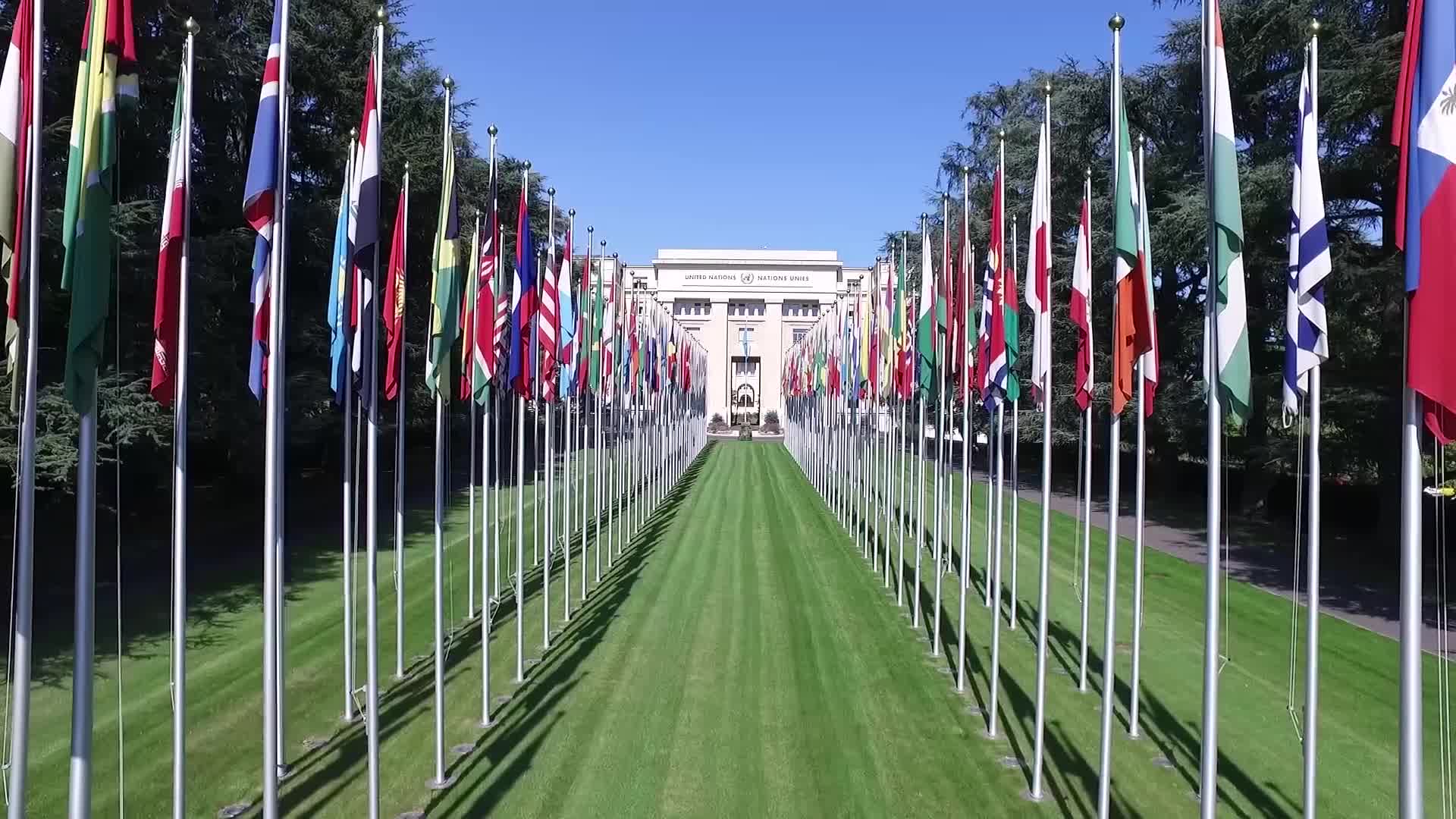
- Exterior shot: Palais des Nations
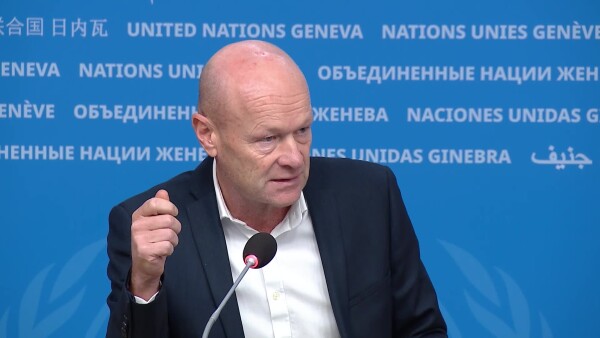
- Interior shot: Room 20
- SOUNDBITE (English)— Volker Türk, UN High Commissioner for Human Rights: “We are at an inflection point in the crisis in the Occupied Palestinian Territory.
- Various shots: Inside Jenin refugee camp, where many homes have been destroyed - 07 FEBRUARY 2025, JENIN, WEST BANK - PLEASE CREDIT UNICEF ON SCREEN
- SOUNDBITE (English)— Volker Türk, UN High Commissioner for Human Rights: “At this tenuous moment, the world must ask itself how to resolve this decades old conflict and stop the cycle of violence. Any plans for a better future must deal with the past, so accountability and justice for violations are crucial.”
- Various shots: Gazans Returning to their Homes in Jabaliya/Drone Shots (mute) 4 FEBRUARY 2025, JABALIYA, NORTHERN GAZA - PLEASE CREDIT WFP ON SCREEN
- SOUNDBITE (English)— Volker Türk, UN High Commissioner for Human Rights: “In Gaza, they have been subjected to blockades amounting to collective punishment. In the West Bank, illegal settlements and violence have been growing for decades, in violation of international law, with a significant increase over the past three years. Most of these violations have gone unpunished.”
- Various shots: Various shots, destruction inside Nur Shams refugee camp - 7 FEBRUARY 2025 - PLEASE CREDIT UNICEF ON SCREEN
- SOUNDBITE (English)— Volker Türk, UN High Commissioner for Human Rights: “There is absolutely no justification for the horrific attacks committed on 7 October 2023 when Hamas and other Palestinian armed groups brutally assaulted Israeli communities, killed civilians, and took over 250 hostages, and I have repeatedly condemned these acts.”
- Various shots: Various shots, destruction inside Nur Shams refugee camp - 7 FEBRUARY 2025 - PLEASE CREDIT UNICEF ON SCREEN
- SOUNDBITE (English)— Volker Türk, UN High Commissioner for Human Rights: “And nothing justifies the appalling manner in which Israel has conducted its military operations in Gaza, which consistently breached fundamental principles of international humanitarian law. According to the Gaza Ministry of Health, more than 48,000 people, most of whom are women and children, have been killed. Over 35,000 children have lost one or both parents. More than 1,054 medical personnel have been killed, with many others injured or detained by Israeli Forces. At least 277 United Nations staff have been killed, as well as a reported 200 journalists and media workers.”
- Various shots: Gazans returning to north - 20 FEBRUARY 2025, GAZA CITY- PLEASE CREDIT WFP ON SCREEN
- SOUNDBITE (English)— Volker Türk, UN High Commissioner for Human Rights: “As my Office and others have documented, Israel’s means and methods of warfare have caused staggering levels of casualties and destruction, raising concerns over the commission of war crimes and other possible atrocity crimes.”
- Various shots: Temporary shelter - 22 FEBRUARY 2025, JABALIA - PLEASE CREDIT WFP ON SCREEN
- SOUNDBITE (English)— Volker Türk, UN High Commissioner for Human Rights: “However, there are serious doubts about the capacity and will of the Israeli justice system to deliver full accountability, in line with international standards, notably in relation to the unlawful killing of Palestinians in Gaza or in the West Bank.”
- Cut away: room 20
- SOUNDBITE (English)— Volker Türk, UN High Commissioner for Human Rights: “Hamas and other Palestinian armed groups have taken, held, and tortured hostages in Gaza, and have indiscriminately fired projectiles into Israeli territory, amounting to war crimes. There are grave concerns that they may have committed other serious breaches of international humanitarian law in Gaza, including the intentional co-location of military objectives and Palestinian civilians.”
- Cut away: room 20
- SOUNDBITE (English)— Volker Türk, UN High Commissioner for Human Rights: “Any attempts at shaping a peaceful future where such horrors do not recur must ensure that perpetrators are held to account. The tragic record of this conflict, and of so many other conflicts, shows clearly how impunity begets more violence. Abuse is given free rein to ripple across other war zones. This harms us all, and generations down the line. Delegitimising and threatening international institutions that are there to serve people and uphold international law also harms us all.”
Similar Stories
1
1
1
Edited News | OCHA , UNICEF , WFP
Aid agencies warned on Friday of the fast-developing humanitarian emergency inside Taiz City in Yemen, which has been encircled by de facto Houthi forces fighting government troops along the country’s west coast.

2
17
1
2
Edited News , Press Conferences , Images | OCHA , WMO
Two UN agencies teamed up on Wednesday to issue an appeal for immediate assistance to help communities already being impacted by the strongest El Niño on record.

3
16
2
2
Edited News , B-roll , Conferences , Images | UNITED NATIONS , UNOG
Sixth Consultative Meeting on Enhancing Coordination of Peace Initiatives and Efforts for Sudan

1
1
1
Edited News | UNICEF , WHO , UNHCR
Yemen war continues to force families from homes amid hunger and disease
More than 250,000 people have now fled renewed fighting in Yemen, the UN said on Tuesday, citing particular concern for those sheltering in the southwestern city of Taiz and the wider governorate, where access is “essentially blocked”.

1
1
1
Edited News | UNICEF
A little over one year since a ceasefire agreement was announced between Hamas fighters and Israel, more than 340 children have been reported killed and hundreds more injured, the UN Children’s Fund, UNICEF, said on Friday.

1
1
1
Edited News | UNICEF , IFRC
Six weeks after Nepal’s deadly flooding disaster, communities are still struggling to rebuild their lives, but they will need sustained help as global warming increases the risk of another Himalayan catastrophe, the UN Children’s Fund (UNICEF) said on Friday.

1
1
1
Edited News | WHO
In suspected Russia plague death, testing and monitoring underway – WHO
The death of a lab worker in Russia’s Siberia region has sparked concerns about plague being the cause, the UN World Health Organization (WHO) said on Tuesday, adding that it was following the situation closely.

1
1
Edited News | OHCHR , UNOG
UN Human Rights Chief Volker Türk on Friday provided and oral update to the 63rd session of the Human rights Council on Ukraine.

1
1
1
Edited News | OHCHR , UNOG
UN Human Rights Chief Volker Türk on Friday provided and oral update to the 63rd session of the Human rights Council on the human rights situation in Haiti.

1
1
1
Edited News | WHO
Repeated delays in bringing lifesaving medicines, prosthetics and more from Israel into Gaza risk having devastating consequences on Palestinians who urgently need them in the wartorn enclave, the UN World Health Organization (WHO) said on Friday. “A truck full of non-priority supplies or the right supplies arriving too late, doesn't save lives. That's the question that actually matters," said Dr Reinhilde Van De Weerdt, WHO Representative in the OPT.

1
1
1
Edited News | WHO
DRC: Early access to care and oxygen decisive for Ebola patients’ survival – WHO
In the Democratic Republic of the Congo (DRC), health workers fighting the country’s largest-ever Ebola outbreak are struggling to overcome critical challenges to patient care, the UN World Health Organization (WHO) warned on Tuesday.

1
1
1
Edited News | OCHA , UN
Civilians in Iran are continuing to feel the consequences of months of conflict and military escalation, the UN’s top official in the country has said, as loss of life, damage to civilian infrastructure and mounting economic pressures leave many facing continued uncertainty.