

The United Nations Office at Geneva
Multimedia Newsroom
DR Congo displacement, health crisis worsens amid dwindling aid access – UN humanitarians
In the eastern Democratic Republic of the Congo (DRC), a dire displacement crisis is escalating as M23 rebels make headway while aid routes are cut off, UN humanitarians warned on Friday.
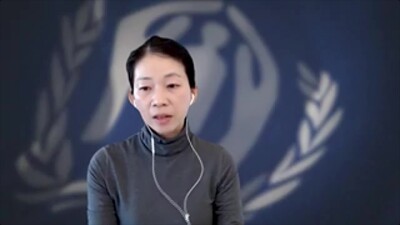
“The crisis is worsening as people flee to areas where humanitarian aid cannot reach due to insecurity,” UN Refugee Agency (UNHCR) spokesperson Eujin Byun told reporters in Geneva.
The development comes a day after the top UN aid official in the country Bruno Lemarquis warned that a shortage of humanitarian routes was threatening the aid operation in the region.
The rebels, who seized North Kivu province’s capital Goma late last month, are advancing towards Bukavu, the capital of South Kivu, following a short-lived lull in fighting.
Ms. Byun said that in South Kivu, more than half of the aid groups providing critical support to survivors of sexual violence “report being unable to reach those in need due to insecurity and continuous displacement”.
Meanwhile, in North Kivu, “the destruction of health facilities, including mortuaries, and overcrowded hospitals increase the risk of spreading infectious diseases, including cholera, malaria, and measles,” she said.
The UNHCR spokesperson also highlighted the fact that “heavy artillery shelling and looting” have destroyed 70,000 emergency shelters around Goma and Minova in North and South Kivu provinces, leaving some 350,000 internally displaced people (IDPs) “once again without a roof over their heads”.
While some 100,000 displaced people have attempted to return to their home areas, where they are met with damage to their homes and a lack of essential services, many remain stranded, Ms. Byun said. Unexploded ordnance left over from the fighting is another obstacle to their safe return.
Ms. Byun warned of the possibility that those people “will be displaced once again”.
The UNHCR spokesperson stressed that most of the 28 IDP sites around Goma are now destroyed. The agency’s concern in terms of aid access is that the road from Goma to Bukavu has been cut off, she said.
Ms. Byun also recalled that the airport in Goma is “still not functioning for humanitarian aid”.
“Since violence has spread to South Kivu, this supply line is our biggest concern,” she added.
With the rebels pushing towards Bukavu, the UN’s Mr. Lemarquis expressed worry on Thursday about the fate of South Kivu’s main airport some 20 miles from the province’s capital, which until recently was the “main lifeline” for bringing in humanitarian personnel.
Meanwhile, the spokesperson for the UN World Health Organization (WHO), Christian Lindmeier, highlighted the “heavy” impact of the hostilities on the mpox response, “particularly in Goma and the adjacent area” as the fighting spread southwards.
He stressed that the DRC is “the worst-affected country for mpox”, with Kivu being the epicentre of the highly infectious clade 1b outbreak.
Due to the rapid spread of the clade 1b strain, in August last year WHO moved to declare mpox once again a “public health emergency of international concern”, for the second time after a global outbreak of the virus made headlines in 2022.
Earlier this month, WHO Director-General Tedros Adhanom Ghebreyesus said that before the latest violence in eastern DRC, mpox cases had been stabilizing. But the recent fighting has forced patients to flee treatment centres, increasing transmission risks.
“Out of 143 confirmed mpox patients in isolation units in Goma and around, 128 fled in fear for their lives,” Mr. Lindmeier said, stressing that only 15 patients remain in isolation.
“That’s of course dangerous for everybody around,” he insisted.
Mr. Lindmeier added that some health facilities in the area had been looted, health workers had fled, and people were unable to access healthcare because of the security situation.
-Ends -
STORY: DRC humanitarian update UNHCR – WHO 14 February 2025
TRT: 3:04”
SOURCE: UNTV CH
RESTRICTIONS: NONE
LANGUAGE: ENGLISH/ NATS
ASPECT RATIO: 16:9
DATELINE: 14 FEBRUARY 2025 GENEVA, SWITZERLAND
1. Exterior wide shot: Palais des Nations, Flag Alley.
2. Wide shot: Speaker at the podium of the press conference; journalists in the Press room.
3. SOUNDBITE (English) – Eujin Byun, spokesperson, UN Refugee Agency (UNHCR): “The crisis is worsening as people flee to areas where humanitarian aid cannot reach due to insecurity. In South Kivu, over 50 per cent of humanitarian organizations providing critical support to survivors of sexual violence report being unable to reach those in need due to insecurity and continuous displacement. Meanwhile, in North Kivu, the destruction of health facilities, including mortuaries, and overcrowded hospitals increase the risk of spreading infectious diseases, including cholera, malaria, and measles.”
4. Wide shot: Speaker at the podium of the press conference from rear; speaker on screens; journalists in the Press room.
5. SOUNDBITE (English) – Eujin Byun, spokesperson, UN Refugee Agency (UNHCR): “Heavy artillery shelling and looting have destroyed 70,000 emergency shelters around Goma and Minova in North and South Kivu provinces, leaving some 350,000 internally displaced people once again without a roof over their heads.”
6. Wide shot: Journalists in the Press room; speaker on screens.
7. SOUNDBITE (English) – Eujin Byun, spokesperson, UN Refugee Agency (UNHCR): “Around Goma there has been 28 IDP sites, most of them are destroyed. Still, we have some access, but our biggest concern is that we don’t have the access from Goma, the road from Goma to Bukavu is cut.”
8. Wide shot: Speaker at the podium of the press conference from rear; speaker on screens; journalists in the Press room.
9. SOUNDBITE (English) – Eujin Byun, spokesperson, UN Refugee Agency (UNHCR): “100,000 attempt to return to their hometown, which they also found difficult because of explosive ordnance, and also lack of services, meaning that if they cannot find safety and essential services [in their] place of origin, there is also a possibility [that] those people will be displaced once again.”
10. Medium shot: Journalists in the Press room.
11. SOUNDBITE (English) – Eujin Byun, spokesperson, UN Refugee Agency (UNHCR): “As far as I know, the airport (in Goma) is still not functioning for the humanitarian aid, and this is one of our concerns as well. And at the same time, since the violence has spread to South Kivu, and then [this] supply line, supply pipeline, is our biggest concern.”
12. Wide shot: Speaker at the podium of the press conference from rear; speaker on screens; journalists in the Press room.
13. SOUNDBITE (English) – Christian Lindmeier, spokesperson, UN World Health Organization (WHO): “The mpox response is heavily impacted, of course, particularly in Goma and the adjacent area, with the conflict now reaching South Kivu as well. DRC in general is the worst-affected country for mpox, with Kivu being the epicentre of the clade 1b outbreak.”
14. Wide shot: Speaker at the podium of the press conference from rear; speaker on screens; journalists in the Press room.
15. SOUNDBITE (English) – Christian Lindmeier, spokesperson, UN World Health Organization (WHO): “Out of 143 confirmed mpox patients in isolation units in Goma and around, 128 fled in fear for their lives. Only 15 patients, about 10 per cent, remained in isolation. And that’s of course dangerous for everybody around.”
16. Close shot: journalist in the Press room.
Similar Stories

2
17
1
2
Edited News , Press Conferences | OCHA , WMO
Two UN agencies teamed up on Wednesday to issue an appeal for immediate assistance to help communities already being impacted by the strongest El Niño on record.
3
16
2
2
B-roll , Conferences , Edited News | UNITED NATIONS , UNOG
Sixth Consultative Meeting on Enhancing Coordination of Peace Initiatives and Efforts for Sudan

1
1
1
Edited News | UNICEF , WHO , UNHCR
Yemen war continues to force families from homes amid hunger and disease
More than 250,000 people have now fled renewed fighting in Yemen, the UN said on Tuesday, citing particular concern for those sheltering in the southwestern city of Taiz and the wider governorate, where access is “essentially blocked”.

1
1
1
Edited News | UNICEF
A little over one year since a ceasefire agreement was announced between Hamas fighters and Israel, more than 340 children have been reported killed and hundreds more injured, the UN Children’s Fund, UNICEF, said on Friday.

1
1
1
Edited News | UNICEF , IFRC
Six weeks after Nepal’s deadly flooding disaster, communities are still struggling to rebuild their lives, but they will need sustained help as global warming increases the risk of another Himalayan catastrophe, the UN Children’s Fund (UNICEF) said on Friday.

1
1
1
Edited News | WHO
In suspected Russia plague death, testing and monitoring underway – WHO
The death of a lab worker in Russia’s Siberia region has sparked concerns about plague being the cause, the UN World Health Organization (WHO) said on Tuesday, adding that it was following the situation closely.

1
1
Edited News | OHCHR , UNOG
UN Human Rights Chief Volker Türk on Friday provided and oral update to the 63rd session of the Human rights Council on Ukraine.

1
1
1
Edited News | OHCHR , UNOG
UN Human Rights Chief Volker Türk on Friday provided and oral update to the 63rd session of the Human rights Council on the human rights situation in Haiti.

1
1
1
Edited News | WHO
Repeated delays in bringing lifesaving medicines, prosthetics and more from Israel into Gaza risk having devastating consequences on Palestinians who urgently need them in the wartorn enclave, the UN World Health Organization (WHO) said on Friday. “A truck full of non-priority supplies or the right supplies arriving too late, doesn't save lives. That's the question that actually matters," said Dr Reinhilde Van De Weerdt, WHO Representative in the OPT.

1
1
1
Edited News | WHO
DRC: Early access to care and oxygen decisive for Ebola patients’ survival – WHO
In the Democratic Republic of the Congo (DRC), health workers fighting the country’s largest-ever Ebola outbreak are struggling to overcome critical challenges to patient care, the UN World Health Organization (WHO) warned on Tuesday.

1
1
1
Edited News | OCHA , UN
Civilians in Iran are continuing to feel the consequences of months of conflict and military escalation, the UN’s top official in the country has said, as loss of life, damage to civilian infrastructure and mounting economic pressures leave many facing continued uncertainty.
1
1
1
Edited News | WHO , UNICEF
Aid agencies in Yemen highlighted the growing hunger emergency sparked by renewed fighting between Houthi opposition forces and Government troops, after mobile health clinics reported that hundreds of children displaced by the violence are suffering from the most deadly form of malnutrition.