

The United Nations Office at Geneva
Multimedia Newsroom
UN human rights chief Volker Türk on Friday expressed profound concerns at the ongoing violent escalation in eastern Democratic Republic of the Congo (DRC) caused by the ongoing Rwanda-backed M23 offensive. “If nothing is done, the worst may be yet to come, for the people of the eastern DRC, but also beyond the country’s borders,” he told a Special Session of the Human Rights Council in Geneva.
Since 26 January, nearly 3,000 people have been killed and 2,880 injured in attacks by the M23 and their allies “with heavy weapons used in populated areas, and intense fighting against the armed forces of the DRC and their allies”, the High Commissioner said, as UN Member States weighed setting up a fact-finding mission to investigate extreme rights violations still being committed in the DRC provinces of North Kivu and South Kivu.
Hostilities have continued unabated in this mineral-rich region that has been unstable for decades amid a proliferation of armed groups, forcing hundreds of thousands to flee their homes. Fighting escalated in late January when majority-Tutsi M23 fighters seized control of parts of North Kivu, including areas near Goma, and advanced towards South Kivu and the eastern DRC’s second city of Bukavu.
A draft resolution circulated before the Special Session – the 37th since the Council was created in 2006 - also condemned Rwanda’s military support of the M23 armed group and called for both Rwanda and M23 to halt their advance and to allow lifesaving humanitarian access immediately.
Hospitals targeted
Addressing the emergency session, Mr. Türk noted that two hospitals in Goma had been bombed on 27 January, killing and injuring multiple patients, including women and children.
In a mass prison break at Muzenze Prison in Goma on the same day, at least 165 female inmates were reportedly raped and most were later killed in a fire under suspicious circumstances, he said, citing the authorities.
“I am horrified by the spread of sexual violence, which has been an appalling feature of this conflict for a long time. This is likely to worsen in the current circumstances,” the UN rights chief continued, adding that UN staff were now verifying multiple allegations of rape, gang rape and sexual slavery in eastern DRC’s conflict zones.
MONUSCO role
Echoing those concerns, Bintou Keita, Special Representative of the Secretary-General in the DRC and chief of UN peacekeeping mission (MONUSCO) told the Council that dead bodies still lie in the streets of Goma, which M23 fighters now control. The situation is “catastrophic”, she continued.
“While I am speaking, youth are being subjected to forced recruitments and human rights defenders, civil society actors and journalists have also become a major population at risk. MONUSCO continues to receive requests for individual protection from them as well as from judicial authorities under threat and at risk of reprisals from M23 in areas under its control.”
She issued a stark warning on the health risks linked to ongoing fighting, “especially the resurgence of cholera and the high risk of mpox, the sudden interruption of children's schooling, and the rise of conflict-related sexual violence and gender-based violence”.
According to latest reports, medical personnel face electricity cuts and lack fuel for their generators for basic services, including morgues, Ms. Keita continued. “I again call on international community to advocate for humanitarian assistance to reach Goma immediately.”
Countries respond
In response to the ongoing crisis, DRC’s Minister of Communications and Media, Patrick Muyaya Katembwe, spoke out against the continued logistical, military and financial support of countries including Rwanda “to armed groups operating on our territory”.
The minister maintained that Rwanda's support for the M23 had fuelled the violence in eastern DRC “for more than 30 years, exacerbating the war for reasons linked to the exploitation of the strategic mining resources of the Democratic Republic of Congo”.
Dismissing that claim, Ambassador James Ngango of Rwanda to the UN in Geneva, insisted that a large-scale attack against Rwanda was “imminent”.
He accused the “Kinshasa-backed coalition” of stockpiling a large number of weapons and military equipment near Rwanda’s border, mostly in or around Goma airport.
“These weapons include rockets, kamikaze drones, heavy artillery guns capable of shooting precisely within the Rwandan territory. The weapons were not turned at the theatre of operations against the M23, rather they were pointed directly at Rwanda,” he said.
‘We are all implicated’
Highlighting the need for international efforts to end the long-running conflict, Mr. Türk called for greater understanding of the political and economic background.
“The population in the eastern DRC is suffering terribly, while many of the products we consume or use, such as mobile phones, are created using minerals from the east of the country. We are all implicated.”
STORY: US humanitarian funding - OCHA, UNFPA
TRT: 04 min 22s
SOURCE: UNTV CH
RESTRICTIONS: NONE
LANGUAGE: ENGLISH / FRENCH / NATS
ASPECT RATIO: 16:9
DATELINE: 07 FEBRUARY 2025 GENEVA, SWITZERLAND
Speakers:
- UN High Commissioner for Human Rights Volker Türk
- Bintou Keita, Special Representative of the Secretary-General and Head of MONUSCO
- Patrick Muyaya Katembwe, Minister of Communications and Media, DR Congo
- Ambassador James Ngango, Permanent Representative of Rwanda to the United Nations in Geneva and other international organizations in Geneva
SHOTLIST
- Exterior wide shot: Palais des Nations, Flag Alley.
- Medium shot of the podium with screen showing High Commissioner for Human Rights to the UN Human Rights Council Volker Türk speaking.
- SOUNDBITE (French) - Volker Türk, UN High Commissioner for Human Rights: "Je suis horrifié par la propagation de violences sexuelles, qui sont un élément effroyable de ce conflit depuis longtemps. Ils risquent de s’aggraver dans les circonstances actuelles." / "I am horrified by the spread of sexual violence, which has been an appalling feature of this conflict for a long time. This is likely to worsen in the current circumstances."
- SOUNDBITE (French) - Volker Türk, UN High Commissioner for Human Rights: "Si rien n’est fait, le pire est peut-être encore à venir pour les habitants de l’est, mais aussi au-delà de la RDC." / "If nothing is done, the worst may be yet to come, for the people of the eastern DRC, but also beyond the country’s borders."
- Medium shot of the podium showing the speakers.
- SOUNDBITE (English) - Bintou Keita, Special Representative of the Secretary-General in the Democratic Republic of the Congo and Chief of the United Nations Organization Stabilization Mission in the DRC (MONUSCO): “While I am speaking, youth are being subjected to forced recruitments and human rights defenders, civil society actors and journalists have also become a major population at risk. MONUSCO continues to receive requests for individual protection from them as well as from judicial authorities under threat and at risk of reprisals from M23 in areas under its control.”
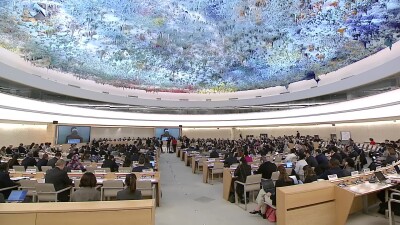
- Wide shot of the Human Rights Council room showing ceiling and seated delegates.
- SOUNDBITE (French) - Bintou Keita, Special Representative of the Secretary-General in the Democratic Republic of the Congo and Chief of the United Nations Organization Stabilization Mission in the DRC (MONUSCO): « Ces combats en zone densément peuplée ont causé la mort d’au moins 2,900 personnes et plus de 3,000 blessés. Les conséquences à moyen et long terme m’inquiètent, surtout la résurgence du choléra et le risque élevé de Mpox, l’interruption brusque de la scolarité des enfants, et la multiplication des violences sexuelles liées au conflit et des violences basés sur le genre. » / “The fighting in densely populated areas has caused the deaths of at least 2,900 people and injured more than 3,000. I am concerned about the medium and long-term consequences, especially the resurgence of cholera and the high risk of Mpox, the sudden interruption of children's schooling, and the rise of conflict-related sexual violence and gender-based violence.”
- Medium pan shot of delegates
- SOUNDBITE (English) - Bintou Keita, Special Representative of the Secretary-General in the Democratic Republic of the Congo and Chief of the United Nations Organization Stabilization Mission in the DRC (MONUSCO): “I reiterate that the humanitarian situation in Goma is catastrophic. The decomposing bodies collected from the streets of Goma prompted WHO to warn of potential epidemics. Medical personnel are facing electricity cuts and lack fuel for their generators. They work under extremely difficult conditions, when ensuring the treatment of patients and the functioning of morgues. I again call on international community to advocate for humanitarian assistance to reach Goma immediately."
- Wide shot of the Human Rights Council room showing ceiling and seated delegates.
- SOUNDBITE (French) - Patrick Muyaya Katembwe, Minister of Communications and Media, DR Congo: « Nous rejetons fermement l’implication continue de certains États, notamment le Rwanda, dans le soutien logistique, militaire et financier à des groupes armés opérant sur notre territoire. Le soutien du Rwanda au M23, documenté à plusieurs reprises, y compris le groupe d'experts mandatés par le Conseil de Sécurité des Nations Unies, a alimenté la violence dans l'est de notre pays depuis plus de 30 ans, exacerbant la guerre pour des raisons liées à l'exploitation de ressources minières stratégiques de la République Démocratique du Congo. » / "We firmly reject the continued involvement of some states, including Rwanda, in providing logistical, military and financial support to armed groups operating on our territory. Rwanda's support for the M23, which has been documented on several occasions, including by the group of experts mandated by the United Nations Security Council, has fuelled the violence in the east of our country for more than 30 years, exacerbating the war for reasons linked to the exploitation of the strategic mining resources of the Democratic Republic of Congo."
- SOUNDBITE (English) – Ambassador James Ngango, ambassador of Rwanda to the United Nations in Geneva, told an emergency meeting of the Human Rights Council: "The Kinshasa-backed coalition has stockpiled a large number of weapons and military equipment near Rwanda’s border, mostly in or around Goma airport. These weapons include rockets, kamikaze drones, heavy artillery guns capable of shooting precisely within the Rwandan territory. The weapons were not turned at the theatre of operations against the M23, rather they were pointed directly at Rwanda. »
- Medium shot of podium showing Mr. Türk speaking and Human Rights Council President Jürg Lauber.
- SOUNDBITE (French) - Volker Türk, High Commissioner for Human Rights to the UN Human Rights Council: « Il est aussi fondamental d’analyser l’économie politique de ce conflit. J’étais toujours frappé par le fait que la population de l’est souffre terriblement, tandis que beaucoup de produits qu’on consomme ou qu’on utilise, comme les téléphones portables, sont nourris par les minéraux de l’est. Nous sommes donc impliqués toutes et tous. » / "It is also essential to analyze the political economy of this conflict. I have always been struck by the fact that the population in the eastern DRC is suffering terribly, while many of the products we consume or use, such as mobile phones, are created using minerals from the east of the country. We are all implicated."
- Close-up shot of DRC delegate.
- Medium shot of delegates listening, taking notes.
- Medium shot of delegates showing Rwandan delegate listening.
Similar Stories

1
1
1
Edited News | UNICEF
A little over one year since a ceasefire agreement was announced between Hamas fighters and Israel, more than 340 children have been reported killed and hundreds more injured, the UN Children’s Fund, UNICEF, said on Friday.

1
1
1
Edited News | UNICEF , IFRC
Six weeks after Nepal’s deadly flooding disaster, communities are still struggling to rebuild their lives, but they will need sustained help as global warming increases the risk of another Himalayan catastrophe, the UN Children’s Fund (UNICEF) said on Friday.

1
1
1
Edited News | WHO
In suspected Russia plague death, testing and monitoring underway – WHO
The death of a lab worker in Russia’s Siberia region has sparked concerns about plague being the cause, the UN World Health Organization (WHO) said on Tuesday, adding that it was following the situation closely.

1
1
Edited News | OHCHR , UNOG
UN Human Rights Chief Volker Türk on Friday provided and oral update to the 63rd session of the Human rights Council on Ukraine.

1
1
1
Edited News | OHCHR , UNOG
UN Human Rights Chief Volker Türk on Friday provided and oral update to the 63rd session of the Human rights Council on the human rights situation in Haiti.

1
1
1
Edited News | WHO
Repeated delays in bringing lifesaving medicines, prosthetics and more from Israel into Gaza risk having devastating consequences on Palestinians who urgently need them in the wartorn enclave, the UN World Health Organization (WHO) said on Friday. “A truck full of non-priority supplies or the right supplies arriving too late, doesn't save lives. That's the question that actually matters," said Dr Reinhilde Van De Weerdt, WHO Representative in the OPT.

1
1
1
Edited News | WHO
DRC: Early access to care and oxygen decisive for Ebola patients’ survival – WHO
In the Democratic Republic of the Congo (DRC), health workers fighting the country’s largest-ever Ebola outbreak are struggling to overcome critical challenges to patient care, the UN World Health Organization (WHO) warned on Tuesday.

1
1
1
Edited News | OCHA , UN
Civilians in Iran are continuing to feel the consequences of months of conflict and military escalation, the UN’s top official in the country has said, as loss of life, damage to civilian infrastructure and mounting economic pressures leave many facing continued uncertainty.
1
1
1
Edited News | WHO , UNICEF
Aid agencies in Yemen highlighted the growing hunger emergency sparked by renewed fighting between Houthi opposition forces and Government troops, after mobile health clinics reported that hundreds of children displaced by the violence are suffering from the most deadly form of malnutrition.
1
1
1
Edited News | UNHCR
Displacement on the rise in Yemen as fighting continues - UNHCR
As hostilities worsen in Yemen, more people have been fleeing their homes, further intensifying the humanitarian crisis within the region, the UN Refugee Agency (UNHCR) warned on Tuesday.
1
1
1
Edited News | IOM , OHCHR , UNFPA , UNOG , UNHCR , WHO
Yemen’s humanitarian crisis growing by the hour amid spike in displacement
Yemenis displaced by renewed fighting have described fleeing for their lives amid shelling and gunfire, aid agencies reported on Friday, while highlighting the dramatic increase in humanitarian needs in the country and in Djibouti, where thousands have sought shelter.
1
1
1
Edited News | OHCHR , UNOG
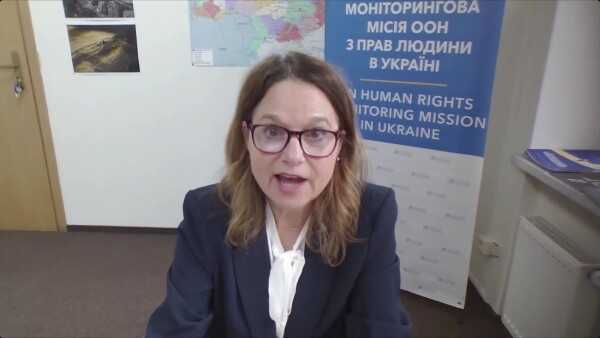
The UN Human Rights Office issued on Friday a report documenting a shocking pattern of sexual violence amid Russia’s full-scale armed attack on Ukraine.